Live NFL betting is not one bet, it is a whole day of them. An NFL Sunday arrives in waves: the wall of 1pm kickoffs, the 4:25 window that narrows to a game or two, then the entire country pointing at one island game under the lights on Sunday and Monday night. By the time any of those games kick off, the pregame number has been hammered efficient by thousands of sharp bettors. The edge that is left does not live in the pregame market. It lives in-game, and it is deepest and softest exactly when the market's attention collapses onto those primetime games. That island-game spot is the most repeatable edge on the NFL week, and I will show you how to attack it by the end.
In Summary
- Live NFL Betting Means The Book Keeps Re-Pricing The Spread, Total, And Moneyline While The Game Is Being Played, so a mispriced number appears and disappears in seconds instead of sitting there for hours.
- The three in-game edges are the overreaction (casual money chases whatever just happened), the latency gap (books price off a lagged feed), and the key-number reset (3 and 7 still rule the live spread).
- The workflow spine is the OddsShopper In-Game EV Screen: it reads every live line, flags the ones priced in your favor, and sizes the bet to your bankroll.
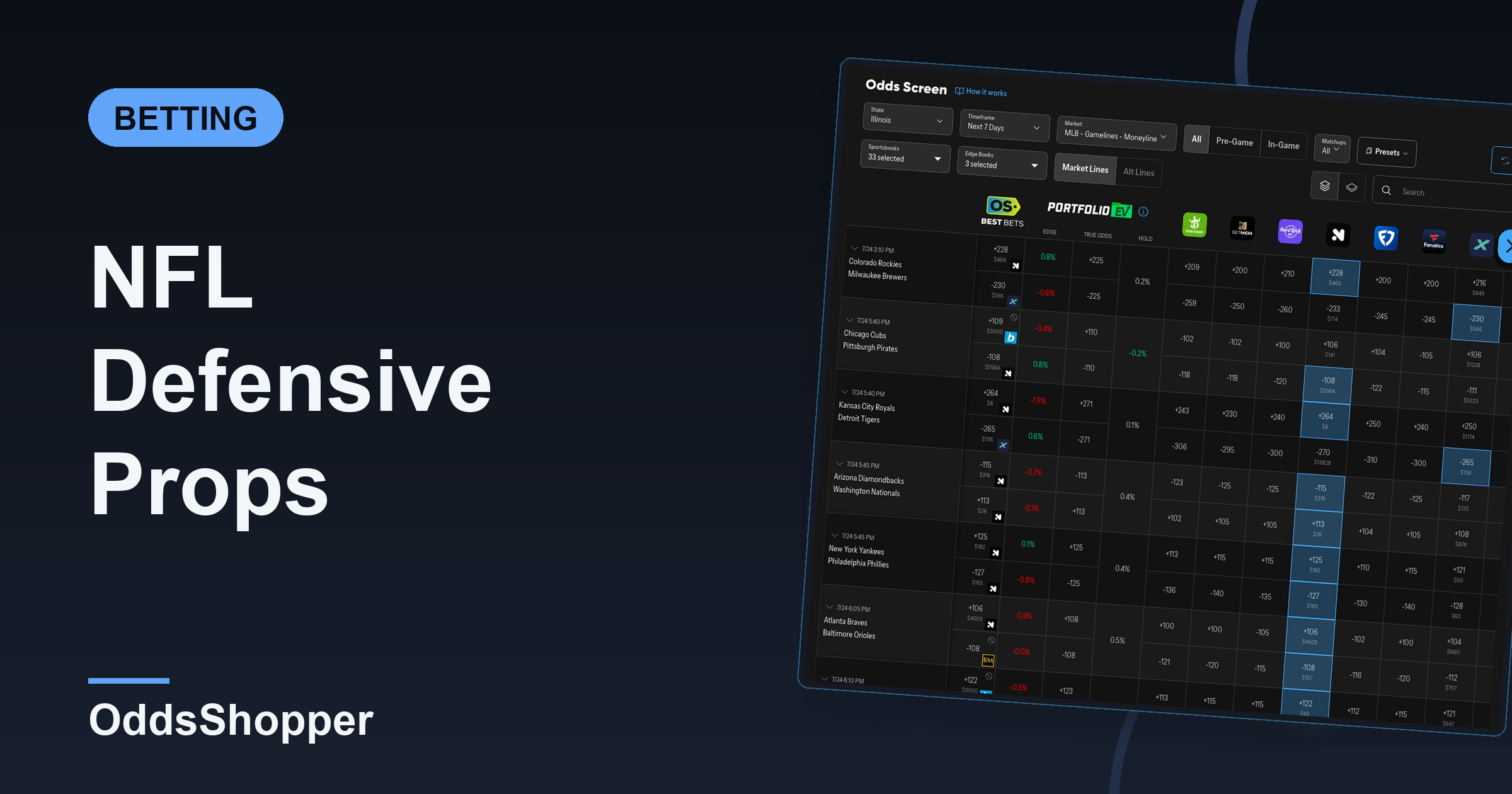
- Shop the live number across books and wait for a break in the action so the price holds still long enough to place. Live NFL moneyline, spread, and total odds sit side by side on the odds screen.
- The primetime island games (SNF, MNF) carry the highest live limits and the most recreational money, which is why the biggest live overreactions of the week happen there.
Watch The Video
This is our OddsShopper live NFL betting show, where we work a game in real time and read the number as it moves.
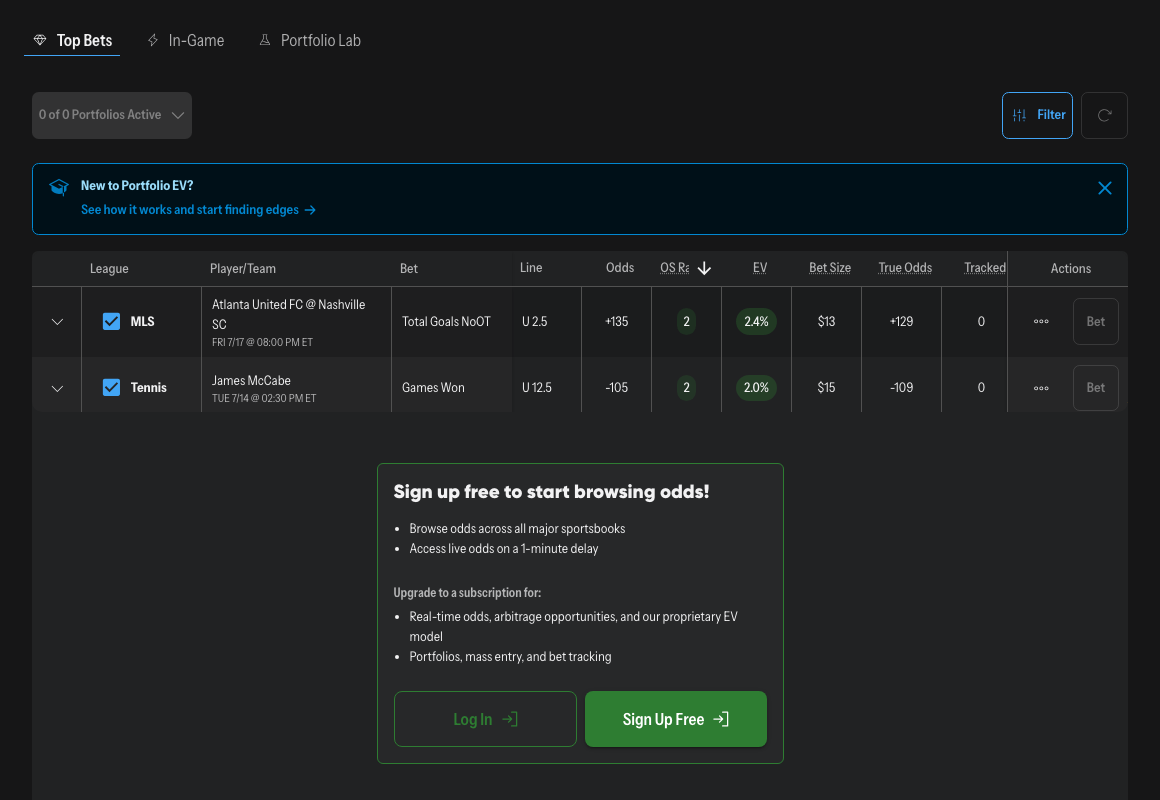
The OddsShopper +EV Screen.
Why Live NFL Betting Beats The Pregame Number
Pregame NFL lines are the hardest market in American sports to beat. A full week of sharp money pounds the Sunday card into shape, so by kickoff the spread is close to a fair reflection of the game. Live is the opposite. The book has to re-post a price every few seconds off incomplete information, while the people betting into it are reacting to the last snap. Speed plus emotion is what creates a beatable number. (For the full case on why in-game is the single biggest edge in the market, we lay it out in the live betting strategy guide; this piece assumes you know the basics of an NFL bet and goes straight to the in-game workflow.)
There is a second reason it is underrated. Books limit live bettors far less aggressively than they limit pregame prop sharps, because a winning live bettor blends into the flood of recreational in-game action. You can keep getting NFL live bets down long after a book would have trimmed your pregame limits.
The mispricing comes from three places at once:
- The Overreaction Edge. A team goes up 10-0 in the first quarter and the casual money piles on. The live line overcorrects to that early score, and the value sits on the other side. A pregame seven-point favorite that is down 10-0 is very often still the better team, now available at a discount.
- The Latency Edge. Every book prices live odds off a data feed, and not every feed is equally fast. If you are watching the actual game while a book prices off a lagged score, you are betting on information it has not processed yet. A few seconds is enough to grab a number before it moves.
- The Key-Number Reset. Because the live spread re-anchors to the score constantly, it keeps landing back on 3 and 7, the two margins NFL games decide on most. That gives you fresh cracks at the right side of a key number all game long.
The Shape Of An NFL Sunday
The reason a workflow matters is that the day does not give you one clean spot, it gives you dozens, spread across windows that each bet differently.
| Window | What it looks like | The live-betting read |
|---|---|---|
| 1Pm Kickoffs | Eight to ten games at once, attention scattered | Books re-price fast and thin, but you cannot watch them all, so filter to the games you actually have on |
| 4:25 Window | Two or three games, more eyes per game | Prices tighten as the market concentrates, but overreactions still hit on scoring swings |
| SNF / MNF Island Games | One national game, everyone watching | Highest live limits, most recreational money, the biggest overreactions of the week |
The row I keep coming back to is the first one. During the 1pm wave, the mistake is trying to bet every game. You have ten screens of live numbers moving at once and no way to price them by eye. That is not an edge, it is a way to bet into noise. The fix is not more attention, it is a tool that watches all ten for you and only surfaces the ones worth a bet.
Your In-Game Workflow: The OddsShopper In-Game EV Screen
This is where the day becomes manageable. The OddsShopper In-Game EV Screen reads live NFL markets across the books, strips the vig to a no-vig fair price using the Sharp Sportsbook Algorithm, and flags every spot where the offered odds beat that true price. The tool surfaces the mispriced number so you are not eyeballing a fair line in the four seconds before it moves. My setup for an NFL Sunday looks like this:
- Main Lines Only. Live NFL spreads, totals, and moneylines carry higher limits than in-game props, so an edge you find is one you can actually bet at size. Props get limited far quicker.
- Game Status At A Break. Filter to bets available during a timeout or between plays. The number holds still long enough to place instead of vanishing mid-snap.
- Bankroll Sizing On. Enter your bankroll and the screen turns each flag into a real stake, larger on short favorites, smaller on longshots, so your sizing is edge-aware instead of a round number you picked by feel. The fundamentals of that live find-and-size loop are covered in the live +EV betting guide.
- Desktop Notifications And One-Click Betting. A live edge is gone in seconds, so the tool pings you when a qualifying NFL bet appears and drops it straight into your sportsbook slip.
The point of all of it is speed from flagged to placed. On the 1pm wave, that is the difference between catching the overreaction and reading about it.
Bet the best live number, not the first one you see.OS Pro unlocks the full In-Game EV Screen and no-vig fair prices across every book. Use code LIVENFL20 for 20% off your first month and start every NFL live bet on the best price.
Key Numbers Still Rule The Live Spread
Everything the tool does still runs on top of NFL math, and the most important piece of that math is the key number. Three and seven are the margins NFL games land on most, because a field goal is worth three and a touchdown with the extra point is worth seven. That does not turn off when the game starts. If anything, the live spread hugs those numbers tighter, because it keeps resetting to the current score.
Here is the setup, then the reveal. Say a game is tied late and the live spread on the team you like sits at +2.5 on one book and +3 on another. The +3 is a materially better bet, because now a field-goal loss pushes instead of losing. Buying the half-point from +2.5 up to +3 is one of the only point-buys worth making, precisely because it crosses a key number. Buy points that do not cross 3 or 7 and the book rakes you on the juice. Our full breakdown of why these two numbers matter is in the NFL key numbers guide.
Remember the overreaction from the 1pm window, the seven-point favorite down 10-0? Watch where its live spread settles once it scores back to within a field goal. It will re-anchor to 3, and the shop between books for the right side of that number is the same key-number edge, just handed to you live.
A Worked Example: Betting The Comeback The Right Way
Let me put the whole loop together on one hypothetical game. A home team opens as a seven-point pregame favorite, then falls behind 10-0 in the second quarter. The crowd bails, and the live moneyline on the favorite drifts out to, say, +120 to win the game outright.
First, I check the fair price. The In-Game EV Screen de-vigs the live market and prints a true number of roughly +105, which means +120 is a bet priced in my favor. That gap is positive expected value, or +EV: the price I can get beats the true price. (New to the term? Start with positive expected value explained and how to remove the vig.)
Then I shop it. The screen lines every book's live price side by side, and say FanDuel 🎁 has +120 while DraftKings 🎁 sits at +110 and BetMGM 🎁 at +115. I take the +120. Same bet, an extra ten cents of price, and over a season those cents are the whole game.
Last, I time it. Instead of firing during a live drive with the number bouncing, I wait for the two-minute warning, when the line holds still, and place it at the price I actually saw. That is one bet: an overreaction spotted, a fair price confirmed, the best number shopped, and a stable moment to place it. The same four steps work on a live total or spread.
The Island-Game Edge: SNF And MNF
Now the payoff I promised. Everything above gets bigger on the standalone primetime games. On Sunday and Monday night there is one NFL game and the whole country is watching it, which does two things at once. It pushes live limits up, because the book expects real volume, and it floods the market with recreational money betting overs and betting the team that just made a play. Deep and soft at the same time is exactly the water you want to fish in.
That national overcorrection is the 1pm overreaction, just scaled up. A favorite that goes down early in a 1pm game gets a modest overcorrection because only a few thousand people are betting it. The same favorite going down early on Monday night gets a much bigger one, because millions are reacting to the same score in the same minute. The bet is the same. The overcorrection is just larger, and the higher limits mean you can size into it.
On our OddsShopper live NFL betting show, we walked through how a mobile quarterback gets flushed from a collapsing pocket in a tight game and starts scrambling more than he would in a blowout. It is a live read you can act on: in a close primetime game, a dual-threat quarterback's live rushing number is quietly fed by exactly the pressure the defense is generating. It is the kind of in-game NFL betting angle that only exists because you are watching the game unfold, not the pregame sheet.
Frequently Asked Questions
What is live NFL betting? Live NFL betting, also called in-game betting, is placing bets on an NFL game while it is being played. The book posts updated odds throughout the game, so the spread, total, and moneyline shift with every score and possession. The bet types are identical to pregame betting, the prices just refresh as the action plays out.
How do I find value in live NFL betting? You need the fair price faster than you can calculate it by hand. The OddsShopper In-Game EV Screen reads every live NFL line, de-vigs it to a true number, and flags the bets where the offered price beats that number, then shops it across the books so you take the best available price.
Why do the NFL key numbers 3 and 7 still matter live? Because NFL games keep landing on those margins, and the live spread re-anchors to the current score constantly, so it lands back on 3 and 7 all game long. Getting the right side of them, or buying a half-point across them, has the same outsized value it does pregame.
When is the best time to place a live NFL bet? During a break in the action, a timeout, the two-minute warning, or between quarters, when the number stops moving. Filter the In-Game EV Screen to bets available at a break so the price holds still long enough to get down at the odds you saw.
Are the primetime games really softer for live betting? The standalone Sunday and Monday night games draw the most recreational money and the highest live limits, so overreactions are bigger and you can bet more into them. That combination is why the biggest repeatable live spots tend to show up under the lights.
Stop trying to out-handicap the pregame market, because by kickoff it has already priced in everything you know. The edge on an NFL Sunday is in the reaction: the overcorrection on the early score, the half-point across a key number, the national overbet on a primetime favorite. Watch the games, let the In-Game EV Screen watch the prices, and you turn a whole day of NFL into a whole day of live bets worth taking. Start every live NFL bet on the best number with OS Pro, and use code LIVENFL20 for 20% off your first month.
More on this: NFL 2026 on Kalshi: Every Board We Track · NFL Coach Of The Year Odds: Kalshi Fades A Two-Time Winner · NFL Picks Hub: Week 1 Odds, Win Totals, Props · NFL Win Totals 2026: Kalshi Vs DraftKings Vs FanDuel · Kalshi Vs Polymarket NFL: Why The Cheaper Fee Loses