You will see "BTTS" on almost every soccer betting slip, sitting right next to the moneyline and the total, and it is one of the friendliest bets in the sport for a newer bettor. It ignores who wins, it ignores the final score, and it usually comes down to a single, answerable question: are both of these teams good enough to put one goal on the board? Get comfortable reading it and you have a market that is easy to understand and, more often than people realize, easy to find value in.
What BTTS Means In Soccer Betting
BTTS stands for "both teams to score." A both teams to score bet asks whether each side finds the net at least once in the match. The winner does not matter and the exact scoreline does not matter. If both teams score a goal, the "Yes" cashes.
It is a simple yes-or-no market:
- BTTS Yes — you are betting that both teams will score at least one goal each.
- BTTS No — you are betting that at least one team gets shut out (a clean sheet for one side, or a 0-0 draw).
Because there are only two outcomes, BTTS is one of the cleanest entry points into soccer betting. You are not projecting a precise scoreline or picking a winner, just reading whether two attacks are live enough to each break through. If the American odds attached to those two options look unfamiliar, our guide to reading betting odds covers what a price like -120 or +110 actually means.
BTTS Yes Vs. BTTS No: A Quick Example
Say England play France. Here is how the same BTTS Yes ticket settles across a few final scores:
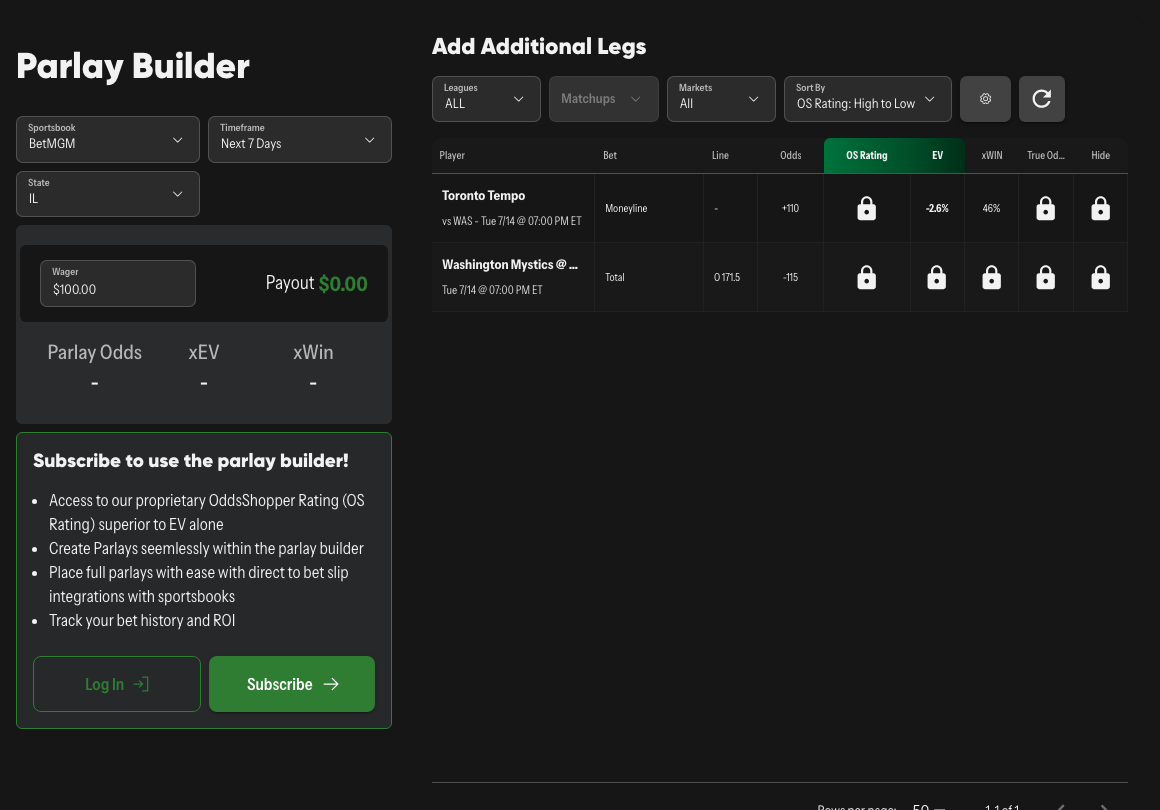
The OddsShopper Parlay Builder.
| Final Score | Did both teams score? | BTTS Yes | BTTS No |
|---|---|---|---|
| England 2, France 1 | Yes | ✅ Wins | ❌ Loses |
| England 1, France 1 | Yes | ✅ Wins | ❌ Loses |
| England 3, France 0 | No (France shut out) | ❌ Loses | ✅ Wins |
| England 0, France 0 | No (nobody scored) | ❌ Loses | ✅ Wins |
Notice the 3-0 line: England scored three, but because France never answered, BTTS Yes loses. That is the trap newcomers fall into. A goal-fest for one team does nothing for a "Yes" ticket if the other side is blanked. You need both attacks to show up.
How BTTS Bets Settle
One rule that trips people up: unless the market says otherwise, BTTS settles on 90 minutes plus stoppage time only. Goals in extra time or a penalty shootout in a knockout do not count. So a scoreless 90 minutes that turns into a 1-1 thriller in extra time still settles as BTTS No. Own goals count as a goal for the team they are credited to. When you shop the market, make sure you are reading a plain "both teams to score" line and not a same-game-parlay leg with its own settlement quirks.
When Both Teams To Score Is Mispriced
Here is where BTTS goes from a beginner bet to a useful one. The books build a BTTS price off each team's scoring and defending, the match total, and how the line is moving, but the sharpest read goes a little deeper. Work down this short checklist before you back a Yes or a No:
- Can each team actually score? Look at how many goals each side has scored in recent matches, not just the results. A team that keeps drawing 1-1 is a quiet BTTS Yes machine.
- Can each team be scored on? Now flip it: how many has each defense conceded lately? Two leaky back lines is the classic Yes; one elite defense (think a side that has conceded once all tournament) is the classic No.
- What do the underlying numbers say? Expected goals, for and against, tell you whether recent results were earned or lucky. A team drawing plenty of chances but finishing poorly is a live "Yes" the scoreline is hiding. Free public tools such as FotMob publish match xG if you want to sanity-check the eye test.
- Is there anything to play for? A dead-rubber match between two eliminated sides often goes quiet, which points at No — though check the lineups, because a rotated, pressure-free game can also open up. A desperate side chasing a result has to attack, which opens the game up.
Put simply, here is what pushes each side of the market:
| Points Toward BTTS Yes | Points toward BTTS No |
|---|---|
| Both Teams Scoring In Most Recent Matches | One elite defense with recent clean sheets |
| Two Leaky Back Lines Conceding Regularly | A heavy favorite likely to shut out a weak side |
| High Combined xG (Both Attacks Creating Chances) | Low combined xG (a genuine grind, roughly 1.6) |
| A Desperate Side That Must Chase A Result | Two eliminated teams with nothing to play for |
The edge is not knowing these things. The edge is the price. When a book prices BTTS Yes off "these two only average a goal a game" but the xG says both attacks are creating far more than they are finishing, the Yes can be quietly underpriced. That gap is the whole game.
BTTS And Totals: Why The Two Markets Move Together
BTTS and the Over/Under goals total are close cousins, and understanding the link keeps you from paying twice for the same read. Both markets are essentially bets on goals. If you love a game to sail Over 2.5, you very often like BTTS Yes too, because the cleanest path to three-plus goals is both teams scoring.
They are not identical, though, and the difference is where value hides:
- A 3-0 blowout cashes Over 2.5 but loses BTTS Yes.
- A 1-1 draw loses Over 2.5 but wins BTTS Yes.
So BTTS Yes is really a bet on goals being shared, not just plentiful. Expecting an open, back-and-forth match between two evenly matched attacks? BTTS Yes can be the safer, better-priced expression of "this will be a lively game" than the Over. Expecting one side to dominate a weak opponent? Now the Over is the play and BTTS is a trap. Read which story the game is telling before you pick your market.
See the whole soccer board at once.New to OddsShopper? The soccer odds screen prices BTTS, totals, and the moneyline side by side across 100+ books and shows a no-vig "fair" price, so you can spot when the Yes is a few cents too cheap instead of guessing. Try it free for 7 days, and code BTTSEDGE20 takes 20% off OS Pro or OS Core if you subscribe.
BTTS + Result Combos: Raising The Price
Once BTTS clicks, the popular next step is stapling it to a match result. "Team X wins AND both teams score" pays more than the plain moneyline because you have added a condition, and there is real game-flow logic behind it, not just a bigger number.
Think about how a soccer match unfolds. Whoever scores first often sits back to protect the lead, which pushes the trailing team to commit numbers forward and chase. That opening-up is exactly what produces a second team's goal. So "favorite wins, but the underdog nicks one" is a very natural script, and combining a win with BTTS Yes prices it at a tidier number than the moneyline alone.
Other common BTTS variations you will see:
- BTTS In Both Halves — both teams must score in each half. High risk, high reward, and much rarer than it looks.
- BTTS & Over/Under — pairs the shared-goals read with a total, for bettors who want both conditions.
These combos live in a book's bet builder or same-game-parlay tool, and on our side the Parlay Builder can assemble them out of legs the market has priced in your favor. They are fun and they pay, but every extra leg adds a way to lose, so treat them as a bigger swing, not your bread and butter. Our full parlay betting strategy guide breaks down how the math compounds.
How To Find Value On BTTS
The mechanics of BTTS are easy. Beating the market on it is a matter of price and process, and it is the same process that works on every soccer bet:
- Shop Every Book. BTTS prices vary more between sportsbooks than most bettors expect. The same match can look like this across the major books (illustrative prices, not a live line):
| Sportsbook | BTTS Yes (illustrative) | Implied chance |
|---|---|---|
| FanDuel | -130 | 56.5% |
| DraftKings | -105 | 51.2% |
| BetMGM | -120 | 54.5% |
| Caesars | -110 | 52.4% |
DraftKings' -105 pays back more on the exact same "Yes" than FanDuel's -130, so line shopping to the best number, every time, is the single biggest edge available to a recreational bettor. Watching the line movement toward kickoff tells you which way the market is leaning, too.
- Strip Out The Vig. The listed odds bake in the book's margin. A no-vig, or "fair," price shows you what the market really thinks the true chance is, so you can tell a cheap Yes from one that only looks cheap. An EV calculator then turns that fair price into a simple "is this bet worth it" number.
- Lean On The Checklist, Not The Narrative. Do not chase a BTTS Yes just because a team shipped five goals to a powerhouse last week. Opponent-adjust. One lopsided result against elite opposition tells you little about whether both teams score in a normal matchup.
This is exactly the manual work an odds tool does for you in seconds. Our odds screen scans 100+ sportsbooks, lines up every book's BTTS and totals prices for a match, and attaches a no-vig fair price to each, so the "which book, and is it actually value" question is answered before you ever place the bet. If you want the full walk-through of how we find edges this way, see our positive expected value guide. That is the difference between hoping a Yes is priced well and knowing it.
Frequently Asked Questions
What does BTTS mean in betting? BTTS means "both teams to score." It is a soccer bet on whether each team scores at least one goal in the match. The winner and the final score do not matter, only that both sides find the net.
What is the difference between BTTS Yes and BTTS No? BTTS Yes wins when both teams score at least once. BTTS No wins when at least one team is kept off the scoreboard, including any 0-0 or clean-sheet result like 2-0.
Does BTTS include extra time and penalties? No. Unless a market states otherwise, BTTS settles on 90 minutes plus stoppage time only. Goals in extra time or a penalty shootout do not count toward the bet.
Is BTTS a good bet for beginners? It can be, because it is a simple yes-or-no market with no need to pick a winner or a scoreline. The key is to shop for the best price and read whether both attacks are truly live rather than betting it on autopilot.
Do own goals count for BTTS? Yes. An own goal counts as a goal for the team it is credited to, so it settles a BTTS Yes just like any other goal.
The Bottom Line
BTTS is one of the most approachable markets in soccer betting: both teams to score, yes or no, decided over 90 minutes plus stoppage. The read is straightforward once you ask two questions, can each team score and can each team be scored on, and check the underlying goal numbers instead of just the results. The money, though, is made on price. Shop every book, look at the no-vig fair number, and you turn a fun beginner bet into a spot where you actually have an edge.
New to OddsShopper? It scans 100+ sportsbooks and flags the bets priced in your favor, including doing the BTTS and totals price-comparison this guide just walked through, automatically. You can try it free for 7 days, and code BTTSEDGE20 takes 20% off OS Pro or OS Core if you subscribe, which works out to just a few dollars per day to stop leaving the better number on the table.
More on this: Can You Take Both Sides On Kalshi? · NFL Playoff Odds 2026: Why Kalshi Doubts the Eagles · Best +EV Bet Tracker: What To Look For (And What Most Skip) · Closing Line Value Vs. Variance: Your P&L Is Lying To You · Devig Calculator: Find Fair No-Vig Odds From -110 Prices