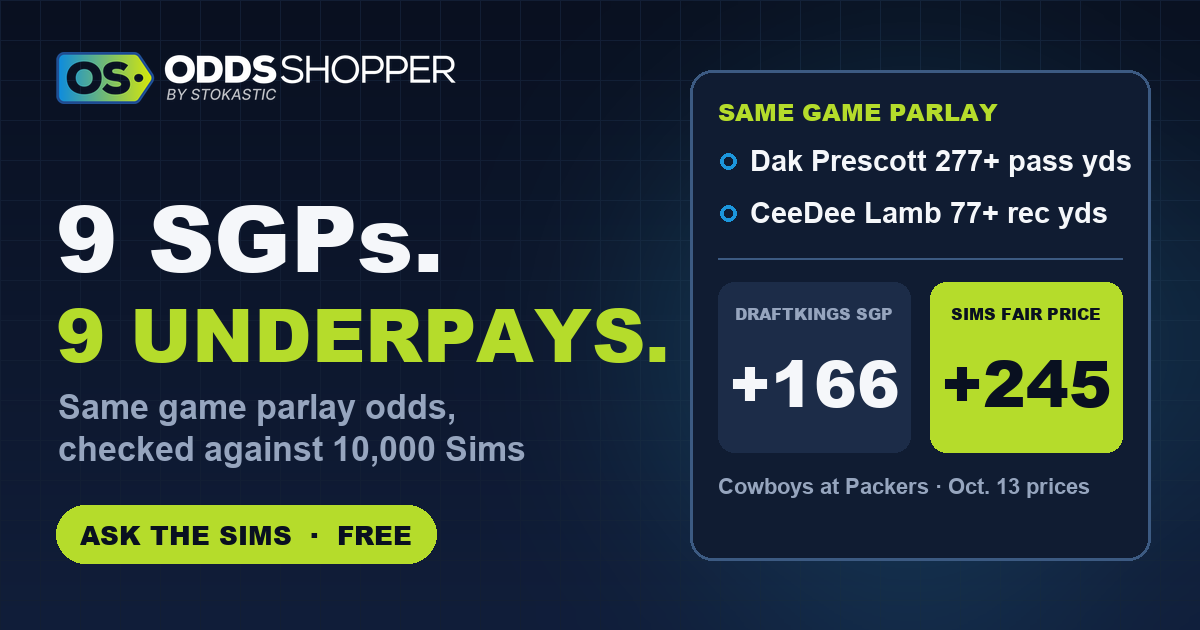
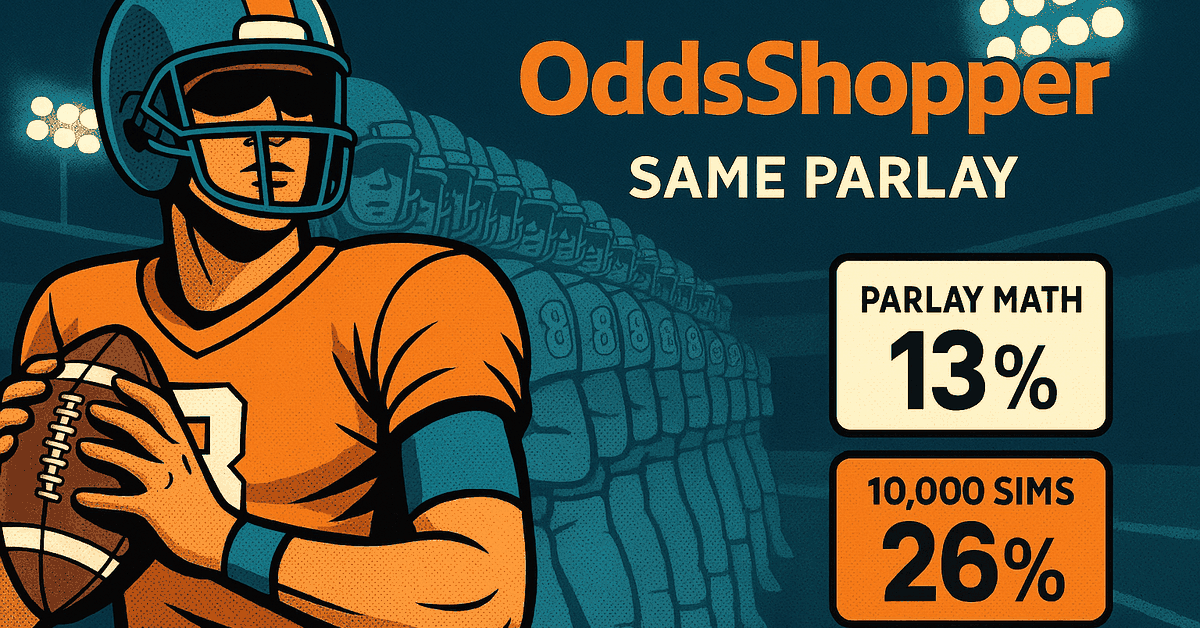
What is a same game parlay? An SGP is one ticket that combines multiple bets from a single game: player props, touchdowns, the game total. Because the legs are correlated, every sportsbook prices the same SGP differently; as of September 4, 2026, the identical three-leg ticket in our breakdown paid +369 at one book and +580 at another. Most SGPs are overtaxed losers by default; the four-book comparison, the correlation tax and how to find the ones worth betting are below.
A same game parlay (SGP) is the most popular bet in the building and, priced wrong, one of the most expensive. The thing almost nobody realizes is that the exact same SGP can pay wildly different odds depending on which book you use, because every book prices the correlation between the legs differently. Once you see that, the strategy is obvious: never place an SGP at the first price you see, and only bet the ones that are actually priced in your favor. Here is how same game parlays really work, why their prices swing so much, and how I find the SGPs worth betting.
Go deeper: Round Robin Bets Explained: How They Work and When to Use One and Parlay Betting Explained: Why Most Lose & How to Win.
Building it on DraftKings or FanDuel instead?The free DraftKings Parlay Simulator and FanDuel Parlay Simulator on Stokastic.com price the same parlay from 10,000 Sims next to that book's odds.
What Is A Same Game Parlay?
A same game parlay is a parlay where every leg comes from the same game: a quarterback's passing yards, his receiver's touchdown, the game total, and so on. The draw is obvious. The legs tell one story, so when the game plays out the way you pictured, several legs cash together.
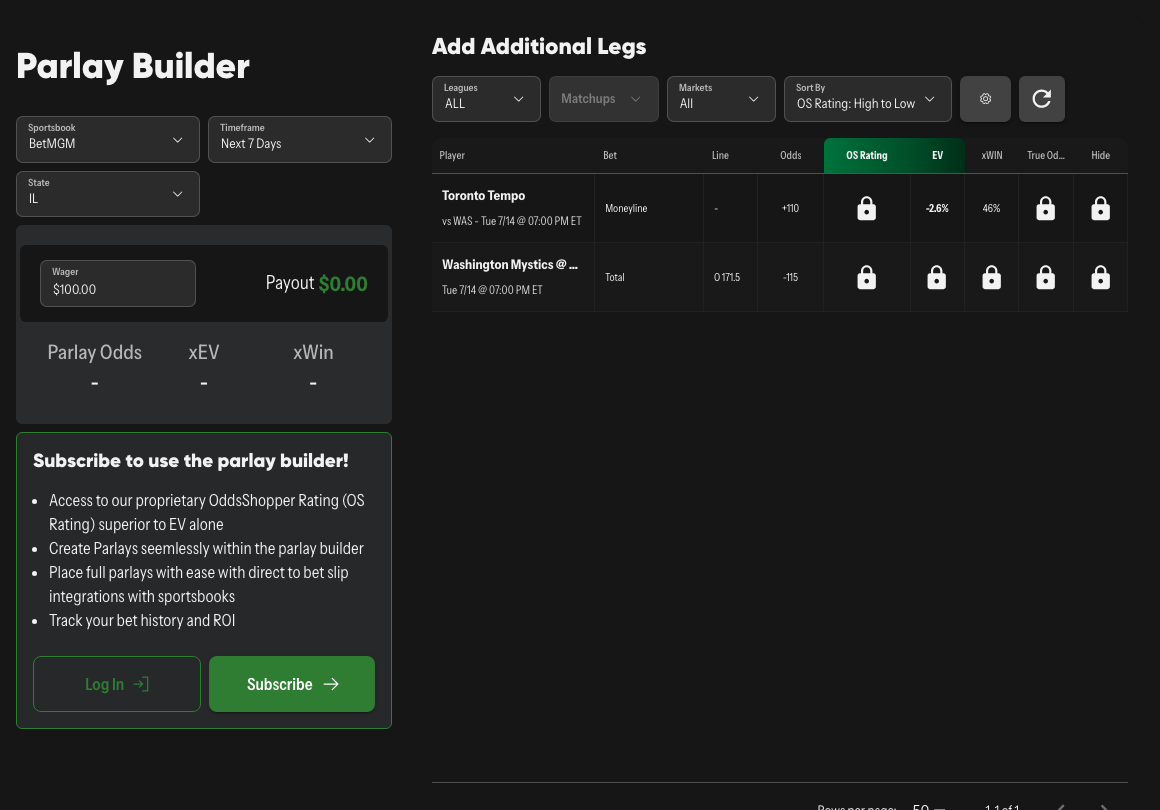
The OddsShopper Parlay Builder.
The first thing I check on any SGP is the price across books, not whether the story makes sense. That correlation is the whole reason SGPs exist and the whole reason they are priced differently from a normal parlay. In a regular parlay the legs are independent, so the book just multiplies the odds (our parlay calculator guide shows that math on any combination). In an SGP the legs move together, so the book adjusts the price to account for that. How aggressively each book makes that adjustment is where everything interesting happens.
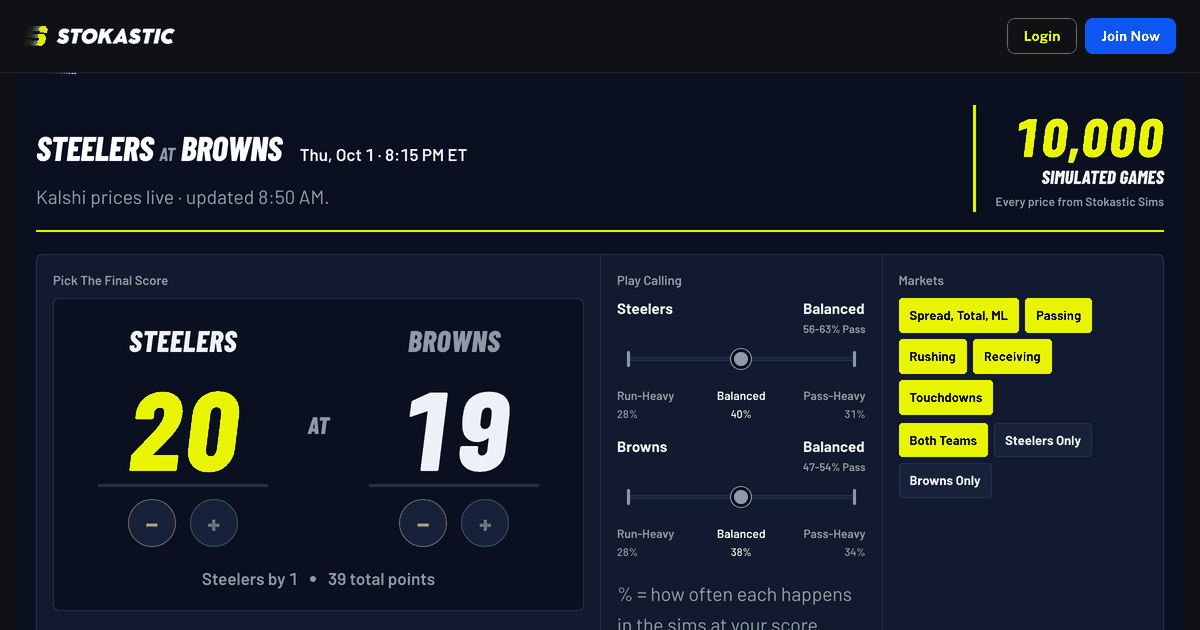 Betting it on Kalshi? Price the combo first. The Kalshi Parlay Simulator prices any combo against 10,000 simulated games of this week's game, next to the price on Kalshi.
Why SGP Prices Vary SO Much
Here is the part that should change how you bet them. Because every book prices the correlation between the legs differently, the same SGP can pay dramatically different odds across the market.
In our own breakdown, we built one three-leg SGP for a Buccaneers-Lions game — a quarterback over his passing yards, over his passing touchdowns, and his top receiver to score. Same three legs, plugged into four books:
| Sportsbook | SGP Odds | Profit on a $100 Bet |
|---|---|---|
| FanDuel | +369 | $369 |
| BetMGM | +400 | $400 |
| DraftKings | +550 | $550 |
| Caesars | +580 | $580 |
That is the identical bet paying $369 or $580 on a $100 stake depending on where you place it. Whether that particular ticket won or lost is beside the point; the reason to shop it is the same either way. If you only bet one book, you are leaving that entire gap on the table every single time.
The Correlation Tax: Why Most SGPs Are A Trap
The flip side of correlation pricing is the catch. Books know the legs are connected, so they shade the price against you to account for it, the same vig that powers every sportsbook's edge only turned up. That "correlation tax" is why a same game parlay that feels like a lock so often pays less than the math should, and it quietly grinds down bankrolls over a season. Building an SGP just because the legs "make sense together" is the mentality of a losing bettor: the combination making sense is not the same as the price being good.
So I start from the assumption that a random SGP is negative value, and make it prove otherwise. You beat that in two ways:
- Shop it across books to claw back the gap shown above and get the least-taxed price.
- Find correlation the book has not fully priced — the rare spots where the market under-adjusted for how the legs move together. That, not "I like the combo," is a real edge.
Same Game Parlay Plus (Cross-Game SGPs)
Most books now offer a "plus" version (DraftKings 🎁, FanDuel 🎁, and others) that lets you combine same game parlays from multiple games into one ticket. The same rules apply, only more so: more legs means more correlation pricing, more variance, and a bigger spread between books. Shop it, and make sure every piece is +EV before you stack it, because a tax compounded across several games adds up fast.
How To Find SGPs Worth Betting
The work is the same as any smart bet: get the best number and only fire when it is priced in your favor. Doing that by hand across four books for a multi-leg SGP is tedious, which is exactly what the tools are for. If you also play pick'em apps on the side, our chalkboard promo code guide walks through claiming Chalkboard's new-user bonus the right way.
Never place an SGP at the first price you see.The OddsShopper odds comparison and Parlay Builder line up your same game parlay across every book so you take the least-taxed price, and the tool surfaces the legs that are actually +EV before you combine them. Start with a free 7-day trial, then code SGP20 cuts 20% off OS Pro or OS Core, a discount that works out to less than a coffee a day.
FAQ
What does SGP mean in sports betting? SGP stands for same game parlay: a single ticket that combines multiple bets from one game. The legs are correlated, so the book prices them together instead of just multiplying the odds.
How does a same game parlay work? It combines multiple bets from one game into a single ticket. Because the legs are correlated, the book adjusts the combined price rather than just multiplying the odds like a normal parlay.
Why is the same SGP a different price at different books? Each book prices the correlation between the legs its own way. That is why one SGP can pay +369 at one book and +580 at another, and why shopping it is free value.
Are same game parlays worth it? Only when the price is. Books tax the correlation, so most SGPs are negative value by default. Shop for the best number and bet only the ones that clear +EV.
What is a same game parlay plus? It lets you combine SGPs from multiple games into one bet. Same logic, more correlation pricing and variance, so shopping and +EV legs matter even more.
Is betting same game parlays legal? SGPs follow the same legality as any other sports bet: if sports betting is live in your state, same game parlays are too; there is no separate rule for combining legs from one game. Play 21+ and never chase losses.
Bet Same Game Parlays The Smart Way
An SGP is not a sucker bet, and it is not free money either. It is a correlated parlay that books tax and price inconsistently, which means the bettor who shops every ticket and only fires on +EV prices has a real, repeatable edge over the one who takes the first number.
Shop your same game parlay across every book with the OddsShopper odds tools and build it on +EV legs in the Parlay Builder. New members get a free 7-day trial, then 20% off OS Pro or OS Core with code SGP20, the cheapest way to bet sharper.
Watch it instead
Tools for thisKalshi combo builder on Kalshi, or the Polymarket Combo Simulator for Polymarket's book.
More on this: How Are Same Game Parlay Odds Calculated? 9 SGPs, 9 Underpays · Broncos vs 49ers Same Game Parlay: Bo Nix Under 250 · Cardinals vs Giants Same Game Parlay: Skattebo Under 80 · Chargers vs Seahawks Same Game Parlay: Darnold Stays Quiet · Dolphins vs Vikings Same Game Parlay: Gordon Held Under 30