One of the most common questions we get at OddsShopper is what a round robin is and how to bet one. The good news: it is simpler than it sounds. A round robin just takes a list of bets you like and turns them into a bunch of smaller parlays automatically, so one bad leg does not wipe out your whole ticket. It is why they get so popular around a loaded NFL Sunday or a full college football Saturday, when you want a payout bigger than singles but do not trust all four picks to land. The part most explainers skip is the one that actually matters, and it is the first thing I check before I build one: a round robin manages your variance, it does not create an edge. I only reach for one when the legs are already priced in my favor, and our Parlay Builder is how I find those.
Watch: Round Robin Bets Explained
Here is the two-minute version straight from our own breakdown before we get into the math. Watch on YouTube if the player does not load.
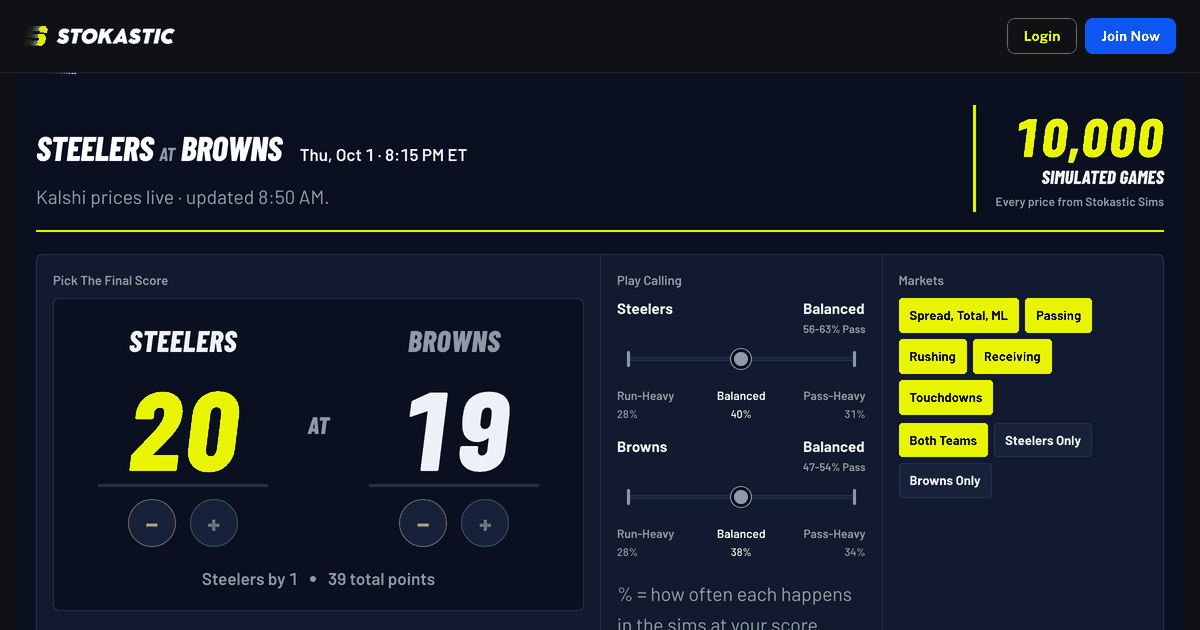 Betting it on Kalshi? Price the combo first. The Kalshi Parlay Simulator prices any combo against 10,000 simulated games of this week's game, next to the price on Kalshi.
What Is A Round Robin Bet?
A round robin is a combination of smaller parlays among a larger list of bets. Say you have four bets you really like. You want a bigger payout than betting them as four singles, but you do not want to parlay all four together, because if one leg loses your entire stake is gone. That middle ground is the round robin: it takes those four bets and builds every smaller parlay inside them for you.
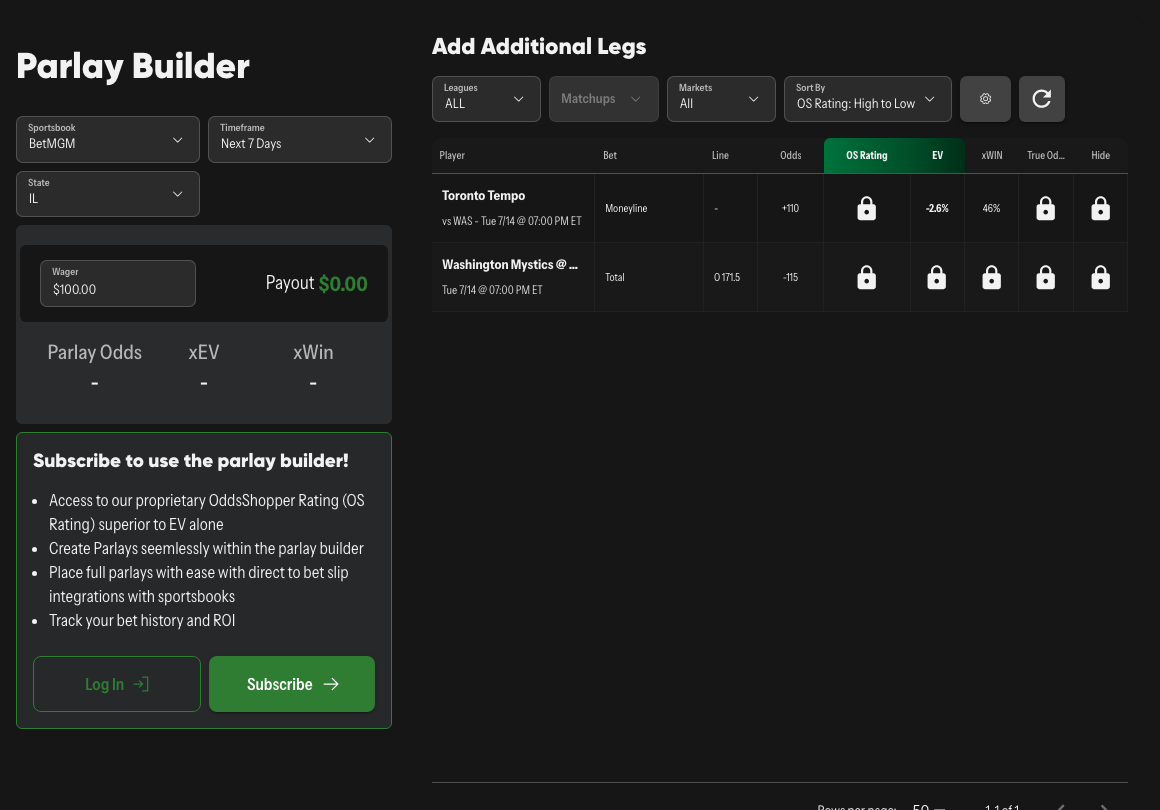
The OddsShopper Parlay Builder.
You choose the size of the parlays. "By twos" means every two-bet combination of your four picks. "By threes" means every three-bet combination. The sportsbook creates all of those parlays automatically; you just set the group size and the stake per combination. The same structure works whether your four legs are NFL spreads, MLB moneylines, or a mix across a college football slate.
How Round Robin Payouts Work
The key thing to understand is that each combination is its own bet, so your total stake is the per-combination amount times the number of combinations. That is the piece that surprises people: a "$5 round robin" is rarely a $5 ticket.
With four bets:
- By Twos: there are six two-leg combinations, so a $5-per-combo round robin costs $30 (6 × $5).
- By Threes: there are four three-leg combinations, so a $5-per-combo round robin costs $20 (4 × $5).
If one of your four legs loses, a straight four-leg parlay is dead. In the "by twos" round robin, every combination that did not include the losing leg still wins. You give up the giant all-four payout, but you keep a real shot at a solid return even when you do not go a perfect 4-for-4. That is the entire tradeoff: smaller ceiling, much softer floor.
Round Robin Payouts: A Worked Example
Here is exactly how the stake scales as you change the number of legs and the group size, using a clean $5 and $10 per-combination bet:
| Your Picks | Group size | Parlays created | Cost at $5/combo | Cost at $10/combo |
|---|---|---|---|---|
| 4 Legs | By twos | 6 | $30 | $60 |
| 4 Legs | By threes | 4 | $20 | $40 |
| 5 Legs | By twos | 10 | $50 | $100 |
| 5 Legs | By threes | 10 | $50 | $100 |
The row I always point people to is the five-leg "by twos": ten separate two-leg parlays for $50 at $5 apiece. That is a lot of tickets from what feels like a small number, and it is the fastest way to blow past the budget you had in your head. Fewer legs and smaller groups keep the cost honest.
Now the payout side. Say your four NFL legs are each priced around -110 at DraftKings or FanDuel (roughly a coin flip after the vig). A single two-leg combo of two -110 bets pays about +264, so a $10 combo returns about $26 in profit when both hit. Stack six of those in a "by twos" round robin and you can lose a leg, watch one parlay die, and still cash the other combinations. You are not chasing one giant number; you are giving yourself several medium ones. I am using -110 here only to show how the payout stacks up; on a real ticket you want each leg priced better than that, which is the +EV part we get to next. To sanity-check any price against its true probability, start with how to read betting odds.
Round Robin Vs. Straight Parlay: The Real Tradeoff
A straight parlay is all or nothing for the biggest payout. A round robin spreads the same picks across many smaller parlays so a single miss does not zero you out. Neither is "better" in a vacuum, and our full breakdown of parlays vs. straight bets digs into where each one belongs. It comes down to variance:
| Round Robin | Straight Parlay | |
|---|---|---|
| Payout Ceiling | Lower | Highest (every leg hits) |
| If One Leg Misses | You still cash the combos without it | The whole ticket is dead |
| Total Stake | Higher (many combos) | Lower (one bet) |
| Variance | Lower | Higher |
| Best When | A leg or two feels shaky | You trust every single leg |
The way I decide between them is one question: how confident am I in every single leg? If I would happily fire all four straight, I lean parlay for the ceiling; if one or two feel shakier but I still like the group, I round-robin to survive a miss. It is the same call I make when I decide whether to build a same-game parlay or keep the legs across different games.
Crucially, the round robin does not change the math on your individual bets. Each combination is still just its legs multiplied together. Spreading them out manages how the results land; it does not turn weak bets into good ones.
When A Round Robin Actually Makes Sense
Here is the rule I never break, and it keeps you out of trouble: a round robin is only worth it when every leg is +EV — priced better than its true probability. Because each combination is the product of its legs, a round robin built from vig-inflated, negative-value bets just compounds that negative value across a dozen tickets. Remember that every price already carries the hold sportsbooks bake in, often a 5% hold per market, so starting from good numbers is the whole game. The structure protects you from variance, not from bad bets.
So the work is the same as any smart betting: find legs that beat their true price, then decide whether you want the lower-variance round robin or the higher-ceiling straight parlay. This is the step the tool surfaces for you, comparing every book so you are not guessing which side carries value. Before you lock any leg, pull up the live odds screen and shop the number across every major book, then check the true no-vig number with Portfolio EV and find the +EV bets worth combining. If you would rather start from vetted plays, our free expert picks today are a fast on-ramp.
Build it on +EV legs, not gut picks.The OddsShopper Parlay Builder surfaces the bets that are priced in your favor, and OS Pro's Portfolio EV shows you the true no-vig number on each one. New members get 20% off their first OS Pro payment with code RR20.
FAQ
What is a round robin bet? It is a set of smaller parlays built from a larger list of picks. You choose the group size (by twos, by threes, etc.) and the sportsbook creates every combination of that size for you.
How much does a round robin cost? Per-combination stake times the number of combinations. Four picks by twos is six combinations, so $5 each costs $30; by threes is four combinations, so $5 each costs $20. Five picks by twos jumps to ten combinations ($50 at $5 apiece), so watch the leg count.
Is a round robin better than a parlay? Neither is universally better. The round robin lowers your variance (you can miss a leg and still cash) but costs more total and pays a smaller top-end. A straight parlay maximizes the payout on a perfect ticket. Pick based on how much variance you want.
Do round robins improve my odds? No. Each combination's value is just its legs multiplied together, so a round robin does not add any edge. It only spreads risk. It is worth using only when your legs are already +EV; otherwise you are compounding a bad number across many tickets.
How many legs should a round robin have? Keep it small. Three to five legs is the sweet spot for most bettors, because the number of combinations (and your total stake) climbs fast beyond that. If you have eight legs you love, you probably want singles or a couple of small parlays, not a giant round robin.
When should I use a round robin for NFL or college football? Weekends with a lot of games you like are the classic spot. If you have three or four spreads or NFL parlay legs you are torn between, a round robin lets you back all of them without betting the house on a perfect card.
Is betting on round robins legal? Sports betting is legal in many regulated U.S. states, but availability and rules vary by state. Bet only where it is offered, play 21+, and never chase losses.
Round Robin Betting, In Summary
A round robin is a clean way to chase parlay-sized payouts without living and dying on a single leg, as long as you remember the one idea that runs through all of this: it manages variance, it does not manufacture an edge. Get the legs right first — priced in your favor, shopped across books — then choose the structure that fits how much risk you want to carry. Do it in that order and a round robin becomes a smart way to bet a full weekend of games; skip the first step and it just multiplies a bad price across a dozen tickets.
More on this: BMW Championship First Round Leader Odds: Scheffler Tops Kalshi's Board At 10 Cents · FedEx St Jude Round 2 Leader Odds: Sungjae Im Tops Kalshi's Board · FedEx St Jude First Round Leader Odds: Kalshi's Flattest Board Of Playoff Week · Rocket Classic First Round Leader Odds: A Wide-Open Board · World Cup Round of 32 Odds: June 28 SoFi Opener
Watch it instead
Tools for thisprice any Kalshi combo on Kalshi, or the Polymarket Combo Simulator for Polymarket's book.