How do you bet on Kalshi? Pick a game, tap Yes or No on a team, and enter an amount. The price is the part that looks strange. Kalshi shows cents where a sportsbook shows odds, and the cents are the chance: a team at 60¢ is about a 60% shot, the same bet a sportsbook lists near -150. Every winning bet pays $1 for each contract, which is Kalshi's word for one unit of a bet.
How to Place a Bet on Kalshi
- Find the game. Each side of it is a yes-or-no question, such as "Chicago wins."
- Tap Yes or No. Yes is a bet that it happens. No is a bet that it doesn't.
- Enter an amount, in dollars or in contracts.
- Submit. This kind of bet, which Kalshi calls a Quick Order, goes through right away at the best prices other bettors are offering. A big bet can fill at more than one price.
The trading fee is not in the price. It shows behind the small "i" next to "You're buying."
A new account needs a bettor who is 18 or older. Kalshi may ask for a driver's license or passport, and when it does the photo is taken live in the app. A Social Security number is not required to deposit, bet or withdraw, crypto withdrawals aside, though Kalshi may ask for one later. The smallest deposit is $10, or $1,000 by wire, and Kalshi deposits and withdrawals covers every way to fund the account and what each one costs.
Stay ahead of the markets.
Daily insights and expert picks on Kalshi, Polymarket, and what's moving markets.
Free forever. Unsubscribe anytime.
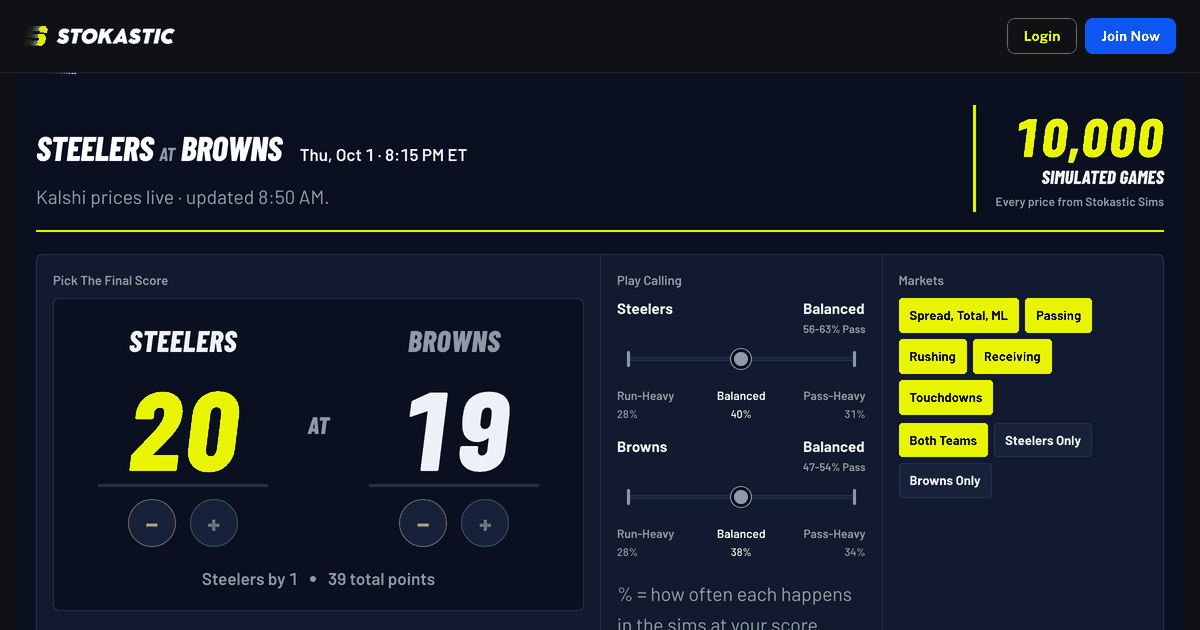 Price the combo before you buy it: the Kalshi Parlay Simulator runs 10,000 simulated games of this week's game and prints the fair price of any combo next to the price on Kalshi.
What the Cents Mean
A Kalshi price runs from 1¢ to 99¢, and a winning contract pays $1. Buy at 60¢ and the profit is 40¢ on a win and the loss is 60¢ otherwise. The price paid is the whole amount at risk.
Put $100 on a 60¢ team and it buys 166 contracts. If the team wins they pay $166, a profit of about $66. A sportsbook pays $67 on the same $100 at -150. It is one bet said two ways.
| Kalshi price | About the same as |
|---|---|
| 25¢ | +300 |
| 40¢ | +150 |
| 50¢ | +100 |
| 60¢ | -150 |
| 75¢ | -300 |
| 80¢ | -400 |
The sportsbook column is our own arithmetic and leaves out Kalshi's fee. Our Kalshi odds page converts any price both ways.
Spreads, Totals and What "1+" Means
Kalshi writes every market as a question with a yes-or-no answer, and it helps to read the question before tapping.
A spread reads "GB Packers wins by over 7.5 points?" Yes is the Packers laying the 7.5. The underdog has "wins by over" questions of its own, but none for getting points. Taking the underdog plus the 7.5 is No on the Packers question.
A total reads "Full Game: over 44.5 points scored?" Yes is the over and No is the under.
Player markets use a plus sign. "1+ hits" means the player gets at least one hit, and "2+ touchdowns" means two or more. Kalshi's rules use the same shorthand: a "4+ hits" market settles to Yes if the player "records 4+ hits."
The winner of a game comes as two questions, one for each team. Yes on one team and No on the other are close to the same bet, and on Friday, September 18, the two prices sat within a cent of each other in all 20 NFL games on the board. Can you bet both teams on Kalshi? walks through what happens when someone buys both.
Name Your Own Price
A sportsbook posts a number and the bettor takes it or passes. Kalshi has a second kind of bet, a Limit Order, where the bettor sets the price.
Say a team is offered at 60¢. A limit order at 58¢ sits in the market until another bettor agrees to take the other side at that price. If somebody does, the bet costs 58. If nobody does, the bet never happens, and Kalshi says as much: there is no guarantee a limit order will be filled. Cancelling an order that is still waiting costs nothing.
A limit order is entered as a number of contracts and a price, where a Quick Order also takes a plain dollar amount.
What the Fee Costs You
Kalshi does not take the other side of a bet. Its money comes from a trading fee on most bets, and the fee is largest on prices near 50¢ and shrinks toward either end.
On 100 contracts at 60¢, a $60 bet, a Quick Order pays a fee of $1.68. That makes the real price about 61.7¢, closer to -161 than -150. On NFL game, spread, total and player touchdown markets a filled limit order pays a quarter of that, 42 cents here. Other markets follow their own schedule, and our Kalshi fees breakdown has the full math.
That gap is the reason to compare before betting. A Kalshi price that looks better than the sportsbook's has to still be better after the fee. The OddsShopper live odds screen shows every book's number for the same game.
Can You Bet Sports on Kalshi?
Yes. Kalshi lists NFL, college football, NBA, MLB and other games as the same yes-or-no markets, with winners, spreads, totals and player markets. It is an exchange regulated by a federal agency, the Commodity Futures Trading Commission, and not by state gaming boards.
Whether a state can block the sports markets is being fought in court. Nevada's Gaming Control Board has said Kalshi's operations are unlawful there. Where is Kalshi legal? tracks it state by state.
Getting Out Before the Game Ends
A Kalshi bet does not have to ride to the final whistle. Cash Out sells an open bet to another bettor at the best price on offer. The price can come in under the one on the screen, and how to cash out on Kalshi explains why and what auto sell does.
Line Kalshi up against every book.The OddsShopper odds comparison puts every book's price on one screen next to Kalshi's, and the Arbitrage tool flags where two prices sit far enough apart to matter. Your first week of OS Pro is free, and code KALSHI20 takes 20% off your first payment.
Nothing here is financial advice.
More on this: Politics Markets For Sports Bettors: Base Rates, Rules · Kalshi Review 2026: No Vig, But One Catch In Your State · Kalshi Liquidity: Why Your Order Won't Fill · Prediction Markets Vs. Sports Betting: The Real Difference