NFL parlay betting is the most popular way to bet football and one of the most misunderstood. A parlay links two or more bets into a single wager where every leg has to hit. The payout looks huge, the ticket feels like a lottery, and that is exactly why the books love it. Sportsbooks promote parlays hard because they tend to carry a bigger margin than straight bets, and the reason bettors love them is simple: most bettors treat them as a way to turn a small stake into a life-changing number, not as a math problem.
This is not a "parlays are a sucker bet" article. That lazy line is wrong. It is a tool, and like any tool it is only as good as the way you use it. The version of NFL parlay strategy is this: a parlay multiplies the value of its legs, so a parlay built from bad legs compounds a bad price, and a parlay built from legs priced in your favor compounds an edge. Below we break down where the money actually leaks, how the same-game-parlay correlation tax works, and the handful of spots where an NFL parlay is defensible.
Building it on DraftKings or FanDuel instead?The free DraftKings Parlay Simulator and FanDuel Parlay Simulator on Stokastic.com price the same parlay from 10,000 Sims next to that book's odds.
What Counts As A Parlay In NFL Betting
Start with the mechanics, because the payout math is where the edge (or the leak) lives.
A straight bet on a single NFL spread priced at -110 pays a little under even money. Parlays work by multiplying the decimal odds of every leg together. Two -110 legs (1.909 in decimal) combine to about 3.64, which is around +265 in American odds. Three of them combine to roughly 6.96, or about +596. Those numbers climb fast, which is the whole appeal.
Here is the catch. At -110, the book is charging you vig on every single leg. A pair of -110 sides implies about a 4.5% house margin per leg. When you parlay, that margin does not stay at 4.5%. It compounds. The table below shows what standard -110 legs would pay with no vig versus what a book actually pays, and how the effective hold climbs with every leg you add (illustrative math, using even-money "fair" legs):
| Legs (Each -110) | No-vig fair payout | Typical book payout | Effective hold |
|---|---|---|---|
| 2 Legs | +300 | ~+265 | ~9% |
| 3 Legs | +700 | ~+596 | ~13% |
| 4 Legs | +1500 | ~+1229 | ~17% |
| 5 Legs | +3100 | ~+2437 | ~21% |
Read the right-hand column. A single -110 leg carries about 4.5% hold; a five-leg parlay of the same legs carries roughly 21%. That gap is the correlation-free "juice" you hand over just for the convenience of one ticket.
That is the single most important idea in NFL parlay betting: the vig on a parlay is not the vig on one leg, it is the vig on one leg compounded across all of them. A naive parlay of unrelated games is not a discount. You are placing the same bets you could make individually, with the margin compounded.
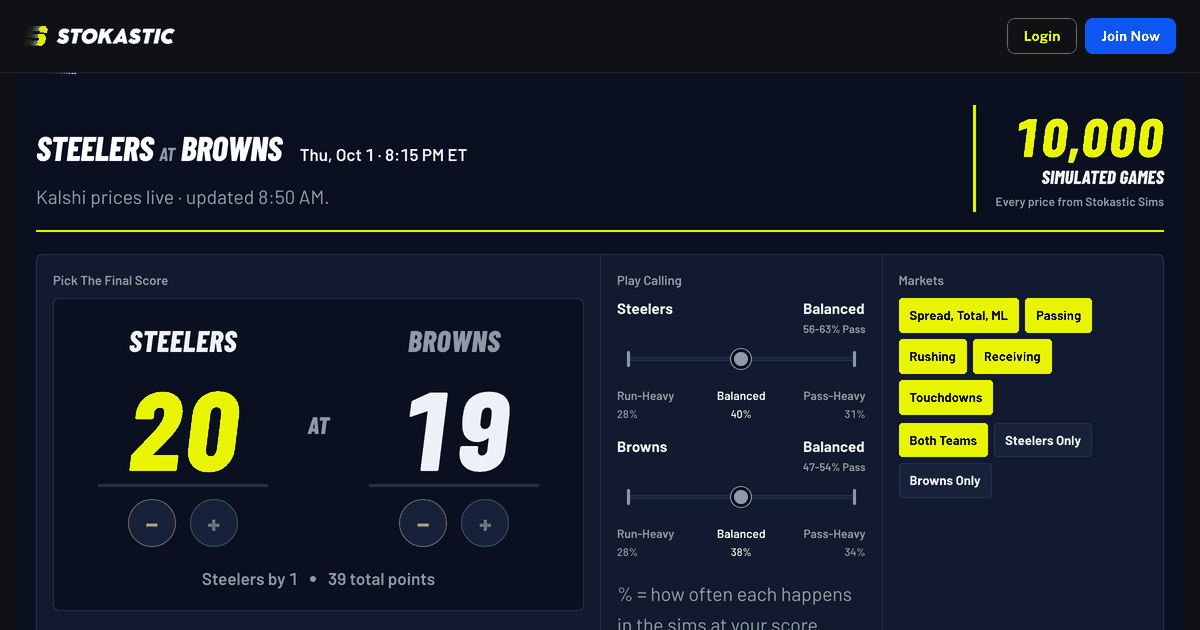 Betting it on Kalshi? Price the combo first. The Kalshi Parlay Simulator prices any combo against 10,000 simulated games of this week's game, next to the price on Kalshi.
Why Naive NFL Parlays Burn Money
Most NFL parlays fail for one of three reasons, and none of them is bad luck.
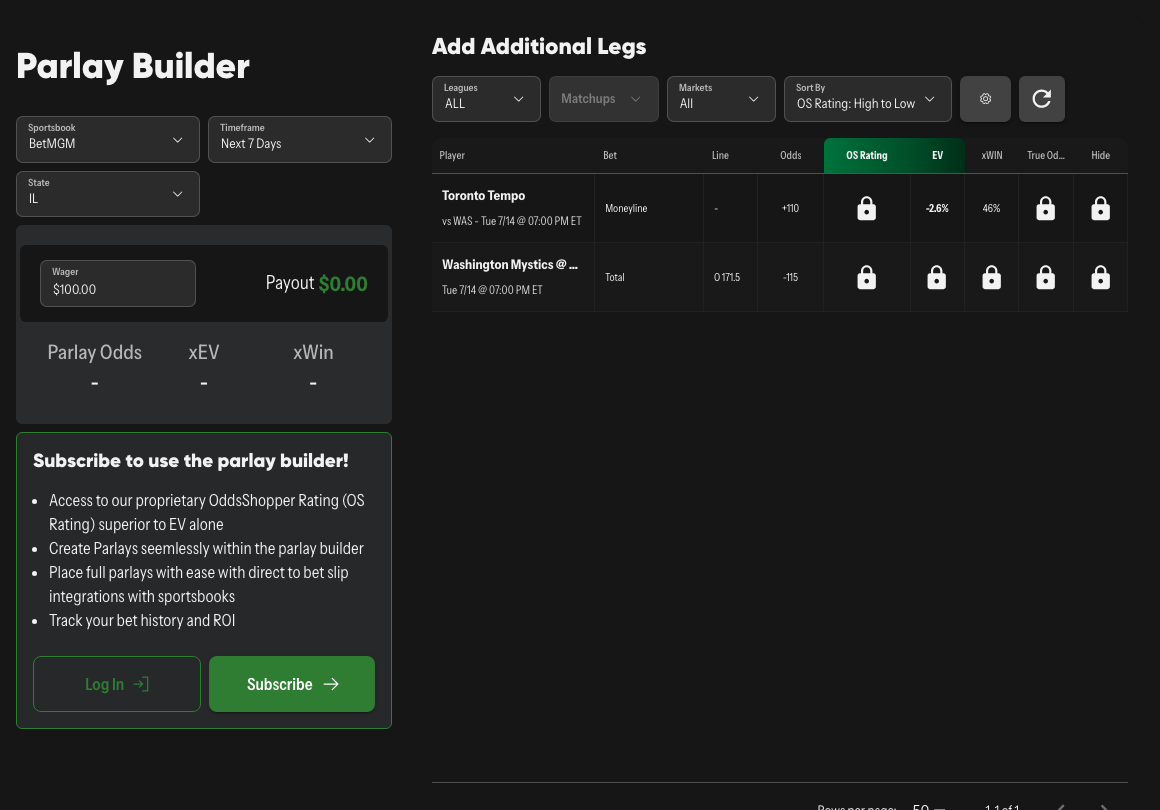
The OddsShopper Parlay Builder.
You are paying compounded vig for no reason. If you parlay a Chiefs spread, a Bills total, and a 49ers moneyline across three different games, those outcomes are independent. There is no relationship between them for you to exploit. You get nothing for combining them except a bigger number and a bigger built-in margin. You would keep more of your money betting each one straight and skipping the parlay entirely.
You are chasing the number, not the value. The reason a five-leg parlay pays roughly +2400 is that it is very unlikely to hit. A long price is not a discount, it is a warning. Parlaying several heavy favorites to manufacture a longer number is the classic version of this leak: three -300 favorites combine to only about +137, and it takes just one of them tripping to lose the whole ticket. If you want a plus-money payout, a single live underdog at +190 is the cleaner bet. If you like a dog, bet the dog. Round-robins are worth a caution here too: they are just automated batches of parlays, not a can't-lose cheat code, and which legs win still matters more than how many combinations you buy.
You added a leg you did not actually want. Every extra leg has to clear its own vig and its own probability. The moment you toss in a "why not" leg to bump the payout, you are adding a bet you would not have made on its own, and an unvetted leg like that usually drags the whole ticket's expected value down. That is how a two-leg opinion you believed in becomes a six-leg ticket you talked yourself into.
The through-line: the parlay did not lose because parlays are bad. It lost because the legs were not priced in your favor and the format compounded that against you.
The +EV Legs Rule (The Only Rule That Matters)
Forget "keep it to three legs to cut the house edge." That advice is only half right, and the wrong half is the part people remember.
Because a parlay multiplies the value of its legs, the math cares about the sign of each leg's value, not the count. A leg is +EV when the price you get is better than the true probability of the outcome. When you multiply +EV legs together, the edge compounds in your favor, the same way vig compounds against you.
A quick illustrative example. Say you find two NFL sides you believe are true coin flips, but you have shopped them and locked each at +120 instead of even money. Each leg is +EV on its own. Parlay them and the book pays +384 (2.2 times 2.2 in decimal). A fair, no-vig two-flip parlay would pay +300. You are getting +384 on something worth +300. The edge did not disappear when you parlayed. It compounded.
Now flip it. Add a third leg you have no read on, priced at -130 when it is really a coin flip. That leg is deeply -EV, and it drags the entire ticket underwater no matter how good the first two were. One bad leg poisons the parlay.
The rule in one linea leg that is not +EV as a straight bet does not belong in your parlay. Leg count is a variance choice; leg value is what decides whether the ticket makes money over time.
So the real NFL parlay strategy is not "fewer legs." It is: every leg must be a bet you would happily make on its own, at a price better than its true odds. If a leg is not +EV as a straight bet, it does not belong in your parlay. This is also why line shopping matters so much here. Getting +125 instead of +115 on a leg is free value, and inside a parlay that free value compounds along with everything else. Shopping like that takes accounts at more than one book, and our best NFL betting apps rankings cover which ones earn a spot.
Same-Game Parlays And The NFL Correlation Tax
The one legitimate reason to combine NFL bets into a single ticket is correlation, and that is what a same-game parlay is built for.
Outcomes inside one game are related. For example, if Patrick Mahomes throws for 320 yards, it is more likely Travis Kelce and the Chiefs' top receiver also cleared their receiving totals, because those yards came from the same passing game. If a heavy favorite covers a big spread, its team total going over is more likely, because covering by three scores usually means they put up points. If a team is trailing all afternoon, its running back's rushing total is less likely and its receivers' reception totals are more likely, because losing teams throw. That dynamic is game script, and in the NFL it drives almost everything.
A same-game parlay lets you bet those relationships as one wager. Bet Mahomes over his passing yards and Kelce over his receptions in the same game, and you are betting a single story: the Chiefs pass a lot and it works.
Here is where the books get you. They know those legs are correlated, so they do not let you multiply the raw independent odds. They apply a correlation adjustment, an SGP "tax," that shortens the payout to account for the fact that the legs tend to hit together. For positively correlated legs, a same-game parlay almost always pays less than the same legs would if you (impossibly) parlayed them as unrelated bets. The correlation you wanted to exploit is already priced into the ticket.
That does not make SGPs worthless. It makes them a pricing problem. The question is never "are these legs correlated" (of course they are, that is the point). The question is whether the book's correlation adjustment is smaller than the true correlation. When the book underprices how tightly two NFL outcomes move together, the SGP is +EV. When it overprices it (the usual case), the SGP is a tax you volunteered to pay. The exact same three-leg SGP can pay wildly different prices at different books, which tells you the "fair" price is fuzzy and worth shopping hard. Our full breakdown of that pricing gap lives in the same game parlay strategy guide.
Shop the SGP before you fire it.Because the correlation tax varies book to book, the same NFL same-game parlay can pay, say, +369 at one book and +580 at another. The OddsShopper Parlay Builder prices your parlay across the market so you take the lightest tax available, and code NFLPARLAY20 gets you 20% off OS Pro or OS Core.
When An NFL Parlay Is Actually Defensible
Parlays are not a mistake. Overusing them, and using them blindly, is. Here are the spots where an NFL parlay holds up.
Every leg is independently +EV. Start with the foundational case. If you have shopped each leg to the best number and each one is priced better than its true probability, parlaying them compounds real edge, and that combination is the only reason to build a cross-game parlay at all.
A boost or promo clears the vig. A profit boost can turn a parlay that was slightly negative into a +EV play, because it adds value on top of the price. The test is simple and strict: the boosted price has to beat the true odds. A boost does not make every parlay good, and it does not need the un-boosted version to already be good. It just has to push the final number past fair. Boosts are also one of the honest ways to beat the SGP correlation tax, because the added value can offset the adjustment the book baked in.
The common threadevery defensible parlay is defined by a price that beats fair, not by the size of the payout. If you cannot point to where the edge comes from, you do not have one.
You are converting a free bet or bonus. When a promo returns your winnings but not your stake, the math rewards longer odds, which makes +EV parlays a sensible way to squeeze the most value out of a free bet. You are not risking your own money, so the higher variance is fine.
You found a correlation the book underpriced. Here is the sharp SGP case. If you can name a specific NFL mechanism the correlation adjustment is missing (a run-heavy team's lead building both its running back's rushing total and its own team total, for example), and the book's SGP price does not fully reflect it, that ticket is defensible. "These feel related" is not enough. You need a reason the book got the relationship wrong.
In every one of these, notice what is doing the work: a price that beats fair, not the excitement of a big number.
How Many Legs, And How To Size Them
Even when your legs are +EV, more legs is not better. That is a variance point, not an EV point.
Each leg you add lowers the odds the whole ticket cashes. A two-leg parlay of strong +EV legs carries far less variance than a six-leg version, so it hits often enough to be a reasonable building block if you size it conservatively. A six-leg version of the same idea might carry more total edge on paper, but it will miss for long, ugly stretches, and most bankrolls cannot ride that variance without tilting. For steady building, keeping it to two legs is a discipline worth adopting: two bets you actually believe in, both priced in your favor, and nothing extra.
Size parlays smaller than your straight bets. The payout swings are bigger, so the stake should be smaller. And never chase a losing day with a parlay. Reaching for a five-leg longshot to "get it all back" is over-betting and higher variance at the exact moment you can least afford either.
Where Teasers Fit In
If your NFL parlay instinct is really about buying yourself a cushion on spreads, a teaser is often the smarter structure. A teaser lets you move multiple NFL point spreads in your favor in exchange for a lower payout, and when you move the numbers through the key values of 3 and 7 (the most common NFL margins of victory), a disciplined teaser can be defensible where a straight parlay of the same sides is not. A teaser is a different tool with different math, and it deserves its own treatment. Start with our NFL teaser betting guide before you tease anything, because the key-number logic is what makes or breaks it. Key numbers are also one of the sharpest contrasts between the pro and college games, a gap our college football vs. NFL betting guide breaks down.
Using OddsShopper To Build NFL Parlays The Right Way
Everything above comes down to two jobs: getting the best price on each leg, and knowing the fair price so you only parlay legs that beat it. Those are exactly what OddsShopper is built to do.
Tools for thisKalshi Parlay Simulator on Kalshi, or the Polymarket Combo Simulator for Polymarket's book.
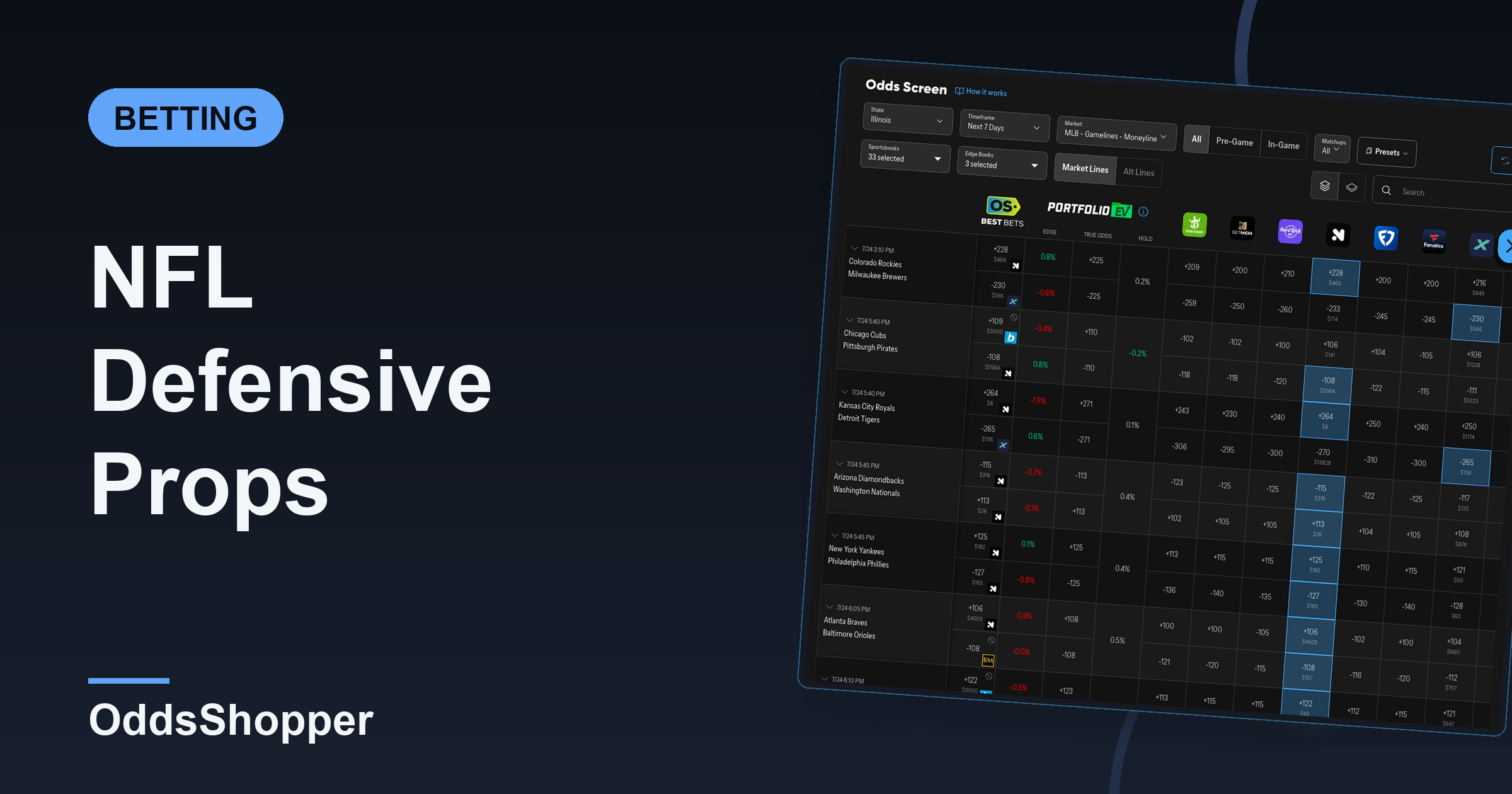
New to OddsShopper?Its odds comparison screen scans the market and shows the best available number on every NFL spread, total, and moneyline, plus the fair no-vig odds so you can see which legs are actually priced in your favor before you ever combine them. The Parlay Builder then lets you price a parlay or same-game parlay and shop it across books, so you can spot when one book's correlation tax is lighter than another's. Try it free for 7 days, and code NFLPARLAY20 takes 20% off OS Pro or OS Core if you subscribe.
The workflow is straightforward. Find your NFL legs, confirm each one beats the fair no-vig number on the odds screen, then use the Parlay Builder to combine and shop them. If the combined price still beats fair after the vig (or after a boost), you have a defensible parlay. If it does not, you just saved yourself from a bad ticket, which is its own kind of win. To run the payout, EV, and bonus-bet math on any of these tickets yourself, our NFL betting calculator guide walks every formula with worked NFL examples. And if your legs lean on player props, our guide to betting NFL props with projections covers how to price each prop leg before it goes in the ticket. One more shopping note: sportsbooks are no longer the only venue posting NFL prices, and our Kalshi vs. sportsbooks NFL breakdown shows when the exchange side of that comparison has the better number.
The Bottom Line
Naive NFL parlays lose because they compound the book's vig across unrelated legs and dress a low-probability outcome up as a big payout. The fix is not "fewer legs," it is better legs: every leg priced better than its true odds, shopped to the best number, and combined only when the math still beats fair. Same-game parlays are worth using when the book underprices the correlation you are betting, and a boost or free bet can push a marginal ticket over the line. Build them that way and a parlay stops being a lottery ticket and becomes another spot to press an edge.
Frequently Asked Questions
Are NFL Parlays Worth It?
They can be, but not the way most people bet them. A parlay of unrelated legs priced with vig is a bad bet, because the margin compounds against you. One built from legs that are each +EV (priced better than their true odds) compounds real edge in your favor. The format is fine. The leg selection is what decides whether it is worth it.
Why Do My NFL Parlays Keep Losing?
Usually because every leg carries the book's vig and adding legs compounds it, and because long-shot payouts reflect truly low probabilities. If your legs are not individually priced in your favor, no number of them will fix the math. Focus on getting +EV legs at the best price, and keep the leg count low so the ticket actually cashes sometimes.
What Is The NFL Same-Game Parlay Correlation Tax?
Same-game parlay legs from one NFL game are correlated (a quarterback's passing yards and his top receiver's yards move together, for example). Books know this, so instead of multiplying the raw odds they apply a correlation adjustment that shortens the payout. That adjustment is the "tax." An SGP is only +EV when the book's adjustment is smaller than the true correlation, which is why shopping the same SGP across books matters.
How Many Legs Should An NFL Parlay Have?
Fewer than you think. Every added leg lowers the chance the whole ticket hits, so even a parlay full of +EV legs gets harder to cash as it grows. Two strong, individually +EV legs is a solid discipline for steady bankroll building. Save the big multi-leg tickets for free bets, where a longer, higher-variance payout is exactly what the bonus math rewards and your own stake is not on the line.
Can A Boost Make An NFL Parlay +EV?
Yes, that is the point of a boost: it adds value on top of the price and can push a parlay that was slightly negative past fair. The rule is that the boosted price has to beat the true odds. A boost does not make a bad parlay good on its own, and it does not require the un-boosted version to already be good. Only the final, boosted number versus the fair number decides.
Bet responsibly. Even +EV parlays lose plenty in the short run, so bet within your means and expect losing stretches. If you or someone you know has a gambling problem, call 1-800-GAMBLER.
More on this: NFL Same Game Parlay Guide: Correlation Done Right · Golf Top 20 Parlay Odds: Scheffler Plus Two: Kalshi Odds · NFL 2026 on Kalshi: Every Board We Track · NFL Coach Of The Year Odds: Kalshi Fades A Two-Time Winner · NFL Picks Hub: Week 1 Odds, Win Totals, Props