Last updated: July 21, 2026
Search "expert gambling picks" and you land on a wall of confidence: 30-year handicappers, "biggest play of the year" pitches, and win streaks that look too clean to be real. Some of those experts really are sharp. Plenty are selling a record they would never let you audit. The difference between the two is not the size of the claim, it is whether the numbers behind it can be verified. This guide shows you how to tell them apart before you tail a single play.
In Summary
An expert gambling pick is a sports bet recommended by a handicapper, a person or service that studies a market and tells you what to bet and at what price. The pick is only as good as the record behind it, and most public records can't survive a close look: no sample size, no timeframe, deleted losses, and a promise of certainty that no honest bettor would ever make. To vet a handicapper, ignore the marketing and check five things: a third-party verified record, a real sample size, units and ROI stated with a date range, evidence the picks beat the closing line (CLV), and full transparency that shows the losers next to the winners. A good place to start is a marketplace that displays tracked expert results openly, like OddsShopper Expert Picks, which posts experts' plays with the price and offers a free tier so you can follow along before you ever pay.
What "Expert Gambling Picks" Actually Means
A handicapper is someone who analyzes a game or a market for a living and packages the conclusion as a pick: a side, a total, a prop, or a parlay, ideally with the price they got and the reasoning. "Expert gambling picks" — along with expert sports picks and expert betting picks — is simply the name for that product across sports betting, whether the sport is the NFL, NBA, MLB, college football, soccer, or UFC.
There is nothing wrong with following an expert. Most bettors don't have time to model every market, and a good handicapper does work you can't replicate at home. The problem is the industry around it. Selling picks is a high-margin business, and a confident sales page is far cheaper to produce than a real edge. So the market fills with operators who are excellent at marketing a record and have no record worth marketing. Your job as the buyer is to separate the two, and the tools to do that are simple once you know where to look.
Why Most Public Handicapper Records Can't Be Trusted
The headline number on a pick-seller's site is almost always the least reliable thing on the page. A "73% winner" or a "12-game heater" tells you nothing on its own, because the claim usually leaves out everything that would let you judge it:
- No Sample Size. Anyone can go 7-2 over a weekend. A coin can do it. Without hundreds of graded bets, a win rate is just statistical noise.
- No Timeframe. "63% lifetime" with no start date can quietly hide a great 2019 and three losing years since.
- Cherry-Picked Windows. Showing only the hot month, or only one sport's good stretch, is the oldest trick there is.
- Deleted Losers. If a service can quietly remove a pick after it loses, its record is fiction. You need a log that locks in every play at the moment it's posted.
- No Price. A pick without the odds it was graded at can't be evaluated. A 55% record on heavy favorites can still lose money; a 48% record on plus-money underdogs can win it.
This is exactly why the verification language matters more than the win rate. When a service says results are independently tracked, that is the claim to check first, because it is the only one that protects you from all of the above.
How To Vet A Handicapper: The Five-Point Checklist
Run any expert, free or paid, through these five questions. After watching pick sellers come and go, we keep coming back to the same short list, because the best sports handicappers welcome this scrutiny and the ones selling a story quietly fail it. If the answers aren't available, that is your answer.
1. Is The Record Third-Party Verified?
A self-reported record is a marketing asset. A verified record is one where the picks are time-stamped and graded by a neutral system the seller can't edit after the fact. Look for an open log or a leaderboard where every play is dated and locked before the games start. If the only proof is screenshots, treat the number as unproven.
2. Is The Sample Big Enough To Mean Anything?
Short-term results are mostly luck. A handful of winning days proves nothing, and even a sharp bettor running a real edge will sit through losing weeks. You want a record measured in hundreds of graded bets, not a highlight reel. The bigger the sample, the more the skill shows through the variance.
3. Are Units And ROI Shown With A Date Range?
Wins and losses alone hide the math. The honest way to report a record is in units (a unit is a fixed share of your bankroll, so results don't depend on bet size) and ROI (return on investment, the profit per dollar risked), both stamped with a start and end date. A hypothetical but well-formed claim — say, "up about 40 units at roughly +7% ROI from September 2025 to June 2026" — is one you can sanity-check. "Hottest capper in the country" is not.
4. Does The Process Beat The Closing Line?
The sharpest single tell of a real edge is closing line value, or CLV: did the pick get a better number than the price the market settled on at kickoff? If an expert consistently bets a team at +150 and the line closes at +130, the market moved toward their side, which is strong evidence the bet was priced in their favor when they made it. One caveat: CLV only means something in a liquid market the expert isn't moving themselves. An influencer whose own followers pile onto a thin, low-liquidity line can push the number after they post, creating artificial movement that isn't driven by sharp action, so it manufactures fake "value" rather than proving it. A handicapper who talks about CLV in a real market is describing a process; one who only points at last night's winner is describing a result. Closing line value is the metric that separates the two.
5. Is The Whole Record Visible, Losses Included?
Transparency is the cheapest trust signal an honest service can offer and the hardest one for a fraud to fake. The full record, with the losing bets sitting right next to the winners, tells you the operator isn't hiding anything. A page that shows only winners is telling you what it's hiding.
| What To Check | Green flag | Red flag |
|---|---|---|
| Record | Third-party verified, time-stamped log | Screenshots, "trust me," editable |
| Sample | Hundreds of graded bets | A hot weekend, no count |
| Reporting | Units + ROI with a date range | A bare win-rate percentage |
| Process | Talks CLV, prices, +EV | Only talks about last night's winner |
| Transparency | Losses shown next to wins | Winners-only highlight reel |
| Promises | "Aims to find value," hedged | Promises of certainty, ironclad "winners" |
The one-line testbefore you follow any expert, ask "can I see every pick they've made, dated and graded, including the losers?" If the answer is no, you're buying marketing, not an edge.
Red Flags That Signal A Pick Seller To Avoid
Some patterns are reliable enough to be deal-breakers on their own. If you see these, close the tab:
- Promises Of Certainty. Any claim that a play simply cannot miss, or a "profit or your money back" pledge on the bet itself. No honest handicapper promises a result, because lines move, books void bets, and variance is real. Certainty is a sales tactic, not a betting reality.
- The "Biggest Play Of The Year" Pitch. Urgency language built to make you bet big and fast: the can't-miss play of the day, the game of the year, the max-confidence card. Confidence is fine; pressure is a tell.
- Secret Or "Insider" Information. Claims of inside info on injuries or fixed outcomes are either fabricated or describe something illegal. Real edges come from pricing and modeling, not whispers.
- Win Rates With No Math Behind Them. A percentage with no sample, no dates, and no prices is a number chosen to impress, not to inform.
- Pressure To Buy The Expensive Package. If the pitch is more polished than the proof, the product is the pitch.
Many sites that sell picks lean on at least one of these tactics. Knowing the patterns means you can read those pages with the right amount of skepticism instead of taking the headline at face value.
Free Vs Paid Expert Picks: What You're Actually Paying For
Both free and paid picks exist for a reason, and the vetting rules don't change between them.
Free picks are usually a sample of an expert's work, offered to show you the process and earn your trust. The value is real, but the incentive is to show their best foot forward, so the same record-checking applies. A free pick with a transparent, tracked history behind it is easier to evaluate than a paid pick with none.
Paid picks should buy you two things: consistent access to an expert's full card, and a record transparent and large enough to evaluate over a meaningful sample. If a paid service can't show you the second part, you're paying for confidence rather than an edge. Here is the concrete rule I use: don't pay until you've watched at least 50 to 100 of that expert's graded plays in the sport you actually bet — enough of a sample that a tracked win rate reflects a repeatable process instead of a hot week. Start with the free plays, let that many results accumulate, confirm the tracked record holds up, and only then consider paying for the rest.
The order that protects youfree play first, verify the tracked record, pay only once the history holds up to scrutiny. Reverse that order and you're paying for the marketing.
For a deeper look at sourcing free plays specifically, see our companion guide on free sports betting picks.
Where To Find Verified, Tracked Expert Picks
The fix for the whole vetting problem is to start somewhere the record is open by default, so verified sports picks and tracked betting records are the norm rather than something you have to demand. OddsShopper Expert Picks is a marketplace where experts' plays are posted with the price and tracked over time, so you can read a handicapper's history the way this guide describes instead of taking a marketing page's word for it. Plays are logged, the records are shown openly, and you can follow an expert across the sports they cover.
It also has a free expert picks tier, a low-pressure way to put everything above into practice: pick an expert, follow their free plays, watch the record build in real time, and decide for yourself whether the process holds up before you ever commit money to it.
Start free and verify for yourself.Browse the experts at OddsShopper Expert Picks, follow a free play, and judge the handicapper on a tracked record you can actually see, not a number on a sales page.
How To Use An Expert Pick The Smart Way
Vetting the expert is half the job. Getting full value from a good pick is the other half, and it comes down to three habits that work no matter who you follow.
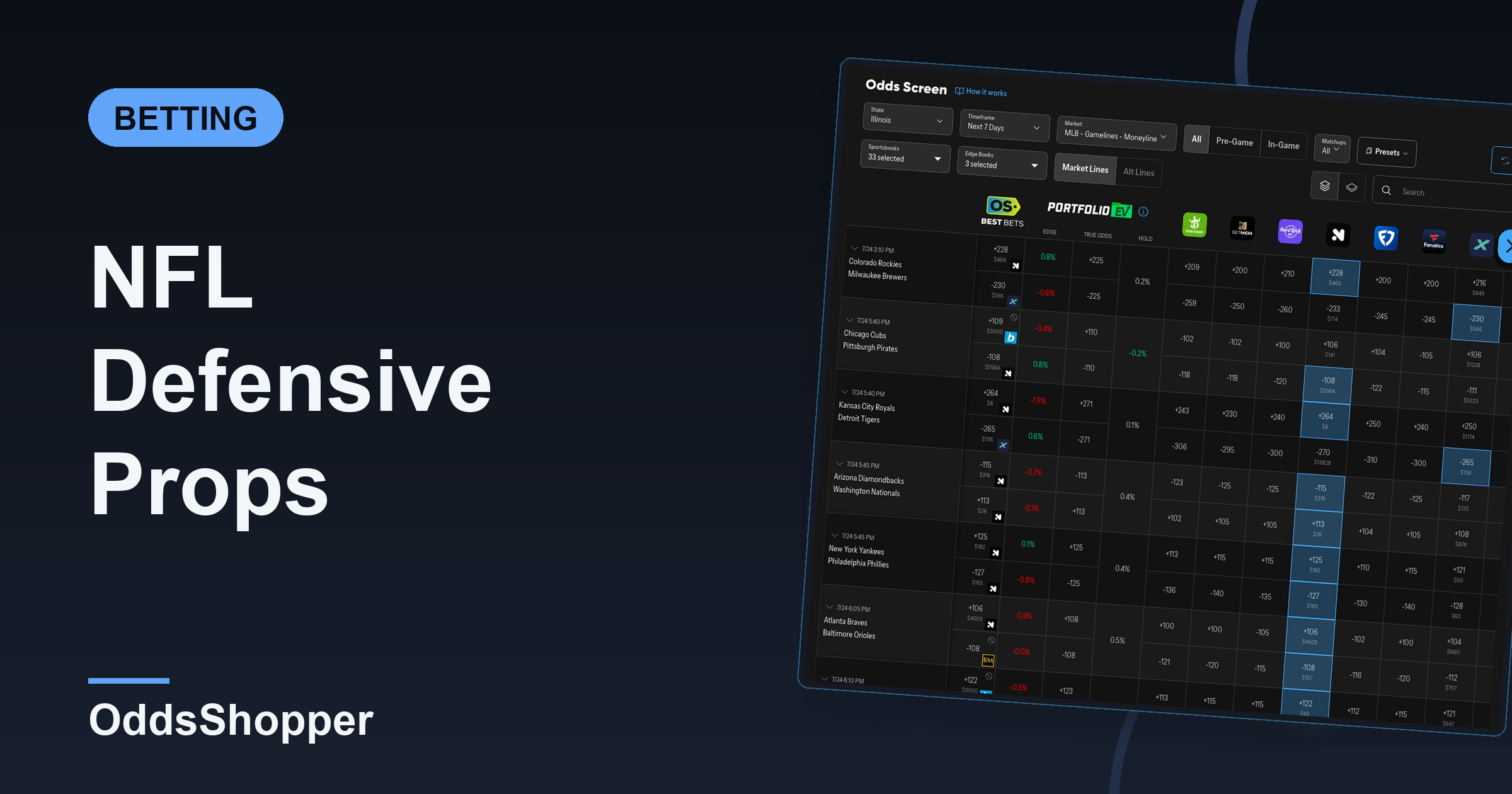
Shop the number. A pick is a side and a price, and the price is half of it. If an expert recommends a team at +150, two minutes of line shopping might find +160 somewhere else, and that better number is free expected value. You can compare prices across books fast on the OddsShopper MLB odds screen, and switch to your sport from there, before you place anything.
Confirm it's still priced in your favor. Lines move. A pick that was a great number when it was posted can be a bad one an hour later. The whole point is to bet plays that are positive expected value, priced better than their true probability, so check the current number before you fire, not just the one the expert quoted.
Size it to your bankroll, not your excitement. Even a strong pick from a verified expert loses plenty of the time, because that's how probability works. Flat, disciplined bankroll management is what keeps a losing week from becoming a blown account. Never stake more on a "can't-miss" play than you would on any other; that kind of certainty is exactly the language you learned to distrust above.
FAQ
What are expert gambling picks? They are sports bets recommended by a handicapper, a person or service that analyzes a market and tells you what to bet and at what price. The recommendation usually includes a side or total, the odds, and the reasoning. The pick is only as useful as the verifiable record behind the person making it.
How do I know if a sports handicapper is legit? Check for a third-party verified record, a large sample of graded bets, units and ROI reported with a date range, evidence of closing line value, and full transparency that shows losses alongside wins. If a handicapper can't or won't show those, treat the advertised win rate as unproven.
Can a handicapper promise a winning pick? No. No honest handicapper will promise a result, because lines move, sportsbooks can void bets, and short-term variance is unavoidable. A promise of certainty is a marketing claim, not a betting outcome, and it is one of the clearest reasons to avoid a service.
Should I pay for expert picks? Only after you've verified the record. Start with an expert's free plays, confirm their tracked history holds up over a real sample, and pay only if you'd have profited following that record. Paying for picks with no verifiable history is buying confidence, not an edge.
What is a unit in betting picks? A unit is a fixed share of your bankroll, often 1%, used so a record can be reported without depending on bet size. "Up 40 units" means 40 times that base stake in profit, which lets you compare handicappers fairly regardless of how big they bet.
The Bottom Line
Expert gambling picks can be a real edge or an expensive way to feel confident, and the deciding factor is never how loud the marketing is. It is whether the record behind the pick is real: verified, large enough to matter, reported with units and dates, backed by a process that beats the closing line, and transparent enough to show the losses. Learn to ask for those five things and the entire field of pick sellers sorts itself out quickly. Start where the records are already open, follow a free play at OddsShopper Expert Picks, and let a tracked record, not a sales pitch, earn your action.
More on this: Are Prediction Markets Dangerous Gambling? Why They Feel Smarter Than A Bet · Is Kalshi Gambling? The Legal Answer And The Honest One · Best +EV Bet Tracker: What To Look For (And What Most Skip) · Closing Line Value Vs. Variance: Your P&L Is Lying To You · Devig Calculator: Find Fair No-Vig Odds From -110 Prices