A college football win total is the season-long over/under on how many regular-season games a team wins, and it is one of the softest markets a bettor can attack. There are more than 130 FBS teams across the sport, and few books price every one of those season-win numbers as tightly as they price a single NFL Sunday. That gap is where a patient college football bettor can find value. This guide covers how the CFB win-total market actually works and the repeatable ways to find an edge in it, from schedule strength to returning production to the overreactions the market bakes in every August.
What A College Football Win Total Is
Think of a win total as a futures market. The book posts a number for a team's regular-season wins, usually as a half-win line so there is no push, and you bet whether the real total finishes over or under it. If a team is set at 6.5 wins, the over cashes at seven or more and the under cashes at six or fewer.
Two things separate win totals from a normal Saturday game line. First, they carry vig like any market, and that vig is often heavier on the over, because the public loves backing a team it likes to have a big year. Second, your money is tied up for months. A win total does not settle until the regular season ends, so you are trusting the book to hold the ticket into late November or December before it grades. That long settlement window is a real cost worth pricing into any futures bet.
Why Win Totals Are The Softest Market In College Football
One reason win totals are less efficient is scale. A sportsbook can sharpen the dozen-plus games on an NFL Sunday to the half-point. It cannot do that for 130-plus FBS teams, each with a full-season number that depends on roughly a dozen separate game projections. The Group of Five numbers in particular tend to get less attention than a blue-blood's, and that is exactly where mispriced totals survive.
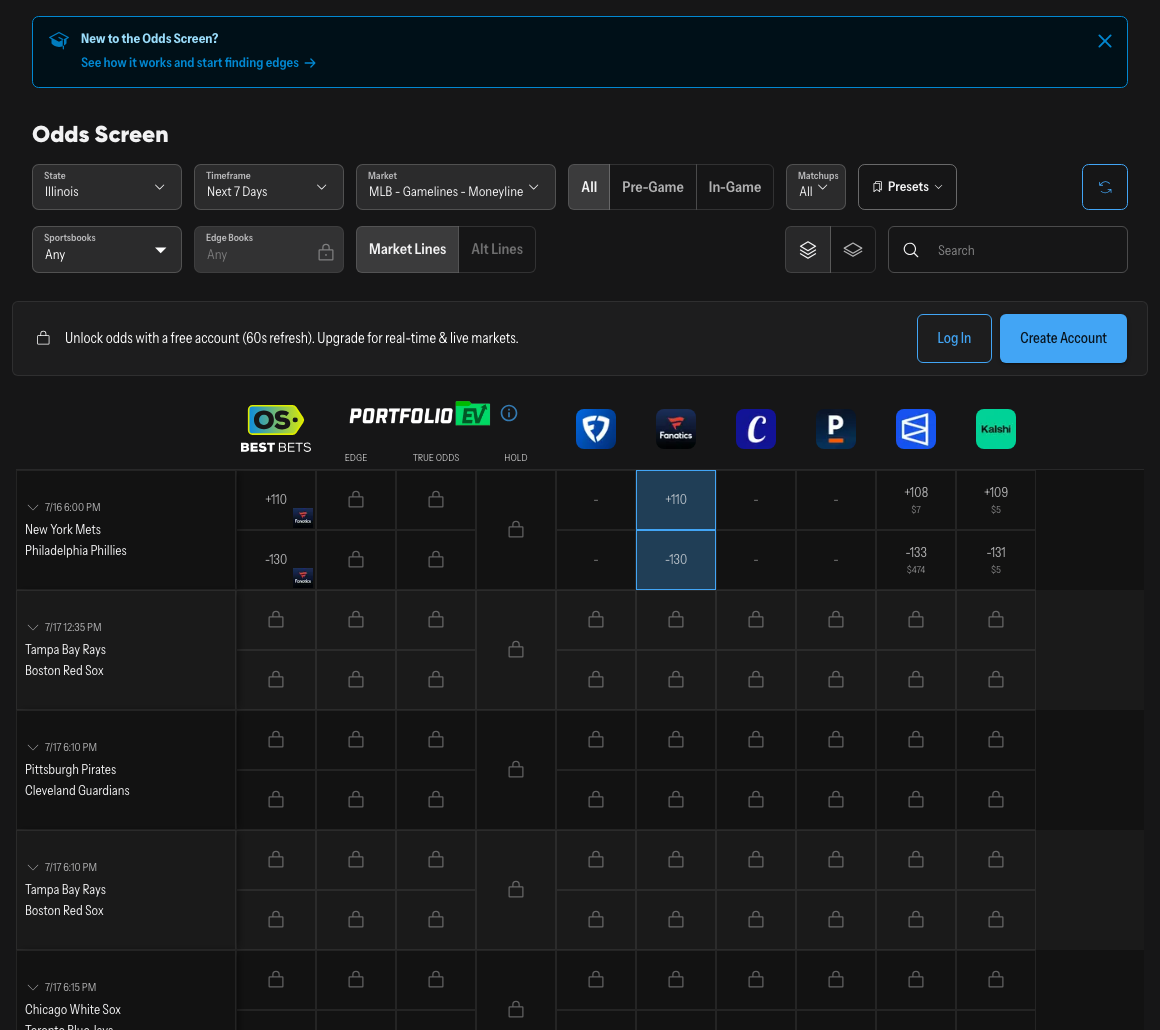
The OddsShopper Odds Screen.
The books know these markets are soft, which is why they defend them with small limits. A low maximum bet is a tell: it often means the number is not battle-tested, and the shop wants to see where the money goes before it moves. Preseason and early futures get posted before the book can sharpen them fully, so the operator protects itself with low limits rather than a razor-sharp price. That is often when the number lags real schedule, roster, and coaching changes.
| NFL win totals | College football win totals | |
|---|---|---|
| Teams Priced | 32 | 130+ FBS |
| Market Efficiency | Very tight | Softer, especially Group of Five |
| Typical Limits | Higher | Low (a soft-market tell) |
| Where The Edge Lives | Rare | Schedule and roster gaps the number misses |
One caution: soft does not mean "just fade the public." Blind contrarian betting is a dead edge in modern markets. The number is beatable because it is less efficient, but your job is still to find the specific gap between the posted total and a realistic season, not to reflexively bet against whichever side is popular.
Read The Schedule First
The path to a win total runs straight through the schedule, so that is where the read starts. Most of a team's 12 games are close to decided before kickoff, and they barely move the number. The season is decided by the handful of near-coin-flip games in the middle, and finding the total means projecting those.
Work through the schedule and sort it: the clear wins, the clear losses, and the toss-ups. A power program's non-conference tune-ups tend to be heavy-favorite wins, and a road trip to a top-five opponent is usually a loss. Those games barely move the number. Then weigh the context that swings the toss-ups. Home and road splits matter more in college football than almost anywhere. Bye-week placement, back-to-back road trips, and a brutal three-game stretch can quietly cost a win. A roster can return every starter and still miss its over if the schedule is a gauntlet, and a mediocre team can clear a soft number on a friendly draw. Check each game's price on the college football odds screen so you are pricing the real path game by game, not last year's reputation.
New to OddsShopper?It scans 100+ sportsbooks and flags the numbers priced in your favor, the same line-shopping and value read this guide teaches, done automatically. Try it free for 7 days, and code CFBWINS20 takes 20% off OS Pro or OS Core if you subscribe.
Study One Conference Instead Of All 130 Teams
Here is the move that turns the breadth of college football into your edge rather than the book's. There are more than 130 FBS teams and nobody can know them all, so the sharpest win-total bettors specialize. They pick one conference and learn it top to bottom: every roster, every coaching change, every quarterback battle, every soft or brutal spot on each schedule.
That specialization pays off because most of a team's schedule is played inside its own league. A Power Four team plays eight or nine conference games out of 12, so the majority of any win total is decided by matchups against opponents in the same conference. If you already have a read on all of those opponents, you are projecting the biggest chunk of the number from real knowledge instead of a reputation you half-remember.
Working conference by conference also gives you a built-in accuracy check the single-team bettor never gets. Every conference win is another conference team's loss, so the league's conference wins and losses have to balance. When you project win totals for a whole conference at once, your numbers have to reconcile against each other. If the market's implied conference wins across the league add up to more games than the schedule actually contains, some of those overs are priced too high, and your league-wide model tells you which ones. Studying one conference until you know it cold is how you find that mispricing before the market does.
The conference edge in one lineevery conference game is a zero-sum result, so projecting a whole league at once forces your win totals to reconcile against one another. That is a consistency check a single-team bettor never gets, and it flags the overs the market has priced too high.
Returning Production Is The Best Preseason Signal
Returning production is the first input to check: how much of last year's snaps, yards, and tackles a team brings back. Continuity wins in college football, and it wins most at quarterback and along the offensive line. A team returning a veteran quarterback behind an experienced line tends to hold or beat its prior season; one replacing both at once tends to take a step back, even with the same coach.
The transfer portal complicates the old version of this signal, which is what creates the edges now. A team can lose a chunk of last year's production and reload it through the portal in a single offseason, and the win total does not always keep up with how much the roster actually changed. A coaching change resets everything, and the market often prices that reset with lag: a proven Group of Five winner taking over a program that just cleaned house is the classic spot where the number still reflects last year's roster instead of this year's.
Fade The Market's Overreactions, Carefully
Win totals over-anchor to last season's record and the offseason narrative, and that is a recurring, mechanical source of value.
- A Team That Overachieved Gets An Inflated Total. Records in one-score games tend to regress toward the mean year to year. A program that went 10-2 by winning six games decided in the final minutes is priced like a 10-win team, but the underlying performance says it was closer to a seven- or eight-win team that got the bounces. The market sells you last year's luck at a premium.
- A Collapsed Team Gets A Suppressed Total. The same regression runs the other way. A roster that lost a pile of close games, or cleaned house and rebuilt through the portal, is often still priced like the wreckage that got the old staff fired.
- Brand And Hype Inflate Overs. A national name draws public money onto its over regardless of the roster, and that money, stacked on top of the natural over-vig, pushes the number past fair.
The discipline is to quantify the gap rather than bet the narrative. An overreaction is only an edge if your own projection of the schedule lands a full win or more off the posted number.
Build Your Own Number: A Worked Example
Everything above rolls into one repeatable process, and it is the process our team runs on every win total we bet: build your own number, then bet only when it disagrees with the market. Go through the schedule game by game and assign each a simple lean, a clear win, a clear loss, or a toss-up, and give the toss-ups a rough win probability. Add it up. That expected-wins figure is your number, and the bet is the gap between it and the posted total.
Here is what that looks like on a generic power-conference team with a favorable draw:
| Bucket | Games | Expected wins |
|---|---|---|
| Clear Wins (Soft Non-Conference And Weak League Games) | 6 | ~5.4 |
| Toss-Ups (Near Coin-Flip Conference Games) | 3 | ~1.5 |
| Clear Losses (Ranked Or Heavy-Favorite Opponents) | 3 | ~0.4 |
| Your Projected Total | ~7.3 |
If your process lands at 7.3 and the book hangs the total at 6.5, the over has value. Project five against a number of 7.5 and the under does. Building a number keeps you honest: it turns "I think they'll be good" into a defined edge you can size and shop, and it stops you from betting a team you like at a price that already reflects the good season.
Shop The Number And Respect The Juice
Win totals move book to book more than almost any market, and half a win is enormous on a season total. For example, one shop might hang 7.5 at -140 while another sits at 6.5 (+120). Those are different bets entirely, and the reader who does not compare is leaving real edge on the table. Check the number across DraftKings 🎁, FanDuel 🎁, BetMGM 🎁, and Caesars before you fire, and remember that the over often carries the heavier vig, so an over needs a bigger projected gap to be worth the price than an under does.
Two more practical notes. Because limits are low, the sharpest numbers get bet early and move, so a soft total you like is usually best attacked sooner rather than later. Bet a soft number before the market corrects and you will often watch it move toward your side, which is closing line value, the clearest sign you were on the right number rather than just the right result. And most books grade win totals on regular-season games only, excluding the conference championship, bowls, and the playoff, so always read the book's grading rules before you assume a December run counts.
The bottom line on pricethe same team's win total is a bet at one number and a pass at another, so shop it every time. Compare the futures number and the juice across every book you can bet, lean on the de-vigged fair price to judge which side has value, and use OddsShopper's NCAAF odds screen to price the game-by-game path behind your projection.
2026 Team Win Totals, By Conference
Put the method above to work. These are our live 2026 team win-total breakdowns, grouped by conference; each one sorts the schedule, weighs the returning production, and builds the case for both sides of the number.
SEC
Every number in one place: SEC Win Totals 2026: Every Number, Ranked
- Alabama Over 8.5 Wins: Our Pick
- Arkansas Win Total 2026
- Auburn Win Total 2026
- Florida Win Total 2026
- Kentucky Win Total 2026
- Missouri Win Total 2026
- Oklahoma Win Total 2026
- Ole Miss Win Total 2026
- Tennessee Win Total 2026
- Texas A&M Win Total 2026
- Texas Win Total 2026
Big Ten
Every number in one place: Big Ten Win Totals 2026: Every Number, Ranked
- Iowa Win Total 2026
- Michigan State Win Total 2026
- Michigan Win Total 2026
- Minnesota Win Total 2026
- Nebraska Win Total 2026
- Ohio State Win Total 2026
- Oregon Win Total 2026
- Penn State Win Total 2026
- USC Win Total 2026
- Washington Win Total 2026
- Wisconsin Win Total 2026
Big 12
- Arizona Win Total 2026
- Baylor Win Total 2026
- Colorado Win Total 2026
- Kansas State Win Total 2026
- Kansas Win Total 2026
- Oklahoma State Win Total 2026
- TCU Win Total 2026
- Texas Tech Win Total 2026
- Utah Win Total 2026
- West Virginia Win Total 2026
ACC
- Clemson Win Total 2026
- Florida State Win Total 2026
- Louisville Win Total 2026
- North Carolina Win Total 2026
- Pittsburgh Win Total 2026
- Virginia Tech Over 6.5 Wins: Our Pick
- Virginia Tech Win Total 2026
More team pages go live as the books post their numbers, and this index grows with them. Price the game-by-game path behind any total on the NCAAF odds screen.
College Football Win Totals FAQ
What is a college football win total? A win total is a season-long over/under on how many regular-season games a team wins. The book posts a half-win number, such as 8.5, and you bet whether the team finishes over or under it. Because it settles as a futures bet, your money stays tied up until the regular season ends.
Are college football win totals a good bet? They can be, because the market is softer than NFL or main game lines. With 130-plus FBS teams to price, books cannot sharpen every number, and the Group of Five totals in particular are where mispriced lines survive. Value comes from projecting the schedule and roster more carefully than the posted number does.
When should you bet college football win totals? Usually earlier rather than later. Limits are low, so the numbers you like tend to get bet and move as the offseason goes on. If your projection is a clear win or more off the posted total and the price is fair, that is the spot, and shopping for the best number matters more the longer you wait.
How do you find value in college football win totals? Build your own number game by game, weigh returning production and the schedule, and look for spots where the market is over-anchored to last year's record or a hype narrative. Bet only when your projection disagrees with the posted total by a meaningful margin, and take the best price across books.
Should you focus on one conference? For most bettors, yes. With 130-plus FBS teams no one can know them all, and eight or nine of a Power Four team's 12 games are inside its own conference. Learn one league top to bottom and you are projecting the majority of every win total in it from real knowledge, with a built-in check: the conference's wins and losses have to balance, which exposes totals that cannot all be right.
The Bottom Line
College football win totals are soft for a simple reason: no book can price 130-plus season-long numbers as tightly as it prices a handful of NFL games. The edge is not a secret angle. It is a process. Pick a conference and learn it cold, read the schedule, weigh returning production, respect that last year's record and the offseason hype distort the number, build your own total, and then shop for the best price on the side your projection likes. Do that, and you are betting the gap between the number and reality instead of the storyline.
New to OddsShopper? It compares college football odds across 100+ sportsbooks and flags the bets priced in your favor, the same value read this guide walks through. Try it free for 7 days, and code CFBWINS20 takes 20% off OS Pro or OS Core if you subscribe.
Betting involves risk. Bet responsibly, only what you can afford to lose, and know that no edge wins every ticket. 21+ where legal.
More on this: College Football Week 2 Predictions: The Machines Won't Take Texas · College Football Playoff Semifinal Odds: The Screen Lies · How To Bet College Football On Kalshi: Markets & Value · NFL Win Totals 2026: Kalshi Vs DraftKings Vs FanDuel Split · NBA Win Totals 2026-27: Thunder and Spurs Near 60 on Kalshi