In Summary (TL;DR)
The market is asking whether a 3-9 college football team can win seven games in year one of a brand-new staff, and I think it can. The Virginia Tech win total for 2026 sits at 6.5 regular-season wins (the Hokies' college football over/under), and I am on the Over at -150. James Franklin took over in Blacksburg and brought a chunk of his Penn State pipeline with him through the transfer portal, the schedule hands the Hokies a soft opening to bank early wins, and the back half is hard but not a wall. You are laying juice here, but a clear path to seven-plus wins is worth the price.
Best betVirginia Tech Over 6.5 regular-season wins, -150. Two winnable games to open the season plus a roster upgrade through the portal gets the Hokies most of the way to seven, and seven cashes the ticket.
The Bet: Virginia Tech Over 6.5 Regular-Season Wins (-150)
A season win total is a futures over/under on how many regular-season games a team wins. At 6.5, the Over needs Virginia Tech to win seven of its 12 games. The Under is betting on a sub-.500 finish in a season where almost everything about the program changed.
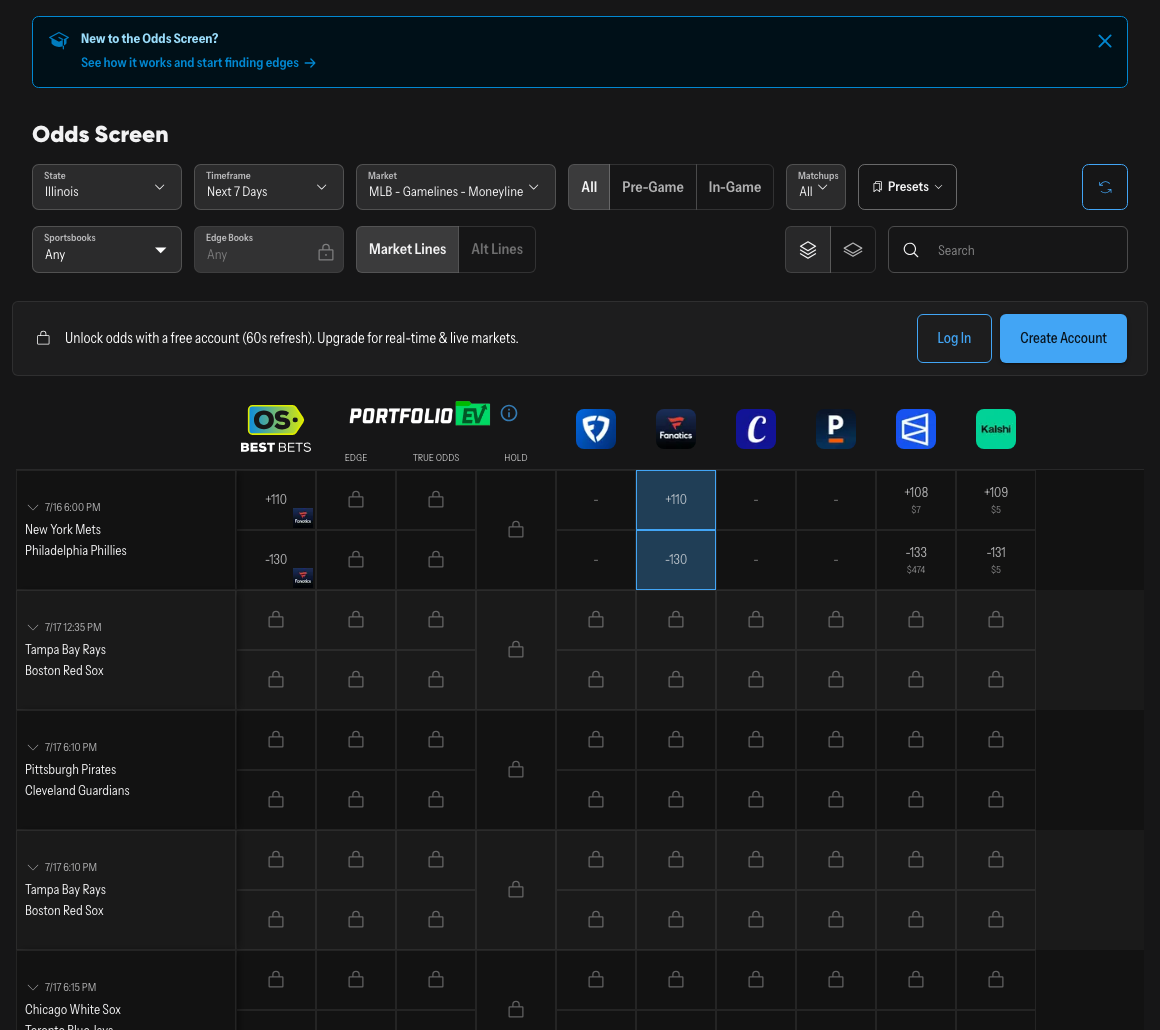
The OddsShopper Odds Screen.
At -150, the book is implying roughly a 60% chance the Hokies clear seven wins. I treat that the same way I treat any implied-probability read: the question is not "will Virginia Tech be good," it is "is seven wins priced correctly." Given the coaching upgrade and the shape of this schedule, 60% reads light to me, and that is where the edge sits.
A New Staff, Rebuilt Through The Portal
The single biggest reason this number is beatable is the thing that does not show up in last year's record: the program got a real upgrade at the top. Virginia Tech moved on after a 3-9 campaign and hired James Franklin, who arrives from Penn State with a long track record of bowl teams and, just as importantly, a recruiting and portal network that follows him. This was not a bargain-bin hire either: the Hokies handed Franklin a five-year deal worth roughly $41.7 million, which is a program telling you exactly how seriously it takes the rebuild.
That last part matters more than the name on the headset. Franklin did not show up alone. He brought key contributors with him from Penn State through the transfer portal, which is the fastest way to raise a roster's floor in modern college football. A first-year coach inheriting a bare cupboard is a projection problem. A first-year coach importing proven talent into the lineup is a team that can win games it would have lost the year before. The Under is essentially a bet that none of that translates in year one, and that is a strong assumption to make against this kind of staff turnover.
The Schedule: Easy Start, Tough Finish
Win totals live and die on the schedule, so break the Hokies' 12 games into the buckets that actually decide the bet.
| Stretch | The read |
|---|---|
| Opening Two Games (VMI, Old Dominion) | Soft, both at home. The realistic baseline is 2-0 out of the gate. |
| The Middle Of The Schedule | The bankable wins. Most of the path to seven hides here. |
| The Closing Stretch | The teeth. Dates with the likes of Clemson, SMU, Miami, and rival Virginia bunched into the closing weeks. |
The value starts with the opening two games, home dates against FCS VMI and Sun Belt Old Dominion that set up as very winnable. Banking two wins before the schedule sharpens is exactly what an Over ticket wants, because it turns "win seven of 12" into "win five of the last ten." That is a far more comfortable ask for a roster with portal reinforcements.
The back end is where the bears live, and they are not wrong to point at it. The closing run is a real gauntlet, with a cluster of ranked-caliber ACC opponents like Clemson and the in-state rivalry game bunched into the closing stretch. But the Over does not need Virginia Tech to win those. It needs the Hokies to take care of the games they should win and steal a couple in the middle, then split or sneak one late. Seven out of 12 leaves room to lose every one of those marquee dates and still cash, as long as the winnable games get won.
Why -150 Is Still Value
Here is the honest part: you are laying -150, and that is real juice on a team coming off three wins. Plenty of bettors will see a minus number on the Over and assume the value is gone.
I do not read it that way. The -150 is pricing last year's 3-9 record more than it is pricing this year's roster and staff. The market has not fully repriced the Franklin hire and the portal additions, partly because win totals are at their softest this early, before camp reports and depth-chart news sharpen the line. You are paying up, but you are paying up on a team whose true win expectation moved well past where it sat a season ago.
Laying -150 is fine when the number under the juice is wrong. The Hokies' win expectation jumped with the coaching and roster overhaul, and the price has not fully caught up. That lag is the bet.
The math backs the patience. -150 needs the Over to hit about 60% of the time. If you believe a Franklin-led roster with a soft opening clears seven wins more often than that, the Over is a +EV play, and the cheaper you can find it, the bigger that edge gets.
The Honest Bear Case
Backing a side does not mean pretending it cannot lose. Size the risk before you fire.
- Year-One Transitions Are Bumpy. New scheme, new staff, and a portal-heavy roster can take time to gel. A slow September would put pressure on the back half immediately.
- The Closing Stretch Is Brutal. If the Hokies are sitting at five or six wins entering that Clemson-SMU-Miami-Virginia gauntlet, the Over could come down to stealing one game they are not favored in.
- Quarterback And Injury Variance can drag any team toward the Under in a hurry, and a first-year roster has less proven depth to absorb it.
None of that flips the bet. It means the Over wants the soft opening to hold and the Hokies to bank the winnable middle games rather than leaning on upsets late. I think this team does that more often than 60% of the time, which is the entire point.
How To Bet The Virginia Tech Win Total The Smart Way
Price matters as much as the pick on a futures bet. -150 is the Over number I am working off, but win totals move and they differ book to book. The same Over 6.5 might be -150 at one shop and -135 at another, and on a futures ticket that gap compounds over a full season. Take the cheapest version of the exact bet you want, which is line shopping applied to a futures market. That is exactly what the tool surfaces: OddsShopper's odds comparison screen lines up every book's price side by side, so grabbing the best number is one glance instead of ten open tabs. Apply the same habit to this futures ticket and take the best Over 6.5 across the books that post it, rather than settling for the first shop you open. This is also just one CFB spoke of a bigger board — the full college football win totals hub prices every team's number the same way, and it is the fastest way to see where the Hokies' number sits against the market.
There is a timing layer under the price, too. Win totals are at their softest right now, before camp reports and depth-chart news move the line, and I expect this specific number to keep climbing as the market reprices the Franklin hire through the summer. Betting the Over today is really a bet on closing line value: if 6.5 (-150) drifts toward a higher total or shorter juice by September, you already have the best of it, and CLV is the scoreboard that tells you a bet was good regardless of how one season breaks. Chasing the Over after the market sharpens toward it is how you hand that edge back. If a price like -150 does not immediately tell you the break-even probability, the reading betting odds primer covers the conversion.
Want the picks, not just the framework?Ben Rasa posts his full board on Tails, with the reasoning behind every play, so you can see exactly why each number is worth backing and tail the ones you like. Follow Ben Rasa on Tails. New to Tails? Code EAGLE15 takes 15% off your first week or month.
From One Futures Ticket To A Full Card
The Virginia Tech Over is one August ticket you place and then cannot touch until December, sweating every Hokies box score in between. That is the nature of a futures bet, and it is exactly why I do not stop at the win total. Once you have the Over booked at the best number, the same read that made it a play — a repriced roster the market has not caught up to — shows up again every Saturday in the Hokies' weekly spread and totals, and in the same soft-line spots across the rest of the ACC.
Following a card beats holding a single ticket. You get the reasoning behind each number, you can re-shop Virginia Tech's line as camp reports and depth-chart news move it, and you stay in live, winnable spots all season instead of staring at one futures bet from preseason to bowl season.
The Bottom Line
Virginia Tech Over 6.5 regular-season wins at -150 is my best bet on this number. A James Franklin staff with Penn State portal reinforcements, a soft opening to bank early wins, and a total that only asks for seven of 12 add up to a team that should clear the number more often than the price implies. Yes, you are laying juice, but the -150 is still pricing the old Virginia Tech. Shop for the best version of the Over, then take it.