The Quick Answer
A winning NFL betting strategy is five habits, not five hundred picks: get your spread on the right side of the key numbers 3 and 7, bet favorites early in the week and underdogs late, shop every line for the best price (the same bet at a better number is free expected value), hunt your real edges in the softer player-prop markets, and grade yourself on closing line value instead of last week's record. The full framework is below, including the exact teaser and parlay rules our team follows and the seven traps that bleed most bettors dry.
Most NFL bettors lose for a boring reason: they bet the right team at the wrong number. The pick can be sharp, the read on the game can be correct, and the ticket still grades out as a long-term loser because the price was half a point off, or a full dime of juice worse than the book down the street. NFL betting is a market, and the season-long winners treat it like one. This NFL betting strategy is the framework our team leans on to bet pro football: where the real edges live, when to fire, and how to stop handing the sportsbook free equity every week.
None of this requires a model or a math degree. It requires a repeatable process and a willingness to shop, wait, and pass. Let's build it.
Key Numbers Are The Foundation Of NFL Betting
Football is scored in 3s and 7s, so NFL margins of victory cluster on a handful of numbers far more than in any other sport. That clustering is the single most important concept in NFL spread betting, because a spread on the wrong side of a key number is a different bet than one on the right side, even when it looks like a coin flip.
The order that matters:
| Rank | Key number | Why it matters |
|---|---|---|
| 1 | 3 | The most common final margin in the NFL (the field goal). |
| 2 | 7 | Second most common (the touchdown). |
| 3 | 6 | Secondary key (missed extra point, two field goals). |
| 4 | 10 and 14 | The next tier of recurring multi-score margins. |
Getting your spread on the right side of 3 and 7 gates almost every side bet. Backing a favorite at -2.5 is meaningfully better than -3, because -2.5 wins the game that lands on a field goal while -3 pushes it. Taking a home dog at +7.5 or +7 instead of +6.5 is the same idea in reverse: the extra half point captures the exact margins the sport produces most often.
That is also why buying a half point is only worth it when it crosses 3 or 7, and only at cheap juice, roughly 10 cents (moving a -110 price to about -120). Buying off numbers that don't cross a key margin is a trap. Books rake those alternate lines aggressively because they know most bettors overpay for points that rarely decide the bet. They also know exactly what the half point around 3 is worth, and most weeks they charge more than 10 cents for it, so the cheap buy is a pounce-when-you-see-it exception, not a weekly routine. When the price isn't there, pass. For the full margin distribution and the math behind each number, our NFL key numbers guide charts it out.
Bet Favorites Early, Bet Underdogs Late
Lines are not static, and the timing of your bet is part of the price. Openers are posted by a small number of sharp originators, and the number sharpens through the week as more money and information come in.
The practical read for most weeks:
- Favorites And Overs Are Usually Best Early. The public piles onto favorites and overs as the week goes on and games approach, which nudges those prices up. Betting a favorite you like on Monday or Tuesday often beats waiting.
- Underdogs And Unders Are Usually Best Late. As public money inflates the favorite, the dog drifts to a better number closer to kickoff. Want the underdog? Patience is usually paid.
Injuries, weather, and news also break late in the week, so a late dog bet lets you buy with more information. Totals are the most context-dependent here: a weather or injury report can collapse a number before casual money even arrives, so let the news, not the calendar, drive an over or under. Treat all of this as a tendency, not a law; some weeks sharp money steams a dog early and the late drift never comes. The discipline is to know which side of a game you want early, then take it at the moment its price is most likely to be in your favor.
One honest tension is worth naming now, because it pays off at the end of this guide: betting late means betting into a sharper number, so a late dog ticket trades away some closing line value in exchange for information. When you bet late, the question shifts from "did I beat the close" to "did the news justify the number I took." Both are legitimate process wins; just know which game you're playing on each ticket.
Line Shopping Is Free EV
If you do one thing from this entire guide, shop your number. The same bet at a better price is free expected value, and over a season it is the difference between winning and losing bettors more than any single handicapping angle.
First, a quick definition, because the rest of this guide leans on it. +EV means positive expected value: a bet priced in your favor that would profit over the long run if you placed it many times. The price you get determines whether a bet is +EV, so the number is not a detail. It is the bet.
One more step separates the best available price from a truly +EV price: stripping the vig. Take a spread where both sides sit at -110. Each side implies 52.4%, which sums to 104.8%; normalize that and the fair probability is 50% per side, so the fair price is +100. A book dealing +105 on either side of that market is offering better than fair, and that, not merely the best of two posted prices, is what makes a bet +EV. Best price is the floor of the process; beating the fair number is the goal.
Worked Example: The Same Bet At Two Prices
Here is why the number matters, with illustrative prices at the two books you'll most often be shopping between. Say you want an NFL road underdog on the moneyline. One book has them at +150 and another at +135. (If plus and minus prices are still new to you, start with our guide on how to read betting odds and come back.)
| Book | Price | Implied win probability (break-even) |
|---|---|---|
| DraftKings 🎁 | +150 | 40.0% |
| FanDuel 🎁 | +135 | 42.6% |
Illustrative prices for the worked example, not a live quote.
Same team, same bet. At +150 your break-even is 40%; at +135 you need the team to win 42.6% of the time just to tread water. Taking +135 when +150 is sitting one tab over means you've handed the book 2.6 percentage points of edge for nothing. Do that across a season and you can be a winning handicapper who still loses money.
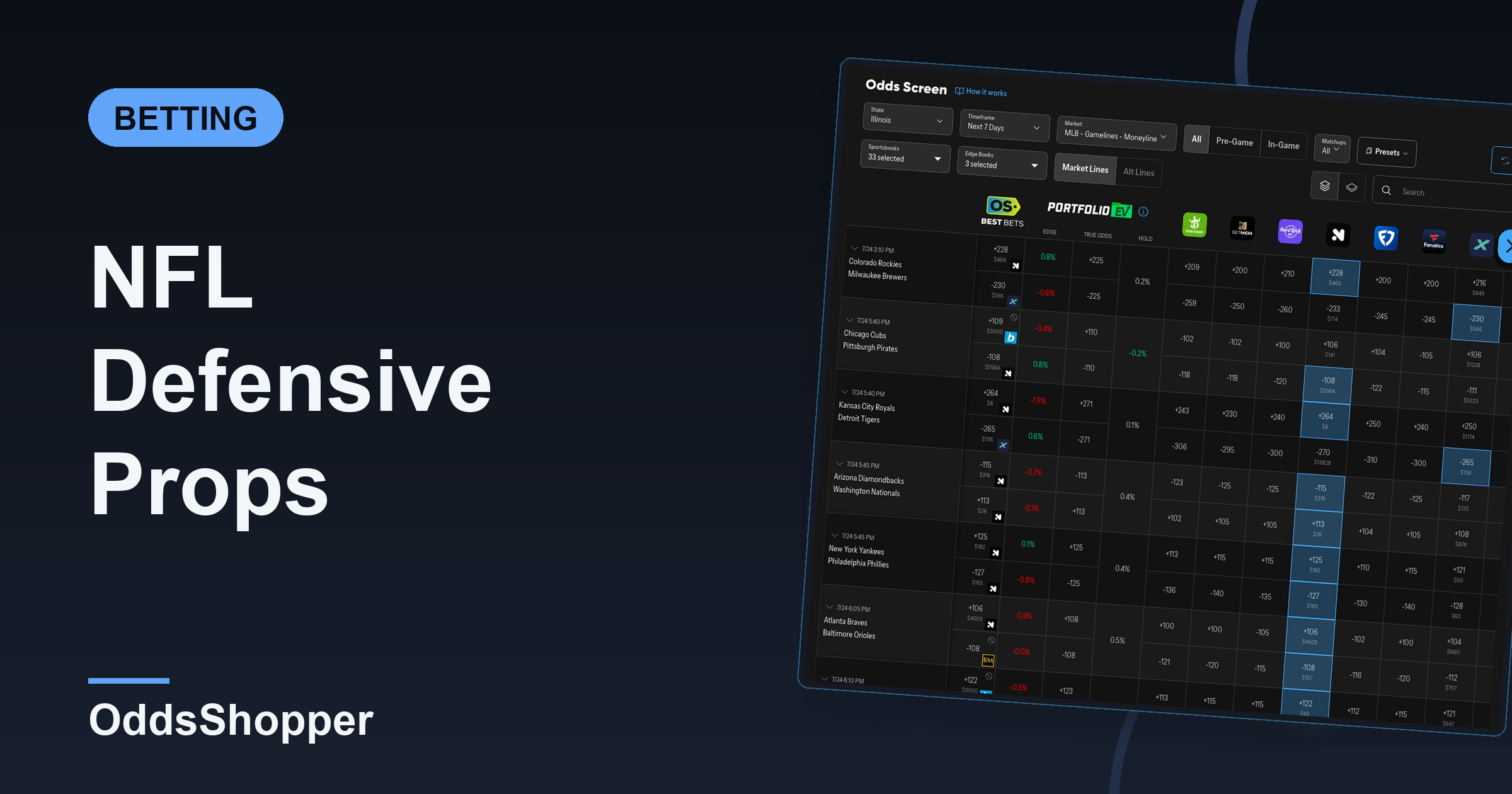
This is where OddsShopper does the work for you. The NFL odds screen compares odds across every major legal sportsbook available in your state on one page, so the best available number is one glance instead of ten logins. Under the hood, the Sharp Sportsbook Algorithm strips the vig (the book's built-in cut) out of the market to estimate the true, no-vig price of a bet, and the tools rank bets by +EV against that fair number. In plain terms: it tells you not just who has the best price, but whether that price is actually better than the bet is worth. That distinction is the whole game, because beating DraftKings and FanDuel doesn't matter unless you're also beating the true odds.
Try this before your next NFL bet.OddsShopper scans every major sportsbook available in your state and flags the exact bets priced in your favor, the same +EV read this guide teaches you to do by hand. Start free for 7 days, and code NFLEDGE20 takes 20% off OS Pro if you subscribe. Must be 21+ where legal; if gambling is a problem, call 1-800-GAMBLER.
Props Are The Soft Market Where Edges Survive
The headline sides and totals everyone hammers are the most efficient markets on the board (even AI models struggle to beat the main lines), which means the thinnest edges. Misprices that actually survive tend to live on the NFL player prop menu. It's the softer, less-efficient corner of the board, and the recommended starting lane for most bettors.
A few durable NFL prop angles our team comes back to:
- QB Rushing Yards On Dual-Threat Quarterbacks. This is the one I keep coming back to every season. Books tend to post rushing lines for quarterbacks with heavy designed-run volume (think Jalen Hurts or Lamar Jackson) low relative to the carries they actually get, so the over is a bet on carries, not on a big game. The catch that keeps it honest: game script cuts both ways, and kneel-downs eat yards in wins, so I want the number early in the week before the market corrects it.
- Longest Reception Over A Boom-Bust Wideout. A big-play receiver who catches two passes for 90 yards busts his receiving-yards total but crushes a longest-reception line. When you like the ceiling but not the volume, that longest-reception over is often the cleaner way to bet it.
- Mind The Hold. Props carry more vig than sides and totals, so always run the break-even math. A -160 over needs to hit 61.5% just to break even, not 50%. The hold is the book's built-in margin, and on props it's structurally higher, so a prop has to clear a higher bar before it's a real bet. Our sportsbook hold calculator does that math for any two-sided market in seconds.
The takeaway: spend your time on props, where limits are lower, lines update slower, and book-to-book disagreement lasts longer. Props reward the bettor willing to find one specific mispriced number over the bettor firing the main line the whole world is already on.
Totals Carry A Structural Under Lean
Two facts shape the NFL totals market. First, the overwhelming majority of casual money lands on favorites and overs, because rooting for points is more fun than rooting for a slog. Second, an OddsShopper study of the 2023 NBA and NFL seasons found our +EV tool surfacing far more qualifying unders than overs, which points to books loading more vig onto the over, and lopsided public demand is what lets them get away with it. Put those together and the under is, structurally, the side with less public tax on it.
That doesn't mean blindly bet every under. Blind "take the under" is a dead edge in today's efficient main markets. It means: when a total is a true coin flip to my read, I want the under, because it's usually the side carrying less baggage, and I need a real reason to pay the over premium.
Teasers The Right Way: Through 3, 6, And 7
Teasers are one of the sharpest specific edges in NFL betting when you use them correctly, and a fast way to light money on fire when you don't. The rules are narrow:
- Only Tease NFL Point Spreads. Never tease totals. The math that makes teasers work is built entirely on crossing football's key numbers, and totals don't cluster the same way.
- Standard Six-Point Teasers, Moving Through The Keys. Move a favorite down through 3 and 7 (for example, -8.5 down to -2.5, which crosses 7, 6, and 3), or a dog up through 3 and 7 (+1.5 up to +7.5). Advanced bettors sometimes find value teasing through 14 on big spreads, but the core rule stays simple: cross 3 and 7 at a playable price.
- Know The Break-Even. A two-team six-point teaser at -110 pricing needs each leg to hit about 72.4% just to break even, and many books now deal teasers at -120 or -130, which pushes that bar to roughly 74-75%. Crossing both 3 and 7 with each leg is what gives you a real chance to clear it. A teaser that doesn't cross those numbers is just a worse parlay.
The wrong teaser, moving through no key numbers or teasing totals, is one of the most reliable losers on the board. The right teaser, at the right price, is a real edge.
Parlays: Each Leg Must Be +EV
Parlays aren't automatically a sucker bet, but the way most people build them is. The math is simple: a parlay multiplies its legs' payouts and compounds their edges. Stack +EV legs and you compound an edge. Add one -EV leg and you compound the negative, which is why casual parlays bleed.
The discipline:
- Keep It To About Three Legs, and make every single leg a bet you'd happily place on its own at +EV.
- Don't Stack Heavy Favorites To Reach Even Money. Want a bigger payout? Just bet a dog at +190. Chaining -300 favorites to manufacture a plus-money ticket only adds ways to lose.
- Same-game parlays are house-favorable lotto tickets, not a profit engine. Books shade the correlation in SGPs in their own favor, so treat them as entertainment. The only real SGP edge is finding correlation the book hasn't fully priced, which is rare and not something to count on.
And size every ticket to your bankroll rather than your confidence. Parlays are higher variance, so they get a smaller stake, not a bigger one. Our bankroll management guide covers how to size to your edge.
CLV Is The Scoreboard
Closing line value (CLV) is the difference between the price you bet and the number the market closes at. If you take a team at +150 and it closes at +130, you beat the close: you got a better price than the final consensus, which is the sharpest signal that you were on the right side of the information.
This signal is strongest in a liquid market like NFL sides and totals, where the closing number reflects a mountain of real money rather than one thin line an influencer nudged. Over a season, beating the closing line is the most honest scorecard you have, more reliable than your short-term win-loss record. Beat the close by half a point on a spread, or by 20 cents on a moneyline like the +150-to-+130 example above, and you made a good bet even when it loses. I'd make that same bet every time it's offered, because results over a small sample are noise and price is the thing you actually control. Track whether you consistently beat the close. If you do, you have real evidence your process is sound, even though short-term results will still swing.
Common NFL Betting Traps To Avoid
The fastest way to improve is to stop doing the losing things. These are the recurring leaks:
| Trap | Why it costs you |
|---|---|
| Buying Points Off A Key Number | Overpaying for half points that rarely decide the bet. |
| Teasing Totals | The teaser math only works crossing spread key numbers. |
| Loading Up Heavy Favorites | Manufactures a plus-money price by adding ways to lose. |
| Treating SGPs As Profit | Books shade the correlation in their favor. |
| Chasing the primetime "island game" | The one nationally-televised game gets over-bet; the number is already inflated. |
| Betting The Narrative | The storyline is already priced into the line. |
| Fighting The Sharp/Closing Line | Whatever you're thinking is usually already in the number. |
The theme runs through all of them: the market is efficient enough that convenience, emotion, and gimmicks get punished. Discipline is the edge.
Using OddsShopper To Find +EV NFL Lines
Everything above is doable by hand. It's also slow, and the edges are measured in fractions of a percent that add up only if you catch them every week. That's what the OddsShopper toolkit automates:
- The NFL odds screen puts 20+ legal US sportsbooks' numbers for a game on one page, so NFL line shopping takes seconds.
- The +EV Rankings sort straight bets by expected ROI against the true, no-vig price, so you're betting the number, not the name. Every day the tool surfaces the bets where a book's posted price beats the fair market number, which is exactly the +EV read this guide teaches by hand.
- The Liquidity Tool shows where sharp money is landing on the betting exchanges, often before the sportsbook line moves, so you see where the market is heading.
- The Parlay Builder assembles tickets from legs with real standalone value that you then edit, instead of you stapling favorites together and hoping.
- The arbitrage tool and Free Bet Converter turn promos and cross-book price gaps into low-risk (not no-risk) value.
That's the difference between reading about line shopping and actually doing it across the full Sunday board at once.
The Bottom Line On NFL Betting Strategy
Winning NFL betting isn't about picking more games right. It's about respecting the market: get on the right side of key numbers, bet favorites early and dogs late, shop every number for free EV, hunt edges in the softer prop markets, tease only through the keys, keep parlays lean and +EV, and judge yourself by CLV rather than last week's record. Pick the number the sportsbook misprices, not the team you like, and do it consistently.
Frequently Asked Questions
What Are The Key Numbers In NFL Betting?
The most important are 3 and 7, the most common final margins because football is scored in field goals and touchdowns. 6 is a secondary key, and 10 and 14 are the next tier of multi-score margins. Getting your spread on the right side of 3 and 7 is the core of NFL side betting.
When Should I Place My NFL Bets During The Week?
As a general rule, bet favorites and overs early in the week before the public inflates those prices, and bet underdogs and unders later as the number drifts and late injury and weather news comes in.
Why Does Line Shopping Matter SO Much In NFL Betting?
The same bet at a better price is free expected value. A moneyline at +150 versus +135 is the same team, but the better number lowers your break-even by more than two percentage points. Over a season, taking the best available price is the biggest edge most bettors have.
Are NFL Player Props Easier To Beat Than Sides And Totals?
Props are a softer, less-efficient market than main sides and totals, so mispriced numbers survive longer there. They also carry more vig, so run the break-even math on the price before you bet.
What Is CLV In Sports Betting?
CLV, or closing line value, is the difference between the price you bet and the line's closing number. Consistently beating the close is the most reliable long-term signal that your process is +EV, even more than your short-term win-loss record.
More on this: NFL Odds Comparison: Why Line Shopping Wins · NFL Key Numbers: Why 3 And 7 Rule The Point Spread · PrizePicks NFL Strategy: Win With Projections & Flex Math · NFL 2026 on Kalshi: Every Board We Track · NFL Coach Of The Year Odds: Kalshi Fades A Two-Time Winner
Bet The Number, Not The Name
You now have the season-long framework. The last step is doing it every week without spending your Sunday morning logging into ten sportsbooks. New to OddsShopper? It scans every major sportsbook available in your state to find the best NFL number and the bets the market has priced in your favor, the exact +EV work this guide walks through, in seconds. Try it free for 7 days, and code NFLEDGE20 takes 20% off OS Pro if you subscribe. Stop leaving the better number on the table. Must be 21+ where legal; if gambling is a problem, call 1-800-GAMBLER.