Cash out betting feels like the sportsbook doing you a favor: your bet is looking good, a button pops up offering you money right now, and you get to walk away a winner before the final whistle. Here is the part the button never tells you: cash out is not a favor but a product the book sells you, priced with the book's margin baked in. It is a live-betting feature at heart — the offer is driven by the current in-game price, the same way an NFL line swings on every snap, then shaded for the book's margin, its risk limits, and whether the market is even stable enough to price. That does not make cashing out always wrong, but it does mean there is exactly one number that settles almost every cash-out decision, and by the end of this guide you will know how to find it.
TL;DR: The Cash-Out Cheat Sheet
If you only remember five things about cash out betting, make it these:
- Cash Out Is A Product, Not A Favor. The book sets the offer with its own margin baked in, so most cash-outs are slightly negative-value — you are paying for certainty.
- One Number Settles It. Your position's fair value = the true no-vig chance your bet wins × your full payout. Compare that number to the offer on the screen; everything else is noise.
- Take The Cash-Out when you are de-risking a ticket you cannot stomach, when real news is about to move the price against you, or when the offer sits at or above fair value.
- Let It Ride when the ticket is small, nothing has changed but your nerves, and the offer is well below fair value.
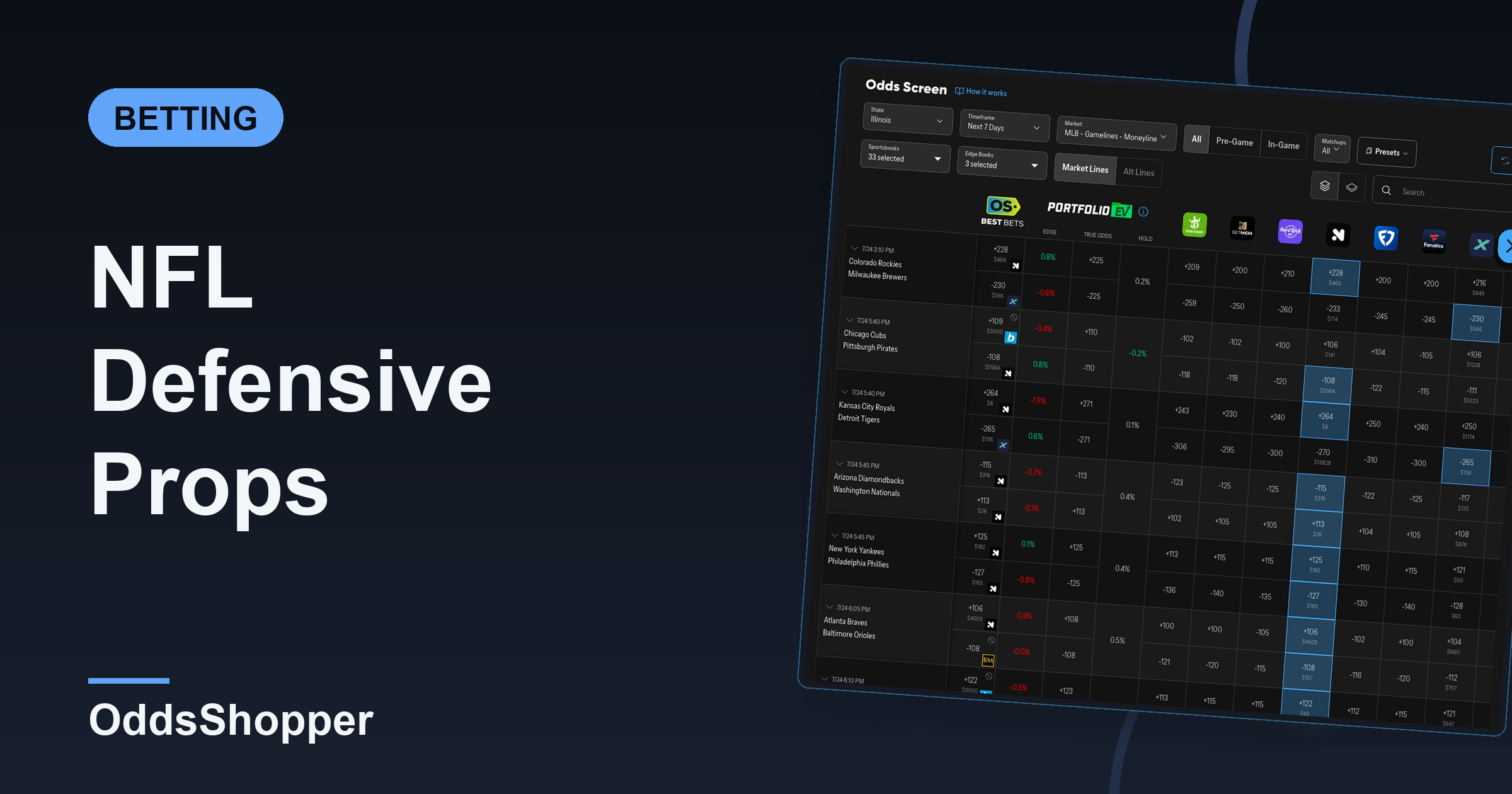
- Price It In Seconds. OddsShopper's live odds screen compares the live market across books, and its in-game EV tools strip the vig to show you the no-vig fair price of that market; multiply it by your payout and you have your position's true value — the number that tells you whether the offer is a gift or a tax.
What Is Cash Out Betting?
The cash-out feature lets you settle an open bet early for a fixed amount instead of waiting for the event to finish. You can use it two ways: lock in a return while your bet is winning, or cut your loss and get some stake back while it is losing. When a book offers it, the amount is usually below your full potential payout — and it can be small, or missing entirely, if the ticket is in bad shape — and taking it ends the bet right there regardless of what happens next. It is not always on the table, though. Books can suspend or pull the option during volatile live stretches, and some bets never show an offer at all.
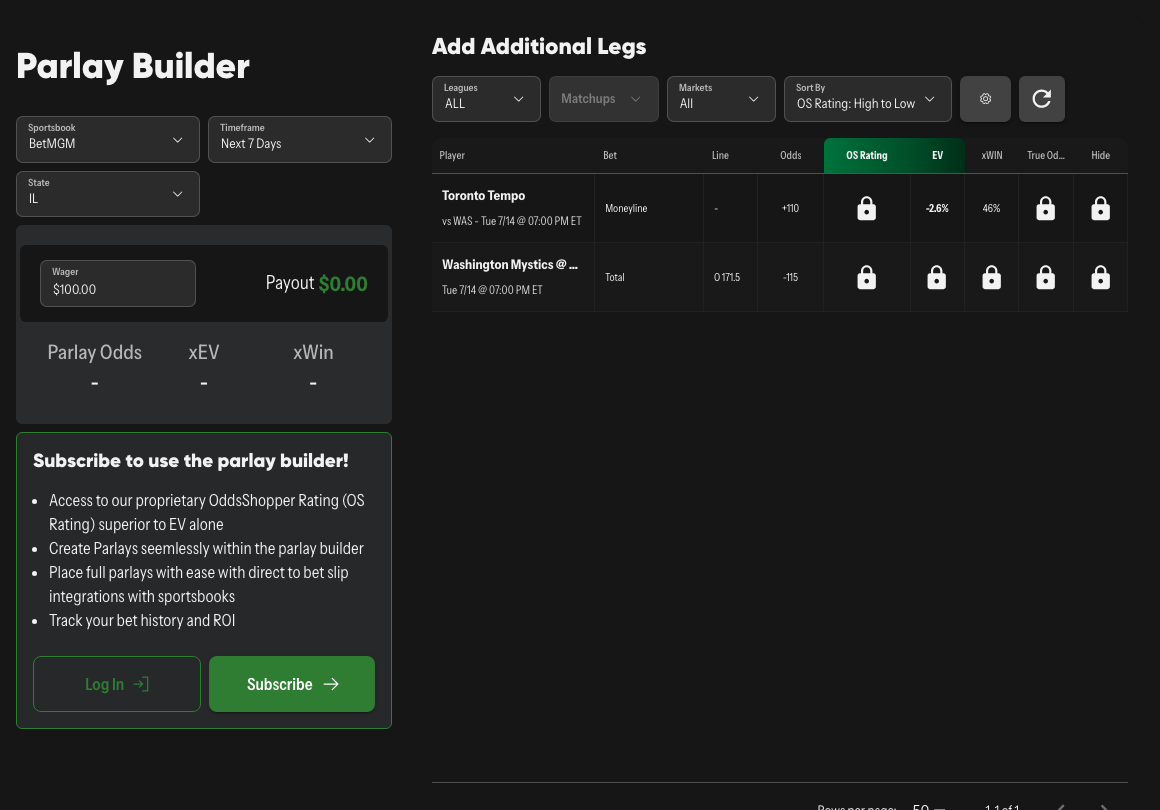
The OddsShopper Parlay Builder.
Most major sportsbooks offer cash out on eligible bets, often including moneylines, spreads, totals, and some parlays, but availability varies by book, market, event, and live status. When an offer does appear, the mechanic is the same everywhere: the book looks at the current live price of your bet, decides what it will pay to take the ticket off your hands, and shows you a number.
That number is where all the money hides.
Why The Cash-Out Number Is Almost Always In The Book's Favor
Here is the thing most bettors never stop to check: the cash-out offer is itself a bet, and the book prices it the same way it prices everything else, by shading it in its own favor. This is the same margin, the vig, that makes sportsbooks money on every wager they take. When you cash out, you are essentially paying a second helping of that vig to buy certainty.
To see why, you need one simple idea: the fair value of a bet is what it would be worth if there were no margin at all. A bet's fair value comes from the true, no-vig probability that it wins. If your ticket would return $250 total (stake included) and your side is a true 60% chance to win, its fair value right now is roughly 60% of $250, or about $150. A fair cash-out offer would hand you close to that $150. What the book actually offers is a bit less, because that gap is its profit for letting you off the hook early.
The rule in one linea bet's fair value = its true no-vig win chance × the full payout. A fair cash-out pays close to that. The book's offer sits a little under it, and that gap is what you are paying for certainty.
Most of the time that gap makes cashing out a slightly negative-value decision. You are trading a bigger expected return for a smaller locked-in return, and you are paying the book for the privilege. Once you see it that way, the question stops being "should I take the money?" and becomes "is this specific offer close enough to fair value to be worth the certainty?"
The One Number That Settles It: Your Position's Fair Value
This is the number I promised you. Before you tap cash out, work out what your position is actually worth right now, then compare it to the offer on the screen.
Say you put $100 on an NFL underdog moneyline at +150, so the ticket returns $250 total if it hits ($100 stake plus $150 profit). Your team jumps out to an early lead, and the live market now makes your side roughly a 66% shot to close it out once you strip the vig from both sides of the price. So the fair value of your ticket at this moment is about 66% of $250, which is around $165.
Where does that 66% come from? You de-vig the live moneyline, and it takes both sides. Say the in-game market now has your team at -220 and the opponent at +180. Convert each price to its implied probability — -220 implies about 68.8%, +180 about 35.7% — then add them. The total is 104.5%, and that extra 4.5% is the book's margin. Divide each side by that 104.5% to strip it out, and your team's true, no-vig chance lands at roughly 66% (the opponent at about 34%). That 66% is the number you multiply by your $250 payout to get the $165 fair value. Do it for both sides or you have not actually removed the vig — that is the single most common mistake bettors make when they try to price a live position by hand. (If converting a price like -220 into its implied probability is the step slowing you down, our odds calculator turns any American, decimal, or fractional price into payout, profit, and implied probability instantly.)
Now look at the offer. Say your book, whether that is DraftKings or FanDuel, flashes you $150 to cash out. That is about $15 under fair value, roughly a 9% tax on your position, paid to the book to convert a very-likely $250 into a locked-in $150. Compare that to a night where the offer comes in at $163 on the same $165 position, and the math flips: you are getting out at nearly fair value, and the certainty is close to free. Same button, completely different decision, and the only way to tell them apart is to price your position first.
New to OddsShopper?It compares live prices across 100+ sportsbooks and strips out the vig to show you the true, no-vig price of any live market, which is the key number you need to value your own position against a cash-out offer. You can try it free for 7 days, and code CASHOUTEDGE20 takes 20% off OS Pro if you subscribe. Start your free trial
When Cashing Out Is Actually Worth It
Now the honest part. Knowing that cash out is usually a small tax does not make it always wrong, and anyone who tells you to never cash out has never had real money riding on a coin flip. There are spots where paying for certainty is the smart, rational move.
The clearest one is a big parlay you simply cannot stomach. If you are down to the last leg of a same-game parlay whose remaining payout is large relative to your bankroll, the "correct" expected-value move is to let it ride, but expected value assumes you can absorb the variance. If losing that ticket would wreck your week or your bankroll, buying certainty is a perfectly defensible choice. You are not chasing the highest expected value, you are managing risk, and those are two different jobs. (The same fair-value habit pays off before you ever place the bet: the OddsShopper parlay builder prices every leg together, so you know what a fair payout looks like going in rather than only when the cash-out button appears.)
A few more spots where cashing out earns its cost:
- New Information Moved The True Odds Against You. A key injury, a red card, weather turning a total. If the price is about to correct and the current offer still reflects the old number, getting out ahead of the move can actually be +EV. Our in-game EV screen is built to catch exactly these moments.
- De-Risking Part Of A Position. Some books and bet types let you cash out a portion. Take enough off the table to cover your stake, let the rest run, and you have taken most of the downside off the table while keeping the upside.
- The Offer Is At Or Above Fair Value. It happens. A book that is slow to adjust, or wants your ticket off its book, will occasionally offer you more than your position is truly worth. When you are confident it does, that is a cash-out worth taking.
You will notice cashing out and hedging a bet yourself solve the same problem from opposite directions. A cash-out is the book hedging for you at its price; a manual hedge is you shopping the other side at yours. When you have time and the other side is well priced, the manual hedge usually keeps more of the value in your pocket.
When To Let It Ride
The counterargument writes itself: "but I locked in a winner, how is that bad?" That instinct is understandable, and it is also expensive — the times cashing out is most tempting are exactly the times it costs the most. The offer is at its ugliest exactly when you are most scared, right after one bad quarter or one shaky inning, because the live line has swung and the book has widened its margin into the panic.
So let it ride when the ticket is small enough that the outcome will not move your bankroll, when nothing has actually changed except your nerves, and when the offer sits well below what your position is worth. Fear is not new information, and the button is happy to charge you for treating it like it is.
Worth knowing: on a CFTC-regulated exchange there is no cash-out button at all. You simply sell your position to another trader at the market price, one of the structural differences covered in Kalshi vs a sportsbook.
How To Price A Cash-Out Offer With OddsShopper
Doing this math in your head, mid-game, while the score is moving, is close to impossible. That is the whole reason the button works on people: it asks for a decision in the one moment you cannot calculate. This is where the tools earn their keep.
| Your Situation | Lean | Why |
|---|---|---|
| Small Ticket, No Bankroll Stress | Let it ride | The margin costs more than the peace of mind is worth |
| Last Leg Of A Parlay Too Big For Your Bankroll | Consider cashing out | De-risking a ticket you cannot stomach is rational, even at a cost |
| Real News Moved The True Odds Against You | Consider cashing out | You are getting out before the price fully corrects |
| Offer Is At Or Above Fair Value | Cash out | The book briefly priced it in your favor |
| Panicking After One Bad Stretch | Let it ride | Fear is not a reason, and the offer is worst when you are most scared |
The row I care about most is the fourth one. An offer at or above fair value is the clearest cash-out worth taking, and it is the one you will miss if you are guessing, because it looks identical to every other offer on the screen. The only way to spot it is to know your number. OddsShopper's live odds screen shows you the current price across 100+ books in real time, and its in-game EV tools strip out the vig so the tool surfaces the no-vig fair price of a live market, the same true-odds logic behind its Portfolio EV tool. Multiply that no-vig win chance by your payout and you have a solid estimate of your position's fair value, the vig-stripping done for you while the game is still live. If you want the broader habit of spotting good prices before they correct, our guide on how to find +EV bets is the natural next read, and our free expert picks today show the same fair-value logic applied to full slates.
FAQ
What does cash out mean in sports betting? Cash out lets you settle an open bet early for a fixed amount instead of waiting for the event to end. You can use it to lock in a return on a winning bet or to recover part of your stake on a losing one.
Is cashing out a bet worth it? Usually it is a slightly negative-value decision, because the book bakes its margin into the offer. It is worth it when you are de-risking a ticket you cannot afford to lose, when real news is about to move the price against you, or when the offer comes in at or above your position's fair value.
Why is my cash-out offer lower than my potential winnings? Because you are being paid the current value of the bet, not the full payout, minus the book's margin. Your bet has not won yet, so the offer reflects the live probability of it winning, shaded in the book's favor.
Can you cash out a parlay? Often, yes, at most major books, though it depends on the book, the market, and what is happening live. Some books also let you cash out a portion of a parlay so you can bank part of it and let the rest run.
How do I know if a cash-out offer is fair? Work out your position's fair value: the true no-vig chance your bet wins, multiplied by its full payout. If the offer is close to that number, the certainty is nearly free; if it is well below, you are paying a steep tax. OddsShopper's in-game EV tools surface the live no-vig prices you need to run that math.
More on this: Cash Out Vs Hedging On Kalshi: One Ticket, Two Exits (2026) · How Kalshi Cash Out Works (Why You Get Less) · Cash Out Or Let It Ride? A Decision Framework For Kalshi Positions · NFL Preseason Event Contracts, Explained In 60 Seconds · Golf Matchup Betting Explained: 2-Ball And 3-Ball Strategy
The Bottom Line
Cashing out is not a trap and it is not free money. It is a price, and like any price it is only worth paying when you know what you are getting for it. The bettors who lose money on the button are the ones who treat it as a feeling, tapping it when they are nervous and skipping it when they are greedy. The ones who use it well treat it as a trade: they price their position, compare it to the offer, and take the certainty only when it is cheap or when they need it. Get in the habit of knowing your number, and cash out stops being the book's tool and starts being yours.
Curious what the sharp price actually says your bet is worth right now? OddsShopper compares live odds across 100+ sportsbooks and strips the vig so you can quickly estimate your position's no-vig fair value and tell whether a cash-out offer is a gift or a tax. Try it free for 7 days, and code CASHOUTEDGE20 takes 20% off OS Pro. Start your free trial