How Do Sportsbooks Make Money? The Vig And The Hold, Explained
I've placed thousands of sports bets, and the single most expensive habit I see new bettors keep is paying a tax they don't even know exists. A sportsbook isn't gambling against you the way a poker opponent is. It's running a business with a built-in margin, and that margin is hiding in plain sight inside the odds. Once you can see it, you'll never look at a betting line the same way again.
In Summary
Sportsbooks make money primarily through the vig (short for vigorish, also called the juice), a commission baked directly into the odds. The clearest example is a point spread or total priced -110 on both sides: a -110 price implies a 52.4% chance, and two sides at 52.4% add up to 104.8%, not 100%. That extra ~4.8% is the book's margin. Across a balanced book, it keeps roughly 4.5% of the money wagered on that market regardless of who wins. That excess over 100% is the overround, and the slice the book expects to keep is the hold. The hold is small on efficient markets like NFL spreads (~4.5%) and much larger on parlays, futures, and player props (often 6% to 30%+). The book's ideal is balanced action, which lets it keep the vig whoever wins, but it will also shade lines toward the popular side to profit off public money. What this means for you: the price you pay determines whether you can win, so shop for the best number, avoid high-hold bets, and only bet when you're getting paid better than the true odds. This guide walks through all of it with real math, then shows how to stop overpaying the vig. If you need to read the odds themselves first, start with how to read betting odds.
What Is The Vig (Juice)?
The vig (vigorish, or simply the juice) is the commission a sportsbook charges for taking your bet. Think of it like the rake in a poker room or the spread a stock broker pockets between the buy and sell price. The book isn't primarily trying to out-predict you. It's trying to price both sides of a market so that, no matter which way the game goes, it pays out less than it takes in.
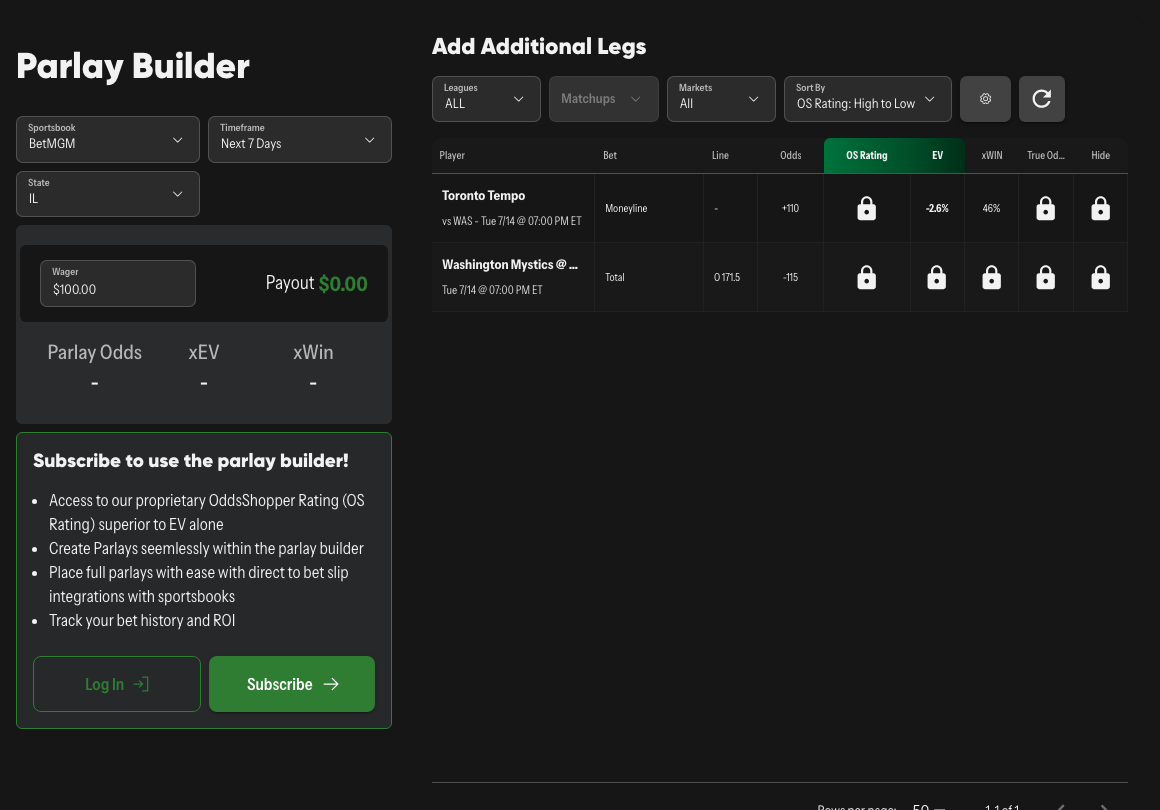
The OddsShopper Parlay Builder.
The reason most bettors never notice it is that the vig is never itemized. You don't see a line on your bet slip that says "house fee: 4.5%." It's folded into the odds themselves, which is exactly what makes it so easy to pay over and over without flinching.
Here's the mental model that makes everything click: in a fair two-outcome market, the prices for both sides should add up to exactly 100% of probability, because one of the two things has to happen. A real sportsbook prices them to add up to more than 100%. That gap is the vig, and the book collects it as its edge.
Why Both Sides Are -110
If you've bet a point spread or a game total, you've seen -110 on both sides. A -110 price means you risk $110 to win $100. People assume both sides being -110 is the "fair" coin-flip price. It isn't.
Convert -110 to an implied probability and you get 52.4%:
Implied probability of -110 = 110 / (110 + 100) = 52.38%
Now add both sides together, because the book is charging you that price on each outcome:
52.4% (Side A) + 52.4% (Side B) = 104.8%
A fair market would sum to exactly 100%, since one side or the other has to win. This one sums to 104.8%. The book has padded the market by 4.8%, and that pad is the vig. It's why "I just take the side I like at -110" loses money even if you're right slightly more than half the time. At -110 you need to win 52.4% of your bets just to break even, not 50%. The vig quietly moved the finish line.
That's also the answer to "why -110 on both sides?" The book isn't predicting a coin flip. It's selling both sides of a coin-flip market priced to add up to 104.8% instead of 100%, and keeping the difference.
The Hold: How The Margin Is Baked Into A Market
The number we just built, the amount a market sums over 100%, has a name: the overround. The slice of total money wagered that the book expects to keep is the hold (or the theoretical hold). They're closely related but not identical, and the distinction is worth 30 seconds.
Picture the book as selling two lottery tickets that together cover every possible outcome. Priced fairly, the pair would cost exactly $1.00 to cover a $1.00 payout, and nobody would have an edge. Instead the book sells the pair for about $1.048. Those extra 4.8 cents are the overround. But the book doesn't keep all 4.8 cents of every dollar; it only keeps its cut of the total handle (the money bet). On a perfectly balanced -110/-110 market, that works out to a hold of about 4.5% of everything wagered:
Hold ≈ overround / (100% + overround) = 4.8% / 104.8% ≈ 4.5%
So the overround is what the odds sum to over 100%, and the hold is what the book expects to pocket. For a beginner, the useful takeaway is simpler: a standard -110/-110 market carries roughly a 4.5% house edge, and the book earns it without ever predicting the game correctly, as long as it has balanced money on both sides.
A Worked Example: How The Overround Becomes The House Edge
Let me put real numbers on a real-looking market. Say an NBA game has a moneyline of Lakers -150 and Celtics +130 at the same book.
Step 1, convert each side to implied probability:
- Lakers -150 → 150 / (150 + 100) = 60.0%
- Celtics +130 → 100 / (130 + 100) = 43.5%
Step 2, add them up:
60.0% + 43.5% = 103.5%
That market carries a 3.5% overround. One of these two teams is going to win, so their true chances have to sum to 100%, but the book has priced them to sum to 103.5%. The book is selling 103.5 cents of "certainty" when only 100 cents exists. That 3.5% overround is the book's margin, and normalizing the prices back to 100% implies a theoretical hold of about 3.4%. Over thousands of bets, that built-in edge is how the book profits on this market, whichever way any single game goes.
If you want to know what the Lakers and Celtics should be priced at with the vig stripped out, that's a separate calculation called devigging, and it's the whole subject of our no vig odds guide. For now, the point is just that the overround sitting on top of 100% is the book's money.
How The Hold Changes By Market
Here's where it gets practical, because the vig is not a flat tax. Sportsbooks often charge more juice on thinner, harder-to-price markets, especially where casual bettors play the most. The more exotic the market, the bigger the cut tends to be. Rough, real-world ranges look like this:
| Market | Typical pricing | Approximate hold |
|---|---|---|
| NFL / NBA Point Spread | -110 / -110 | ~4.5% |
| Reduced-Juice Spread | -105 / -105 | ~2.4% |
| Competitive Two-Way Moneyline | varies | ~3% to 5% (wider on heavy favorites) |
| Three-Way Soccer (1X2) | home / draw / away | ~6% to 8% |
| Player Props | over / under | ~6% to 10% |
| Futures (Win The Title) | long field | ~15% to 30%+ |
| Same-Game Parlays | bundled legs | ~15% to 30%+ |
Two things jump out. First, a reduced-juice book offering -105/-105 cuts the hold roughly in half (about 2.4% instead of 4.5%), which is a meaningful saving you can choose just by where you bet. Second, the markets casual bettors love most, parlays, futures, and props, carry the heaviest juice on the board.
Parlays are the clearest illustration of how the hold compounds, so it's worth doing the math. Roll three -110 legs into a parlay and the book pays about +596 (a $10 bet returns about $69.60, including your stake). Now suppose each of those legs, stripped of its vig, is a true 50/50 coin flip: three of those should pay +700:
Fair price of three 50/50 legs = 0.5 × 0.5 × 0.5 = 12.5% = +700 What the book actually pays = about +596
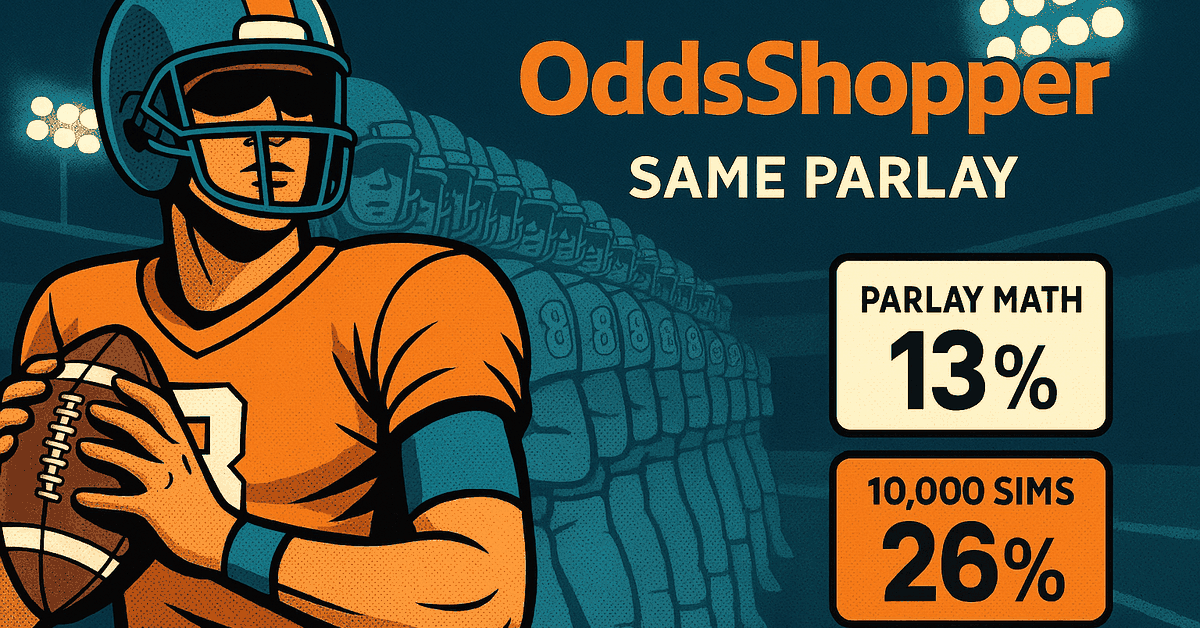
You're getting +596 on something worth +700. The vig didn't just apply once; it stacked on every leg, turning a ~4.5% single-bet hold into roughly a 13% hold on the parlay. That's why parlays feel exciting and cost so much: the house edge is multiplying in the background. None of this means never bet a parlay, but it does mean you're paying a premium, so save them for spots where you truly have an edge on each leg.
The simplest way to pay less vig is to compare prices before you bet instead of taking the first number you see. OddsShopper scans every major sportsbook at once and shows you the best price on the exact bet you want, so you pay less vig on every bet you place. Code VIG20 takes 20% off OS Pro or OS Core.
Balanced Action Vs. Shading The Line
There's a popular myth that sportsbooks always want exactly half the money on each side so they keep the vig whoever wins. That's the textbook ideal, and when a book has balanced action, it's true: equal money on both sides means the winners get paid out of the losers' stakes, and the book just keeps its 4.5% cut. No prediction required.
But real money is rarely balanced, and books know it. The public piles onto favorites, popular teams, and overs. So a book will often shade the line, shifting the price a little against the side it knows the crowd will hammer. For example, if a book expects heavy public money on a popular team like the Dallas Cowboys, it can price that side at -120 instead of the fair -110, nudging the implied cost from 52.4% up to 54.5%, and sell that inflated number to the crowd. That lifts its expected hold above the baseline vig, all while knowing sharp bettors can push the line back if it strays too far. The book is willing to carry a little risk on the unpopular side because the extra margin on the popular side more than pays for it.
This matters for you for one reason: the line you see is a price, not a pure no-vig estimate of the true odds. It's set to make the book money, and in some markets it's also nudged toward whatever the public is buying. Which is exactly why it pays to check whether the unpopular side is being offered at a better price than its true odds, rather than assuming the posted line is neutral.
The takeawaya posted line is a sales price, not a forecast. The popular side is often priced at a premium, so it's worth checking whether the quieter side is offered at a better price than its true odds.
What The Vig Means For You
Knowing how the house makes money is only useful if it changes how you bet. It should change three things.
1. Shop for the best number, every time. Because each book sets its own vig and shades its own lines, the price for the same bet differs from book to book. Taking the Celtics at +130 instead of +120 doesn't feel like much, but over hundreds of bets that gap adds up fast and, for a near-even bettor, can decide whether you finish ahead. This is the single highest-leverage habit in betting, and it's the whole point of line shopping on the odds screen. For a beginner, internalize this one fact: the bigger the number, the more it pays, so +220 beats +150 on the same outcome and the price you take decides your return. Always grab the best available number across books. This is also exactly how you beat the sportsbooks with a small bankroll: you don't need a big account to grind out a profit, just a lower effective vig on every bet you place.
2. Avoid the highest-hold bets unless you have a real edge. Now that you've seen the table, you know parlays, long-shot futures, and many props carry far more juice than a straight spread or total. They're not forbidden, but you're paying a steep tax to play them, so they should clear a higher bar. A casual five-leg parlay is one of the worst-priced bets on the board; a straight bet on a market you've shopped is one of the best.
3. Only bet when you beat the true odds (+EV). The deepest version of this is positive expected value betting. Once you can strip the vig out of a market to find the fair price, a bet is worth making any time a book pays you better than that fair price, and it isn't when the book pays worse. That gap between the price you can get and the true no-vig price is your entire edge. The full theory lives in our positive expected value guide, and the mechanics of removing the vig are in the no vig odds guide. Together they turn "the house has an edge" into "here's how I take some of it back."
You can do all three by hand. What you can't do by hand is check every major sportsbook for every game, devig each market, and act before the price moves. That's where the tools earn their keep: the OddsShopper odds screen lays the price from every book we track side by side so you instantly see the best available number, and Portfolio EV (in OS Pro) devigs each market against a sharp consensus and surfaces the live bets that are actually priced in your favor. The math in this article is the understanding; the tools are the execution.
More on this: How Does Kalshi Make Money? The Charge You Can't See · How To Make Money Betting Sports The Boring Way · MLB Division Odds On Kalshi Vs Sportsbooks: 3 Tightest Races · US Open Tennis Odds 2026: Kalshi vs the Book on One Knee · How Much Money Should You Put On Kalshi? Bankroll Rules For Event Contracts
Frequently Asked Questions
How do sportsbooks make money? Primarily through the vig (juice), a commission baked into the odds. By pricing both sides of a market to add up to more than 100% probability, the book builds in a margin (the overround). On balanced action it pays out less than it takes in regardless of which side wins, keeping roughly 4.5% of the money wagered on a standard -110/-110 market.
What is the vig (or juice) in betting? The vig, short for vigorish and also called the juice, is the sportsbook's built-in commission. It's hidden inside the odds rather than charged as a separate fee. A -110/-110 market carries about a 4.8% overround, which works out to roughly a 4.5% hold on the money bet — but a reduced-juice book at -105/-105 cuts that roughly in half (~2.4%), which is why where you bet changes how much vig you pay.
Why are both sides of a bet -110? Because -110 implies a 52.4% chance, and pricing both sides at 52.4% makes the market sum to 104.8% instead of 100%. That extra 4.8% is the vig. It's why you need to win about 52.4% of your -110 bets just to break even, not 50%.
What is the hold in sports betting? The hold is the percentage of total money wagered that a sportsbook expects to keep after paying winners. It's closely tied to the overround (how much the odds sum over 100%). Hold is low on efficient markets like NFL spreads (~4.5%) and high on parlays and futures (often 15% to 30%+), with player props in between (around 6% to 10%).
Do sportsbooks want balanced action on every bet? Ideally yes, because balanced money lets a book keep the vig whoever wins. In practice action is rarely balanced, so books shade lines toward the popular side to lift their expected hold above the baseline vig, accepting some risk on the unpopular side in exchange for the extra margin.
How do I beat the vig? You can't remove it, but you can pay less of it: shop every bet for the best price, avoid the highest-hold markets unless you have a real edge, and only bet when a book pays you better than the true (no-vig) odds. Tools like the OddsShopper odds screen and Portfolio EV do that comparison across every major sportsbook automatically.
New to OddsShopper? It scans every major sportsbook in real time and flags the bets priced in your favor, so you stop overpaying the vig and stop leaving the better number on the table. Code VIG20 takes 20% off OS Pro or OS Core, and it finds the best available number on every bet. 21+ and legal where regulated; bet responsibly.