This Live With Lindy MLB picks recap comes from a Friday research show that Eric Lindquist opened with an honest confession: July has been a grind. Home runs, pitcher props, the whole card have all bled units this month, and rather than paper over it, he used the show to explain why he still trusts the process despite a rough stretch. That through-line runs through the entire "MLB Research + Data Deep Dive," and it decides how you should read every play below: Lindy is not hunting the likeliest outcome, he is hunting the mispriced one. Value is price against true probability, not the shortest number on the board.
One vocabulary note before the plays, because it changes how you tail any of this. A lean is a game he likes but did not bet. An official play is one he actually fired. Do not promote a lean to a bet that never got made.
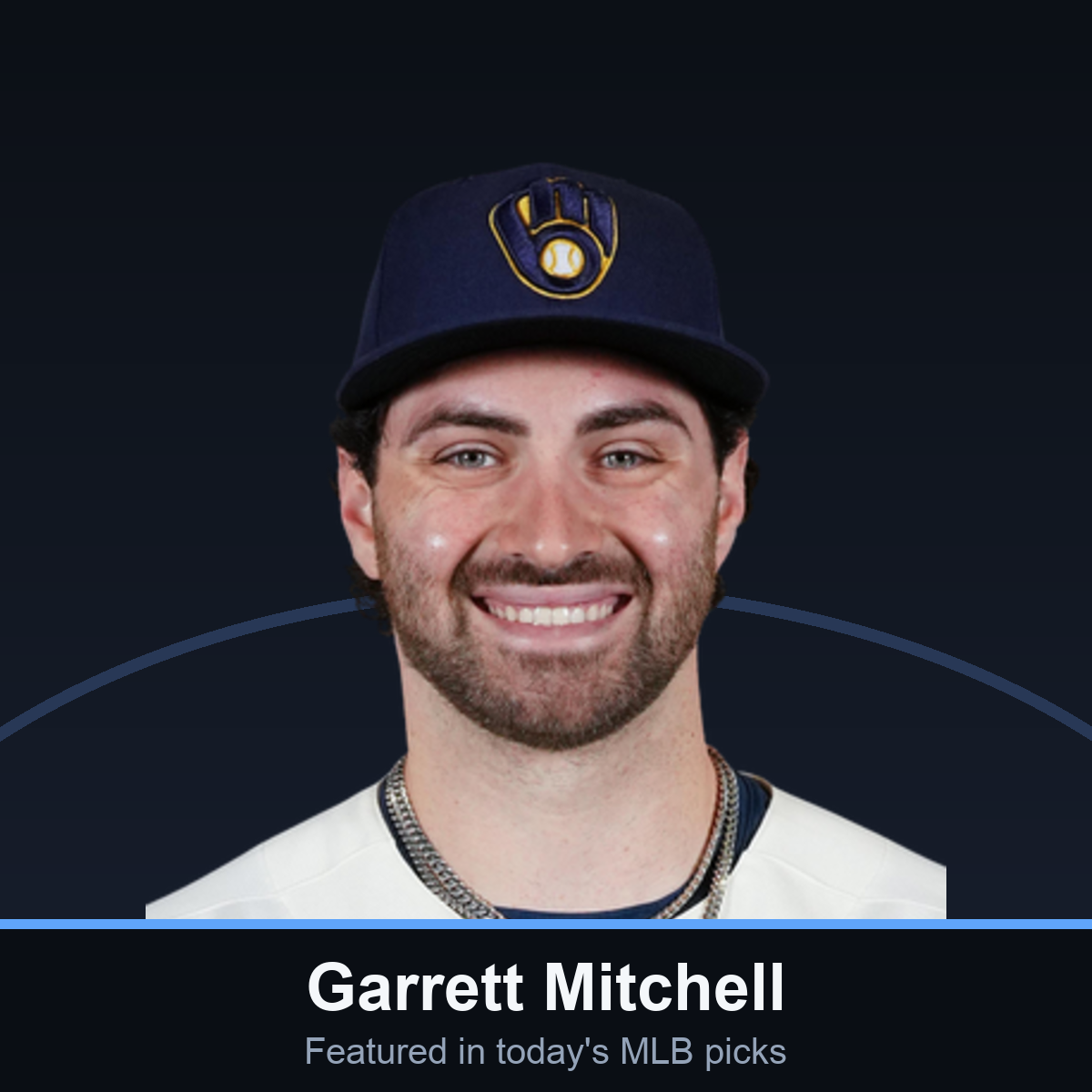
Garrett Mitchell — one of the featured players on today's slate.
In Summary
- The Home-Run Value: Garrett Mitchell (MIL) to hit a home run, a high-strikeout bat pointed at a home-run-prone arm that cannot punish the whiffs, in Milwaukee with the roof open.
- The Signature Process Play: Colt Keith (DET) Under 0.5 hits, an edge built entirely on lineup mechanics rather than talent, because Kansas City's opener plan boxes Keith into just one at-bat.
- The Plus-Money Swing: Kyle Karros (COL) to go deep, the home run Lindy added live, where the launch-angle profile and the platoon edge outrun the price.
- Pitcher Props He Fired Include: a Cam Schlittler (NYY) strikeout over on a discounted number, a Jared Jones (PIT) strikeout play with closing-line value, a Germán Márquez strikeout under, a Patrick Sandoval pitching-outs under against Toronto, and a Joey Cantillo (CLE) strikeout over.
Watch The Video
Lindy built this whole card live with the OddsShopper odds screen open, upgrading numbers as the board moved. Watch it in his own words: Watch on YouTube.
Why "Being Right" Is The Wrong Goal
Lindy spent a chunk of this show on a lesson worth more than any single play: the difference between a good bet and a lucky one. He kept returning to a hitter he loved to go deep at a fat plus-money price, and the temptation to instead take that same hitter on a shorter, safer-feeling combo prop. His answer was blunt. Those are two different markets. His argument: the safer-feeling one is the negative-EV side, because the price does not cover the true probability, while the home run, unlikely as it is on any given night, pays more than it should. Over a long sample, he takes the plus-money home run every time and leaves the combo alone, because the math, not the comfort, is what pays out.
That is the entire game: you do not have to be right often, you have to be right at the right price. It is why he leans so hard on low-hold markets, why he de-vigs a number down to its fair price before he compares it to what a book is offering, and why he treats closing-line value as the north star instead of any single result. The lower the hold, the less often you have to win to profit, so he shops every number across books to squeeze the vig out. That framing is the one I keep coming back to across this whole card: a bet is only good if the price beats the true odds, and every play below earns its spot on that test — not on how likely it feels.
Garrett Mitchell Headlines The Home Run Board
The bat Lindy kept circling in the Rockies–Brewers game is Garrett Mitchell (MIL). Mitchell strikes out a ton, so the whole edge is the matchup: he draws a "gas can" of a starter who cannot make him pay for the swing-and-miss, at American Family Field with the roof open. That is the classic high-strikeout-hitter-versus-non-strikeout-pitcher spot Lindy hunts for power. He had Mitchell's home-run number early, at a price that opened around even money and got steadily shorter as the day went on — exactly the closing-line value that tells you a read was in front of the market rather than chasing it.
Separately, on the pitching side, he took Germán Márquez to stay under his strikeout number. He grabbed the under at a live price while the rest of the market had already shortened it, another spot where he got the number before it moved. Buying a strikeout under early, before books tighten it, is the same timing edge that runs through his whole card.
The Colt Keith Under: An Edge Nobody Can See On A Stat Sheet
This is the play that made the show. Colt Keith (DET) Under 0.5 hits has nothing to do with how good Keith is and everything to do with how Detroit is using him. Keith is brutal against left-handed pitching — a negative wRC+ and roughly a .111 average in the tiny 19 plate appearances he has taken against lefties all season — and roughly league-average against righties, so the Tigers hide him from lefties whenever they can. In the Royals–Tigers game, Kansas City is expected to open with right-hander Beck Way (KC) and bring left-hander Noah Cameron (KC) behind him as the bulk arm. That opener forces Detroit's hand: they hit Keith at the top so he gets his one at-bat against the right-handed opener, and the bet is that Detroit then pinch-hits for him once the left-hander Cameron takes over.
One at-bat. That is the whole read. When a hitter is likely drawing to a single plate appearance, an under on his hits is a structural misprice, not a talent call, and Lindy hammered it across multiple sites while the number lingered. This is the exact pinch-hit and platoon edge he runs the research show to find, the one the market is slowest to price. He was honest about the risk — Detroit could leave Keith in for a second at-bat, and he flagged the lineup wrinkles that would cause it — but he put the odds of that low enough to call it a bet he would deploy every single time.
A Worked Example: Kyle Karros And The Longshot That's Actually +EV
The clearest version of Lindy's value lesson is Kyle Karros (COL) to hit a home run, a big plus-money longshot on the Rockies side of the Milwaukee game. On the surface it looks like a lottery ticket. Under the hood it is the math in action: Karros is a 97th-percentile launch-angle-sweet-spot bat with the platoon edge, elevating the ball against a fly-ball opponent, and Lindy's own projection had him meaningfully more likely to go deep than the price implied. That gap, not the odds themselves, is the reason to bet it.
Here is the worked example he actually ran on stream. He compared the straight home run at its fat plus-money price against the "safer" combo prop on the same hitter — a hits-plus-runs-plus-RBIs line at a much shorter number. It feels safer, and yes, Karros is far more likely to clear the combo than to homer. But when Lindy put both against his projection, the combo's implied probability sat above its true odds while the home run's implied probability sat below, which makes the longshot the positive-EV side and the "safe" bet the negative-EV one. Same hitter, same game, opposite verdicts — because value is price versus true probability, not the likeliest outcome. Longshot and good bet are not opposites.
The Pitcher Props He Fired
Lindy's strikeout card leaned on arms the market had not fully caught up to, and the sharpest one is Cam Schlittler (NYY). His strikeout number had climbed to 7.5 across the board, but Lindy found the over sitting at 5.5 as a discounted pick'em number — a two-full-strikeout gap between where he could buy and where the market had moved. That is not a small edge; that is the whole ballgame. He paired it with a Jared Jones (PIT) strikeout number he grabbed early with closing-line value. On the pitching-outs side he took Patrick Sandoval under his total against Toronto, betting that the weak link of that rotation does not go deep, and he added a Joey Cantillo (CLE) strikeout over. The theme across all of them is timing: he bets pitcher props early, the night before when he can, because that is when the softest numbers exist before the market sharpens them. You can shop every one of these on the strikeout props board before you fire.
Featured Fired Plays (7/24)
| Play | Market | Angle |
|---|---|---|
| Garrett Mitchell (MIL) | To Hit A Home Run | High-K bat vs a gas can who can't punish whiffs, roof open |
| Colt Keith (DET) | Under 0.5 Hits | Opener forces one at-bat |
| Kyle Karros (COL) | To Hit A Home Run | 97th-pct launch angle, platoon edge, plus-money |
| Germán Márquez | Under Strikeouts | Grabbed the under early, before the number tightened |
| Cam Schlittler (NYY) | Over 5.5 Strikeouts | Discounted pick'em vs a 7.5 market |
| Jared Jones (PIT) | Strikeouts | Grabbed early with CLV |
| Patrick Sandoval | Under Pitching Outs | Weak link vs Toronto |
| Joey Cantillo (CLE) | Over Strikeouts | Live number |
The row that matters most is the Colt Keith line, because it is built on brand-new lineup information rather than name value, exactly the kind of edge that evaporates the moment the market reads the same card you did. Pull up the live number on the OddsShopper home run board or the full home run picks page before you touch any of these, and if you are shopping a book like BetMGM for the best plus-money number, check the book's current offer — how to claim it so you are not leaving a sign-up bonus on the table.
Get These Numbers Before They Move
Friday was a July grind, and Lindy leaned into it the honest way: he did not chase, he bought the mispriced. The two reads that stick are the ones you could not have found from a projection sheet alone — Colt Keith drawing to a single at-bat because Kansas City's opener boxes him in, and Kyle Karros's plus-money home run being the sharper buy than his shorter combo-prop number even though the combo feels safer. Both come back to the same lesson: value is the number you get, not the pick alone. Shop every one of these on the OddsShopper MLB odds screen before you fire, and run any bonus bet through the free bet converter before you waste it on a chalk favorite.
Get 25% off your first week or month of OddsShopper Pro with code LINDY25 → That is the same board Lindy uses to shop Bet365, BetMGM and Fanatics against each other in real time.