The first question most new bettors ask is the simplest one: can I actually do this where I live? Sports betting has spread fast since 2018, but it did not spread evenly, so the honest answer is "it depends on your state." This is your plain-English map of where online sports betting is legal in the United States, when each market went live, and which states still have not legalized it.
Everything below was verified as of July 6, 2026 — statuses change, so confirm your state's current rules before betting. Sports betting law changes often, so we date this page and refresh it as states move. Always confirm your own state's rules before you place a wager. Most regulated markets are 21 and up, but the minimum age varies by state, so check yours.
The Big Picture: How Many States Have Legal Sports Betting?
As of mid-2026, 39 states plus Washington, D.C., have legalized sports betting in some form, and 30 of them offer online or mobile betting through regulated U.S. sportsbooks. The rest of the legal states run retail-only or limited models, and a handful of states still have no legal sports betting at all.
The distinction that trips people up: "legal" and "legal online" are not the same thing. A state can allow in-person betting at a casino while banning the app on your phone. When people ask "is sports betting legal in my state," they almost always mean can I bet from my couch, and that is the online/mobile column.
At a glance, every state falls into one of three buckets:
- Legal And Online (30 states): in most, you sign up with a regulated app and bet from your phone, though a few run limited operator, lottery, or tribal models.
- Legal But Limited (retail-only or tribal-only setups): betting exists, but not the full menu of mobile apps.
- No Legal Sports Betting (11 states): no regulated option at all.
Where Online Sports Betting Is Legal (Major Markets)
Below are the largest, best-established online sports betting markets in the country, with the year mobile wagering went live and the restriction bettors most often run into. In most of these states the majors operate side by side (FanDuel 🎁, DraftKings 🎁, BetMGM 🎁, Caesars, bet365, Fanatics, and BetRivers 🎁), which is exactly why shopping for the best price matters (more on that below).
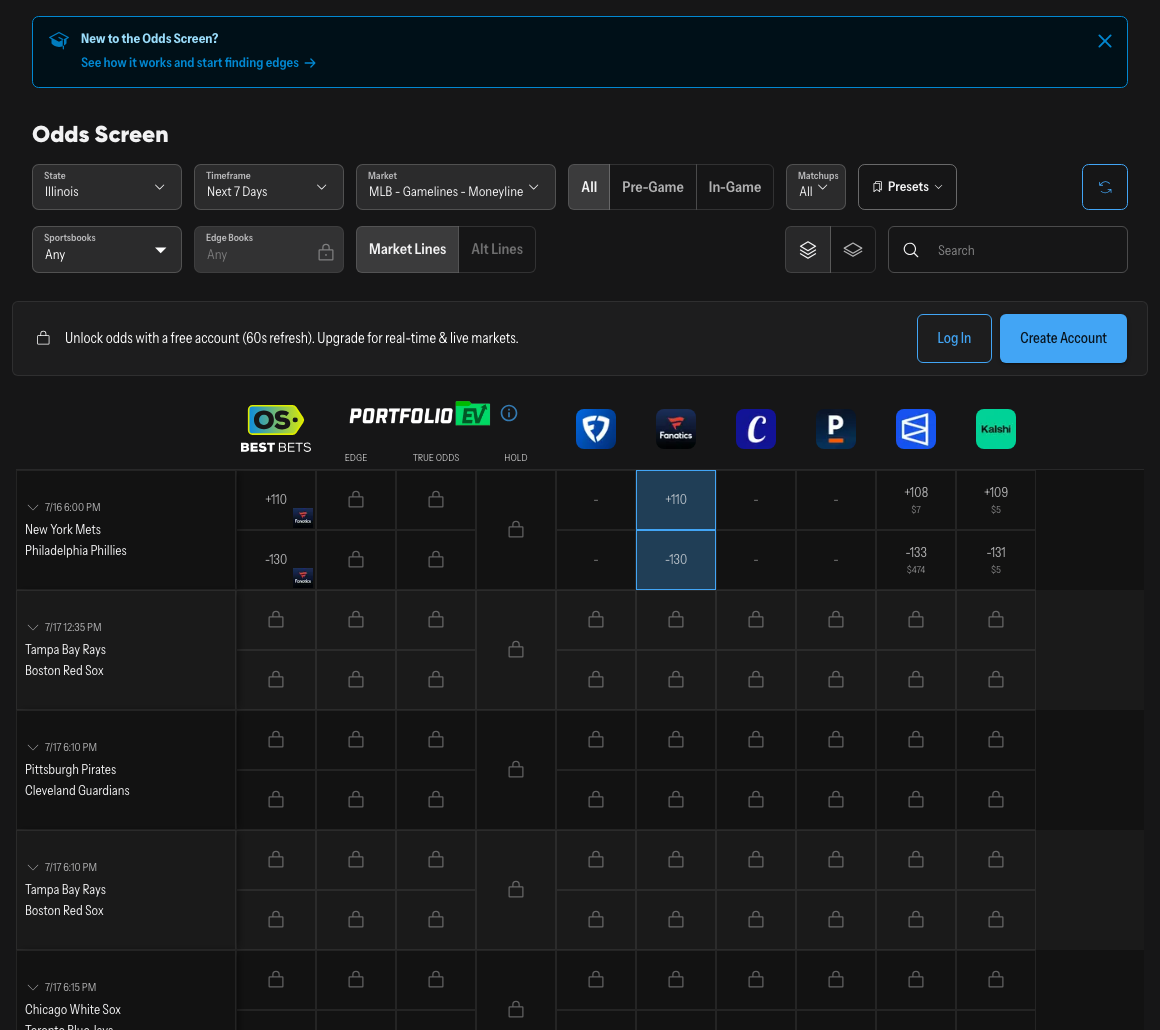
The OddsShopper Odds Screen.
| State | Online Since | Notable Restriction |
|---|---|---|
| New Jersey | June 2018 | No in-state college games or college player props |
| Illinois | June 2020 | No in-state college games or college player props |
| Colorado | May 2020 | No college player props |
| Michigan | January 2021 | None notable |
| Virginia | January 2021 | No in-state college games or player props |
| Arizona | September 2021 | No college player props |
| Tennessee | November 2020 | Online-only market (no retail); no college player props |
| New York | January 2022 | No in-state college betting; no college player props |
| Ohio | January 2023 | No college player props |
| Massachusetts | March 2023 | In-state colleges only in 4+ team tournaments; no college player props |
| Pennsylvania | 2019 | None notable (retail launched 2018) |
| North Carolina | March 2024 | No college player props |
| Missouri | December 2025 | Newest major launch; no college player props |
Beyond these, more states plus Washington, D.C., offer legal online or retail betting, and a few run limited or tribal-only setups. Wisconsin is the freshest addition: the governor signed online betting into law in April 2026, but it is tribal-exclusive mobile, meaning the state's federally recognized tribes control the apps and standalone commercial apps like DraftKings and FanDuel are not offered independently, and the consumer rollout is still coming. We are building dedicated state-by-state guides for each of these markets; check back as they roll out.
States With No Legal Sports Betting
Eleven states still have no legal sports betting of any kind. If you live in one of these, there is no regulated sportsbook to sign up with (and you should steer clear of offshore sites that operate outside U.S. regulation):
- Alabama
- Alaska
- California
- Georgia
- Hawaii
- Idaho
- Minnesota
- Oklahoma
- South Carolina
- Texas
- Utah
Several of these are perennial "next up" candidates. Big-population states like California and Texas keep the conversation going every legislative session, but as of July 2026 none has crossed the finish line. For the states that have gone live, the practical next step is learning to bet smart, starting with how to read betting odds.
How OddsShopper Works Anywhere Betting Is Legal
Here is the part that matters once you have confirmed betting is legal where you are: you probably have access to several sportsbooks, and they rarely post the same price. That habit of always taking the best available price is called line shopping, and it is the single easiest edge a new bettor can pick up.
Example: The Same Bet At Two Prices
Say you want to back a team and one app has them at +150 while another has them at +170. It is the exact same wager, but the payout is not:
- At +150, a $100 winning bet returns $150 in profit.
- At +170, that same $100 winning bet returns $170 in profit.
That is $20 extra for doing nothing but placing the bet on the better app. Do that over hundreds of bets and the difference is enormous. The catch is that no single book is best on every game, so you have to check them all.
Doing that by hand across seven apps is tedious. That is the job OddsShopper does automatically: it pulls live odds from 100+ sportsbooks into one screen, so you can compare available prices on supported games before you bet. The workflow is the same wherever regulated online sportsbooks operate, though which books you can use varies by state. (New to the screen? Here is how the OddsShopper odds screen works.)
New to OddsShopper?It scans odds from 100+ sportsbooks in legal online markets and flags the bets priced in your favor, so you never leave a better number on the table. You can try it free for 7 days, and code STATEBET20 takes 20% off your first payment of OS Pro or OS Core if you subscribe.
A Quick Word On Betting Responsibly
Legal sports betting should be entertainment, not a way to make money or chase a loss. Only wager what you can comfortably afford, set limits before you start, and know that regulated sportsbooks in every legal state offer deposit limits, cool-off periods, and self-exclusion tools if you want them. If gambling stops being fun, help is free and confidential at 1-800-GAMBLER.
Frequently Asked Questions
Is sports betting legal in my state? It depends on where you live. As of July 2026, 39 states plus Washington, D.C., allow some form of legal sports betting, and 30 of them offer online or mobile betting. Check the tables above for the major online markets, and always confirm your own state's current rules before you bet.
How many states have legal sports betting? Thirty-nine states plus Washington, D.C., have legalized sports betting in some form. Thirty of them offer regulated online or mobile wagering; the others are retail-only or run limited setups.
Which states have legal online sports betting? Thirty states offer online or mobile sports betting through regulated U.S. sportsbooks. The largest, longest-running markets include New Jersey, New York, Pennsylvania, Illinois, Michigan, Ohio, Colorado, Arizona, Virginia, Tennessee, Massachusetts, North Carolina, and Missouri.
Which states don't allow sports betting? Alabama, Alaska, California, Georgia, Hawaii, Idaho, Minnesota, Oklahoma, South Carolina, Texas, and Utah have no legal sports betting as of July 2026.
Can I use OddsShopper in my state? OddsShopper is an odds-comparison tool, so you can browse prices from anywhere. To actually place a bet, you need to be physically in a state where online sports betting is legal and signed up with a licensed sportsbook there.
The Bottom Line
Sports betting is legal and online in most of the country now, though never everywhere, and the map still has real gaps. The details (in-state college rules, online vs. retail, tribal-only models) vary state to state. Confirm the current rules where you live, bet within your means, and once you are set up, make line shopping a habit so every bet you place is at the best available price. That is where a free tool like OddsShopper pays off, in all 30 online states and any that join them.
More on this: Louisiana Sports Betting Guide: Rules, Promos & Strategy · Arizona Sports Betting: Is It Legal? Apps & Rules · Illinois Sports Betting: Is It Legal? Apps & Rules · Massachusetts Sports Betting: Is It Legal? Apps & Rules · Michigan Sports Betting: Is It Legal? Apps & Tools