NRFI picks for August 16, 2026: the first-inning board on this page was for August 16, 2026, and those games have been played, so the plays below are that day's record. As of September 4, 2026, today's NRFI and YRFI board is on MLB NRFI picks today, and every first-inning price across the books is on the live MLB odds screen.
The Quick Answer
- NRFI, Brewers At Dodgers (4:10 PM ET). Logan Henderson and Tarik Skubal have struck out 40 of the 99 hitters they've faced in the first inning and walked three. Best strikeout-to-walk profile on the board, and it's my lean the moment the number is up.
- YRFI, Phillies At Twins (2:10 PM ET). Andrew Painter (7.80 first-inning ERA) and Dean Kremer (11.57) combine for a 9.00 mark across 22 first innings. Kremer's .406 average allowed in the frame is the worst of any Sunday starter outside Blade Tidwell's two innings, though it stands on just seven frames itself.
- The Lowest Combined First-Inning ERA Is Not The Best NRFI. Padres-Guardians sits at 2.20, but Tanner Bibee has given up seven first-inning home runs, most of any Sunday starter, and the homer is how an NRFI dies without a walk.
- The Honest Risk On The NRFI Is The Home Run, In Both Halves. Skubal has allowed five in 16 first innings and faces Milwaukee up top; in the bottom half Henderson meets a Dodgers lineup that has hit 27 home runs in the first inning this season.
- Last Edition Went 1-1. Friday's top-rated NRFI, Diamondbacks-Braves, lost in the top of the first. The second play, Red Sox-Pirates, cashed 0-0.
First-inning splits pulled Saturday, 9:30 PM ET — Sunday's first pitches run 12:15 PM to 7:20 PM ET.
Sunday is a strikeout board, not an ERA board. Missed bats and zero free baserunners are what actually end a first inning scoreless, and today they concentrate in one game while the prettiest earned-run averages sit somewhere else.
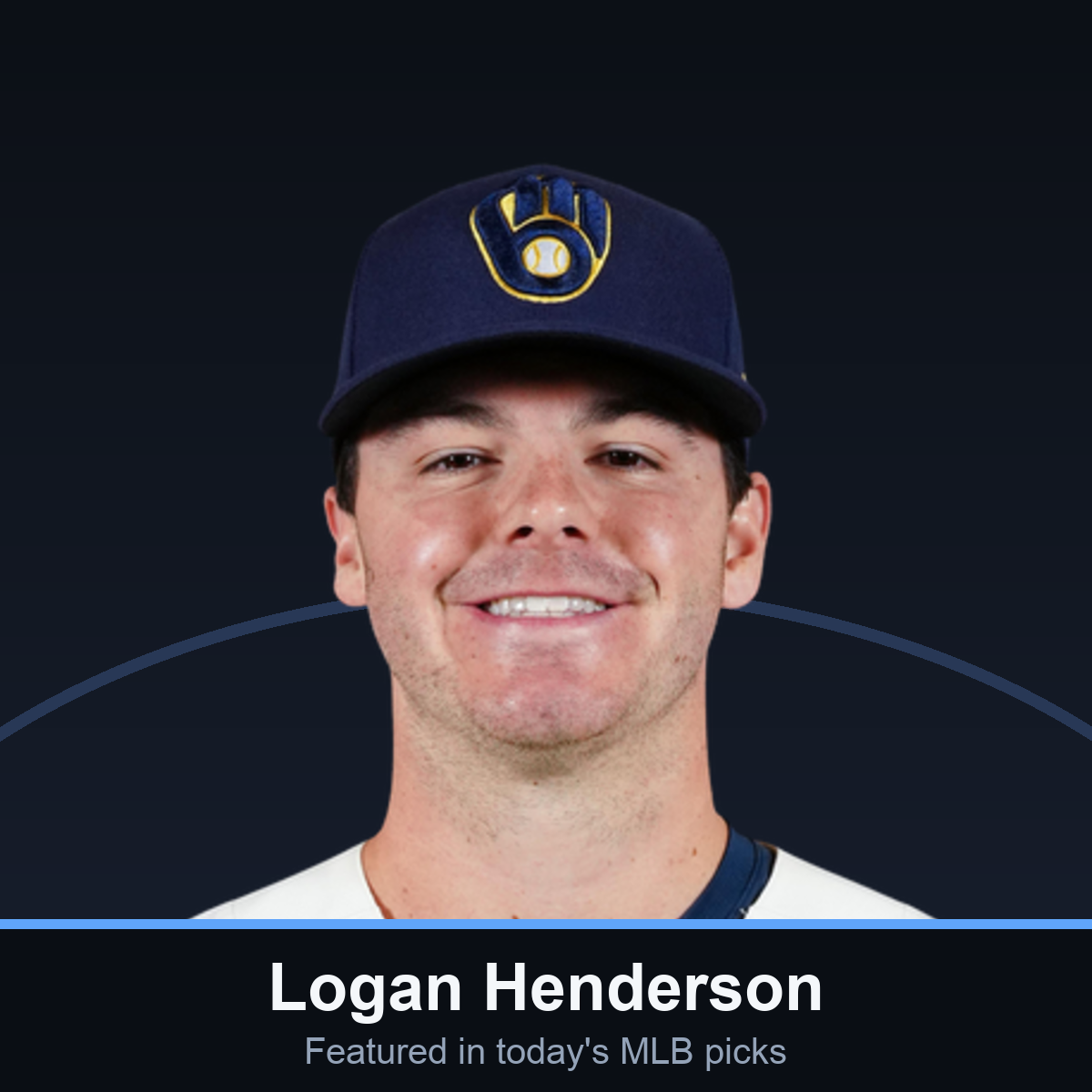
Logan Henderson: 18 strikeouts, three walks and one home run allowed in 11 first innings this season.
Sunday's Full First-Inning Board
Each row adds the two listed starters' 2026 first-inning splits together. Combined ERA ranks the board; I left the innings column in so you can see how much sample each number stands on.
| Game (ET) | Starters | 1st-inn IP | Comb. ERA | K% | BB% |
|---|---|---|---|---|---|
| SD @ CLE (1:40) | Mize / Bibee | 41.0 | 2.20 | 22.4% | 7.5% |
| BAL @ TB (12:15) | Rogers / Peralta | 44.0 | 2.25 | 27.8% | 8.0% |
| STL @ CHC (3:15) | Dobbins / Cabrera | 20.0 | 2.25 | 25.0% | 3.9% |
| MIL @ LAD (4:10) | Henderson / Skubal | 27.0 | 2.33 | 40.4% | 3.0% |
| TEX @ ATH (4:05) | Bradford / Lopez | 18.0 | 2.50 | 21.8% | 19.2% |
| MIA @ CIN (1:40) | Pérez / Lodolo | 34.0 | 3.18 | 32.1% | 6.1% |
| SEA @ HOU (7:20) | Woo / Brown | 35.0 | 3.60 | 29.3% | 8.2% |
| CWS @ DET (1:40) | Burke / Anderson | 24.0 | 3.75 | 26.8% | 4.1% |
| BOS @ PIT (1:35) | Sandoval / Skenes | 30⅔ | 3.82 | 34.6% | 11.0% |
| KC @ LAA (4:07) | Cameron / Johnson | 33.0 | 3.82 | 16.1% | 16.1% |
| NYY @ TOR (1:37) | Weathers / Cease | 45.0 | 4.00 | 30.3% | 8.7% |
| ARI @ ATL (1:35) | Soroka / Elder | 39.0 | 5.31 | 21.1% | 12.6% |
| WSH @ NYM (1:40) | Irvin / Scott | 31.0 | 5.81 | 28.6% | 11.4% |
| PHI @ MIN (2:10) | Painter / Kremer | 22.0 | 9.00 | 20.0% | 10.5% |
| COL @ SF (4:05) | Hughes / Tidwell | 8.0 | 12.38 | 21.4% | 9.5% |
The Rangers-Athletics row is the one I keep coming back to, as a warning. A 2.50 combined ERA reads like an NRFI until the last column: those two arms have walked 19.2% of the hitters they have faced in the first, the worst rate on the board. Cody Bradford has only nine batters faced in there, so the point rests on Jacob Lopez, who has walked 13 in 69. I don't want a scoreless inning that depends on command.
The Plays
Brewers at Dodgers NRFI, 4:10 PM ET — a lean until there's a number to price it against. Skubal has walked nobody in 16 first innings and Henderson three in 11, so both halves of this inning open with an arm that won't hand out a free baserunner, and 40.4% of the hitters they've faced in the frame have struck out. The case against is the home run, and it lands differently in each half: Skubal has allowed five in 16 first innings but gets a Milwaukee first inning that has produced 68 runs and 16 homers at a .737 OPS, while Henderson, with one homer allowed in 11 first innings, draws the harder side in a Dodgers first inning worth 27 homers and a .799 OPS.
Phillies at Twins YRFI, 2:10 PM ET — same condition, same reason. Kremer has allowed 13 hits in seven first innings for a .406 average and a 1.207 OPS, and in the top of the first he draws a Philadelphia lineup that has scored 72 first-inning runs at a .790 OPS, which is the core of the case. The bottom half is more about Painter than Minnesota's lineup: the Twins are mid-pack at 66 first-inning runs and a .711 OPS, but Painter's 7.80 first-inning ERA and four homers allowed in 15 first innings keep that half live on their own.
Most Days The Answer Is No
Fifteen games, two plays. That ratio is the product, not a bad day. First-inning markets price tightly because the inning is short and the inputs are public, so an honest read on a normal Sunday is 13 shrugs and two numbers worth acting on. Friday showed the other half: the top-rated play still lost, because six outs is the smallest sample in baseball betting. Knowing which 13 to skip is the part that compounds.
How To Read Sunday's Board Before First Pitch
No Sunday lineup was posted when I wrote this, which matters less here than usual. Those three walks in 27 combined first innings, the same number that made Brewers-Dodgers the play, mean the read barely depends on who hits second; it turns on whether a top-of-the-order bat catches a Skubal mistake. Philadelphia-Minnesota is the one I'd re-check at noon instead: Kremer's .406 stands on seven first innings, the thinnest sample behind either play I'm making, and one clean frame moves it.
I'm leaving Rockies-Giants alone. It tops the board at 12.38 and it's noise, because Blade Tidwell has thrown two first innings and Gabriel Hughes six. Eight combined innings is a rounding error, and a getaway-day Sunday with 14 of 15 first pitches before 4:15 PM ET offers plenty of spots that don't have that problem.
Then the last step before either bet: pull up the first-inning odds screen, compare the number across books, and pass if the market has already moved past your own fair price. That is the whole discipline on a no-price morning — the read tells you which two games to look at, the number tells you whether to play them. Friday's edition is the graded record above, and the live odds screen, where you shop the number across 20+ books has the full-game sides in the same games. New to first-inning markets? Start with what first-inning runs actually mean, what is NRFI, the MLB betting terms glossary, and free expert picks today. Sports betting is for adults 21+ where legal, and even a positive-edge price loses plenty of nights.
See Sunday's first-inning board devigged before you bet it.OddsShopper prices NRFI and YRFI across 20+ books side by side and flags the moment one of them beats its true odds. Start with the free trial and see what it flags before you pay anything; after that, code NRFI takes 20% off your first month of OS Pro.
More on this: MLB Picks Hub: Today's Live Boards and Series · NRFI Picks Today: Only 1 of 15 Games Has Value · MLB Hit Props Today · MLB Home Run Picks Today (8/23): Shohei Ohtani & More · MLB NRFI & YRFI Picks Today: Bennett's Perfect 14 (Aug. 23)