If you have scrolled an MLB board lately, you have seen NRFI sitting near the top of the props. So what is NRFI in baseball betting? NRFI stands for No Runs First Inning, a yes-or-no bet on whether the first inning ends scoreless. Bet NRFI and you need zero runs from both teams in the top and bottom of the first; the flip side, YRFI (Yes Run First Inning), cashes the moment a single run crosses the plate. It is one of the simplest props on the board, which is exactly why it draws so much action, and why so many people bet it without checking whether the price is any good. This guide breaks down how the bet works, how the juice is built, how to read the matchup, and how to shop for a number priced in your favor.
In Summary (TL;DR)
- NRFI = No Runs First Inning. You win if neither team scores in the first inning. YRFI = Yes Run First Inning, the opposite side, which wins as soon as one run scores.
- The bet is settled by the end of the first inning, so it is over fast and depends almost entirely on the two starting pitchers and the top of each lineup.
- It is usually priced with juice on the NRFI side, because most first innings are scoreless, so the book shades the popular side and you pay for it.
- The read is matchup-driven: quality of both starters, the heart of each order, the ballpark, the weather, and the umpire all push the true chance up or down.
- The edge is the same as any market: strip out the vig, find the side whose true chance beats its price, and shop every book for the best number on the OddsShopper MLB odds screen.
What NRFI and YRFI Actually Mean
NRFI and YRFI are two sides of the same coin, both decided by what happens in the first inning only.
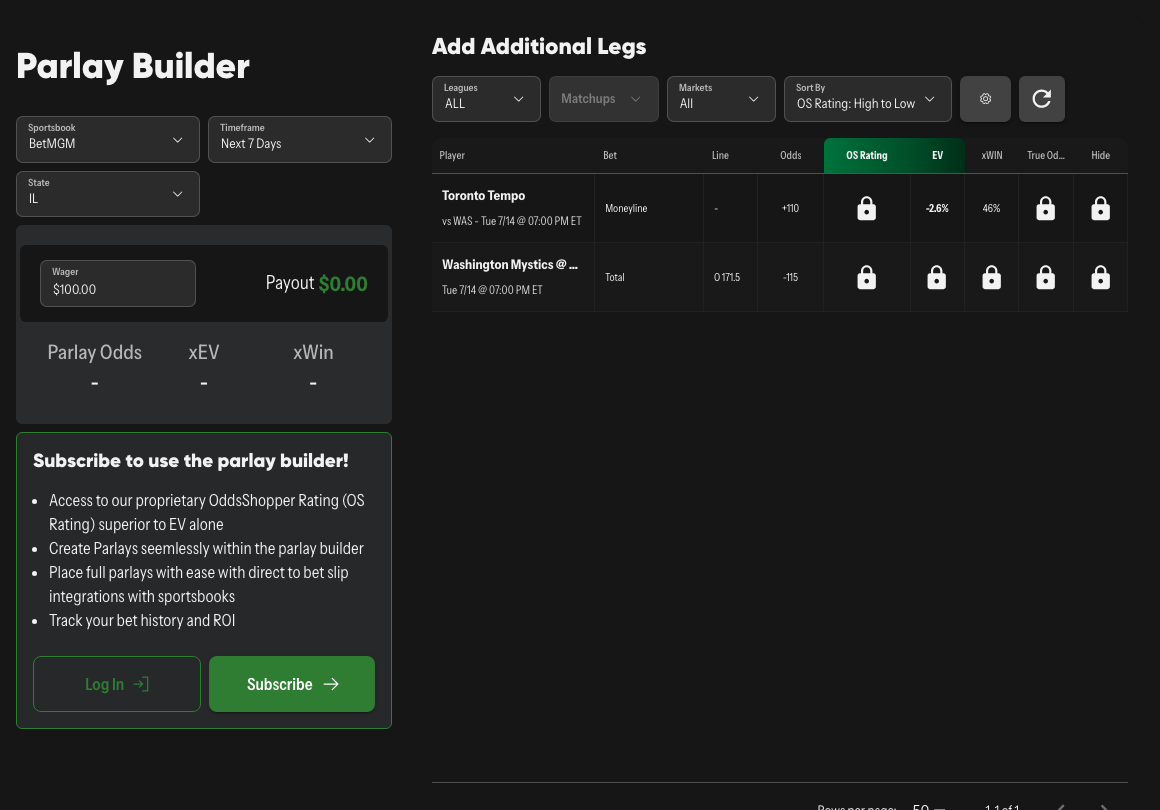
The OddsShopper Parlay Builder.
- NRFI (No Runs First Inning): a bet that the first inning is scoreless. Both halves of the inning must end with the score still 0-0. If either team scores, NRFI loses.
- YRFI (Yes Run First Inning): a bet that at least one run scores in the first inning, by either team. A single run, on either side, cashes it.
Two things make this market different from a full-game total. First, it settles at the end of the first inning, win or lose, so you know the result in ten or 15 minutes. Second, it ignores everything after the first out of the second inning. A 12-run slugfest that started 0-0 in the first is still an NRFI win. That narrow window is what makes the bet readable: you are not handicapping nine innings, you are handicapping one, against two specific starters and the top of two lineups.
You will also see related markets built on the same idea: a first-inning total (Over/Under 0.5 runs is effectively YRFI/NRFI), team NRFI (one specific team to not score in the first), and first-inning Over/Under 1.5. The core read carries across all of them.
How the Line and the Juice Work
NRFI is almost always offered as a two-way market with American odds on each side, and the vig is built into both prices. A scoreless first inning is the more common outcome over a full season, so NRFI is usually the genuine favorite and sits at a minus price while YRFI is the longer number. On top of that, NRFI is also the popular, public side, so books often shade the price a little shorter than the true odds and still get plenty of action.
Here is the mechanic, with clearly illustrative numbers. Say a game is posted at NRFI -135 / YRFI +115. Convert each American price to an implied probability and the two add up to more than 100 percent. That extra slice above 100 is the hold, the book's margin. To judge either side honestly you have to strip that margin out across both prices to get the fair, no-vig chance of each outcome. If your read on the matchup says NRFI's true chance is higher than its devigged number, the NRFI price is priced in your favor. If it is lower, you either take YRFI or you pass. The numbers here are illustrative, so always run the live board, but the process never changes. If devigging is new to you, how to remove the vig walks through the math step by step.
The key thing to internalize: a shorter NRFI price is not automatically a good NRFI bet. You can love the matchup and still be staring at a number too short to be worth it. Price first, lean second.
Why NRFI Trends So Hard
NRFI blew up as a betting market for reasons that have nothing to do with whether it is profitable. It is cheap to enter, it resolves fast, it is easy to understand, and it is easy to parlay (stacking several games' NRFI legs into one ticket is a staple of baseball Twitter). That popularity is a double-edged sword for a bettor. High public interest is exactly what lets a book shade the popular side and still get plenty of action, which is how value quietly leaks out of the number.
That does not make NRFI a bad bet. It makes it a bet you have to price carefully, because the crowd is on one side and the book knows it. In our experience, the bettors who do well here are not the ones hammering NRFI every night out of habit; they are the ones who only fire when the matchup read says the offered price is longer than the outcome's true chance. That is the discipline we built our tools around.
How to Read an NRFI Matchup
Because the bet lives entirely in the first inning, a handful of inputs do almost all of the work. Here is what actually moves the true probability.
The two starting pitchers
This is the biggest lever by far. Two front-line starters who consistently work efficient, low-traffic first innings push the true NRFI chance up. A pitcher who tends to labor early, walk hitters, or give up hard contact in the opening frame pushes it toward YRFI. You only care about how each starter performs in the first inning, which is not the same as overall quality. A great pitcher who is a notoriously slow starter and a back-end starter who settles in early can flip the read you would expect from their season-long numbers.
The top of each lineup
NRFI is decided by whoever bats in the first, so the relevant hitters are roughly the top three or four in each order, not the lineup as a whole. Two orders stacked with high on-base, high-power bats at the top raise the YRFI chance; two soft top-of-the-orders lean NRFI. Always check the posted lineups before you bet, because a star resting or hitting lower than usual changes the read.
Park, weather, and umpire
A hitter-friendly park, a hot day with the wind blowing out, and a tight strike zone all nudge toward runs (YRFI). A pitcher-friendly park, a cool night, wind blowing in, and a wide zone nudge toward NRFI. None of these is decisive on its own, but stacked together they meaningfully shift the true first-inning run probability, and the closing line will usually reflect them, so the value is in spotting it before the market does.
The point of the read is not to "predict" a scoreless inning. It is to estimate the true probability so you can compare it against the de-vigged price and only bet when the number is in your favor. For a refresher on the broader baseball board, our MLB betting terms glossary covers the rest of the market vocabulary you will run into.
How to Find a +EV NRFI Bet
Reading the matchup gives you an estimate of the true chance. Turning that into a profitable bet comes down to two habits, and OddsShopper is built to do both for you automatically.
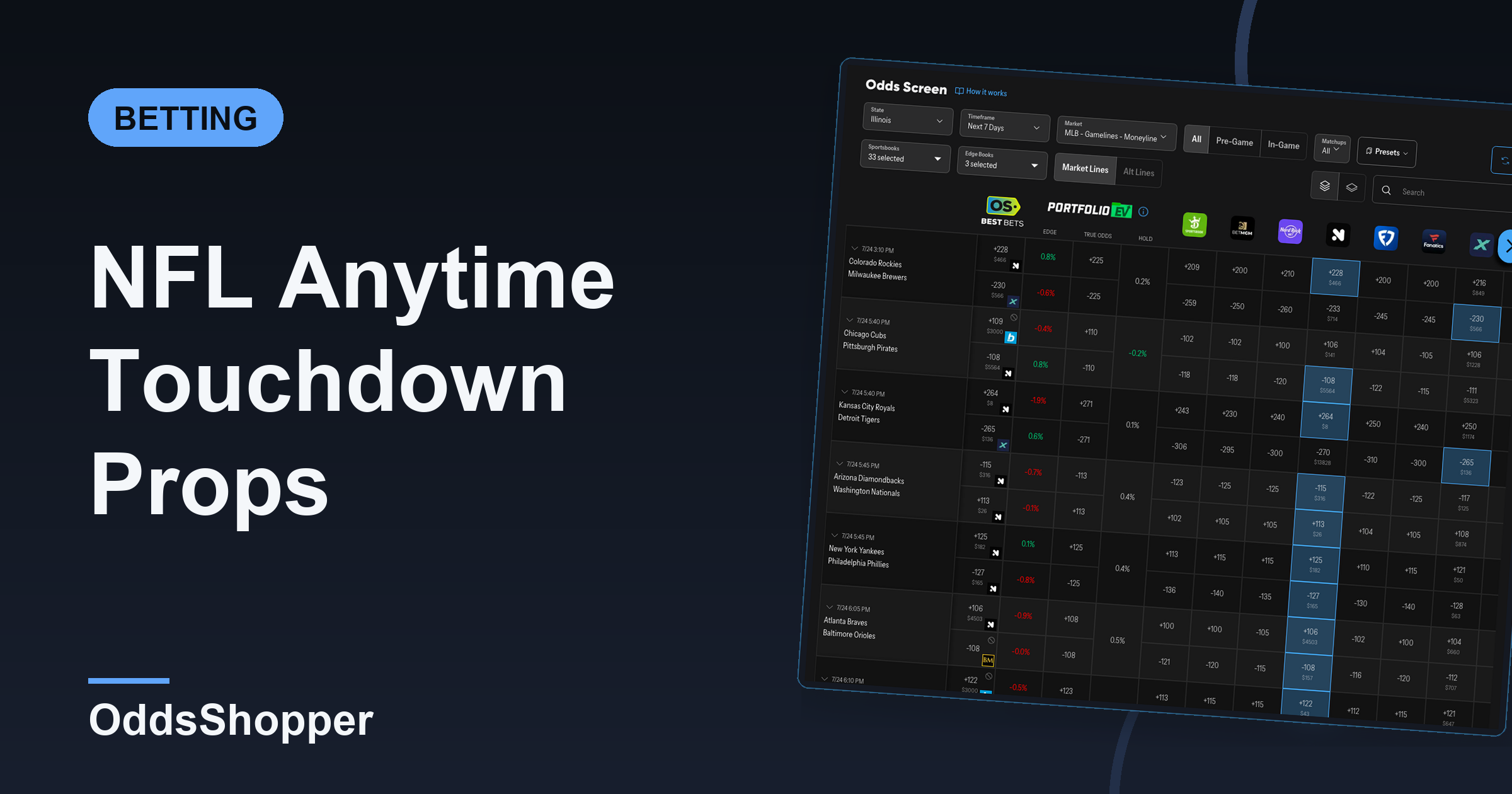
First, line shop. The same NRFI bet can pay a different price at different books, and taking the best available number is free value: it is the same outcome at a better payout. The OddsShopper MLB odds screen lines up every book's NRFI and YRFI prices in one place, so you always bet the best number instead of leaving value on the table at whatever app you happened to open. One honest caveat: the best available price can still sit inside the fair number, so a good price is necessary but not sufficient. You still have to clear the true-odds bar below.
Second, find the +EV side. A bet is worth making only when its real probability is higher than the price implies after the vig is removed. Our Portfolio EV tool scans the market, devigs it to a fair number, and flags the side priced in your favor, and our Sharp Sportsbook Algorithm benchmarks the offered price against where the sharpest books land, so you are measuring against the true odds rather than just beating one app. If neither NRFI nor YRFI clears that bar, the right move is no bet. Not every game has a side worth taking. If you want the full method, how to find +EV bets lays it out.
A quick worked illustration to tie it together. Say two efficient starters are on the mound, the tops of both orders are light, and it is a cool night in a pitcher's park. Your read says the true NRFI chance is meaningfully higher than the devigged price the board is offering. That gap between your estimate and the fair price is the bet. Shop the books, take the longest NRFI number you can find, and size it to your edge and your bankroll, not to how confident you feel. If instead the de-vigged price already reflects everything you see, you pass and wait for a board that does not. The numbers are illustrative; the discipline is the whole job.
New to OddsShopper? It scans the major sportsbooks, devigs each market to a fair number, and flags which NRFI and YRFI prices are actually in your favor, the exact work this guide just walked through, done for you in seconds across every MLB game. You can try it free for 7 days, and code NRFI20 takes 20% off OS Pro or OS Core if you subscribe.
A Note on NRFI Parlays
Stacking several NRFI legs onto one ticket is wildly popular, and there is nothing inherently wrong with it. A parlay multiplies the EV of its legs, so a parlay of +EV NRFI legs is a +EV parlay. The trap is the opposite: piling on NRFI legs you have not priced, just because the matchups "look good," compounds negative EV with every leg you add. The rule is not "fewer legs," it is "every leg must be a price priced in your favor." If a leg does not clear the de-vigged number on its own, it does not belong on the ticket.
FAQ
What does NRFI mean in baseball betting? NRFI means No Runs First Inning. It is a bet that neither team scores in the first inning of an MLB game. If the first inning ends 0-0, NRFI wins; if either team scores, it loses.
What is the difference between NRFI and YRFI? They are opposite sides of the same first-inning market. NRFI (No Runs First Inning) wins if the first inning is scoreless. YRFI (Yes Run First Inning) wins if at least one run scores in the first, by either team.
Is NRFI a good bet? It can be, but only when the price is longer than the outcome's true chance after you remove the vig. Because NRFI is the popular side, books often shade it, so a short NRFI number is frequently not worth it. Price the matchup first, then decide.
How is an NRFI bet settled? It settles at the end of the first inning. Nothing that happens from the second inning on affects it. A game that is 0-0 after one inning is an NRFI win regardless of the final score.
What matters most when handicapping NRFI? The two starting pitchers in the first inning, the top three or four hitters in each lineup, and the conditions (park, weather, umpire). Always check the posted lineups before betting, and compare prices across books to get the best number.
More on this: How To Bet Baseball On DraftKings: 3 Markets Explained · Best +EV Bet Tracker: What To Look For (And What Most Skip) · Closing Line Value Vs. Variance: Your P&L Is Lying To You · Devig Calculator: Find Fair No-Vig Odds From -110 Prices · How To Bet On Horses: 6 Horse Racing Bet Types Explained
Bottom Line
NRFI is one of the easiest props on the MLB board to understand and one of the easiest to overpay for. The bet is simple: No Runs First Inning, settled fast, driven by two starters and the top of two lineups. Winning at it is the same discipline as any market. Estimate the true first-inning run probability, strip the vig out of the offered price, and only bet the side, NRFI or YRFI, that is priced in your favor. Then shop every book for the best number, and when nothing clears the bar, do not force a bet. Whatever you take, size it to your edge and your bankroll. Bet only where it is legal in your state, play 21+, and keep it within your means.
Shop the best NRFI and YRFI number across every book on the OddsShopper MLB odds screen, then let OS Pro's Portfolio EV and Sharp Sportsbook Algorithm flag the side priced in your favor. Start with a free 7-day trial, then code NRFI20 takes 20% off OS Pro or OS Core.