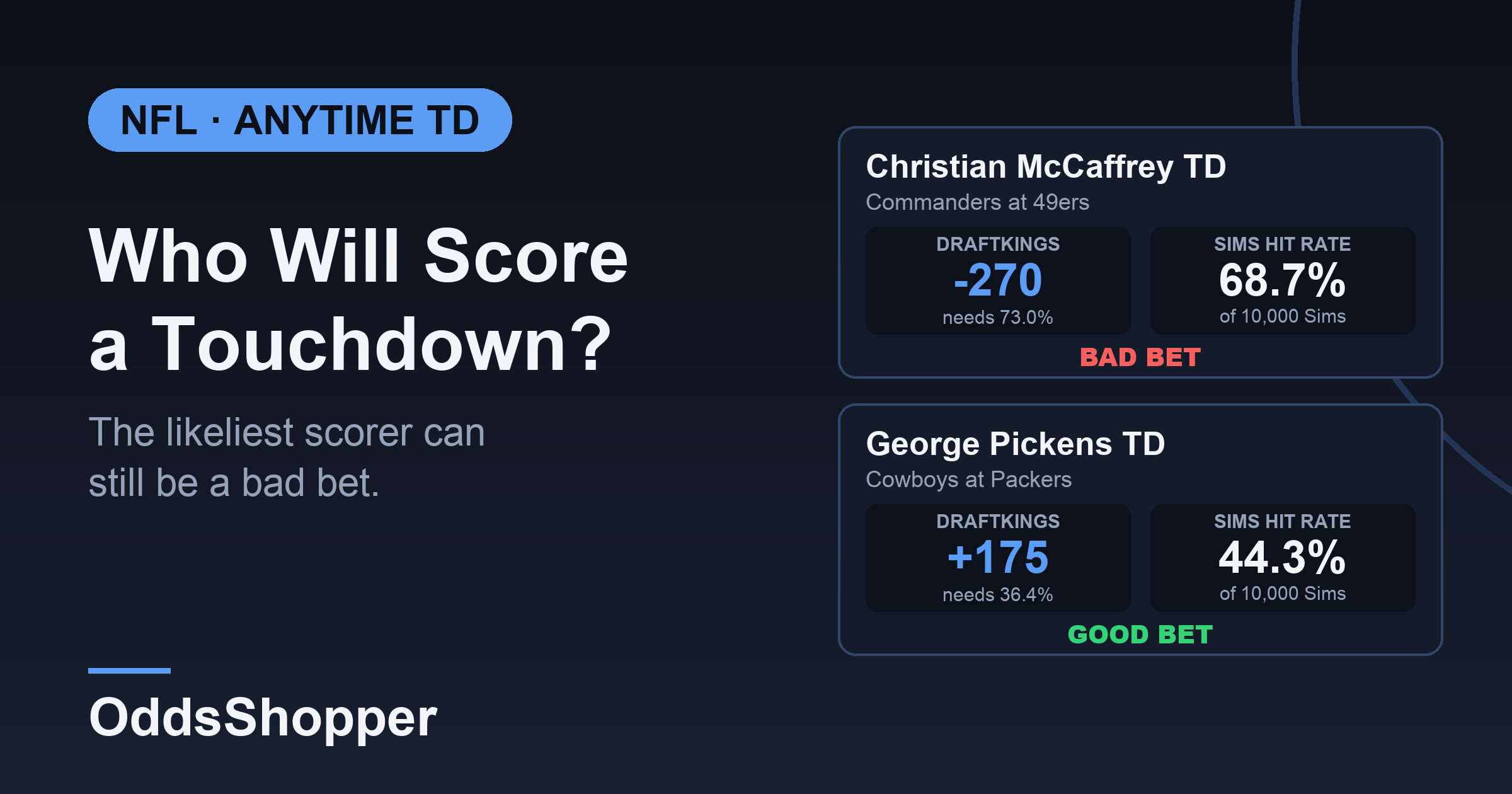
You already know how to build this ticket at a sportsbook: pick a handful of touchdown scorers, stack them onto one slip, every leg has to hit. That's a parlay. Kalshi runs the same idea under a different name — a combo — built through a combo builder instead of a bet slip, and the mechanics underneath are different enough to actually walk through before you touch one.
Building It On Kalshi
You open the combo builder either from the page of any eligible event or from the live tab by selecting the sports category and then the combo builder, per Kalshi's help center (last updated June 20, 2026). Pick your legs. Kalshi's 2026 NFL menu carries touchdown scorers broken out by full game, half, or quarter (CBS Sports, September 8, 2026), and here's the part that's genuinely unfamiliar if you've only ever used a betting slip: the price you see isn't posted by Kalshi. It comes from a request for quote. You name a market and a size, the request goes out to market makers, they answer with yes/no prices for the full size, and you take one side of the best quote (Kalshi API documentation, September 8, 2026). Market makers typically answer in 1 to 2 seconds, and an accepted quote voids if you don't confirm it within 30 seconds.
The part that actually matters if you're spending money: Kalshi's help center states plainly, "Fills are not guaranteed. If no market participant responds to the RFQ with a quote, the combo order will not fill." The weirder and longer the legs, the fewer market makers have a reason to answer you at all. Quoted prices can also move between when you see them and when you try to execute.
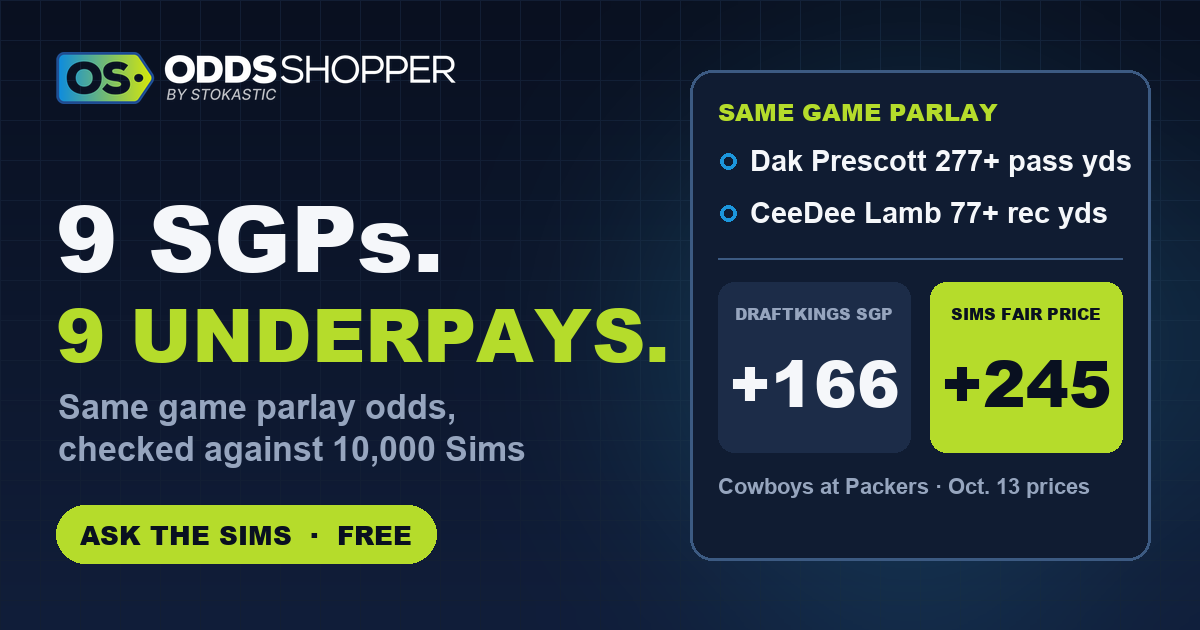
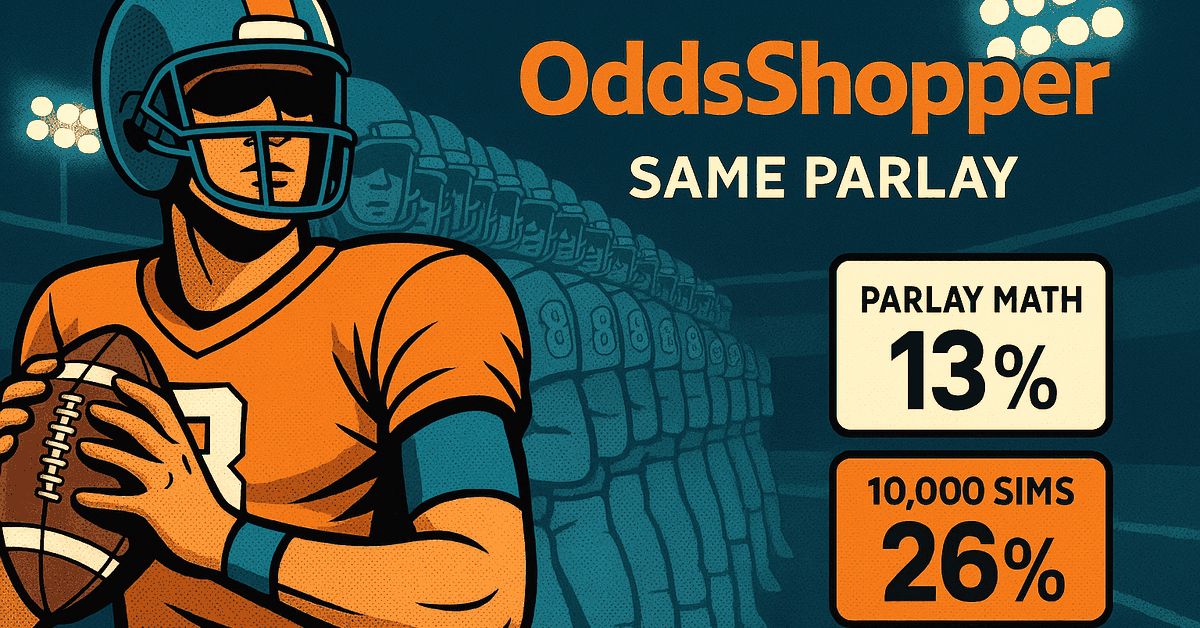
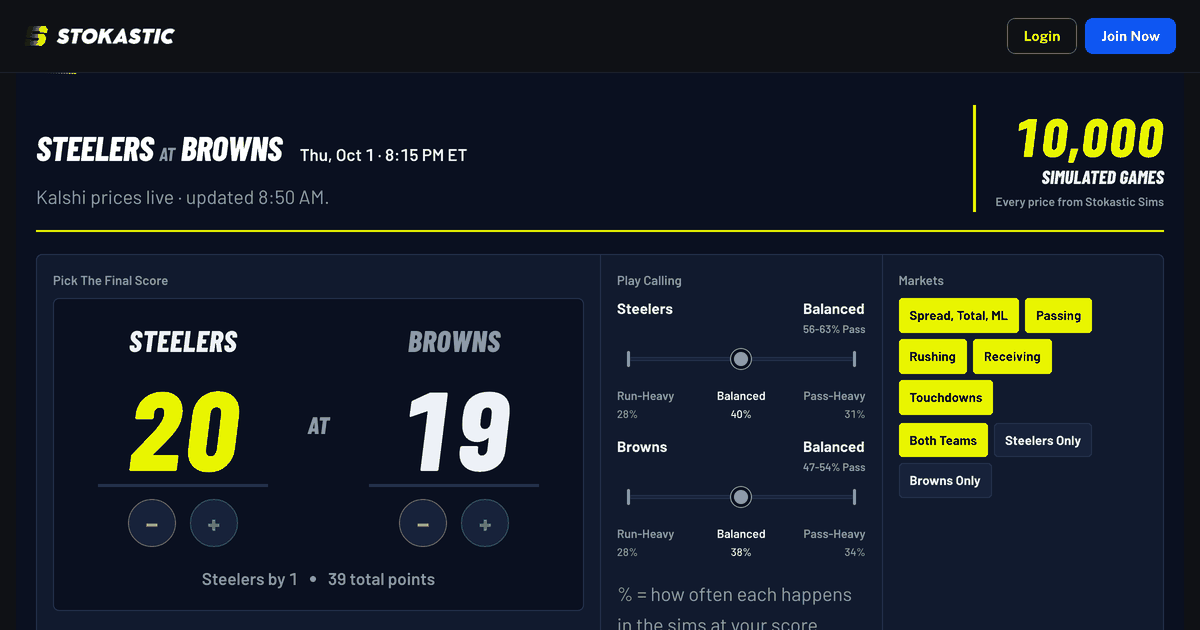 Price the combo before you buy it: the Kalshi Parlay Simulator runs 10,000 simulated games of this week's game and prints the fair price of any combo next to the price on Kalshi.
The Fee Rule That Actually Changes What This Costs
Two Kalshi API changelog entries from the same August week reset the math. As of August 20, 2026, combo markets "composed entirely of independent NFL components" carry no maker fee. Two days later, a quoter-fee swap went live: if a quoting market maker executes against an order that's rested on the book for less than five seconds, the quoter pays the maker fee and the resting order's owner pays the taker fee, the more expensive side. No maker fee doesn't mean free; it means the charge lands on the other side of your trade. And nothing in the public documentation says whether two touchdown scorers from the same game count as "independent NFL components." That single word decides how your ticket gets charged, and nobody's answered it publicly yet.
Building The Same Ticket On The Terminal
Stokastic's own internal Terminal does this with a few more clicks up front and a lot more shown to you at the end. To be clear about what you're looking at below: these are screenshots of our own desk's combo builder, not Kalshi's app — our Terminal sends the quote request to Kalshi on your behalf, it isn't Kalshi's own interface.
Find a market card, say a touchdown scorer priced Yes 39¢ / No 62¢, and click the small combo icon on the side you want. A tooltip confirms it: "Add Yes to combo, anchor 39¢." That first leg is your anchor.
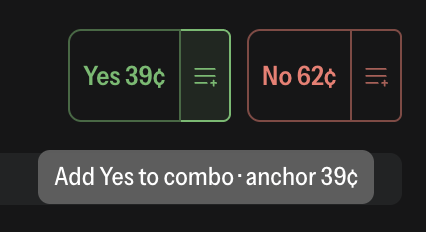
Open the full order book on any market instead of the card, and the same icon sits next to Quote Yes and Quote No, with the spread and a live price ladder underneath if you want to see exactly what's resting on the book before you commit to it.
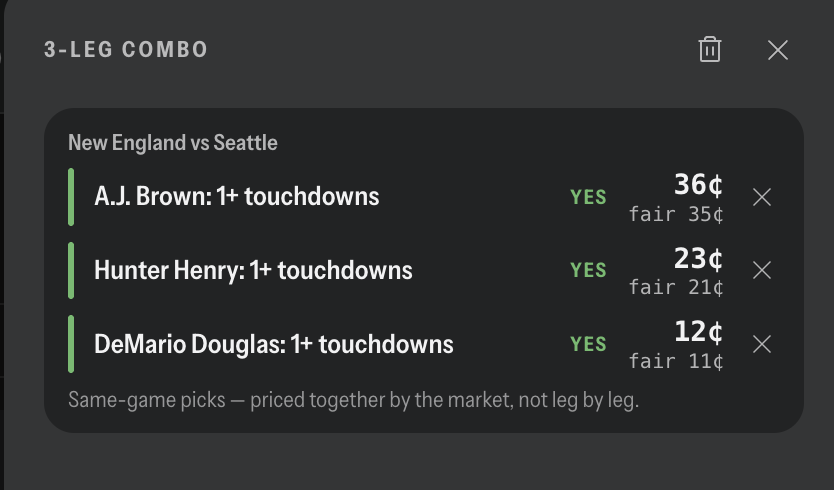
Every leg you add stacks into a combo panel on the side, grouped by the actual game. Build a 3-leg touchdown combo on New England-Seattle and it shows you each leg's live price next to the Terminal's own fair number: A.J. Brown 1+ at 36¢, fair 35¢; Hunter Henry 1+ at 23¢, fair 21¢; DeMario Douglas 1+ at 12¢, fair 11¢. That fair column next to the live one is the whole point of building it here instead of blind on Kalshi.
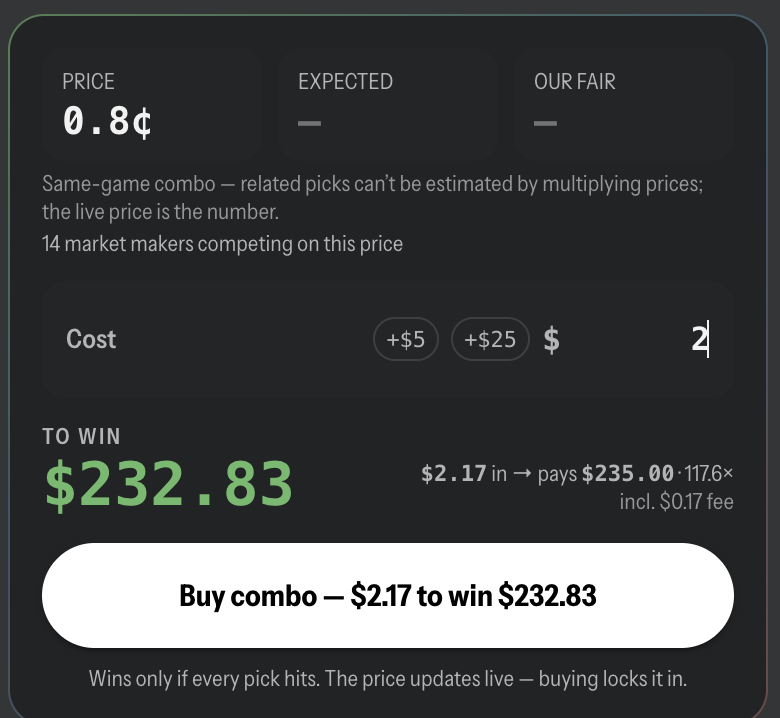
It disappears on purpose once you get to checkout, though, and that's worth understanding rather than assuming it's a bug. The panel is explicit: "Same-game combo, related picks can't be estimated by multiplying prices; the live price is the number." Correlated legs from one game don't have a clean fair value to multiply toward, so the Terminal shows you the real combo price (0.8¢ on that same 3-leg ticket) and how many market makers are actually competing on it (14, in that instance) instead of a made-up estimate. Type in a dollar amount and it does the rest of the math for you: $2.17 in pays $235 if all three hit, a 117.6x return with the fee already included in the number, not hidden past checkout. One button, "Buy combo, $2.17 to win $232.83," and a plain reminder underneath it: it only wins if every pick hits, and the price is live until you actually buy.
More on this: Oklahoma Should Win And Cover 5.5 At Michigan · NFL MVP Odds: Who The Market Backs In Week 1 · The Shutdown Market Got Its Answer This Week · How To Bet Team USA: Where The Real World Cup Value Hides · Free PrizePicks Optimizer Guide
What Nobody Can Answer For You
The leg most readers will actually want in a Patriots opener ticket is the one nobody can price cleanly: TreVeyon Henderson hasn't practiced since August 24 with an ankle injury, and his availability for the opener was still uncertain as of September 6 (ESPN). Rhamondre Stevenson is the clear-cut starting back for the opener regardless (NBC Sports, September 6). Asked directly about Henderson's ankle two days before kickoff, Mike Vrabel said: "We'll see how he feels today. We'll see if he can do anything. He's been working extremely hard to come back." That's not a status, that's a shrug with a clipboard. It's exactly the kind of leg that RFQ pricing punishes, since nobody wants to quote a player whose own coach won't commit.
One more thing worth knowing before you fire off a string of quote requests: your request isn't anonymous the way you'd assume. Independent researcher Andrew Courtney documented on March 17, 2026 that Kalshi's quote-request messages carry a visible creator ID, a scrambled string tied to the requester. "If the same individual makes another request, the responder can tell it's the same counterparty, but not who it is," he wrote, adding this is public API data, "not reserved for favored parties." Build ten parlay tickets in one night and you're building a readable pattern for whoever's quoting you.
A price on Kalshi is stated as a chance, so a contract at 12 cents prices that outcome at about a 12 percent chance, and a multi-leg ticket's chances can add up past 100 because several legs can hit in the same game. Those percentages aren't slices of one pie.
Kalshi contracts are CFTC-regulated event derivatives, not sportsbook wagers, and can lose their full value. 18+. Available where Kalshi operates.
These are market prices and model estimates, not predictions of fact and not financial or trading advice.
Tools for thisKalshi combo builder against the sims, or the Polymarket Combo Simulator for Polymarket's book.