If you already bet NFL spreads, a teaser is the tool that lets you buy your way onto the right side of the two numbers football games land on most: 3 and 7. Move a favorite from -8.5 down to -2.5, or a dog from +1.5 up to +7.5, and you have walked through both of them. That is the whole idea behind the most famous play in football betting, the Wong teaser. The catch is that the books know it too, so the edge now lives in the details: which spreads qualify, what the teaser actually costs, and when the number in front of you is a trap instead of a value.
This is a strategy piece for bettors who already know what a teaser is. Want the ground-floor version first (how teaser points work, how the payout is calculated, football versus basketball)? Start with our teaser bets explained guide, then come back here for the NFL-specific read.
The Quick Answer
The sharpest NFL teaser is the two-team, 6-point Wong teaser: favorites of -7.5 to -8.5 and underdogs of +1.5 to +2.5, so all six points sweep through the key numbers 3 and 7. At the -120 to -135 books now charge, that template is only +EV when you shop both the base spread and the teaser price. The exact qualifying windows, the honest break-even math at each price, and the full trap list are below.
Betting a Kalshi combo on this game?Kalshi combo builder before you buy it: 10,000 simulated games price every combo next to the price on Kalshi.
What Makes An NFL Teaser Its Own Animal
A teaser is a multi-leg bet where you move the point spread in your favor on every leg in exchange for a smaller payout, and every leg still has to avoid losing (a push is graded by each sportsbook's house rules, which vary). That mechanic is identical across sports. What makes NFL teaser betting special is where NFL points cluster.
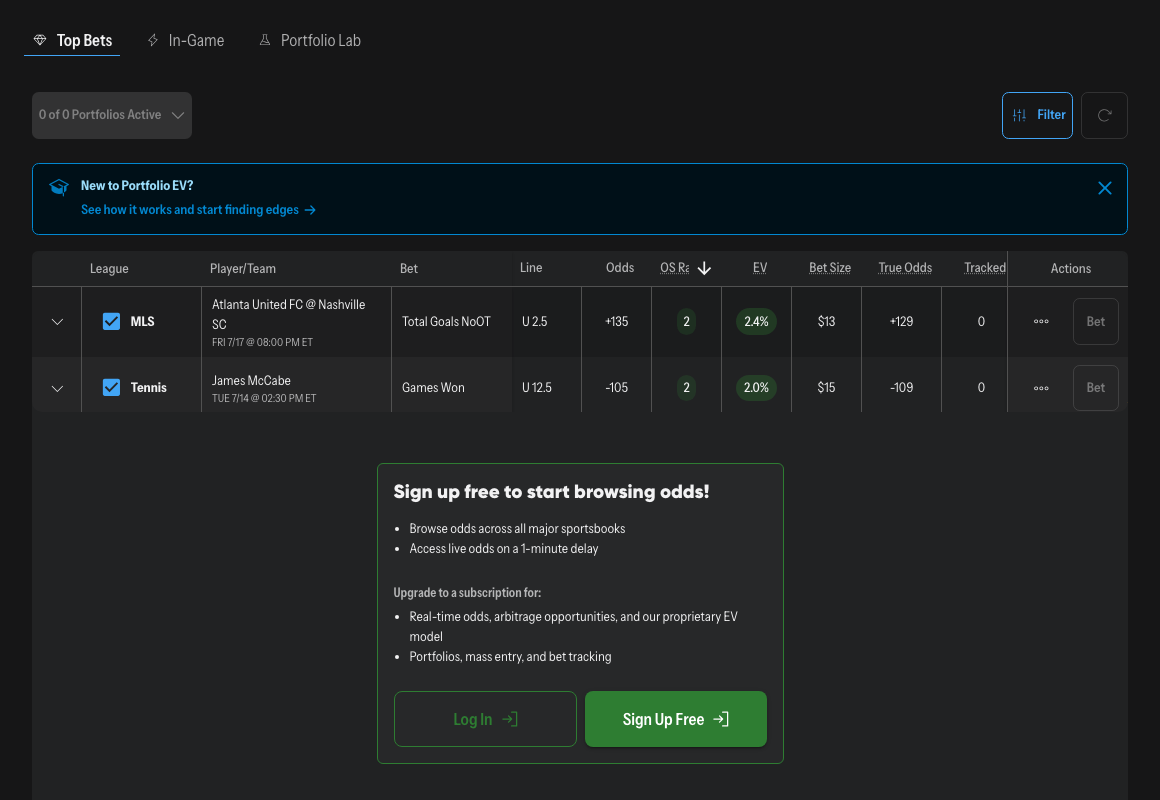
The OddsShopper +EV Screen.
NFL scoring is built out of field goals (3) and touchdowns with the extra point (7), so final margins pile up on those exact numbers far more than random chance would produce. Basketball margins, by contrast, are spread smoothly across a wide range with no comparable spikes, which is why a 6-point NBA teaser rarely buys you enough probability to justify the reduced payout. In the NFL, a well-placed 6 points is worth real probability. That single fact is why almost every serious teaser conversation is an NFL conversation.
Why The Key Numbers 3 And 7 Rule NFL Teasers
Handicappers talk about "key numbers" because a huge share of NFL games are decided by the same handful of margins. Approximate long-run frequencies look like this:
| Final Margin | Roughly how often NFL games land here |
|---|---|
| 3 Points | ~14-15% |
| 7 Points | ~8-9% |
| 10 Points | ~5-6% |
| 6 Points | ~4-5% |
| 4 Points | ~4-5% |
| 14 Points | ~3-4% |
The two spikes at 3 and 7 tower over everything else. A single point that moves your spread across one of those numbers is worth far more than a point that moves it across a "dead" number like 12 or 15, because it flips a whole cluster of likely outcomes onto your side. Teasing is simply buying points; NFL teaser strategy is buying points that cross 3 and 7 rather than points that pass through empty space. A 6-point teaser that starts and ends on dead numbers is mostly wasted juice. For the full margin-frequency picture and why those two clusters exist, our NFL key numbers guide goes number by number.
The Wong Teaser: The Classic 6-Point NFL Teaser
The template is named for Stanford Wong, who laid it out in Sharp Sports Betting. The idea: take a two-leg, 6-point teaser and only use legs where those 6 points sweep through both 3 and 7. Two spread windows do that cleanly:
| Leg Type | Base spread | Teased to | Key numbers crossed |
|---|---|---|---|
| Favorite | -7.5 to -8.5 | -1.5 to -2.5 | 7 and 3 |
| Underdog | +1.5 to +2.5 | +7.5 to +8.5 | 3 and 7 |
A favorite laid at -8.5 becomes -2.5, so it now wins by pushing through both a touchdown and a field goal. A +1.5 dog becomes +7.5, gaining the same two cushions. The figure most commonly cited from Wong's research is a roughly mid-70% hit rate on legs that met these criteria across the historical NFL seasons he studied (the exact number moves with the dataset and how pushes are graded), and at the cheaper teaser pricing of that era, that cleared the break-even comfortably. That historical edge is the reason the strategy became gospel. We keep a dedicated Wong teaser strategy deep dive if you want the template's history and the qualifier debate on their own page.
Two guardrails keep a "Wong" leg honest:
- Stay Inside The Windows. A -9 favorite teased to -3 lands on the key number, not past it, so a 3-point win pushes instead of covers. A +3 dog teased to +9 has already paid full price for the 3 it needed. The value is specifically in starting at -7.5/-8.5 and +1.5/+2.5.
- Mind The Game Environment. The scoring math assumes a normal NFL game. A blowout-script spot (a heavy favorite on a short week, a total in the low 30s in a gale) can distort how margins land, and correlated legs from the same game defeat the point of spreading your risk. Treat the qualifier as the starting filter, not the finish line.
Are NFL Teasers +EV? The Break-Even Math, Honestly
Here is the part most guides skip. A teaser is only +EV if your real per-leg win rate clears the rate the price demands, and modern books have quietly repriced teasers to swallow most of the old Wong edge. A standard two-team, 6-point NFL teaser that once paid even money or -110 now typically prices somewhere between -120 and -135. Which book is cheapest shifts by state, week, and promo period, so treat any specific number as something to shop rather than assume. That 15-cent spread across books is not cosmetic; on a bet this tight it is most of your edge.
Because both legs must hit, you can back the required per-leg win rate straight out of the price:
| Two-Team, 6-Point Teaser Price | Parlay-level break-even | Required win rate PER leg |
|---|---|---|
| -110 | 52.4% | ~72.4% |
| -120 | 54.5% | ~73.9% |
| -130 | 56.5% | ~75.2% |
| -135 | 57.4% | ~75.8% |
Line those numbers up against that mid-70% historical hit rate and the problem is obvious: at -130 or -135, the strategy is barely break-even before you account for the fact that today's markets are sharper than the samples that produced those old numbers. The framework for selecting legs is still sound. The automatic profit is not. You do not have an edge just because your two legs meet Wong criteria; you have an edge when qualifying legs are also priced somewhere you can actually clear the break-even.
Worked example, in dollars: a $100 two-team, 6-point teaser at -120 returns $83.33 in profit when both legs cover. If each leg independently wins 74% of the time, the ticket hits about 54.8% of the time (0.74 × 0.74), for an expected profit of roughly +$0.39 per $100 — a razor-thin positive. Move that same ticket to -135 and the payout drops to $74.07, so the identical 54.8% hit rate now expects about -$4.68 per $100. Nothing about the legs changed. Only the price did, and it took the bet from barely playable to a long-term loser.
The takeawaythe same two Wong legs at -120 versus -135 are two different bets. One can be a slim value; the other is a loser you just feel good about. Price shopping stops being optional and becomes the whole bet.
Never Tease Totals, And The Other NFL Teaser Traps
A few rules separate a disciplined NFL teaser bettor from a book's favorite customer:
- Only Tease Point Spreads, Never Totals. Totals do not have the same 3-and-7 structure, so buying 6 points on an over or under passes mostly through dead numbers. It is usually a bad price unless you have a separate, model-backed read. Teasers belong on sides.
- Tease Favorites Down Through The Keys And Dogs Up Through The Keys. The direction matters: a favorite moves toward the pick'em, a dog moves toward a bigger cushion. Both should cross 3 and 7.
- Do Not Stack The Teaser With Heavy Chalk To "Feel Safe." Adding a -13 favorite teased to -7 as a third leg does not give you the clean sweep through both key numbers. Every extra leg is one more result that has to come in, and the payout math shifts with leg count, so price the teaser out rather than assume a longer one is safer.
- Watch The Extra Points Books Try To Sell. A "sweetheart" 10-point teaser looks generous, but at three legs and inflated juice the required per-leg rate climbs fast: even at a flat +100, a three-leg ticket has a 50% break-even, which works out to about 79.4% per leg — higher than the two-team 6-pointer demands at any normal price. Run the math before you assume 10 points is better than 6.
- Timing Is Market-Specific. NFL lines move on injuries, weather, limits, and public money, not a fixed schedule. If you expect the public to pile onto a favorite, grabbing that favorite early can lock the better number; if you want a specific dog at +2.5 (which teases to +8.5), watch whether the market is drifting toward a friendlier number before kickoff.
How To Shop An NFL Teaser Before You Bet
Since the margin between profit and loss is now a point or two of spread and a few cents of juice, the workflow is what makes teasers playable:
- Shop the base spread first. Before you tease anything, find the best number on each leg across every book. Getting a dog at +2.5 instead of +1.5 at one book can be the difference between crossing both key numbers and only crossing one. On our NFL odds screen, the tool surfaces the best available spread on every game across 100+ books, so you start each leg from the friendliest base number on the market.
- Compare the teaser price across books. The same two legs can be -120 at DraftKings and -135 at Caesars. On a bet this tight, that gap is your entire edge. Never place a teaser at the first price you see.
- Confirm both legs still clear the break-even. Start with OddsShopper's de-vig fair odds (the no-vig "true" price stripped of the book's hold) to gauge each side, then weigh the teased number against an alternate-spread price or a margin estimate before you assume the leg beats the required per-leg rate. The de-vig base line is the starting point, not proof the teased leg clears it, so don't stop at "these look like Wong legs."
- Keep it to two clean legs when in doubt. Two qualifying legs at a good price beats three legs that drag in a marginal spread and lift your break-even.
This is the same market-reading discipline that runs through all of our sports betting strategy content: the pick is only half of it, and the price is the other half. If you also build straight multi-leg tickets, the same "every leg must beat its number" logic drives our parlay betting strategy guide and its football-specific companion on NFL parlay betting — and the Parlay Builder applies it mechanically, assembling a ticket from +EV legs you can then edit before you bet. Of the four steps above, the one I keep coming back to is the first: a half-point on the base spread is the cheapest point you will ever buy, because you are not paying teaser juice for it.
The Bottom Line On NFL Teaser Betting
The Wong teaser is still the sharpest framework for choosing NFL teaser legs: two-team, 6-point teasers on favorites of -7.5 to -8.5 and dogs of +1.5 to +2.5, so your points sweep through both 3 and 7. What has changed is that books now price those teasers at -120 to -135, which pushes the required win rate right up against the strategy's historical hit rate. That does not kill teasers; it moves the edge from the leg selection to the price. Find qualifying legs, shop the base spread and the teaser price, skip totals entirely, and only fire when the number clears the math.
Frequently Asked Questions
What is a Wong teaser in NFL betting? A Wong teaser is a two-team, 6-point NFL teaser that only uses favorites of -7.5 to -8.5 and underdogs of +1.5 to +2.5, so the 6 points move each leg through both key numbers, 3 and 7. It is named after Stanford Wong, who documented the approach in Sharp Sports Betting.
Why are 3 and 7 the key numbers in NFL teasers? NFL games are scored in field goals (3) and touchdowns (7), so final margins land on 3 and 7 far more often than any other numbers. Teasing a spread across those two clusters is worth much more probability than moving it through "dead" numbers.
Are NFL teasers still +EV? Sometimes, but not automatically. A two-team, 6-point teaser now usually costs -120 to -135, which requires roughly a 74% to 76% win rate per leg. The mid-70% hit rate commonly cited from Wong's research sits right on top of that, so the margin is thin and depends heavily on getting the best base spread and the best teaser price.
Can you tease NFL totals? You can, but you should not. Totals do not have the 3-and-7 scoring structure that gives spread teasers their value, so teasing an over or under mostly buys points through meaningless numbers. Keep teasers on sides.
How many legs should an NFL teaser have? Two clean qualifying legs is the classic Wong build and the easiest to keep +EV. Every extra leg raises the combined win rate you need, so only add a third leg if it also cleanly crosses both key numbers at a price you can beat.
Where can I find the best teaser pricing? Because the edge is only a point or two of spread and a few cents of juice, compare both the base spread and the teaser price across books. OddsShopper scans 100+ sportsbooks so you can start from the best number and place the teaser at the best available price.
New to OddsShopper? It does automatically what disciplined teaser betting requires by hand: it scans 100+ sportsbooks, flags the best NFL spread on every leg, and shows fair no-vig odds so you can see when a teaser is actually priced in your favor. Prefer to see how our handicappers apply these numbers first? Browse the free expert picks today and watch the method in the wild. You can try OddsShopper free for 7 days, and code NFLTEASER20 takes 20% off OS Pro or OS Core if you subscribe.
More on this: Wong Teaser Strategy: Is The NFL Classic Still +EV? · NFL 2026 on Kalshi: Every Board We Track · NFL Coach Of The Year Odds: Kalshi Fades A Two-Time Winner · NFL Picks Hub: Week 1 Odds, Win Totals, Props · NFL Win Totals 2026: Kalshi Vs DraftKings Vs FanDuel