Betting on Monday Night Football means betting into the one game the whole country watches at once. Same goes for Sunday Night Football and Thursday Night Football. When a single NFL game gets a national stage with little competition on the board, it pulls in more bets than almost anything else all week, and that changes how the number behaves. Once you understand why primetime games move the way they do, you can stop betting them like a fan and start reading them the way the market does.
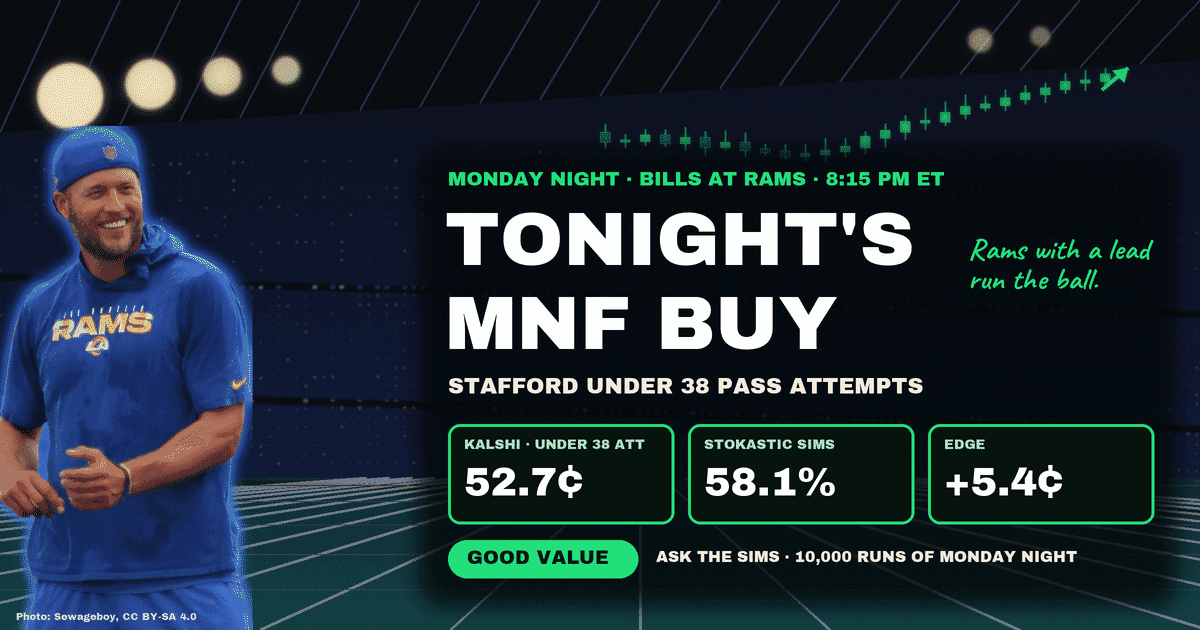
Tonight: Bills at Rams, 8:15 p.m. ET.The bet is Matthew Stafford under 38 pass attempts: 52.7¢ (-111) on Kalshi against 58.1% in 10,000 Sims, 5.4¢ of edge. When the Rams win in the Sims, they do it handing off with a lead. Ask The Sims how often Stafford stays under 38 →
This is a strategy guide, not a game preview. It works the same early in the season or deep into the playoff race, because the edge comes from human behavior, not from any one matchup. Below we walk through why the primetime number gets distorted, how it moves through the week, and how we find real value in it instead of just guessing at a side.
Why Primetime NFL Games Are Different
A normal NFL Sunday spreads the money across a dozen games. A primetime game concentrates it. Monday Night Football, Sunday Night Football, and Thursday Night Football are standalone "island games," and a standalone game becomes the default bet for millions of casual players who want a reason to watch. More attention means more handle, and more handle from recreational bettors means the number gets pushed around by opinion instead of by information.
The whole idea behind betting on Monday Night Football with any edge is this: you are not just handicapping the two teams on the field, you are handicapping the crowd that is about to bet on them.
The Public Loves Overs And Favorites (And The Books Know It)
Recreational money has two well-documented habits. It backs favorites, because favorites are the better team and betting the better team feels right. And it backs overs, because rooting for points is more fun than rooting for a defensive slog. In a heavily watched primetime game, both tendencies get amplified.
Sportsbooks are not blind to this. Books like DraftKings, FanDuel, BetMGM, and Caesars have priced these games for years, and they know the primetime crowd leans over and leans favorite. So they shade the number toward that money and, on totals especially, they price the over a little less generously, knowing it is the popular side. That built-in margin, the book's "hold," means the crowd's favorite side is often a slightly worse price than it looks.
For years, primetime totals leaned under often enough that "just bet the primetime under" became conventional betting wisdom. Conservative game plans, defensive familiarity, and clock-milking in close national games have all been cited for why scores can land below an inflated number. The part most guides get wrong is this: that pattern is exactly why it no longer prints money on its own. Once a trend is famous, the books bake it into the opening number. Modern NFL main lines are efficient, and blindly betting the under on every primetime game because "the public loves the over" is a dead strategy, not a live edge.
So the primetime environment does not hand you a side. It tells you where to look for a misprice. Then you have to actually check whether the number is in your favor.
New to OddsShopper?It scans every major sportsbook in real time and, using its Sharp Sportsbook Algorithm, strips out the vig to show you the de-vigged fair price on every side, then flags the bets priced in your favor. That is the exact work this section describes doing by hand. Try it free for 7 days, and code EDGE20 takes 20% off OS Pro or OS Core if you subscribe.
Reading The Line: What Actually Moves A Primetime Number
Because a primetime game sits on the board by itself for days, its line has a long runway to move, and it moves in a fairly predictable rhythm.
- Sharp Money Comes Early; Public Money Comes Late. Some of the disciplined money that helps set the market gets down early in the week, often on the underdog or the under. The recreational wave arrives Friday through kickoff, and it piles onto the favorite and the over. That late public push can inflate the favorite's spread and the total by game time.
- Favorites Tend To Get Bet Up As Kickoff Nears; Dogs And Unders Can Improve As The Number Climbs. If you like the favorite, the earlier price is usually the better one. If you like the underdog or the under, waiting for the public to push the number can hand you a few extra points closer to kickoff. There is a tradeoff: bet early and you eat any late injury or weather news; wait and you risk the number moving past your spot.
- Key Numbers Matter More Than The Point. NFL games are decided by 3 and 7 more than any other margins, so a spread of 3 is worth far more than a spread of 2.5 or 3.5. Getting the favorite at 2.5 instead of 3, or the dog at 7 instead of 6.5, is often the whole bet.
There is a simple scorecard for whether you timed it well: closing line value, or CLV. If you bet a side and the market later moves toward your number by kickoff, you beat the close, which is the clearest sign over time that you were on the right side of the price. CLV only means something in a deep, liquid market where the closing number reflects real money, and primetime NFL games are about as liquid as it gets, so their close is a trustworthy benchmark. It does not guarantee that one bet wins. It means you consistently got a better number than the market settled on, and that is what profits over a long run of bets.
A Worked Example: When The Number Comes To You
Walk through a typical Monday nighter with us, using round illustrative numbers to show the mechanic.
Say the total opens at 44.5. Early in the week the fair, de-vigged price (the true number once you strip out the book's built-in margin) sits right around there, so there is no edge yet. Then the public arrives. By Sunday and Monday the over has been hammered, and several books push the total to 46. Nothing about the two defenses changed, only the money did.
If our read was the under, the number just came to us. We can now take the under at 46 instead of 44.5, a full point and a half of value on the total, on a game the crowd inflated. To be sure it is real value and not just a higher number, we check the offered price against the fair price: if 46 is above where the market should sit, the under is now priced in our favor. If the fair number rose to 46 as well, say a key injury or weather shift changed the outlook, there is no edge and we pass.
The takeawayThe public did not change the game, only the price. The whole job is deciding whether the new number sits above fair value. If it does, you take it; if it does not, you pass.
This is also why shopping every book matters. In that same window one book might still hang 45.5 while another sits at 46, and the same $10 under is a better bet at one than the other. Doing this by hand is slow, which is why the tool scans every major sportsbook at once: OddsShopper's odds screen lines up every book's number side by side, and its Sharp Sportsbook Algorithm strips the vig to show the fair price you measure the offer against. Line shopping alone can meaningfully cut the effective price you pay, before you have handicapped a single thing.
Where The Real Edge Is: Value, Not A Blind Fade
Primetime strategy is not about blindly fading the public. It is about finding the price the public distorted, then betting only when that distortion leaves a good number.
The term +EV means positive expected value: a bet priced better than its true probability, so over a large sample it is expected to be profitable. The primetime crowd's over-and-favorite bias can create +EV on the other side, but only sometimes, and only at the right number. The disciplined move is to compare the offered price to the fair, de-vigged price, and pass when the edge is not there. Not every game has a side worth betting, and "no bet" is a perfectly good result.
The difference between how a fan approaches a primetime game and how the market reads it comes down to this:
| The Square Read | The Sharp Read |
|---|---|
| "It Is The Better Team On National TV, Take The Favorite." | Is the favorite's number inflated by late public money? What is the fair spread? |
| "Primetime Games Go Under, Bet The Under." | Is the total already shaded for that? Where is the de-vigged fair total? |
| Bets At One App Out Of Habit. | Shops every book and takes the best number on the chosen side. |
| Bets Every Primetime Game For The Sweat. | Bets only when the price beats fair value, and passes the rest. |
| Judges The Bet By Whether It Won. | Judges the bet by the price it got versus the close (CLV). |
Checking every book and every fair price by hand is slow, and the primetime number keeps moving while you do it. We built the tools to handle exactly that: the line-movement history shows how a total or spread has traveled since it opened, so you can see whether the number moved on news or just on public money. You can compare live NFL odds across books here and see the exact price gap between the best and worst book on the same bet.
A Simple Primetime Checklist
Before you bet a Monday, Sunday, or Thursday night game, run through this:
- Note the public lean. In primetime, assume heavy money on the favorite and the over. That is your "where to look," not your bet.
- Find the fair number. Check the de-vigged price. Is the favorite's spread or the total actually off, or has the book already shaded it?
- Shop every book. Take the best available number on your side. Same bet, better price, free value.
- Respect the key numbers. On spreads, treat 3 and 7 as the numbers that matter most. Cross them when you can.
- Time it. Favorite? Lean earlier. Dog or under? Waiting for the public push can hand you a better number, injury news permitting.
- Be willing to pass. If nothing beats the fair price, the primetime bet is no bet.
Betting is 21+ and legal only in regulated markets where available. Bet what you can afford to lose, and treat a passed game as a win, not a missed opportunity.
A Simulation Beats A Hunch
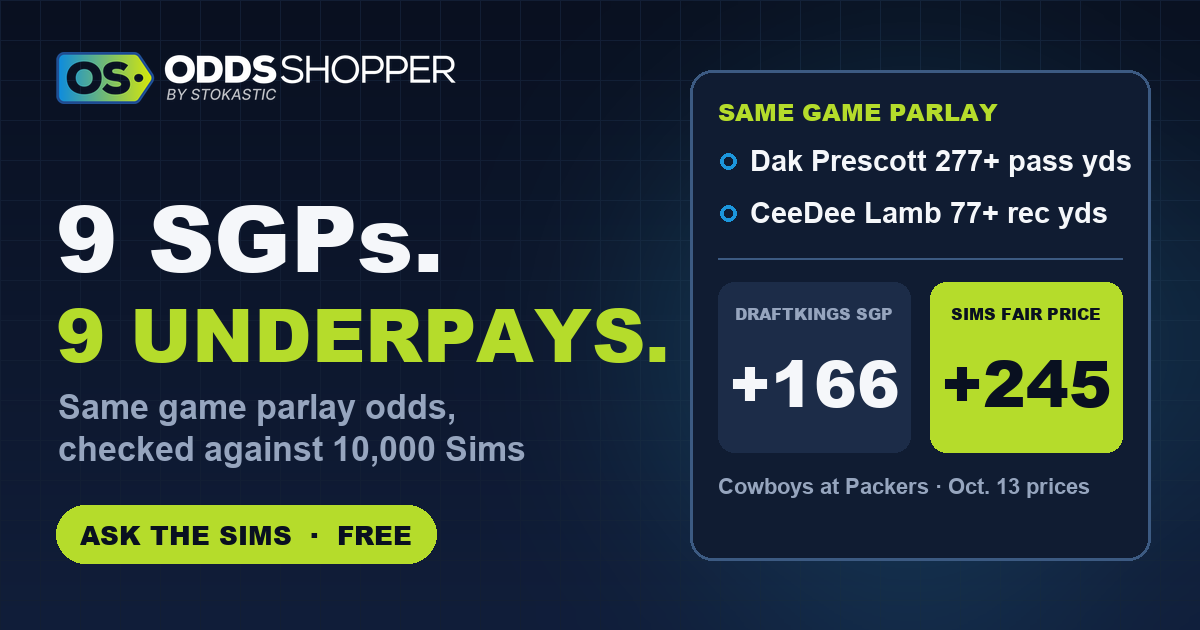
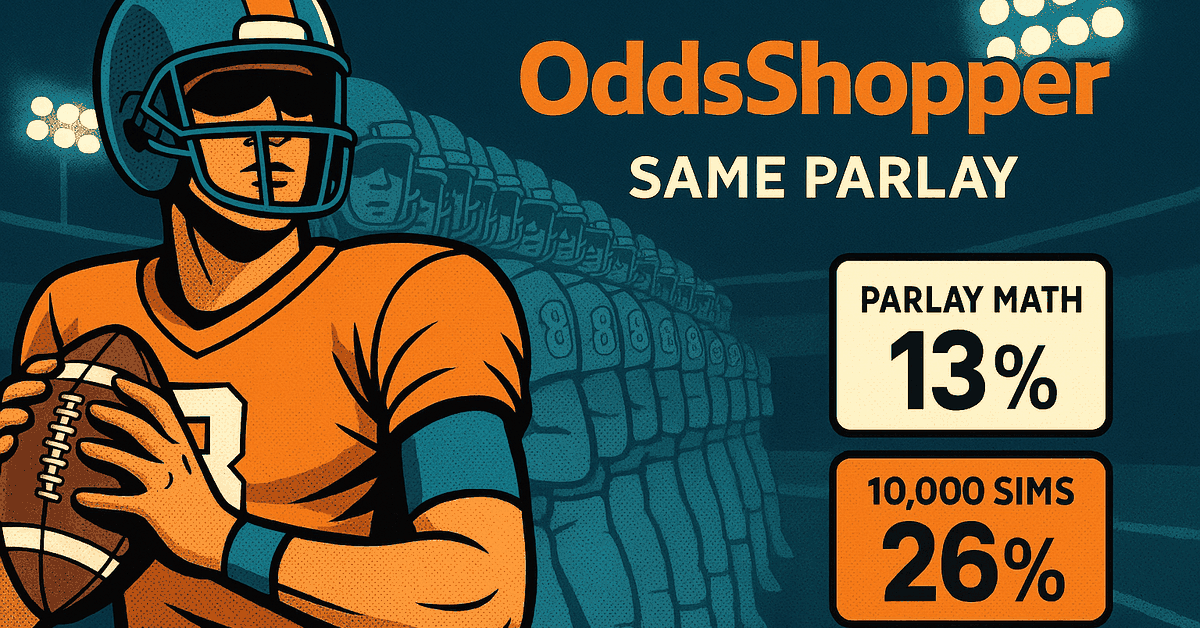
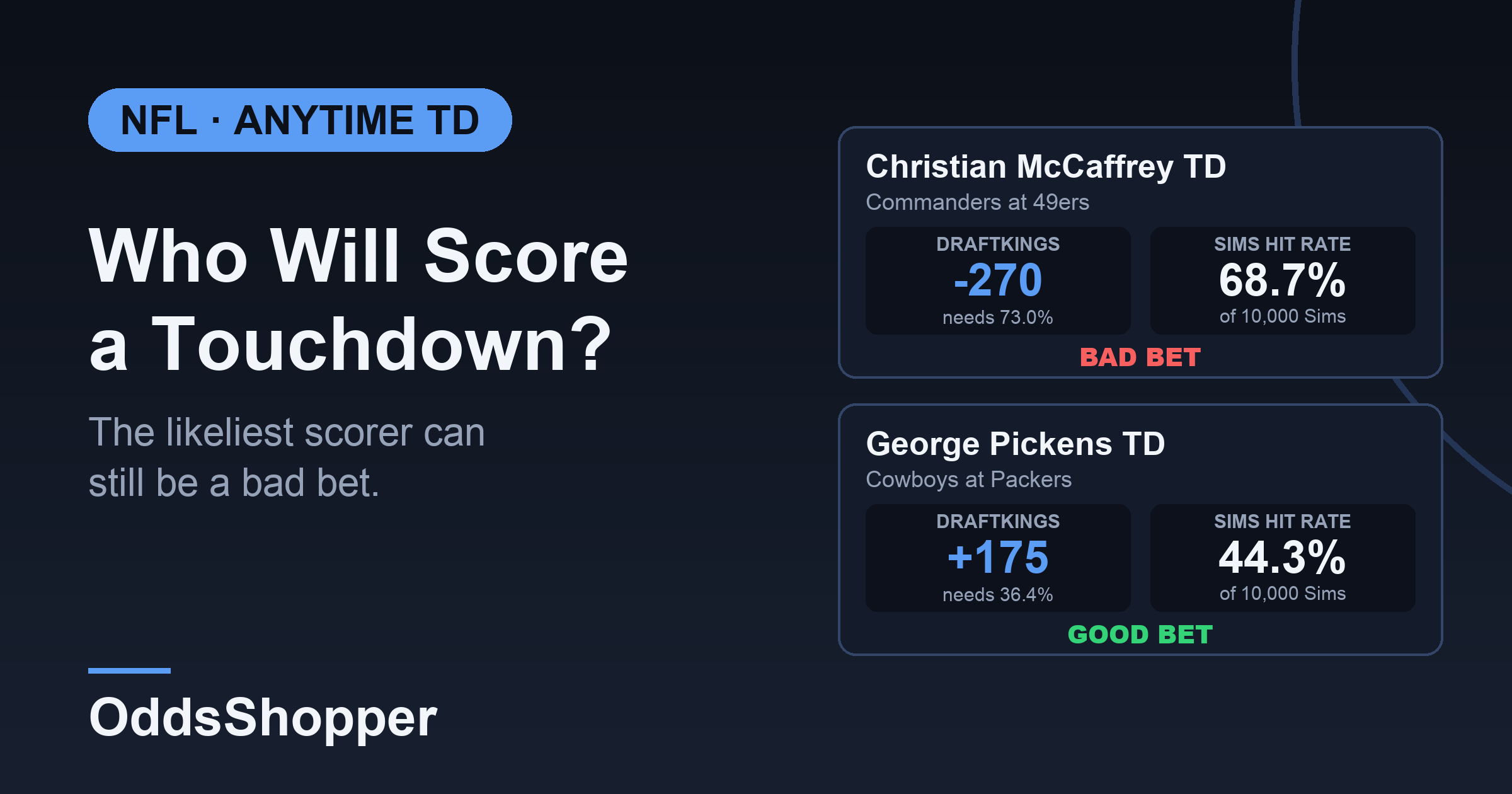
Everything above is about reading the number. The faster way to know whether a primetime number is right is to play the game before it happens. Stokastic's Sims run each Monday and Sunday night game 10,000 times with the actual lineup, which means every bet on the board has a count behind it: how often the favorite covers, how often the game clears the total, how often a running back scores. A bet is worth making when the count beats the price, and nothing else about primetime changes that.
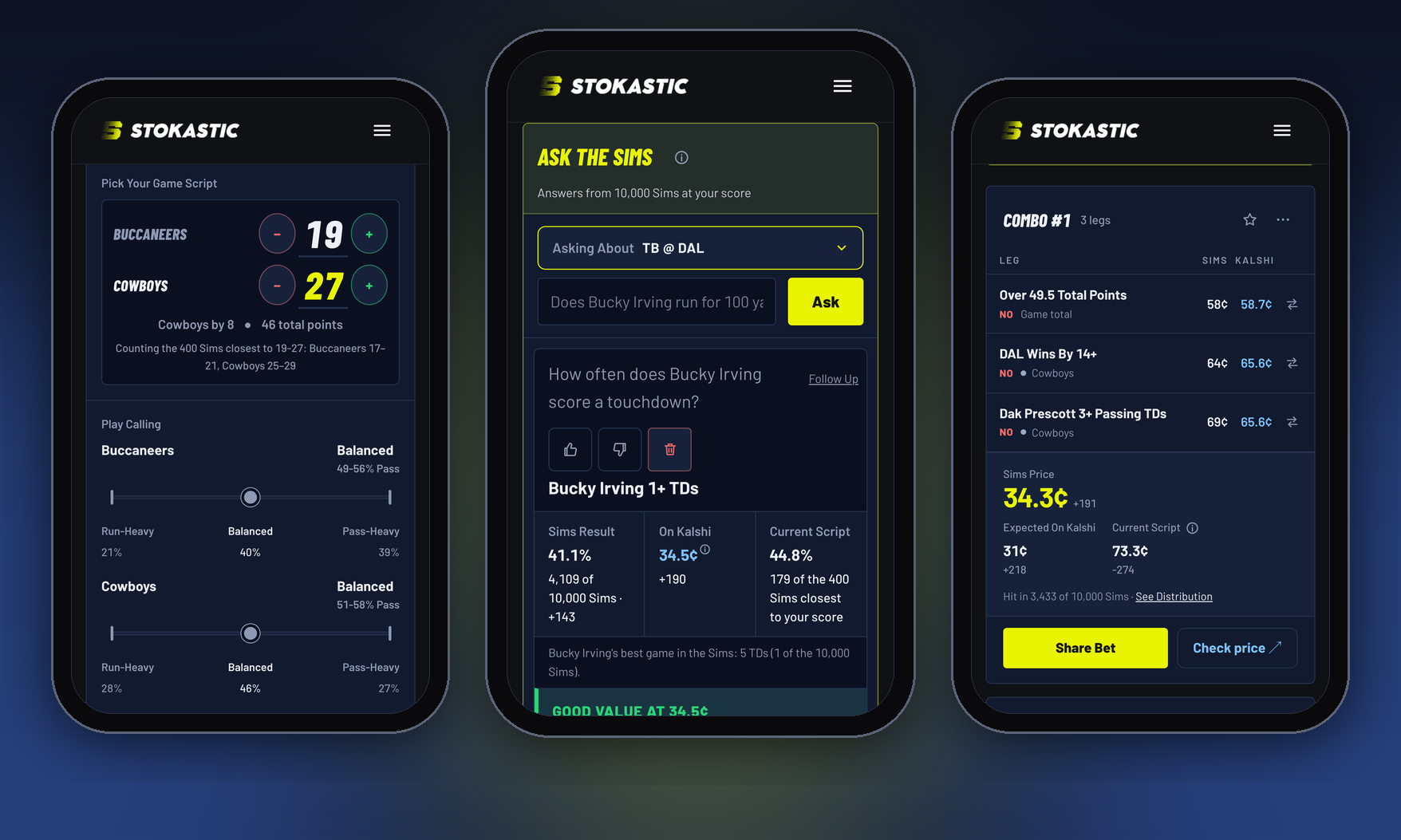
Ask the Sims on the Kalshi Parlay Simulator. Tap the image to open this week's Monday night game.
The simulators are free and take a question in plain English. "How often does Josh Allen throw for 250 yards?" comes back as a percentage of 10,000 games with the price beside it, and the same engine prices the whole parlay, not just the legs, so a correlated ticket gets the credit it deserves.
- Kalshi Parlay Simulator for prediction-market contracts, fee included
- DraftKings Parlay Simulator and FanDuel Parlay Simulator for sportsbook odds
- Polymarket Combo Simulator for Polymarket's prices
Run the primetime checklist above, then ask the Sims the same question. When the two agree, bet. When they disagree, the Sims have the count.
The Bottom Line
Primetime NFL games are the most heavily public games on the board, and that is both the trap and the opportunity. The trap is betting them like a fan, backing the favorite and the over with the crowd. The opportunity is understanding that the crowd's bias can leave real value on the other side, and then only taking it when the number actually beats fair value. Read the line, shop the price, respect the key numbers, and pass when there is no edge. Do that, and you are betting primetime football like the market instead of against it.
Ready to stop guessing at the number? OddsShopper compares every sportsbook's primetime line in one screen and flags the bets priced in your favor, so you take real value instead of the popular side. Start free for 7 days, then code EDGE20 takes 20% off OS Pro or OS Core.
FAQ
Why do primetime NFL games attract so much betting money? A Monday, Sunday, or Thursday night game usually sits alone on the schedule, so it becomes the default bet for millions of casual fans who want a reason to watch. That concentrated recreational handle is what makes primetime lines behave differently from a full Sunday of games.
Should I always bet the under in primetime games? No. Primetime unders had profitable stretches in past NFL seasons, which is exactly why sportsbooks now price that tendency into the opening total. Blindly betting every primetime under is a dead edge. Use the public's over-lean as a hint to check the number, then bet the under only when the price actually beats the de-vigged fair total.
When is the best time to bet a primetime game? It depends on your side. Sharp money comes in early and public money comes in late, so favorites are usually a better price earlier in the week, while underdogs and unders can get a better number as the public pushes the line closer to kickoff. Betting early captures more line value but exposes you to late injury and weather news.
What are the key numbers in NFL betting? The most common NFL margins of victory are 3 and 7, so those spread numbers carry the most value. Getting a favorite at 2.5 instead of 3, or an underdog at 7 instead of 6.5, can be the difference between a winning and losing bet over time.
How does OddsShopper help with primetime betting? OddsShopper scans every major sportsbook, shows the live number and its movement history on every game, and uses its Sharp Sportsbook Algorithm to de-vig the price so you can see the fair number. That lets you shop the best line and bet only when the number is actually in your favor.
More on this: Primetime NFL Betting: TNF, SNF And MNF Island Games · Monday Night Football Picks: Stafford Won't Air It Out · Monday Night Football Picks: The 27-Cent Bet I'm Taking · Monday Night Football Odds: Stafford Under 38 Is the Buy · Sunday Night Football Picks: The Backup Changes Everything