If you already bet the NFL and figured college football would just be more of the same, your first Saturday will correct that fast. Same sport on the field, very different sport at the betting window. The college game runs wilder, the lines stay softer longer, the totals climb into territory the NFL never touches, and the key numbers you lean on every Sunday don't carry the same weight. Understanding where those gaps sit is the whole edge, so let's walk through them one at a time.
Why College Football And NFL Betting Aren't The Same Sport
Start with variance, because it drives everything else. The NFL is 32 rosters built from a talent pool already filtered down to the best few thousand professional players in the sport, and the gap between the best team and the worst is narrow enough that "any given Sunday" is a real thing. College football is the opposite. You have 130-plus FBS programs, recruiting advantages that compound for a decade, and coaching philosophies so different that watching two games back to back can feel like changing channels between two entirely separate games.
That talent spread shows up in the final margins. Blowouts are routine in college football in a way they simply aren't in the pros, and a chunk of the schedule is decided by three, four, five touchdowns. For a bettor that means two things at once: more spots where a big favorite is mismatched, and far more noise in the results. A well-reasoned college side can lose by 20 to a backup quarterback and a pick-six, and that same volatility is exactly why one week of results should never convince you a read was right or wrong. Judge the process over a real sample, not a single Saturday.
Line Softness: Where The Soft Numbers Actually Live
Here is the difference most NFL bettors underrate. The NFL attracts the heaviest concentration of sharp money in American sports. Professional bettors, syndicates, and models hammer every game, and sportsbooks respect that action, so an NFL number gets corrected quickly and is close to airtight by kickoff. There are edges in the NFL, but you are fighting for fractions against one of the most efficient betting markets in U.S. sports.
College football is a softer market by structure, not by accident:
- Volume Dilutes Attention. A full Saturday can run 40-plus games. Books and bettors can't scrutinize a Group of Five mid-afternoon matchup the way the entire industry dissects a single NFL game, so mispriced numbers survive longer.
- Limits Are Lower. Books cap what you can bet on smaller college games, which means sharp money can't fully hammer a soft line back into place the way it does an NFL spread.
- Emotional Money Moves The Market. Alumni and regional fans bet their school regardless of the matchup or the price. That lopsided public action can push a popular program's spread multiple points with no real handicapping reason behind it, which creates value on the other side.
The practical takeaway: in the NFL your edge comes from precision, and in college football a meaningful part of your edge comes from finding the soft number before it firms up. A soft college line can linger into game week, while an NFL mispricing tends to get copied across books and corrected far faster.
Totals: College Football Runs Hot, The NFL Runs Compressed
Point totals are where the two markets look least alike on the screen. NFL totals live in a fairly compressed band, generally somewhere from the high 30s to the low 50s, because pro defenses, pro special teams, and tighter game scripts keep scoring within a predictable range. College football blows that ceiling off. Up-tempo spread offenses facing overmatched defenses can push a total into the 60s and beyond, and the range from the lowest defensive slugfest to the highest track meet is enormous.
That width is a double-edged sword. It creates more obvious over/under narratives, but it also makes college totals harder to price, which loops back to the softness point. One structural note worth carrying from the sharp side of the NFL market into your college handicapping: books tend to load a little more vig on overs across football, because casual money loves the over and loves the favorite. That doesn't mean blindly bet unders, but it does mean the over needs to clear a slightly higher bar to be a real number, and the under is worth a hard look when public enthusiasm inflates a high total.
Key Numbers: 3 And 7 Rule The NFL, College Football Spreads The Field
Key numbers are the single most important concept in football spread betting, and this is where the two markets diverge in a way you can actually put to work.
Because football scores in threes and sevens, certain margins come up far more than others. In the NFL, 3 is the most important number, 7 is second, and 6 and 10 matter after that. Margins of 3 and 7 account for a large share of NFL final scores, far more than any other numbers. That concentration is why getting your NFL spread on the right side of a key number is so valuable, and why buying a half-point is only worth it when it actually crosses 3 or 7 at cheap juice. Buying points that don't cross a key number is a trap the books price aggressively.
The college game scatters its results across many more margins. Blowouts and wider variance spread the outcomes out, so those same key numbers still exist but carry noticeably less weight. Because blowouts are so much more common, college results land on 3 and 7 far less often than NFL results do. Three is still the most important number on the board, but the premium for landing on the right side of it is smaller, and paying a steep price to buy through it in college football is rarely worth the same cost you'd justify in the pros.
Here is the same idea in one view:
| Factor | NFL | College Football |
|---|---|---|
| Market Efficiency | Sharpest market in U.S. sports | Softer; value survives longer |
| Line Softness | Corrected fast, close to airtight | Slower to firm, exploitable into game week |
| Betting Limits | High | Often capped on smaller games |
| Totals Range | Compressed (high 30s to low 50s) | Wide (can push into the 60s-plus) |
| Key Numbers (3 And 7) | Dominant; a large share of final margins | Less concentrated; blowouts spread results out |
| Public/Emotional Money | Present but sharp-corrected | Heavy regional/alumni action moves lines |
Market Depth, Limits, And When Lines Post
Timing and depth differ too, and they change how you attack each market. NFL lines post early, absorb a full week of the sharpest action in the country, and are treated as the marquee product, so the number you see Sunday morning is the market's best guess after everyone has had their say. The old timing heuristic still applies: if you like a favorite, bet it early before the price firms, and if you like a dog, waiting often gets you a better number as the public piles onto the favorite.
College football's depth is spread thin across a giant Saturday schedule. The headline games (a top-10 showdown, a rivalry week marquee) get NFL-like attention and tighten up accordingly. The other 30-something games each week get a fraction of that scrutiny, and that is precisely where the soft numbers hide. Your job shifts from "beat the sharpest market" to "be the one who actually shopped the game nobody else priced carefully."
The edge in one linethe NFL rewards precision against a razor-sharp market, while college football rewards finding the soft number before it firms. Same discipline, different hunting ground.
How To Actually Bet The Difference
The strategy that ties this together is the same in both markets but pays off more in the softer one: line shopping. The same bet at a better price is free expected value, and the softer and more scattered the college market is, the wider the gap between books tends to be on any given game. Bet one book and you leave the better number on the table every week, and that price desensitization is the quiet leak that keeps most bettors losing.
This is where our tools earn their keep. The Portfolio EV tool scans 100-plus sportsbooks at once and de-vigs each market to a fair, no-vig number, so instead of eyeballing whether DraftKings 🎁 at -3, FanDuel 🎁 at -2.5, or BetMGM 🎁 at -2.5 (-115) is the play, we see the true price and exactly where the offered number beats it. The Sharp Action tool goes further and tracks where sharp money is landing on the betting exchanges before the number moves. Pull up the college board on our live odds screen, and the tool scans every book side by side, which in a soft market is the difference between guessing at value and measuring it. A few of the levers that translate straight across from NFL to CFB:
- Get The Right Side Of The Key Number First, Then Shop The Best Price. On the college board, that means valuing 3 (and secondarily 7) while recognizing the premium is smaller than in the pros.
- Read The Totals Honestly. Respect the extra vig on overs, and lean into the fact that wide college totals are harder for books to price than compressed NFL numbers.
- Hunt The Soft Spots, Not The Marquee. The Saturday undercard is where limits are low and attention is thin, which is exactly where a line-comparison and de-vig read finds mispriced numbers the sharp NFL market never leaves lying around.
- Score Yourself By Closing Line Value. Whether you win or lose a given bet, if the market moves toward your number after you bet it, you were on the right side of the information. Over a real sample, beating the close is the honest scoreboard in both sports.
New to OddsShopper?It scans 100-plus sportsbooks in real time, de-vigs each market to a fair number, and flags the bets priced in your favor, which is exactly the "find the soft college line before it firms" job this article is about, done automatically. You can try it free for 7 days, and code GRIDIRON20 takes 20% off OS Pro or OS Core if you subscribe.
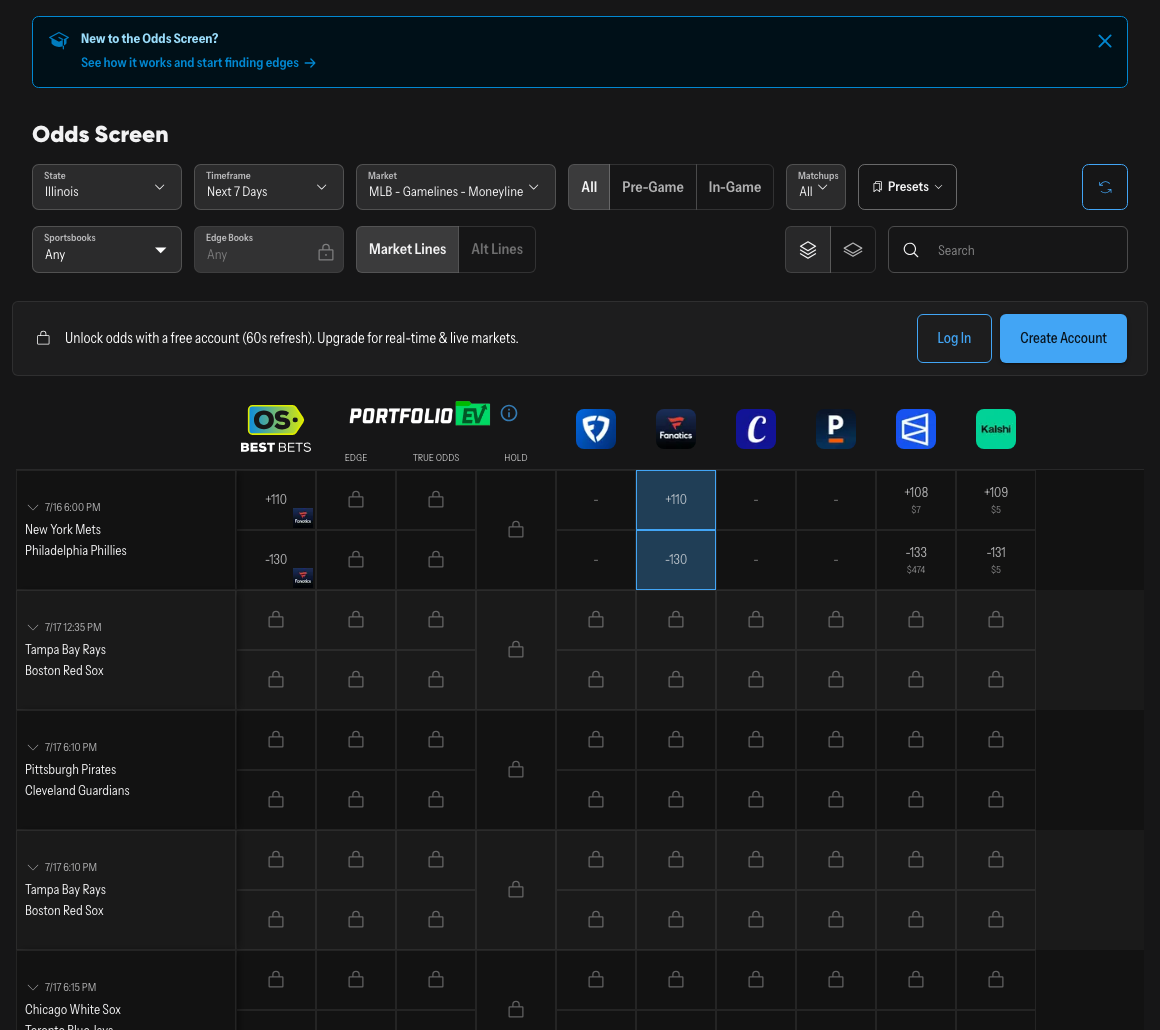 The OddsShopper live odds screen — every book's price on one board, refreshed in real time. Open the live board.
Frequently Asked Questions
Is college football easier to beat than the NFL? Not easier, but softer. College lines are less efficient because of the sheer volume of games, lower limits, and heavy regional money, so mispriced numbers survive longer than they do in the razor-sharp NFL market. That softness is an opportunity, not a guarantee, and it rewards bettors who actually shop for the best price.
Why do key numbers matter less in college football? Football scores in threes and sevens, so margins of 3 and 7 dominate. The NFL's tight talent gap concentrates results heavily on those numbers. College football's wider variance and frequent blowouts scatter results across many more margins, so 3 is still the most important number but the premium for landing on it is smaller.
Are college football totals higher than NFL totals? Often, yes. Up-tempo college offenses against overmatched defenses can push totals into the 60s, while NFL totals sit in a more compressed high-30s-to-low-50s band. The wider college range also makes those totals harder for books to price precisely.
Should I buy a half-point in college football like I do in the NFL? Be more selective. Buying a half-point is most defensible when it crosses a key number like 3 at cheap juice. Because those key numbers carry less weight in college football, paying a steep price to buy through them is rarely worth the same cost you'd justify in the NFL.
Where do I find the soft college football lines? Away from the marquee matchups. Top-10 and rivalry games get NFL-level attention and firm up fast; the rest of the giant Saturday board gets far less scrutiny. A line-comparison and de-vig tool that scans every book at once is the fastest way to surface the games nobody else priced carefully.
The Bottom Line
College football and NFL betting reward two different skill sets. The NFL asks you to grind out small edges against the sharpest market in sports, where timing and precision are everything. College football hands you a softer, wilder, higher-scoring market where the edge comes from finding the mispriced number before it firms and shopping every game for the best price. Carry the discipline you've built on Sundays (respect the key numbers, mind the vig on overs, chase closing line value) into Saturdays, and point it at the soft spots the NFL market never gives you.
New to OddsShopper? It scans 100-plus sportsbooks, de-vigs each market to a fair number, and shows you exactly where the offered price beats the true one, on the college undercard and the NFL main card alike. Try it free for 7 days, then code GRIDIRON20 takes 20% off OS Pro or OS Core if you subscribe.
Betting involves risk. Bet only what you can afford to lose, and if gambling stops being fun, help is available at 1-800-GAMBLER. 21+ where legal.
More on this: College Football Week 2 Predictions: The Machines Won't Take Texas · College Football Playoff Semifinal Odds · How To Bet College Football On Kalshi: Markets & Value · \ud83c\udfc8 College Football Week 0 Odds: How Kalshi Priced 8 Games · Kalshi College Football Picks This Week: Every Board, Scored