For decades, NFL home-field advantage came with a price tag everyone agreed on: three points. Ask any bettor what the home team was worth on the spread and you'd hear the same number without a pause. That rule of thumb is now wrong, and betting as if it's still true is one of the quietest ways to hand the book your money. Home field is real, but it has been repriced, and the whole game today is knowing which home fields still beat the new number and which ones the market has already picked clean.
The thesis this article runs on is simple: home-field advantage is no longer a flat bonus you add to every home team. It's a range. Most homes are worth almost nothing extra now, a handful are still worth real points, and the edge lives entirely in telling those two groups apart. The table below is the short version of which is which, and we'll build the case for it the rest of the way down.
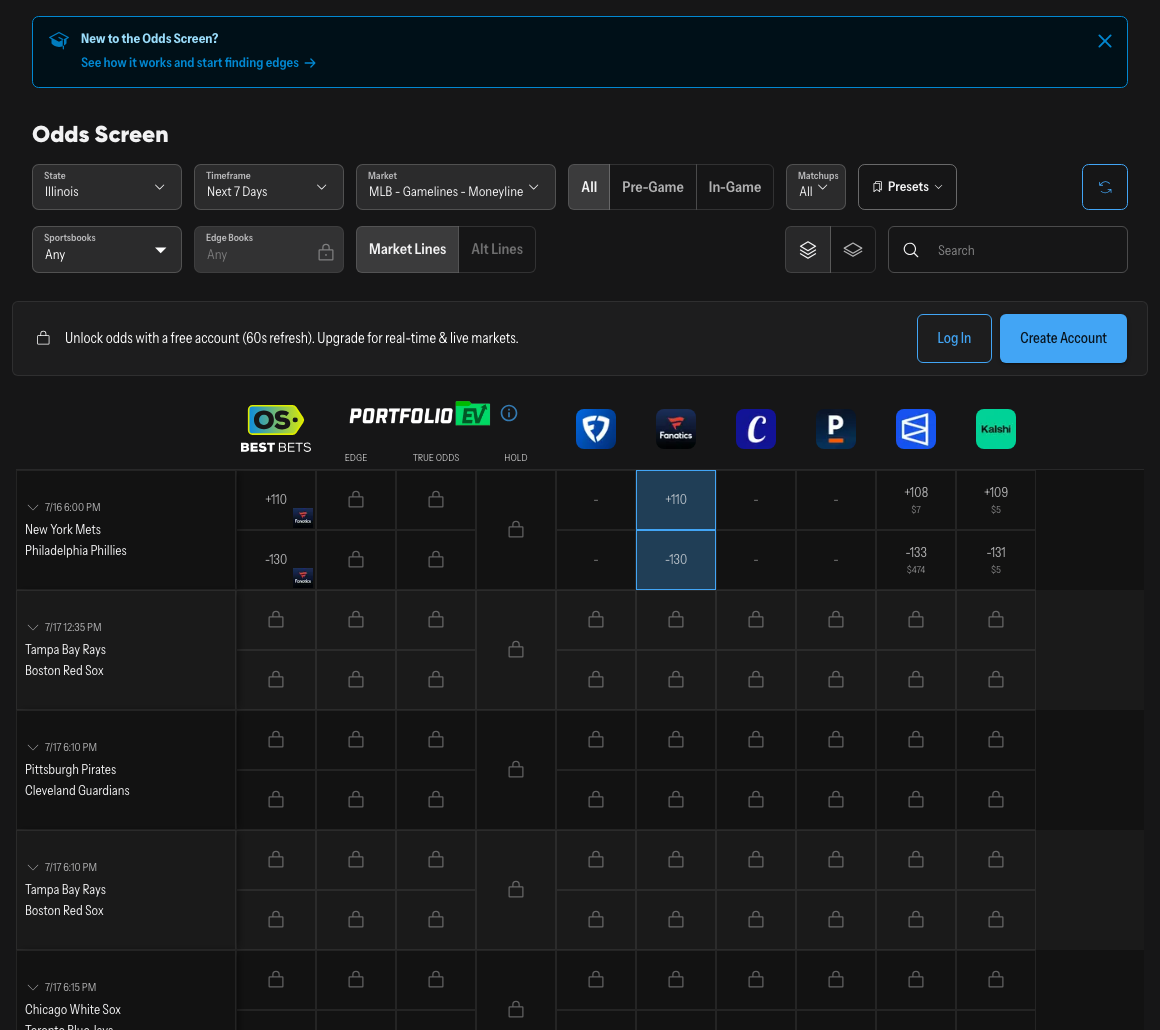 The OddsShopper live odds screen — every book's price on one board, refreshed in real time. Open the live board.
In Summary: NFL Home-Field Advantage At A Glance
- League-Average Home-Field Advantage Is Now Worth About 1.5 Points On The Spread, not the traditional three. The number has been sliding since roughly 2016.
- Home Teams Win Around 52–53% Of Games Today, down from the historical ~57%. The 2020 empty-stadium season, where home teams posted a losing record for the first time on record (127-128-1), is the natural experiment that proved how much of HFA is actually the crowd.
- Not Every Home Field Is Equal. Denver's altitude, Seattle's and Kansas City's noise, and cold-weather December sites still generate more than the average edge; neutral domes and warm-weather teams generate less.
- Books Already Bake A Team-Specific HFA Into The Opening Spread. Your job isn't to add points, it's to find the games where the market shaded the environment wrong and then shop the best number across sportsbooks.
| Home-Field Factor | Roughly worth | Why |
|---|---|---|
| League-Average Home Team | ~1.5 pts | The market repriced it down from 3; mostly baked in |
| Denver (Altitude) | Above average | Thin air taxes visiting conditioning, especially late |
| Seattle / Kansas City (Noise) | Above average | Crowd noise drives false starts and pre-snap chaos |
| Cold-Weather Site In December | Situational | Warm-climate visitor + wind/cold can move a total too |
| Dome Or Warm-Weather Neutral | Below average | Clean, quiet, travel-friendly = little real edge |
The row I keep coming back to is Denver. Altitude is the one home-field factor that can't be trained away in a week or muted by a veteran quarterback's silent count, and it's the clearest example of an edge the average "add points at home" bettor never isolates. Hold that thought, because it's the thread that ties the dome-versus-altitude split together later.
What Home-Field Advantage Is Actually Worth Now
Start with the number, because everything else is a reaction to it. Multiple public models and home-field trackers now peg league-wide NFL home-field advantage at roughly 1.5 points. For most of the sport's modern history that figure sat near three, which is why "the home team gets three" became gospel. Somewhere around 2016 it began a steady decline, and it hasn't reverted.
The win rate tells the same story from a different angle. Home teams used to win about 57% of the time; over the last several seasons that's been closer to 52–53%. That's still an edge, but it's a thin one, and a thin edge that the entire betting market knows about is not an edge you get to keep. When everyone prices the same three points, the three points stop paying.
Why did it shrink? A few forces stacked up. Travel got easier and more scientific, with charter logistics, sleep protocols, and body-clock management smoothing out the road disadvantage. Stadiums got more standardized. And rule changes tilted the league toward offense, which travels better than defense does. None of that erased home field. It just deflated it from a headline number into a tiebreaker, and the market adjusted the spread to match.
The number, in one line~1.5 points leaguewide, a ~52–53% home win rate, trending down since 2016. Treat that average as the floor of what you need to know, not the whole story — the rest of this piece is about where the real points hide. (If you're still getting comfortable reading a spread at all, our how to bet on NFL guide covers the mechanics this one assumes.)
The Empty-Stadium Proof
If you want a single piece of evidence for how much of home-field advantage is the crowd rather than the zip code, look at 2020. With stadiums empty or near-empty, home teams finished 127-128-1, a .498 winning percentage — the first NFL season on record where the home-field edge essentially vanished. Take away the fans and the advantage didn't just shrink; it flattened to a coin flip.
That result reframes everything above. It means the surviving 1.5 points isn't about the grass or the locker room. It's mostly about noise, familiarity, and the specific hostility of specific buildings. Which is the whole reason the average number is useless on its own: if the edge is the crowd, then a raucous, deafening crowd is worth more than a polite one, and a flat leaguewide figure buries that difference. The value was never in home field as a category; it's in which home field.
Not Every Home Field Is Equal: Dome, Altitude, And Noise
This is where the money is, so slow down here. A leaguewide 1.5 points is an average of very different buildings, and betting the average means overpaying for the weak homes and underpaying for the fierce ones.
Three environments consistently punch above the mean:
- Altitude (Denver). At roughly 5,280 feet, the thin air is a genuine physiological tax that no amount of prep fully solves. Visiting teams tend to fade late, and that creeping fatigue shows up as blown assignments and pre-snap mistakes when a game goes long. And unlike the crowd effect that flattened to a coin flip in 2020, altitude is the rare home factor that isn't crowd-driven at all, which is exactly why it held up even as the average collapsed.
- Noise (Seattle, Kansas City). Kansas City's Arrowhead holds the Guinness record for the loudest crowd roar ever recorded at a sports stadium, and Seattle built a decade of home dominance on the same weapon. Deafening noise wrecks a visiting offense's cadence, forcing false starts, burned timeouts, and blown pre-snap communication. And because that edge is built entirely on a full, screaming house, the loudest buildings are precisely the ones whose advantage most obviously lives or dies with the crowd — the same crowd that vanished in 2020.
- Cold And Weather (December In The North). A warm-climate team traveling to Buffalo, Green Bay, or New England in December isn't just fighting a crowd, it's fighting the elements. That one bleeds into the total as much as the side; if you're weighing a late-season northern game, our NFL weather betting guide covers how wind and cold move the number.
At the other end sit the neutral homes: dome teams and warm-weather clubs in comfortable, quiet buildings. Clean footing, no wind, easy travel for the visitor, and a crowd that doesn't move the needle add up to a home field worth well below that 1.5-point average. Betting a generic three points, or even a flat 1.5, at one of those stadiums is how you talk yourself onto the wrong side of a shaded line.
Travel And The Body Clock: HFA's Silent Partner
Home-field advantage never travels alone, and its most reliable companion is the road team's travel burden. The single most repeatable version is the body clock: a West Coast team flying east for a 1:00 PM ET kickoff is playing at 10:00 AM by its own internal clock, and human bodies usually aren't at peak that early. That's not a home-crowd effect at all, but it stacks on top of one, and the two together can be worth more than either alone.
The cleanest recurring example is an East Coast home team hosting a West Coast club in that early Sunday window: the visitor swallows both the cross-country flight and the body-clock hit while the host plays rested and on schedule. It's one of the most persistently mispriced travel spots on the board, because the market bakes it in slowly rather than all at once. That lag is exactly why it pays to pull up the odds screen and see where every book has the rested home team's number right now — if it's still hanging soft on a book or two while the rest of the market has firmed up, you're getting in ahead of the correction instead of after it. Grab the home favorite early in the week, before the number moves, rather than waiting for the sharp money to fold the travel spot into the line.
The lesson is to read home field and travel as one combined input, not two separate ones. A loud home crowd hosting a cross-country visitor on a body-clock disadvantage is a stiff spot; that same crowd hosting a division rival on a two-hour bus ride is much softer. Same stadium, very different edge, and the spread doesn't always separate them cleanly.
How The Books Bake HFA Into The Spread
Here's the part that trips up bettors who still think in terms of adding points. You don't need to add home-field advantage to the line, because the oddsmaker already did — and they didn't use a flat three. Modern power ratings assign each team its own home-field value, so Denver and Seattle open with more home juice built in than a dome team does. By the time you see the spread, the environment is priced.
So the edge was never "the home team is worth three, so bet them." It's the opposite: find the games where the market baked in the wrong amount of home field, then win the price war on the number you actually bet. That second half matters as much as the first, because NFL margins cluster on specific numbers. Getting your side across a key number is often worth more than being right about the matchup, and if that concept is new, our NFL key numbers breakdown is the foundation this rests on.
This is where line shopping stops being optional. Different sportsbooks weight home field slightly differently, so the same game can hang at different numbers across the market at the same moment. That gap is exactly the kind of edge the tool surfaces — and capturing it is the entire mechanical advantage of comparing every book at once instead of betting the first line you see.
Stop hunting lines by hand.OddsShopper's odds screen compares every major sportsbook's NFL spread in one view, so the book that shaded home field light is the one you actually bet. Try OS Pro free for 7 days, then code HOMEFIELD20 takes 20% off your first month of OS Pro.
A Worked Example: Reading Home-Field Value On The Odds Screen
Make it concrete. Say a loud, altitude, or cold-weather home team is favored, and the market is split on how much of that environment to price. An illustrative look at how the number might sit across the board:
| Sportsbook | Home spread | Price |
|---|---|---|
| DraftKings | -2.5 | -110 |
| FanDuel | -3 | -110 |
| BetMGM | -3 | -115 |
Read the most important row first: DraftKings at -2.5 is the outlier, and it's the outlier that matters, because 3 is the single most common margin of victory in the NFL. If your read is that this specific home field is being underpriced (a fierce crowd or an altitude visitor the model shaded light), you want to be laying the shorter number, so DraftKings' -2.5 lets you win by exactly a field goal and still cash, while the -3 books push. If instead you think the home edge is overpriced at a neutral dome, you want the points, and you'd rather take the underdog at +3 than +2.5, buying yourself onto the right side of that key number.
Either way, the same tool does the work. The odds screen lines up all three prices side by side so you can grab the best number in seconds, and the +EV tools strip out the vig (the house's cut baked into a standard -110 market, where you risk $110 to win $100) to show the fair price for the number actually on offer. Where a book's price beats that fair number, you've found value. Say your read makes this home team a true 2.5-point favorite while a book is still laying 3: the value sits on the dog at +3, and getting that extra half-point across the 3 is the whole ballgame. For the mechanics of laying and taking a number, our NFL spread betting guide walks through it, our real-time NFL odds hub explains how the live board works, and you can jump straight to the live NFL point-spread screen to shop every book's home number yourself.
New to OddsShopper?The odds screen compares live NFL lines across every major sportsbook and flags the bets priced in your favor, so you can see whether a home-field number is +EV or just a story the market already told itself. Try OS Pro free for 7 days, and code HOMEFIELD20 takes 20% off your first month of OS Pro.
Frequently Asked Questions
How much is home-field advantage worth in the NFL now? About 1.5 points on the spread, on average — down from the traditional three points that bettors used for decades. The figure has been declining since roughly 2016, and home teams now win around 52–53% of games rather than the historical 57%. Because it's a leaguewide average, it understates fierce homes like Denver and Seattle and overstates quiet domes.
Why did NFL home-field advantage shrink? Easier and more scientific travel, more standardized stadiums, and rule changes that favor offense (which travels better than defense) all deflated it. The 2020 empty-stadium season, when home teams went 127-128-1, showed that a large part of home-field advantage was the crowd itself — remove the fans and the edge nearly vanished.
Which NFL teams have the biggest home-field advantage? The environments that survive the leaguewide decline are altitude (Denver), extreme crowd noise (Kansas City's Arrowhead and Seattle), and harsh late-season cold for warm-weather visitors (Buffalo, Green Bay, New England in December). Dome and warm-weather teams in quiet, comfortable buildings tend to carry a below-average home edge.
Do I need to add points for home field when I bet? No. Oddsmakers already build a team-specific home-field value into the opening spread, and it isn't a flat three. Your edge is finding games where the market priced the environment wrong, then line-shopping to get the best number across sportsbooks — especially onto the right side of a key number like 3 or 7.
Does home-field advantage affect the total too? It can, indirectly. Weather-driven home sites (cold, wind) push toward the under, and altitude can nudge things the other way. But the cleaner application of home field is on the side and the spread; for totals, the environment matters most through weather rather than the crowd. That same environmental read moves the player-prop markets too. Fade passing and receiving props into a 20 mph wind, lean into them in a quiet dome, and our NFL player props guide breaks those markets down one by one.
The Bottom Line: Bet The Environment, Not The Reputation
A book still laying -3 on a quiet dome team, or shading a screaming Arrowhead crowd a half-point light, is the exact gap this whole read exists to find — and it only opens up once you stop treating "home field" as one number. A deafening January night in Kansas City and a sleepy September dome are both "home games," and pricing them the same is how the market separates casual bettors from their bankrolls.
So stop adding points and start reading environments. Ask what this specific home field is actually worth — the altitude that never quite lets go of a visitor in Denver, the noise, the cold, the travel the visitor swallowed to get there — then check that read against every book's number and take the best side of the nearest key number. The 1.5-point average is the trap; the building-by-building truth underneath it is the edge, and the odds screen is where you catch the book that priced it wrong.
More on this: NFL Rest Advantage Betting: Bye Weeks & Short Weeks · MLB Home Run Picks Today (8/19): Shohei Ohtani & More · NFL 2026 on Kalshi: Every Board We Track · NFL Coach Of The Year Odds: Kalshi Fades A Two-Time Winner · NFL Picks Hub: Week 1 Odds, Win Totals, Props