The Denver Broncos win total 2026 line is the loudest regression bet on the board this summer, and the number tells you why before a word of analysis: Denver went 14-3 last season, tying the franchise record for wins (14, matching the 1998 Super Bowl team), and the sportsbooks set the 2026 total at just 9.5 wins. A team that won its division, grabbed the AFC's No. 1 seed, and came a single game short of the Super Bowl is priced to win nearly five fewer games than it did. That is not the market doubting Denver's talent. It is the market doing math on how those 14 wins happened: the Broncos won 11 games by one possession last season, tying an NFL single-season record for close-game wins. Coin-flip luck like that regresses, and the books have already penciled in the correction. This piece does not hand you a lean. A win total is a two-way market, so what follows is the framework: why the number sits at 9.5 with the over the favored side, the schedule that shapes it, the honest case for the over, the honest case for the under, and the exact thresholds where the bet changes. Keep one thread in mind throughout: the tension between an elite roster and unrepeatable close-game luck is the swing factor we keep coming back to.
The Quick Read (TL;DR)
- The Market: the Denver Broncos 2026 season win total is 9.5 wins, with the over the favored side (the over has been priced from roughly -105 to -125, the under around +105 to -110), a futures bet on how many regular-season games Denver wins. Even as the favored side, the over is a modest price; this is close to a coin flip on the number.
- Why 9.5: a 14-3 division winner priced down almost five games because that record leaned on 11 one-possession wins, a total that tied an NFL record, and close-game luck does not repeat.
- The Over Case: the talent is real and mostly intact. An elite defense led by Pat Surtain II and Nik Bonitto, a healthy Bo Nix entering year three, a genuine weapons upgrade in traded-for Jaylen Waddle, and a returning run game. Ten wins is a realistic bar for a roster this talented, if the defense and Nix's health hold.
- The Under Case: you are fading a mirage. Eleven one-score wins is the loudest regression flag in football, Nix is coming off ankle surgery, the AFC West is a gauntlet with Kansas City and the Chargers, and a first-place schedule gets harder, not easier.
- The Swing Factor: whether the close-game luck or the roster wins the argument. Confirm Nix's ankle and the Week 1 depth chart before you bet, and remember a win total ties your money up for months.
Where The Number Sits And Why It Is 9.5
Start with the number itself, because a win total is really the market's combined read on the schedule and roster rolled into one line, and where the books set that line decides how you play it. Denver sits at 9.5 wins with the over the slightly favored side. Both halves of that sentence matter. A 14-3 team that reached the AFC Championship would, on results alone, open somewhere near 11 or 11.5. The books hung it at 9.5. That four-to-five-win haircut is not an accident and it is not disrespect — it is the single most important fact on the page, and it is the market telling you in advance that it does not believe last year's record was a clean read on how good this team actually is.
The reason is the way those 14 wins were assembled. Denver won 11 games by one possession in 2025, a figure that tied an NFL single-season record. One-possession outcomes are the closest thing football has to a coin flip; teams that win a wildly disproportionate share of them almost never repeat the trick the following year, because the underlying skill — moving the ball, stopping the other guy — is not what decided those games. The books know this cold, which is why a 14-win team is set below 10. The over being favored, but only barely, is the compromise: the roster is good enough that the market will not price the correction all the way down, but the 11 one-score wins keep the number from climbing where a 14-3 finish would normally put it.
Here is what the number asks of each side:
| Posted Total | The over needs | The under needs |
|---|---|---|
| 9.5 Wins | 10+ wins | 9 or fewer wins |
Ten wins in a 17-game season means going 10-7 or better — four full games worse than last season would still cash the over, which is exactly how much regression the market has already baked in. That gap between "they won 14" and "the books only ask for 10" is the entire bet in one sentence, and it is the sentence to keep in mind while every other section fills in the receipts behind it. (New to season-long markets? Our futures bet explainer covers how these prices are built and settled.)
The Schedule Read: Sort The Games First
Before you weigh talent, count the schedule, because a win total starts with the schedule and the roster only decides the toss-ups. And here the schedule quietly leans toward the under. Two forces stack against Denver. The first is structural: the Broncos won the AFC West, so their 2026 division-based crossover draws are first-place opponents, the built-in penalty the NFL hands every team that finishes on top. The second is the neighborhood. The AFC West is a meat grinder. Denver plays Patrick Mahomes and the Chiefs twice and the Chargers twice, four games against playoff-caliber rosters before the schedule even leaves the division. That is why the market slots the Broncos third in the division at around +225 to win it, behind Kansas City and the Chargers, despite Denver being the reigning champion.
The math on 10 wins gets harder once you sort the games honestly. A team that banked a record 11 one-score wins a year ago is not going to get that same coin-flip cushion again, and the schedule offers no soft landing to make up the difference, since four of the toughest games on the card — Kansas City twice and the Chargers twice — come from inside the division, with the two Raiders matchups carrying normal division volatility on top. Sort it out and you are asking a very good team to go 10-7 or better through a first-place schedule in the league's deepest division, without the close-game luck that carried it last time. For the full picture of how Denver's schedule stacks up against the field, our NFL strength of schedule breakdown ranks all 32.
That difficulty is a big part of why the over is favored by so little despite a 14-3 finish: the market is not doubting that Denver is good, only that "good" translates to a repeat of 11-plus wins through this draw without the coin flips landing the same way twice.
Returning Production And Coaching: The Receipts
Three facts carry the most weight on the Broncos number, and the order they matter in is not up for debate.
The regression flag first, by a mile. This is the swing factor promised up top, and it is the whole reason a 14-win team sits below 10. Denver's 11 one-possession wins tied an NFL single-season record, and record-tying close-game luck is the least sticky trait in football. The flip side is the honest part: winning 11 one-score games is not only luck — a great defense and a poised young quarterback help you close, and Denver has both. But the historical base rate is brutal. Teams that ride an extreme one-score record almost always give games back the next year, which is precisely the correction the 9.5 line is pricing. Whether the roster is good enough to absorb that regression and still clear 10 is the difference between the over and the under.
The quarterback, second, because his health decides the ceiling. Bo Nix is the engine, and the news is good: after a season-ending ankle fracture suffered in the Divisional Round win over Buffalo, he had a cleanup procedure, is on track for the start of training camp, and has said flatly, "I could be full go right now." Through two seasons Nix is 24-10 as a starter (10-7 as a rookie in 2024, then 14-3 in 2025), tying Russell Wilson's record for wins in a quarterback's first two years. A healthy, ascending third-year passer is the raw material for the over. A quarterback coming off ankle surgery, whose real season-long durability at this workload is still unproven post-injury, is a live risk for the under. Confirm the ankle before you bet either way.
The roster moves and defense, third and steadiest. This is what keeps Denver a contender no matter how the close games break. The headline addition is a real one: the Broncos traded for wide receiver Jaylen Waddle, sending Miami the No. 30 overall pick plus a third- and fourth-rounder to land a legitimate No. 1-caliber target for Nix. They re-signed running back J.K. Dobbins, the team's leading rusher before a Week 10 Lisfranc injury opened the door for rookie RJ Harvey — who then led all NFL rookies in total touchdowns — kept change-of-pace back Jaleel McLaughlin, and locked up linebackers Alex Singleton and Justin Strnad to keep the front seven intact, while drafting tight ends Justin Joly and Dallen Bentley. The losses are manageable (defensive lineman John Franklin-Myers signed with Tennessee and safety P.J. Locke with Dallas), but the spine of an elite defense returns, anchored by cornerback Pat Surtain II and edge rusher Nik Bonitto under coordinator Vance Joseph, with Sean Payton, who passed Bill Parcells on the all-time wins list, still running the show. Bank on the defense and the Waddle upgrade; the open question is never the talent, only the win math.
The Case For The Over
Start with the fact the whole market is talking around: this is a playoff-caliber roster that just reached the AFC Championship, and the over only asks it to win 10 games. Here is the callback that cuts the reader's way: the over can still cash even if Denver finishes four full wins worse than a team that came one game short of the Super Bowl. The over is fundamentally a bet that regression trims the record without gutting it — that a defense-led roster this talented lands at 10, 11, or 12 wins even after the coin flips stop breaking its way.
Layer on the reasons for optimism. Pat Surtain II and Nik Bonitto headline a defense good enough to keep Denver in every game, and while a great defense does not ensure you win the close ones, it does make sure there are close ones to win — it wins the 20-17 slugfests that decide coin-flip win totals. Bo Nix is healthy and entering the year quarterbacks historically take their biggest leap, now with Jaylen Waddle giving him a true separator on the outside and J.K. Dobbins back to steady the run game. And this is a Sean Payton roster with elite-tier Super Bowl equity — the books still price Denver around +2000 to win it all and near -140 to make the playoffs, which is a market that firmly expects a very good team. If any book drifts the Broncos to 8.5, where the over needs just 9 wins, that side gets stronger in a hurry (assuming the move is not tied to a Nix setback or a camp disaster that would explain it).
The Case For The Under
Now the honest other side. The under's thesis rests on three forces, and they compound.
First, the regression is real and it is large. Eleven one-possession wins tied an NFL record, and no team sustains that. The historical pattern is unambiguous: extreme one-score records snap back, and Denver's snap-back does not have to be a collapse to cash the under — it only has to cost the Broncos a handful of the games they stole last year. To go under 9.5, Denver just has to finish 9-8 or worse, which is a perfectly normal season for a good team that stops going a near-perfect run in one-score finishes. Second, the quarterback is a question mark until proven otherwise. Nix is recovering from ankle surgery, and however good the updates sound in July, a mobile quarterback's first full season back from an ankle fracture is a genuine unknown. Third, and most concrete, is the callback the schedule already handed us: a first-place schedule in the league's toughest division, with four games against Kansas City and the Chargers alone. One rough month against that gauntlet, without the coin flips landing, and the under case gets much stronger.
Add it up and the under is clean: you are not betting against Denver being good. You are betting that "good" and "14-3 again" are very different numbers, that 11 one-score wins was the peak rather than the baseline, and that a first-place schedule in the AFC West is where a regressing win total goes to get corrected.
The Key Thresholds That Flip The Bet
This is where line shopping stops being generic advice and becomes real money. On a Broncos-class win total sitting right on a coin-flip number, small differences swing the whole bet, and because the two sides are priced close together, the price is your main lever.
- 9.5 Is The Live Number. If a book posts the Broncos at 8.5, the over needs only 9 wins and the whole calculation changes, so re-price it from scratch rather than assuming this same case applies. The same goes if a book stretches to 10.5. That makes the price, not just the number, the thing to hunt.
- If You Want The Over, Shave The Juice. The over has traded anywhere from -105 to -125 depending on the book, and paying -105 instead of -125 on the same opinion is a materially better number, so line the over up across DraftKings, FanDuel and BetMGM and take the cheapest one.
- If You Want The Under, Grab The Best Price You Can. The under has floated from around +105 down to -110, so the gap between plus-money and paying juice on the same side is real money over the life of the bet. Take the best number you can find, because on a futures ticket that edge rides for a full season.
The practical takeaway is the one our seasonal handicapping repeats every summer: never bet a win total off the first line you see. The gap between the best and worst price on the same side is not a rounding error on a bet like this. It is the edge. Compare every book before you lock anything in, and use a tool like Portfolio EV to check whether the price is actually in your favor rather than just the side you like.
The Market Read: What The Price Is Actually Charging You
Here is the read specific to this number, in dollars rather than adjectives. The over at -125 asks you to lay $125 to win $100 — an implied break-even near 55.6%. Find the over at -105 or -110 instead and that break-even drops to roughly 51-52%, which means the same opinion on Denver only has to be right about 52% of the time to profit instead of 56%. That three-to-four-point swing, on identical logic, is the entire reason to shop: the under sitting anywhere from +105 to -110 is the same lever in reverse, where +105 pays you to hold the side and -110 charges you for it. On a 14-3 division winner set at 9.5 — close enough to a coin flip that neither side is a value on its face — the juice, not the number, is where any edge on this bet actually lives.
Two Denver-specific habits pay off from here. Futures limits are lower than main-line game limits, so the 9.5 can move on news the market reacts to before Week 1: a Bo Nix training-camp practice report or a Week 1 depth chart that finally answers the ankle question could nudge both the number and the juice, so a bettor who waits for that specific catalyst may get a friendlier entry than the July price (treat any in-season repost as a separate market from a ticket you already hold). And because a win-total ticket ties your money up for months while the depth chart changes under you, that opportunity cost is part of the bet's real price. For the general mechanics of how these season-long markets move, our NFL win totals guide walks through the same structure across the league.
How To Actually Shop The Broncos Win Total
We do not hand you a side on this one, and that is by design: a claimed lean on the Broncos is a named analyst's call, not a house verdict. What OddsShopper gives you is the two things that actually move your bottom line on a bet like this. First, the best price. On the live odds screen the tool surfaces every major book's NFL price in one place, and the same book-comparison discipline you use there is exactly what this bet rewards: when the season-win-total market is posted at your books, take the over at the one charging the least juice, or the under at the one paying the most. Second, an honest read on that price: Portfolio EV and our de-vig tools flag when a number is actually positive expected value rather than just the side you like. Pair that with the framework above and the Broncos over/under stops being a guess and starts being a priced decision.
New to OddsShopper?It scans every major sportsbook and shows you, in one place, which book offers the best price on a bet like the Broncos win total, so you are less likely to leave value on the table when the juice is split. You can try it free for 7 days, and code BRONCOS20 takes 20% off OS Pro or OS Core if you subscribe. See today's edges free
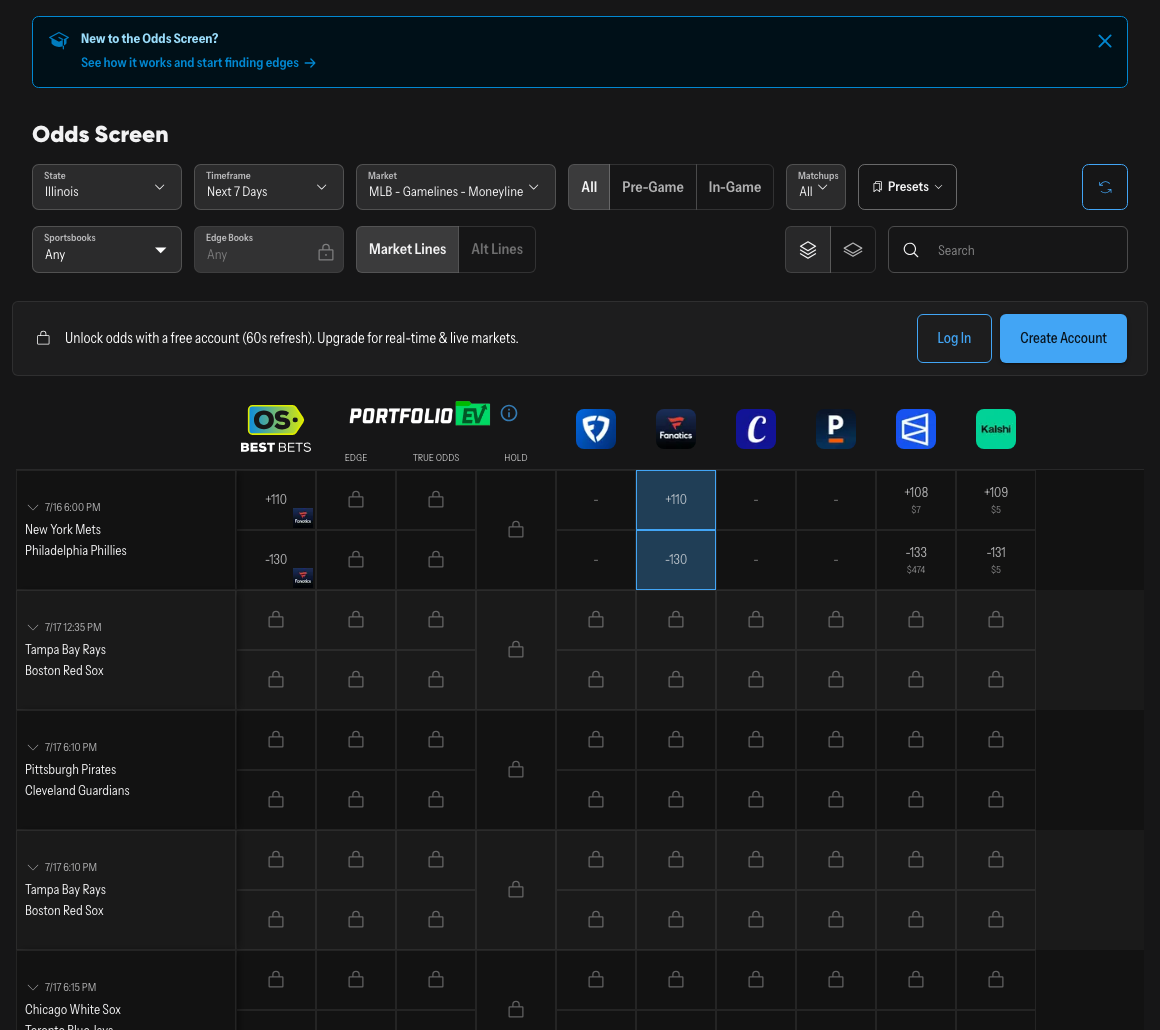 The OddsShopper live odds screen — every book's price on one board, refreshed in real time. Open the live board.
The Bottom Line
The Broncos at 9.5 is a number one big idea built: regression. Backing the over is a bet that a defense led by Pat Surtain II and Nik Bonitto, a healthy Bo Nix with a new weapon in Jaylen Waddle, and a Sean Payton roster with real Super Bowl equity stay good enough to win 10 even after the coin flips stop landing — a roster this good does not fall off a cliff just because its luck normalizes. The under is a bet that 11 one-possession wins was the ceiling, not the floor, that a quarterback coming off ankle surgery and a first-place AFC West schedule shave off the handful of games Denver stole last year, and that a 14-win record was always going to correct toward the roster's true level. Which side is right depends on the price you can find and how much of last year's magic you think repeats. Shop the number and the juice across every sportsbook, confirm Nix's health and the depth chart before you commit, and let the regression math and the schedule, not the memory of a 14-3 season, decide the bet.
New to OddsShopper? It scans every major sportsbook at once and flags the bets priced in your favor — the gap between the Broncos over at -105 and -125, or the under at plus money versus laying juice, is exactly the kind of edge it surfaces on a coin-flip number like 9.5. Try it free for 7 days, and code BRONCOS20 takes 20% off OS Pro or OS Core.
More on this: Cowboys Win Total 2026: Last In Defense, Priced To Contend · Giants Win Total 2026: A 4-13 Team Priced For 7.5 Wins · Patriots Win Total: The Books Agree On The Number. The Machines Don't · Chiefs Win Total Odds: Lindy Vs. The Machine On 11+ Wins · Shaedon Sharpe Injury: Blazers Win Total Odds On Kalshi