Most Bitcoin price prediction takes ask a comfortable question: how high can BTC go? This Kalshi market asks a brutal one. Will Bitcoin more than triple from where it trades today and print above $200,000 by the first night of 2027, a level it has never touched? Someone is paying real money that it will. Laughing feels safe, except laughing at Bitcoin longshots has one of the worst track records in finance. Both sides here have a sharper argument than you would guess, and the number that settles the argument is the one every model in our panel admitted it did not have.
The Quick Answer
- The Market: Kalshi's YES trades near 4¢, about a 4% implied probability that Bitcoin tops $200,000 at the January 1, 2027 measurement.
- The AI Read (Why It Isn't One): our seven-model panel saw the full question and priced it, landing a 6% blend, two points above the market. Read the next line before you trust that gap.
- The Fact The Models Lacked: Bitcoin traded near $66,000 in late July 2026 when the panel ran, and sits near $64,000 at our August 11 re-check, so $200,000 is roughly 3x the current price, a 200%-plus rally in under five months. Several models said outright that if spot were already high they would price this well above their headline number. It isn't.
- Why It's SO Hard: a new all-time high wouldn't even be enough. BTC would have to smash its record and keep climbing, then hold above $200,000 at one instant.
- How To Use It: read 4¢ as a near no-vig probability, compare it to your own estimate, and treat the model blend as a caution flag, not a green light. The market's 4¢ is arguably better calibrated than the panel's 6%.
The full bull and bear cases, the seven model verdicts, and a settlement-rules quirk that ends this market's clock almost a full day earlier than the title reads are all below.
Stay ahead of the markets.
Daily insights and expert picks on Kalshi, Polymarket, and what's moving markets.
Free forever. Unsubscribe anytime.
The Market
| Venue | Kalshi — a CFTC-regulated exchange |
| Ticker | KXBTC2026200-27JAN01-200000 |
| The Contract | Resolves per the market's official settlement rules: does Bitcoin's price top $200,000 at the January 1, 2027 measurement? |
| Closes | On resolution; per the rules text, the measurement window ends January 1, 2027 at 12:00 AM ET — the first second of the year, not the last (see Read the Fine Print below) |
| Current YES Price | 4¢ ≈ 4% implied (first snapshotted July 20, 2026; re-verified unchanged at 3¢ bid / 4¢ ask on August 11, 2026 — confirm the live price on Kalshi before trading) |
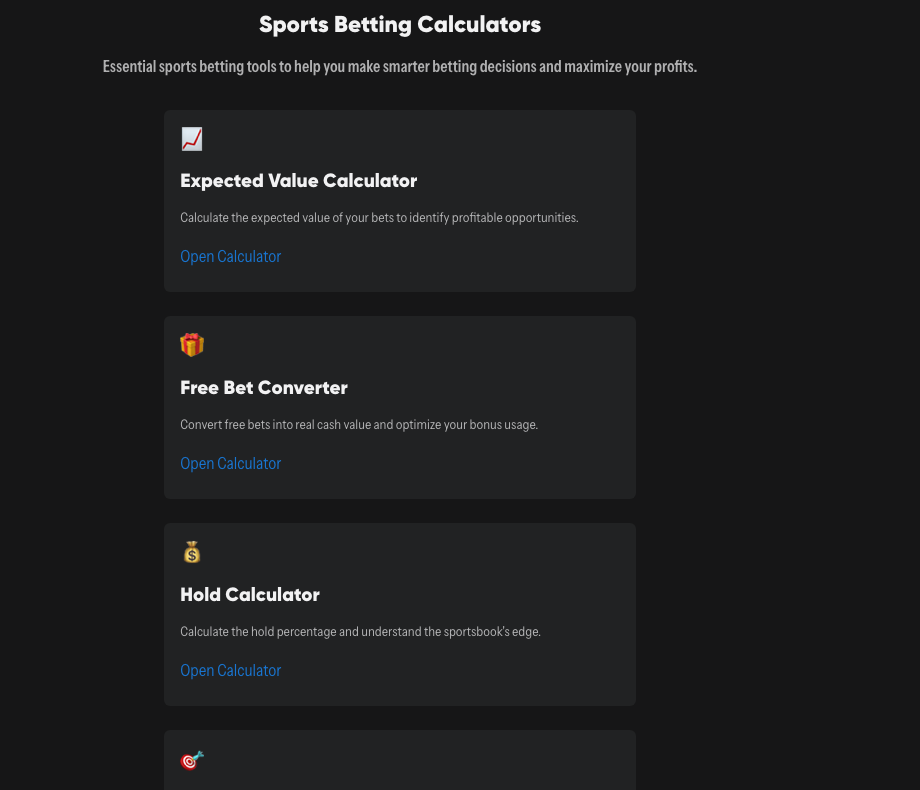
The OddsShopper Betting Calculators.
Verify it yourself: the live market, the exact settlement rule, and the current YES price all sit on Kalshi's crypto markets under ticker KXBTC2026200-27JAN01-200000, and Bitcoin's live spot price is on any major tracker such as CoinGecko. At our August 11, 2026 re-check BTC trades near $64,000, far below the $200,000 strike, so YES requires roughly a tripling. Only the market's official settlement print counts, so whatever Bitcoin does after the calendar turns to January 1, 2027 belongs to a different market.
The Bull Case (Why YES)
The bull case is not that Bitcoin drifts to $200,000; it is that Bitcoin has never drifted anywhere. Historically, most of its gains arrive in a few violent weeks, usually after long stretches that made owning it look foolish. The structural setup is also different from past cycles: spot ETFs gave institutions a regulated pipe into a fixed supply, the latest halving cut new issuance in half, and Washington's posture toward crypto has softened compared with the enforcement era. Add a liquidity tailwind, say aggressive rate cuts or a weaker dollar, and the fuel is there. Five months sounds short to a doubter, but in Bitcoin terms it is an eternity, and the precedent the bull leans on is specific, not vague. From roughly $13,800 at the end of October 2020, Bitcoin more than doubled to about $29,400 by New Year's Eve and pushed past $37,000 in the first days of 2021, roughly a 2.7x in about ten weeks, only a shade under the tripling this market now needs. From a spot in the mid-$60,000s, a print above $200,000 asks for a move of that same order, and the honest bull case is simply that this asset has, more than once, done exactly that when almost nobody was positioned for it.
The Bear Case (Why NO)
Start with the plain fact: $200,000 is a level Bitcoin has never traded at, and this market needs it there by the first night of 2027 from a spot near $66,000. A new all-time high would not be enough; the price would have to smash the old record and keep accelerating into the settlement print. The pattern bulls cite cuts both ways, because each Bitcoin cycle has delivered a smaller multiple than the one before it. That is arithmetic, not pessimism: doubling, let alone tripling, a trillion-dollar asset takes far more fresh capital than doubling the scrappy early version ever did. Volatility is not a one-way friend either; the three post-halving-peak years the panel keeps citing, 2014, 2018 and 2022, were all deep bear years, and in each of those cycles Bitcoin gave back more than three-quarters of its value from peak to trough. A bad macro stretch or one credit scare in crypto could bury this question for the rest of the year the same way. Mostly, though, the bear case is boredom. Sideways is a full win for NO.
What The Market Is Pricing
The market is not torn. As of July 20, 2026, YES trades around 4 cents, with a 3-cent bid and a 4-cent ask, an implied chance in the low single digits. That price is the classic lottery-ticket shape: near zero, not at zero, because sellers remember what Bitcoin has done to comfortable skeptics. The base case is that nothing close to the required 3x rally arrives, the January 1, 2027 deadline passes with the price far below the line, and the contract settles NO per the market's settlement rules. Note that the rules, not the headline, define which price source counts and whether a spike through $200,000 is enough — the next section quotes the exact clauses, including a deadline detail the title glosses over. Expect the quoted odds themselves to swing hard with spot Bitcoin; that volatility is a feature of every crypto market here. Watch the near-term year-end bands reprice as December approaches, because that migration tells you more than any single quote does. Two of those neighboring markets get the same panel treatment in our Bitcoin $77,500 band verdict and our ETH $2,125 band verdict, both priced much closer to the money than this moonshot.
Read The Fine Print
That last point deserves its own section, because we pulled this market's live settlement rules from Kalshi on August 11, 2026, and two clauses read differently than the title suggests. This is settlement mechanics, not scandal — every regulated contract pays on its rules text, and this one has two places where the text and a casual reading part ways.
The deadline is not the one in the title. The market's title asks whether Bitcoin will be above $200,000 "by Jan 1, 2027 at 11:59PM ET." The primary rule says, verbatim: "If the Bitcoin spot price according to the CF Bitcoin Real-Time Index is above $200000 starting 2025-10-10 and before Jan 1, 2027 at 12:00 AM ET, then the market resolves to Yes." Those are two different moments. 12:00 AM ET on January 1 is the first second of New Year's Day, nearly 24 hours before the 11:59 PM the title names, and the market's scheduled close time (midnight ET, January 1) matches the rules, not the title. Under the rules text, a rally that finally clears $200,000 during the day on January 1, 2027 would land after the window shuts. If your mental model of this trade includes New Year's Day itself, the fine print doesn't appear to give you that day.
A brief spike lives in two clauses at once. The secondary rules contain two mechanisms side by side. One sentence says: "If the BRTI crosses the threshold at any point during the measurement period (triggering early expiration), the market immediately resolves." Read alone, that means one confirmed tick above $200,000 ends the market YES on the spot, and Kalshi's early-close condition ("This market will close and expire early if Bitcoin crosses the specified price threshold") backs that reading for a definitive cross. But the same rules also define settlement as a trimmed mean: the resolution value is calculated "by taking all BRTI values for each minute from market issuance until the specified time on the target date, removing the top 20% and bottom 20% of values, then averaging the remaining 60% of values." A trimmed mean exists to ignore outliers, and a short-lived spike through $200,000 sits exactly in the top slice that gets discarded, while an average over more than a year of sub-$200,000 minutes would sit far below the strike even after a real touch. The two clauses describe different outcomes for a fast wick: immediate YES under one, statistical erasure under the other, and nothing in the text defines how brief is too brief.
None of this changes the panel math — with spot still in the mid-$60,000s ($63,994 on CoinGecko as of August 11, 2026), the question stays academic until Bitcoin is actually knocking on $200,000. But settlement language is exactly what a trader should price before taking a position, not after, and if the distinction ever matters to your money, the authoritative answer comes from the market's rules page and Kalshi itself, not from any summary — including this one. We grade exactly this kind of language across the ten biggest markets on Kalshi in our Fine Print Watch.
The Fact The Models Lacked
Here is the detail that reframes the whole panel: Bitcoin trades near $66,000 in late July 2026, and it sat around $64,200 on July 20, the day the market snapshot and the model panel were both dated. That level, which not one model could confirm, is the difference between reading this market and guessing at it. At a spot in the mid-$60,000s, topping $200,000 is not a stretch goal. It means roughly tripling, a 200% rally in about five months, into a price the asset has never printed. That is what the 4-cent market is quoting: an extreme tail, not a coin flip.
And the panel knew it was flying blind. Nearly every model named its missing spot price as its largest uncertainty, and several went further and told you exactly how the answer would move once that fact was known. ChatGPT wrote that "if spot is already above roughly $160,000, this estimate would be materially too low." Kimi K3 said that if spot turned out to exceed $150,000 it "would raise my estimate substantially," while a spot below $80,000 "would push it toward 1-2%." GLM 5.2 was the most explicit: "if it's above $150k, I'd raise my estimate to 15-20%; if below $100k, I'd drop it to 2-3%." Read those conditionals against the real number. Spot near $66,000 sits below both downside triggers those models named — GLM's $100,000 and Kimi's $80,000. Plug the real spot into their own stated logic and each lands in the 1-3% range, at or under the market's 4 cents, not the 6% the headline blend printed.
That callback matters for the whole verdict. The 6% blend sits two points above the market, which looks like the panel spotting value the crowd missed. It isn't. The gap is longshot respect, not insight. Gemini Flash actually came close on the current price, assuming "a rough current price of $65,000-$70,000," and still printed 8%, purely out of deference to how violently Bitcoin can move. DeepSeek V4, the low outlier at 3%, paired that same low base ("perhaps $60k-$100k") with a corrective-year cycle read and came in as one of four models within a point of the 4-cent market. So the split is not about who saw the price; it is about how much weight each model gave Bitcoin's fat tails from a low base. The takeaway is not that the panel beat the market. It is that the 4-cent quote is at least as defensible as the blend, and the model that reasoned most explicitly from the real setup is the one that moved toward it.
Model Verdicts
Market: 4¢ · AI blend: 6% — but that two-point gap is a mirage, not an edge. Not one model could confirm Bitcoin's actual spot price.
| Model | YES | Why |
|---|---|---|
| ChatGPT | 5% | With only five months remaining, Bitcoin likely needs an unusually large rally and must remain above $200,000 at the exact resolution time. |
| Gemini Flash | 8% | Bitcoin's historical volatility and recent halving suggest potential for significant upside, but reaching $200k in 5 months is a steep climb. |
| Gemini Pro | 5% | With only 5.5 months remaining until 2027, Bitcoin would require an unprecedented and statistically rare short-term capital inflow to reach $200,000, justifying the very low probability. |
| Grok 4.5 | 6% | Only ~5 months remain and a sustained multi-x rally to clear 200k is historically rare outside peak mania. |
| DeepSeek V4 | 3% | Bitcoin historically peaks 12-18 months post-halving (April 2024), so by mid-2026 it's likely in a bear phase, making a >2x rally to $200k by Jan 2027 very unlikely. |
| Kimi K3 | 5% | The 4-cent market price implies Bitcoin sits far below $200,000, and post-halving-peak years (2014, 2018, 2022) have historically been bear years, making a doubling-plus rally by January 2027 unlikely. |
| GLM 5.2 | 8% | Reaching $200k in ~5 months requires a major rally from likely current levels, but Bitcoin's volatility and year-end seasonality make a modest tail outcome plausible. |
| Blended Verdict | 6% | equal-weight mean of 7 models (method always disclosed) |
The models span a 5-point range, from DeepSeek's 3% to the 8% pair, but that spread is mostly longshot noise on a tiny probability, not a disagreement about direction. All seven agree a run to $200,000 is unlikely; they differ only on how much respect to pay Bitcoin's fat tails. Feed the real $66,000 into the two models that named a downside trigger, GLM and Kimi, and their own stated logic pulls them toward 1-3%, compressing the cluster toward the 4-cent quote rather than away from it.
Model estimates generated 2026-07-20 22:55 UTC. These are model estimates, not predictions of fact and not financial or trading advice. Models are frequently wrong; the market price reflects real traders' money.
The Full Reasoning
ChatGPT (5%): The dominant factor is the short remaining horizon: unless Bitcoin is already near $200,000, reaching that threshold by year-end requires an exceptional risk-on move. Bitcoin has historically produced gains exceeding 50–100% within five months, but such episodes are uncommon and usually coincide with strong liquidity, accelerating adoption, or speculative mania. Moreover, resolution appears to require trading above $200,000 at a specific timestamp, making a temporary intraday breach insufficient and adding volatility-related downside. The quoted 4-cent market price is weak supporting evidence rather than my primary input; it plausibly reflects the hurdle and limited time, though thin liquidity could distort it. My largest knowledge limitation is not having reliable contemporaneous Bitcoin spot, ETF-flow, macroeconomic, and regulatory data for July 20, 2026; if spot is already above roughly $160,000, this estimate would be materially too low. The single news event most likely to raise my estimate would be enacted, funded large-scale US government Bitcoin purchases, which could create substantial incremental demand and momentum.
Gemini Flash (8%): The primary driver for a 'YES' resolution is Bitcoin's historical price appreciation post-halving events, with the most recent halving occurring in April 2024. This often precedes significant bull runs. However, reaching $200,000 by January 2027 implies an approximate 200% increase from its current level (assuming a rough current price of $65,000-$70,000, which is uncertain as of today's knowledge). While not unprecedented for Bitcoin, this is a very aggressive target in a relatively short timeframe (5 months). Base rates for such rapid, large-scale gains are low, even for Bitcoin. I am most uncertain about the precise impact of current macroeconomic conditions (e.g., interest rates, inflation) and potential regulatory developments on Bitcoin's price in the short term. The one piece of news that would most change my estimate would be a major institutional adoption announcement or a significant, unexpected global economic stimulus package.
Gemini Pro (5%): The primary driver of this estimate is the extremely short time horizon of approximately 5.5 months remaining until the January 1, 2027 resolution date. Assuming Bitcoin's price in mid-2026 is significantly below the $200,000 threshold-as strongly implied by the 4-cent market price-an astronomical and unprecedented percentage gain would be required. Base rates for Bitcoin show that while rapid bull runs occur, doubling or tripling to reach a $4 trillion market capitalization in under six months is statistically rare and requires immense, sustained capital inflows. My greatest uncertainty lies in not knowing Bitcoin's exact current trading price or recent macroeconomic shifts as of July 2026; however, the market's low confidence anchors my assessment. The one piece of news that would most drastically change my estimate would be a major sovereign nation or central bank announcing the addition of Bitcoin to its strategic reserves, which could trigger an immediate, massive liquidity shock and price rally.
Grok 4.5 (6%): Key drivers: short residual time to Jan 2027 sharply limits path dependency; Bitcoin's realized volatility supports large moves but 2-3x gains in under half a year have occurred mainly in early cycle blow-offs, not late-stage. Base rates from prior cycles (2013, 2017, 2021) show post-halving peaks rarely deliver another full doubling once already elevated. Macro liquidity, ETF flows and halving residual effects are secondary tailwinds at best. Most uncertain: exact spot price and positioning as of mid-2026, which my knowledge cannot observe. The single most updating news would be a sudden break above prior ATHs on massive volume confirming a new parabolic phase.
DeepSeek V4 (3%): The strongest driver is the four-year halving cycle: the April 2024 halving suggests a bull peak around mid-to-late 2025, with 2026 typically a corrective year. By July 2026, Bitcoin is probably trading well below its cycle high, perhaps $60k-$100k. A surge above $200k in just 5.5 months would require an unprecedented late-cycle rally or an immediate new bull market, both historically improbable. Secondary drivers include macro conditions (interest rates, liquidity) and institutional adoption, but these are unlikely to override cyclical gravity. I'm most uncertain about the actual spot price on July 20, 2026, and whether a black-swan catalyst (e.g., US Bitcoin strategic reserve approval) has already occurred. The single piece of news that would most raise my estimate is a confirmed, imminent launch of a major sovereign Bitcoin accumulation program.
Kimi K3 (5%): Drivers in order of weight: (1) The market's 4-cent price is my strongest signal, since the scenario date exceeds my reliable knowledge; it implies spot is far from $200,000-likely requiring a 60-150%+ gain in ~5.3 months. (2) Cycle base rates: years following halving-cycle peaks (2014, 2018, 2022) were deep bear years; if 2026 fits that pattern after a 2025 peak, a new all-time high well above prior highs by January 2027 is improbable. (3) Bitcoin's fat tails: multi-month doublings have occurred (late 2020, early 2024), so I avoid going below ~2-3%; longshot bias roughly offsets this. (4) Possible catalysts-ETF inflows, Fed easing, sovereign adoption-add real upside uncertainty. What I am most uncertain about: the actual spot price on 2026-07-20, macro liquidity conditions, and any 2026-specific shocks (regulatory action, exchange failures, or conversely major institutional adoption). The single piece of news that would most change my estimate: the current Bitcoin spot price-learning it exceeds roughly $150,000 would raise my estimate substantially, while below roughly $80,000 would push it toward 1-2%.
GLM 5.2 (8%): Key drivers: (1) Timeframe is only ~5 months from July 2026 to Jan 2027, requiring a large move; (2) Post-2024 halving bull cycle dynamics may be waning by mid-2026, reducing momentum; (3) Bitcoin's historical capacity for rapid 50-100% surges in short windows provides nonzero tail probability; (4) I lack real-time price data for July 2026, creating significant uncertainty-if BTC is already near $150k+, the odds increase substantially versus if it's below $100k. Base rate for Bitcoin gaining 50%+ in a 5-month window is perhaps 15-20% historically, but conditional on being mid-to-late cycle, lower. The market's 4% price seems slightly low but reasonable. I'm most uncertain about current BTC price and macro conditions in July 2026. The single piece of news that would most change my estimate: confirmation of Bitcoin's current spot price-if it's above $150k, I'd raise my estimate to 15-20%; if below $100k, I'd drop it to 2-3%.
Reading A 4¢ Price The Way A Sharp Bettor Would
The panel handed you a 6% it built without Bitcoin's real spot price; the fix is to build your own read from the one number they lacked, and it takes fifth-grade arithmetic. A prediction-market price is not a vibe; it is a probability with a dollar sign in front of it. YES at 4¢ is the market's shorthand for "about a 4% chance," the same implied-probability math you would run to de-vig a two-way sportsbook line. What sharp bettors like about a venue such as Kalshi is that, on liquid markets, the price sits close to no-vig: you are not paying the standard 4-5% hold a book bakes into a two-way market. This particular contract is a thin longshot quoting a 3¢/4¢ spread, wider in relative terms than a heavily traded line, so treat 4¢ as a rough read on true probability rather than a precise no-vig print, but it is still cleaner than a lopsided moneyline would be. If you have never turned a market price into a percentage before, our primer on how prediction markets work walks through it step by step.
The first move is just translating the price. Four cents means about a 4% chance, and if turning market quotes and American-style prices into clean probabilities is not yet second nature, OddsShopper's betting calculators do that conversion for you. The next move is the one you would make on any number: compare that implied probability to your own estimate, and only act when the two diverge. The on-topic tool for that step is OddsShopper's EV calculator, which turns any price-plus-estimate into an expected-value figure in one shot: feed it the 4¢ price and a probability you actually believe, and it does the arithmetic below for you. The catch, as the last section showed, is that on this market the models handed you a 6% they built without knowing Bitcoin trades at $66,000. And before you trade any crypto or event market, confirm it is available where you live; we keep a running guide to whether prediction markets are legal in your state.
The one number I keep coming back tois the $66,000 the models never saw. Feed the 6% blend into a calculator and YES looks like a thin edge; feed in a spot-aware estimate at or below the market's 4%, which is exactly where the panel's own "below $100k, I'd drop it" conditionals point, and the edge evaporates. The panel didn't find value the market missed. It paid a $200,000 longshot more tail-respect than a base near $66,000 warrants. Once you weigh that number, the honest read of this market is the 4-cent one.
A Worked Example: Why The 6% "Read" Isn't An Edge
It's tempting to drop the 6% blend into an expected-value calculation and treat a positive number as a green light. Here is exactly what that looks like, and exactly why it fools you:
| Input | Value |
|---|---|
| YES Price (The Market) | 4¢ — risk 4¢ to win 96¢ |
| Break-Even Probability | 4% |
| Plug In The 6% Model Blend | EV = (0.06 × $0.96) − (0.94 × $0.04) = +$0.02 |
| Plug In The Market's Own 4% | EV = (0.04 × $0.96) − (0.96 × $0.04) = $0.00 |
The 6% row prints a small positive number, and a hurried reader would stop there and call YES a value bet. Don't. That +$0.02 exists entirely because the blend is two points richer than the market, and the previous section showed why: several models paid extra respect to Bitcoin's fat tails from a low base rather than round down to the quote, so the blend floats above the price without anyone actually finding value the market missed. Feed the EV calculator a spot-aware probability instead, at or below the market's 4% (which is where the models' own conditionals land once you plug in the real spot), and the edge is gone, then negative the moment you add Kalshi fees. This table is an illustration of the math, not a recommendation to buy YES. The honest read of this market is the one the arithmetic keeps returning to: when your "edge" is just a model number built on a missing fact, the correct play is no bet.
More on this: Bitcoin Price: Six Figures Before New Year's? · Where Does Bitcoin End 2026? Kalshi's Price-Band Odds · How Bitcoin Price Contracts Work On Kalshi · How Low Will Bitcoin Get In August? The Floor It Hit Twice · How High Will Bitcoin Go In September 2026? Kalshi Vs. AI