Kalshi opened a market on Sunday morning, September 6, 2026, called "When will Dabo Swinney leave Clemson?" It listed the morning after LSU beat the Tigers 51-10 in Baton Rouge, the most lopsided loss of Swinney's tenure as Clemson's head coach. By that Sunday evening the market's answer to the question Clemson fans were asking on Saturday night was close to zero: a penny bid on the contract that pays if Swinney is out before December 1, and four contracts traded. Thirteen days and about 1,340 contracts later, the answer has a shape. The rungs inside this season trade between a few cents and a quarter on thin books. The rung that pays if he is gone before January 1, 2028 is quoted 44 cents bid and 52 asked, the first tight two-sided price this board has had. The reason the near rungs stay low sits in the coach's buyout: firing him costs Clemson $57 million, and the deal has no clause that lets the school recoup a dollar of it if he takes another job. That number still sets every rung inside this season. The far rung is where the market has started to argue with it.
The Quick Answer
The market says Dabo Swinney stays through the 2026 season, but it no longer says so at a penny. As of about 1:45 a.m. ET on Saturday, September 19, 2026, the before-December-1 contract is bid 3 cents and last traded at 3, the January and February 2027 rungs both last traded at 25 cents on thin books, and the rung that pays if he is gone before January 1, 2028 is quoted 44 cents bid and 52 asked, close to a coin flip and the only rung with a real two-sided price. The buyout is still why the near rungs sit low; the 2028 rung is where the market has begun to price a parting after next season. The full ladder, with the sizes behind each price and what moved this week, is below.
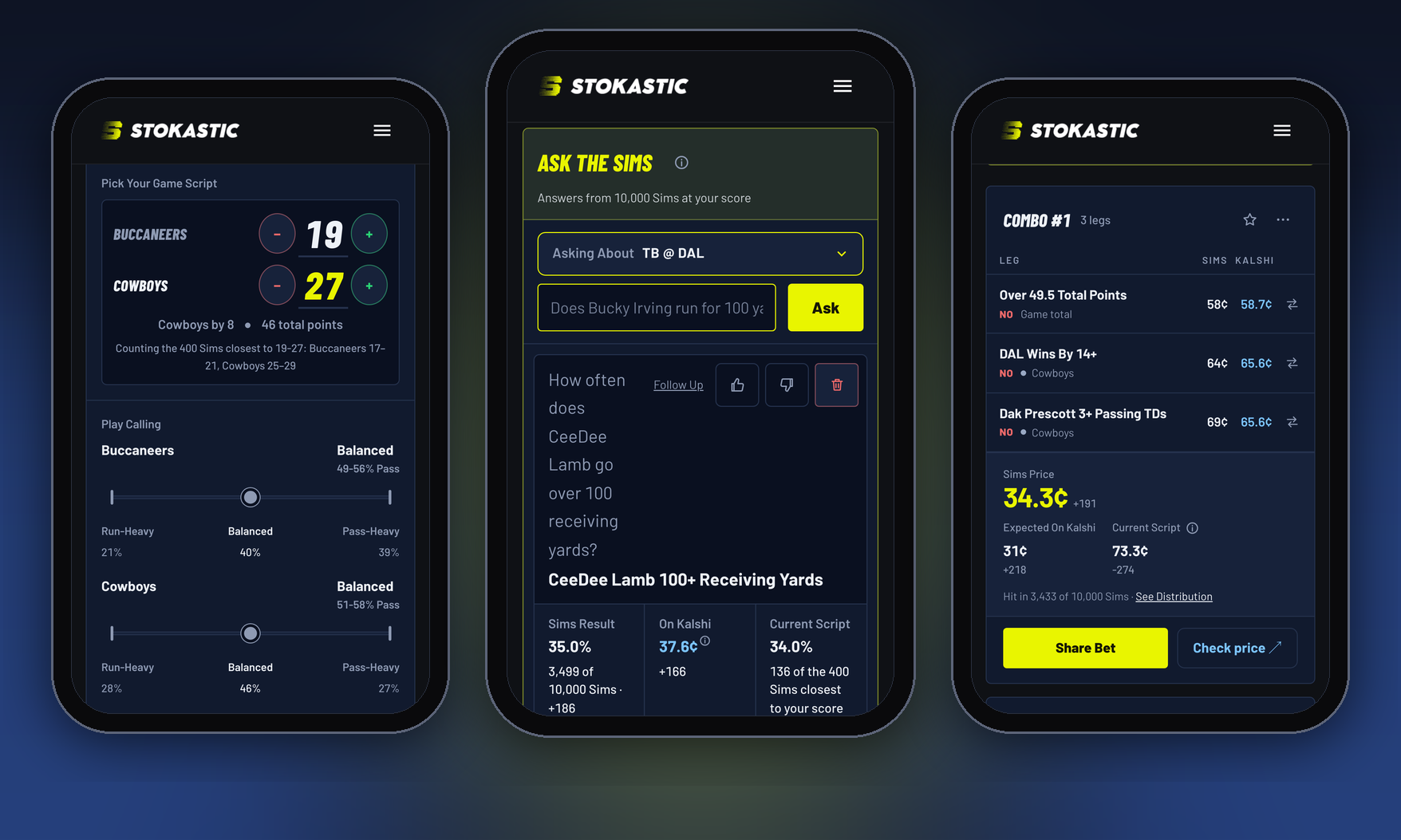 Price the combo before you buy it. The Kalshi Combo Simulator plays this week's NFL game 10,000 times and prices any combo you build next to the price on Kalshi, on your phone, free, no login.
New to Kalshi event contracts? Start here with how they work. Every price on this page carries its stamp, about 1:45 a.m. ET on Saturday, September 19, 2026, taken ahead of that day's noon kickoff against North Carolina, and will move as the season does. Free: The PM Weekly Brief covers this ladder and the rest of the week's prediction-market moves in one email.
What Actually Settles This Market
| Venue | Kalshi |
| The Question | "When will Dabo Swinney leave Clemson?" A ladder of four yes/no contracts, one per deadline: before December 1, 2026; before January 1, 2027; before February 1, 2027; before January 1, 2028 |
| What Settles It | A rung pays YES if Clemson's head coach leaves the job before that date, whether fired, resigned or otherwise, OR announces before that date that he will (per Kalshi's rules) |
| Event Ticker | KXNCAAFCOACHLEAVE-26DSWI (each rung trades as KXNCAAFCOACHLEAVE-26DSWI-120126 and so on) |
| Opened | 9:45 a.m. ET, Sunday, September 6, 2026 |
| Prices Below As Of | About 1:45 a.m. ET, Saturday, September 19, 2026 |
Two words in the rules matter more than the score of the LSU game. The first is "announces." A coach who says in November that this is his last season settles the December rung YES, even if he coaches the bowl game. The second is "leaves." The rule does not say fired. This ladder pays on any exit, and it does not care whose idea it was.
The December rung also covers more than its name suggests. It stops trading at 11:59 p.m. ET on November 30. Clemson's regular season ends at home against South Carolina on Saturday, November 28, per the Tigers' schedule. The Sunday and Monday after a finale are when college programs often make coaching changes, and both of those days sit inside this rung. So "before December 1" is the whole regular season plus the two days when firings often happen, and the market bids that window at 3 cents, up from a penny on opening day.
The Loss That Opened The Market
LSU outgained Clemson 644 yards to 145 on Saturday night. Clemson converted 1 of 13 third downs; LSU converted 11 of 16. Starting quarterback Christopher Vizzina went 10 of 16 for 83 yards with an interception and was benched at halftime for Tait Reynolds, and Clemson's only touchdown came on an 11-yard David Eziomume run with 3:13 left in the game, per ESPN's box score. Swinney's postgame line, as ESPN's David Hale reported it, was that "the best thing about that one is that it's over," followed by "we got our asses kicked" and "we've got a long way to go." ESPN called it the worst defeat of his coaching career.
The part of that Saturday that carried forward was the quarterback, and Clemson answered it twice in the week that followed. Vizzina started against Georgia Southern on September 12 and left after the third drive when, as The Post and Courier reported, he could not feel his left arm; Reynolds went 16 of 27 for 178 yards and Nolan Hauser kicked five field goals in a 22-7 win that kicked off at 9:30 p.m. after a two-hour lightning delay. On the Monday after, Swinney named Reynolds the starter for North Carolina and called it a decision "exclusively based on those two QBs' body of work and performance through two games," per Yahoo Sports, with Vizzina, "a little bit of a left arm injury," available in a backup role. The December rung traded as high as 17 cents during that game and has drifted back to a 3-cent bid since, on 11 contracts sold this week; the 'What Moved' section below has the week's trading. Clemson has now lost its opener four years running and has started 0-1 in five of the last six seasons, per the same ESPN report, which is the kind of streak that keeps a fan base's patience thin even before a 41-point margin.
The patience was thin already. Clemson went 7-6 in 2025, Swinney's worst record since a 6-7 season in 2010, per Fox Sports. After a 46-45 loss to Duke on November 1, 2025, Swinney told reporters, "May get fired today. Graham [Neff]'s sitting in the back. So, I don't know. Can't say I blame him," as Sports Illustrated relayed it, a joke about athletic director Graham Neff that was a joke because of a number. The buyout has dropped by $3 million since, and the ESPN reporter who put it on the record in August, Pete Thamel, did so bluntly.
Why The Buyout Is The Whole Story
Swinney signed a 10-year, $115 million extension in September 2022 that runs through 2031, and the 2026 season is its fifth year. If Clemson fires him without cause this year, it owes him $57 million, down from $60 million a year ago, per Fox Sports' contract breakdown. The clause that turns that figure from large into decisive is the one the deal does not have. CBS Sports' Robby Kalland reported that the contract contains no mitigation clause, what most coverage calls an offset, meaning Clemson would owe the full amount even if Swinney took another head-coaching job the next week. Coaching contracts commonly include an offset that shrinks the buyout when the fired coach is hired elsewhere. This one has none, and Kalland writes that Clemson would end up paying the second-largest buyout in college football history in full.
Kalland's reading of the deal adds a wrinkle that should, on paper, push money toward the December rung rather than away from it: the flat $57 million applies while the contract is in its fifth year, and from 2027 the buyout becomes his remaining compensation, which CBS puts at $60 million. By that reading, firing Swinney during this season is $3 million cheaper than firing him after it. A cheaper window with a 3-cent bid on it is the market telling you $57 million and $60 million are the same number to a university.
Now the other direction, because the rules pay on any exit. If Swinney leaves Clemson for another program this year or next, he owes the school $3 million, per the Fox Sports breakdown. The same breakdown says the figure is 150% higher if the program is Alabama. A $57 million exit door on one side and a $3 million exit door on the other is the whole shape of this ladder. A firing is close to impossible at the price. A resignation is cheap, and a resignation is not something a coach with two national titles is going to volunteer after one Saturday. The plausible YES on any near rung is a mutual parting or an announced final season, which is why the word "announces" in the rules is doing so much work.
Pete Thamel said it plainly on ESPN in August, as Sports Illustrated relayed it on August 17: "Dabo Swinney is not on the hot seat, Dan. Let's just be clear about that. He's one of two active coaches who have won two national titles. He would be owed $57 million in the long, long, long, long shot that he gets fired, and he's not going to get fired. We are a long way from the hot seat conversation." USA Today's Blake Toppmeyer, writing after Saturday's game and relayed by ClutchPoints via Yahoo Sports on September 6, described the combination of a $57 million check and no offset language in a single phrase: "That, folks, is what an impasse looks like." The market opened the next morning and priced the impasse at a penny. Two weeks later the rungs inside this season still agree with him, and the rung that runs through next season does not.
A Worked Example: Reading The Ladder Off Bid And Ask
The bid is what buyers will pay, the ask is what sellers want, and on a market this thin the book is still the price while the last trade is a clue. Every price below is a cent value on a one-dollar contract, so a 10-cent contract turns $100 into $1,000 if it pays and into nothing if it does not, and 1 cent turns $100 into $10,000, all before Kalshi's trading fee, which is charged when the trade executes, and all only if you could get filled there. On the three near rungs you still mostly cannot: the offers sit at 70 to 82 cents, so the bid and the last trade are the working prices. The 2028 rung is the exception, and it is the row to read first.
| Swinney Leaves Before | Best Bid (size) | Best Ask (size) | Last Trade | Volume | Open Interest |
|---|---|---|---|---|---|
| Dec 1, 2026 | 3¢ (44 contracts) | 82¢ (25) | 3¢ | 293 contracts | 288 |
| Jan 1, 2027 | 17¢ (5) | 73¢ (103) | 25¢ | 308 | 308 |
| Feb 1, 2027 | 12¢ (10) | 70¢ (23) | 25¢ | 412 | 364 |
| Jan 1, 2028 | 44¢ (3) | 52¢ (100) | 44¢ | 326 | 326 |
Kalshi's order book at about 1:45 a.m. ET, September 19, 2026, sizes rounded to whole contracts. Sizes are contracts resting at the best price, and open interest is the number of contracts still held by someone. The 5,000-contract bid at 10 cents on the February rung is still there, now two levels under the 12-cent best bid; the 2028 rung has 100 contracts bid one level below the top, at 43 cents; and the December rung's 82-cent offer is 25 contracts, with 31 more a penny worse at 83. The tightest gap between a bid and an ask anywhere on the board is now 8 cents, on the 2028 rung, down from 89 cents on opening day.
The row that teaches the most is the last one. On opening day the 2028 rung was bid 2 cents for 100 contracts and offered at 99. On Wednesday, September 9, between 3:41 p.m. and about 9 p.m. ET, roughly 211 contracts were bought there, walking the price from 38 cents to 45, and the next three days added prints at 46 and 51. Then it stopped. The last trade before this stamp was 2 contracts sold at 44 cents on Thursday afternoon, September 17, and the book has sat at 44 bid, 52 asked since. Read it as the market's answer to a different question than the December rung asks: not "is Clemson going to pay $57 million this fall," but "does Dabo Swinney leave, or announce he is leaving, before January 1, 2028." The bid says about 44 chances in 100 that he does, the offer says 52, and it is the only rung on this board where a buyer and a seller are within 8 cents of each other.
The February 2027 rung, the row that carried the board's only real bid on opening day, has become its most traded rung and its least decisive. The 10-cent bid for 5,000 contracts, $500 at risk for a payout of $5,000 if Swinney is out, or has announced he is out, before February 1, 2027, is still resting, and no seller has ever taken it. Above it, buyers paid 22 to 24 cents on September 9 and 10, then 29 cents on Friday night and 29 to 33 cents in the small hours of Saturday, September 12, with 100 contracts printing at 33 cents at 4:46 a.m. ET, the highest price any buyer has paid in size on a rung inside this season. That was the top: 6 contracts sold down to 11 cents that Saturday evening, and this week's trading has been 28 contracts in both directions at 25 and 26 cents. The last trade is 25, the bid is 12, and the offer is 70, up from 62 in the previous session, so the tell this page named on opening day, the first ask below 50 cents on February, still has not shown up.
The ladder's shape has been repaired in one direction and not the other. Every YES before February 1, 2027 is also a YES before January 1, 2028, so the 2028 rung has to be worth at least as much as the February rung, and at 44 bid against 12 it now is, by a wide margin. The rungs inside this season still disagree with each other, though: the January 2027 rung is bid 17 cents and the February rung, which covers a month more, is bid 12. That is not a view, it is two thin books. The Anthropic IPO ladder on the same exchange quoted its March 2027 rung above its April rung on thin far books the weekend this market opened, and the lesson holds here: the rungs with a bid and an ask close together are the signal, and the rest are approximations.
What Moved Since September 16
Two sessions and change, about 140 contracts, bids a cent or two lower on the three rungs inside this season, offers backed away on two of them, the 2028 rung unchanged, and one buyer still paying up on January.
- January 2027 rung. The print of the week: 100 contracts bought at 25 cents at 4:03 p.m. ET on Thursday, September 17, the third 100-lot on this rung and the highest, after 16 cents on the 12th and 20 cents on the 13th. The quote at this stamp is 17 bid, 73 asked; the previous session closed 18 bid, 60 asked, so the offer has backed away 13 cents since the previous session's close.
- February 2027 rung. 28 contracts changed hands on Thursday: 15 sold at 25 and 26 cents in the morning and mid-afternoon, then 13 bought at 25 cents in the same minute as the January print. Last trade 25; the bid slipped from 14 to 12 and the offer backed up from 62 to 70; the 5,000 at 10 cents untouched.
- 2028 rung. 2 contracts sold at 44 cents at 2:46 p.m. ET on Thursday, the only trade there since a 51-cent print on the 12th. The quote, 44 bid and 52 asked, is unchanged from the previous session.
- December rung. The only Friday-night move on the board: 10 contracts sold at 4 and 3 cents around 9 p.m. ET, and one more at 3 cents after midnight. The bid is 3 cents for 44 contracts, down from 4 the session before; the 82-cent ask is where the last buyer paid on the night of the 12th, and it was 82 in the previous session too.
As of this stamp, taken ahead of Saturday's noon kickoff, nothing on the board reflects the North Carolina game, and the December rung's whole week of trading, 11 contracts, is smaller than a single January print.
What A Real Number Looks Like
Kalshi has run this exact question on other coaches, and one of those boards shows what this one would look like with money in it. The "When will Bill Belichick leave North Carolina?" ladder opened August 30. At this stamp its before-December-1 rung has 10,995 contracts of volume and 7,226 open, with a book of 61 cents bid, 68 cents asked and a last trade at 61. Its before-February-1 rung sits at 75 bid and 80 asked on 2,883 contracts traded, and its before-January-2028 rung at 85 bid, 86 asked. A 2-0 coach priced at 61 cents to be gone by December is a market pricing an early end to the experiment whatever the record says, and the Belichick board is a market: two-sided quotes a few cents apart on every rung, 7,226 contracts open on the December rung alone, and a shape that rises with the calendar the way a cumulative ladder should. It is also the board that walks into Death Valley at noon on Saturday, September 19, when Belichick's 2-0 Tar Heels play Swinney's 1-1 Tigers in the ACC opener for both.
The comparison cuts the other way too. The "When will Greg Schiano leave Rutgers?" ladder opened September 4 with every rung at 0 bid, 100 asked. Two weeks later its December rung is bid 12 cents and still offered at 99, on 332 contracts, a one-sided book with a bid in it: the same shape as the Swinney board's December rung, at four times the bid. Its February rung is bid 45 cents against Clemson's 12, same question, same exchange, and the $57 million buyout with no offset clause is the biggest reason the two numbers are not the same. A coach-exit market on Kalshi does not fill by itself. It fills when there is a plausible event to price, and the Belichick board has one on every date that the Swinney board, on the market's read, has only on the far one. The difference between 61-to-68 and 3-to-82 on the same December date is the difference between a plausible parting and a $57 million one.
Where A Real Number Would First Appear
Run the calendar against the rules. The December rung covers the season and the two days after it. The January rung adds December, when the early signing period lands and the coaching carousel turns, and the January transfer-portal window that follows is the reason a program that wants a new coach needs one by then. The February rung adds January and the bowl games. The 2028 rung adds all of next season.
The 5,000-contract bid still sits on the February rung, and that is the right place for it. A school that decides in December that it cannot go into another portal cycle with the current staff can settle this ladder with a joint statement that this season is his last, no firing required, and that statement pays every rung whose date comes after it. The 10-cent bid on February is a bet that Clemson and Swinney reach that kind of arrangement in December or January, and it is the nearest rung where a bid that size makes sense: December is too soon for a program four years into a 10-year extension, and 2028 is where the price has, in fact, gone.
The first two-sided market on this ladder showed up on the 2028 rung, not February, and it showed up in the first week: the first bid above a dime there arrived on September 9, and the rung has not traded under 38 cents since. February is still the place to watch for a December announcement being priced, and the tell is unchanged, the first ask below 50 cents there. Somebody selling a real number on February is somebody willing to say the impasse holds through the carousel, and then the near ladder has both halves of a price. The rung I keep coming back to now is January. Three times, on the 12th, the 13th and the 17th, a 100-contract buy has printed there, at 16 cents, then 20, then 25, each one higher than the last, and nobody has sold into it below 72 cents. One side of that rung is being built a hundred contracts at a time.
The case for the other side is real and short. "Not going to get fired" was said in August, before a 41-point loss, and a 3-9 finish with a quarterback change every other week is the scenario in which a university decides $57 million is a cost of doing business. That scenario is what the 10-cent bid is buying, and the 22-7 win over Georgia Southern, with a freshman quarterback now named the starter, was followed by a week of the near rungs drifting back without settling anything: the December rung's 17-cent high print came during that game, and the bid has slid to 3 cents since.
What Moves It Next
- Saturday, September 19, North Carolina At Clemson, Noon ET. Bill Belichick's Tar Heels arrive 2-0, with their own Kalshi exit ladder bid 61 cents on the same December date this one bids at 3, and Tait Reynolds, named the starter on Monday, makes his first career start. Swinney said this week that "it's an honor to coach against him, really. Sometimes I still can't believe he's the coach at North Carolina, but he is, and we've gotta play him," as Keeping It Heel relayed it. The line and moneyline across the books we track are on our live college football odds screen. A home loss in the ACC opener is the kind of result that would put real size behind the December bid rather than through it; a win leaves the near rungs about where they sit.
- A Statement From Graham Neff. The largest resting order on the board is still the 10-cent bid for 5,000 contracts on the February rung. A public vote of confidence from the athletic director is the sentence that pulls that bid. A "we will evaluate everything after the season" is the sentence that brings the first seller under 50 cents to meet it.
- Anything Swinney Says About His Own Future. The rules pay on an announcement, and an announced final season is the cheapest YES on this ladder: it costs the school nothing against a $57 million firing, it pays every rung dated after the announcement, and Swinney has already joked about being fired with his athletic director in the room. The December rung's 3 cents is a bid on a mid-season announcement as much as on a firing.
- The South Carolina Finale On November 28. The two days after it sit inside the December rung and are the last window in which the 3-cent bid pays. If Clemson reaches that game out of bowl contention, the December book stops being a placeholder for the first time.
Until one of those fires, the near rungs are a bid with a buyout sitting on top of it, and the 2028 rung is the market's first real argument with the buyout.
The Bottom Line
The question everyone in college football asked after the LSU game has a market, and two weeks of trading have split its answer in two. On every rung inside this season, $57 million with no offset clause is still a heavier fact than a 51-10 score, and the December rung's 3 cents says so. On the rung that runs through next season, the market is at 44 bid and 52 asked, the first place anyone has priced the possibility that the impasse ends before the contract does. The score changed how many people are asking the question. The contract is why the near answer is still a few cents, and the calendar is why the far one is not.
Prices on this page are Kalshi's book. If you also trade on the Polymarket App, code OS4 gets new users a $50 trading bonus on a $10 deposit. Affiliate link; we may earn a commission.
18+ Only. Restrictions and eligibility requirements apply. Not available in all jurisdictions. Trading is risky. 100% loss can occur. See polymarket.com/tos for more information. The Polymarket US App serves as an independent software provider and affiliate of Polymarket US and Polymarket Clearing, the CFTC-regulated exchange and clearing organization.
More on this: College Football Playoff Odds 2026: All 50 Teams On Kalshi, Scored · Clemson Win Total 2026: Over/Under Wins Odds & Prediction · NFL Coach Hot Seat: Which Coaches Could Be Out Before The 2026 Season? · How Kalshi Event Contracts Work · OddsShopper Prediction Markets Hub