Since MLB went to a balanced schedule in 2023, the San Diego Padres and Kansas City Royals are locked into exactly one short interleague series a year. Three games a season, against the 13 a division rival gets. That imbalance is the whole story of this betting board: books price Padres vs Royals about three times a year and Padres vs Dodgers 13 times, and the reps show up in the numbers they post.
Their 2026 meeting is already in the books, a three-game set at Kauffman Stadium on July 17-19. This page is the line-shopping playbook for that matchup and the next one, plus what the July series actually revealed. One market on this board swung further across those three games than any pregame number could have covered, and it is the one we keep coming back to.
In Summary
- What This Covers: how to grade a Padres vs Royals price on the MLB moneyline, run line and total, and where the market is loosest.
- The Core Idea: the same game carries different prices at DraftKings, FanDuel, BetMGM, Caesars and bet365. Taking the best of those numbers, every time, is the most durable habit in baseball betting.
- How We Grade A Price: our Sharp Sportsbook Algorithm strips the vig out to the true no-vig number. A price only counts as +EV when it clears that fair number by a real margin, not by a penny.
- Where We Look First: on a once-a-year interleague matchup the books have the fewest reps on run scoring, so the total and the run line are the first two numbers we shop.
- Live Board: these two clubs are not scheduled together again in 2026. For today's prices, use the live MLB odds screen or the full MLB odds today board.
Where The Padres Vs Royals Odds Actually Disagree
Some books list this game as Royals vs Padres odds and some as Padres vs Royals odds. It is the same board either way, just ordered from the other side. And there is no single number on it. There are roughly 20 of them, one per sportsbook, and they rarely match.
The disagreement is not random. It tracks repetition. A book that prices Padres against Dodgers 13 times a season has a well-worn model for San Diego's bullpen and a market full of sharp money correcting it between starts. The same book pricing San Diego at Kauffman Stadium for three games in July has neither. When books differ by a half-run on a total, this is the kind of game where it happens.
Line shopping is the habit of pulling up every book's price on the market you want and taking the best one. It sounds obvious and it is the single most underrated skill in betting, because the payoff compounds across a season's worth of bets. A +150 price beats a +140 one on the identical bet, every time, with no handicapping required. If the numbers themselves are still new to you, our guide on how to read betting odds covers the format first.
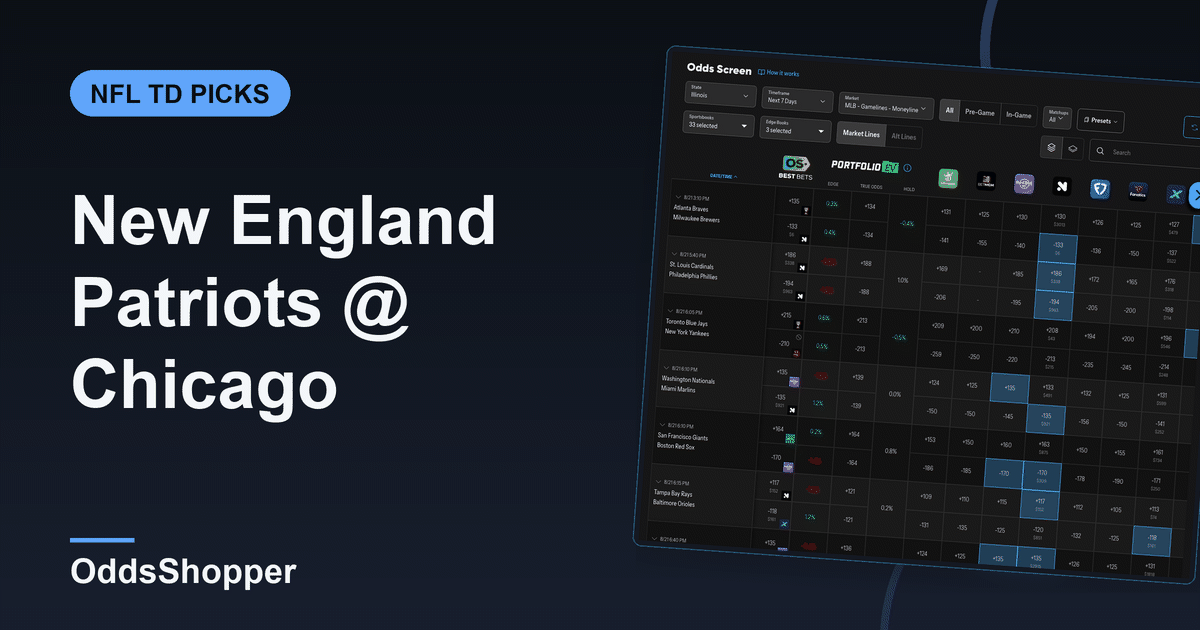
The problem is doing it by hand. Nobody opens four apps to compare a run line before every bet. That manual work is what we built the OddsShopper +EV top bets screen to do: it scans 20+ sportsbooks in real time and surfaces the best available price on every market at once.
How We Grade A Padres Vs Royals Price
Finding the best of four prices is step one, and it is worth being blunt about what step one does and does not buy you. It gets you to the top of the market. It does not, by itself, tell you the bet is good. Step two is where de-vigging comes in.
Every posted number has the book's margin baked into it. Our Sharp Sportsbook Algorithm strips that margin out and calculates the true no-vig probability for each side of a market. When a book leaves a side hanging materially longer than that fair number, the difference is your expected value. The tool surfaces every one of those gaps automatically and ranks them by expected ROI, which matters more than it sounds on a game like this one: the widest edge on a thin interleague board is usually a single outlier book, not the best of the four you happened to open.
Two displays do real work beyond the raw price:
- Hold shows the vig built into a market before you bet, book by book. Knowing it tells you instantly whether you are looking at a tight market or a padded one, and the illustration further down shows how to read it off a four-book moneyline.
- Line-Movement History tracks how the moneyline, run line and total have moved since posting, which is worth more on a market the books reprice once a year than on one they reprice every week.
For the mechanics behind turning a fair number into a dollar edge, our expected value guide walks the math, and how to remove the vig shows the de-vig calculation itself.
See the whole board, live.Every price we grade comes off the OddsShopper +EV screen. Start a 7-day OddsShopper Pro free trial and watch it flag edges across every book in real time, or take 20% off your first payment with code MLBODDS20.
A Worked Line-Shopping Example For Padres Vs Royals
The numbers below are an illustration of the method, not a live line. Picture a Padres road night where four major books disagree on San Diego's moneyline:
| Sportsbook | Padres Moneyline | Royals Moneyline | Implied hold | Padres no-vig price |
|---|---|---|---|---|
| DraftKings | +138 | -152 | 2.3% | +144 |
| FanDuel | +145 | -160 | 2.4% | +151 |
| BetMGM | +150 | -165 | 2.3% | +156 |
| Caesars | +142 | -156 | 2.3% | +147 |
The bet is identical at all four books. The payout is not: a $100 wager on the Padres profits $150 at BetMGM and $138 at DraftKings, a $12 swing on the same outcome.
Here is the part most line-shopping articles skip. De-vig all four books, average them, and the fair price on San Diego lands around +149, or 40.1% to win. This is a simplified retail-only consensus, built from the four books in the table so you can check the arithmetic; the Sharp Sportsbook Algorithm anchors to sharper, lower-hold books than these four. Now look back at the column on the right. BetMGM's +150, the best number on the board, sits one point above a fair price of +149. Run that through the expected-value math and it is worth about three tenths of one percent, which is a coin flip with a rounding error attached. DraftKings' +138, meanwhile, is roughly 4.5% expected value in the wrong direction.
That row inverts the usual lesson. Shopping four books did not manufacture an edge here; it just kept us from taking a bad one. The fair price is the break-even line, not the bet threshold. A real +EV play on this game looks like a fifth book hanging the Padres at +162 against that +149 consensus, which is worth about 5% and is a different job from comparing the four apps already on your phone.
The bet is not "the Padres win." It is "the Padres at a price that clears fair by enough to matter." Grade the number, not the team.
What The 2026 Series Told US About This Board
Here is the payoff on the promise from the top. San Diego visited Kansas City for three games in July 2026, and this is how the run scoring landed:
| Game | Result | Total runs |
|---|---|---|
| July 17 | Royals 7, Padres 6 | 13 |
| July 18 | Royals 6, Padres 1 | 7 |
| July 19 | Padres 19, Royals 2 | 21 |
The third row is the one everybody remembers, but the first row matters almost as much. A typical MLB total sits somewhere around 8.5 to 9 runs. Game one went four over it, game two landed comfortably under, and game three obliterated the number by a dozen. Three games, three completely different answers, all inside 72 hours.
Be careful what you take from that. We are not showing you the closing moneylines from those three games, so this is not a graded comparison of one market against another, and results are not the same thing as mispricing. What it is: three swings in run scoring wide enough that no single posted total was ever going to look smart, on the market these books get the fewest reps on.
One series is three games, which proves nothing on its own. It illustrates a pattern worth checking rather than a pattern already proven, and the way to check it is to watch the hold and the book-to-book spread on the next low-repetition board you see.
Moneyline, Run Line Or Total: Where To Spend Your Shopping Time
The moneyline is one of three Padres vs Royals markets worth shopping, and the case for each is different.
- Total (Over/Under): the first number I check on a low-repetition board, for exactly the reason those three games illustrate. When one book hangs 8.5 and another hangs 9, the half-run is worth more than the price attached to it. Shop the number first, then the juice.
- Run Line (-1.5 / +1.5): low-total games are likelier to end inside one run, so the +1.5 on the underdog tends to get bet up, and one book will hang it short while another stays fair. Small price differences move the needle more here than on a moneyline.
- Player Props: strikeout, total-bases and home-run markets are where books are least efficient, and the live MLB strikeout props screen shops those the same way the board shops game lines.
The habit that ties all three together is simple: price each market on its own number, and bet only where the best available price clears the fair one by a margin you can defend. If nothing on the board clears, pass. We hold our own card to that standard too, which is why a play only makes the free expert picks today page when the price justifies it.
The Bottom Line On Padres Vs Royals Odds
A once-a-year interleague series rarely hands you an obvious side, and it was never supposed to. What it hands you is a market the books have had less practice on, which is a reason to look harder at the total and the run line before you look at the moneyline. The $12 spread in the example above is the shape of the opportunity, and the de-vig underneath it is the reminder that the spread alone is not the opportunity. Getting the best of four prices protects your bankroll. Finding the book that is materially off the consensus is what pays it.
Shop every market, grade each price against its fair number, and let the ones that fall short go by. The screen applies that same standard to every game on today's MLB board, so the habit carries from one rare July series to the whole card.
More on this: Royals Vs Mets Odds: Best Prices And +EV Edges · Royals Vs Orioles Odds: Best Prices And +EV Edges · Phillies Vs Royals Odds: Best Prices And +EV Edges · Diamondbacks Vs Dodgers Odds: Best Prices And +EV Edges · Astros Vs Nationals Odds: Best Prices And +EV Edges