Kalshi halved the odds that Connor Hellebuyck is still a Winnipeg Jet on Nov. 1, cutting the contract from 28 cents to 15 in a day, after the Jets suspended their franchise goaltender for refusing to report to training camp. Nothing else at the top of the board moved. That reaction is backwards.
The contract does not pay on Hellebuyck making peace in Winnipeg. Kalshi settles this board on Nov. 1, 2026, and pays the Winnipeg side if he "remains on the team they were on upon issuance" that day. The market opened June 29, when he was a Jet. Fifteen cents is the board calling it an 85 percent shot that a trade actually closes inside six weeks.
Six weeks is not long to move a goaltender at a full cap hit, between a player who has publicly said his position has not changed and a general manager who says there is no timeline. A suspension on day one is what two dug-in sides look like, and dug-in sides burn time ... of which we have limited for this market.
The Board
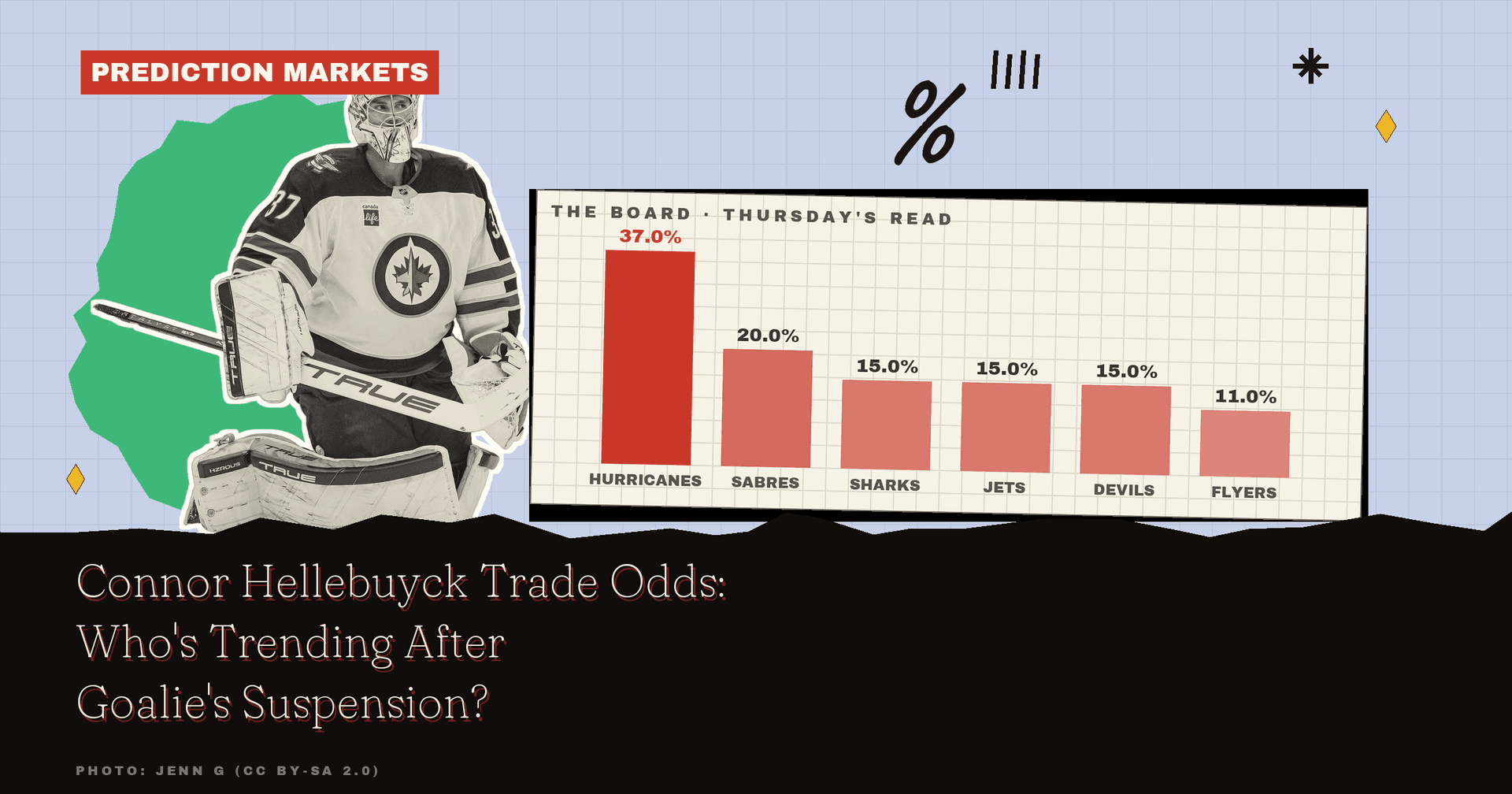
| Team | Last trade | Cost to buy |
|---|---|---|
| Carolina Hurricanes | 37¢ | 26¢ |
| Buffalo Sabres | 20¢ | 19¢ |
| San Jose Sharks | 15¢ | 14¢ |
| Winnipeg Jets | 15¢ | 15¢ |
| New Jersey Devils | 15¢ | 12¢ |
| Philadelphia Flyers | 11¢ | 2¢ |
Kalshi's Connor Hellebuyck next-team board (KXNEXTTEAMNHL-26CHELLEBUYCK37) on Thursday, Sept. 17, 2026. "Cost to buy" is the ask, the price you actually pay. Each team trades as its own yes-or-no contract, which is why the 33 listed last trades sum to about 156 cents rather than 100. Nothing here is financial advice.
Carolina's 37-cent headline number stands out because: Nobody will sell you that — the real offer is 26. Philadelphia's 11 is a ghost; you can buy the Flyers for two cents. New Jersey is 12, not 15.
Winnipeg is the only row on this board where the last trade and the price you pay are the same number. The five named destinations inside 22 points amount to one real favorite, two live outsiders and a couple of stale prints.
Two Sides Dug In, In Public
On Aug. 27, Hellebuyck confirmed through his agent, Ray Petkau, that he had asked for a trade earlier in the offseason. His words, via TSN: "I tried to handle the situation quietly and respectfully while giving the organization time to explore its options. With training camp approaching, I felt it was important to publicly confirm my request. My position has not changed. I believe moving on is the best path forward for me and my family."
He then skipped camp, and on Wednesday, Sept. 16, the Jets suspended him. The team disclosed no length and no end condition.
The next day, general manager Kevin Cheveldayoff said there is no timeline for a trade. "Unfortunately this situation is what it is," he said. "Just looking to find a resolution that works for both sides… Look no doors are closed. But at the end of the day that will be his choice."
A player whose position has not changed, and a club with no timeline -- we call that entrenchment, and entrenchment is slow.
Why The Other Side Has Time On Its Hands
Nov. 1 is the Kalshi contract's settlement date, not anything the NHL has set. What actually falls on that date in the sport is a waiver rule, the order in which teams may claim a player another club has made available. Per The Hockey Writers: "If a player is placed on waivers prior to Nov. 1, the waiver order is determined by the reverse standings order from the previous season," and after that date the order follows the current standings. The only other in-season restriction on the books is the holiday roster freeze. Neither is a gun to a general manager's head.
The real pressure is accounting. Teams operate under a salary cap and bank unused room as the season runs, so a dollar of space saved in October is worth several dollars of buying power at the March deadline. A contender that wants this goaltender has a standing financial reason to let the standoff ripen rather than swallow a full-season cap charge in week 1.
That is what the Winnipeg side of the board gets paid on: The buyer's incentive to wait runs straight through the settlement date.
What Would Actually Move This
Three things would move the Hellebuyck market, and none is a daily tick: A club with the cap room to absorb the contract, a club that says out loud it needs a goaltender, and/or a reported deal between the two camps. Cheveldayoff's "no timeline" is the baseline, so the tell is any change in the language from either side.
There are two real limits. No report ties Wednesday's suspension to Winnipeg's 13-point drop; the two sit next to each other on the calendar, that's it.
About The Numbers
A price in cents reads as a chance, so 26 cents on Carolina is roughly a 26 percent chance he lands there. Each team trades as its own yes-or-no contract, which is why the board's listed prices add past 100. Where a last trade and the current ask disagree, the ask is the number that costs you money — read the last trade as direction and the two-sided quote as the price. Chart ranges are read off one screenshot, so treat them as shapes rather than closes.
Kalshi is an event-contract exchange, not a sportsbook. Most of this board trades thin, and a 15-cent contract with an 11-cent bid under it is not a position you can always exit at your number.