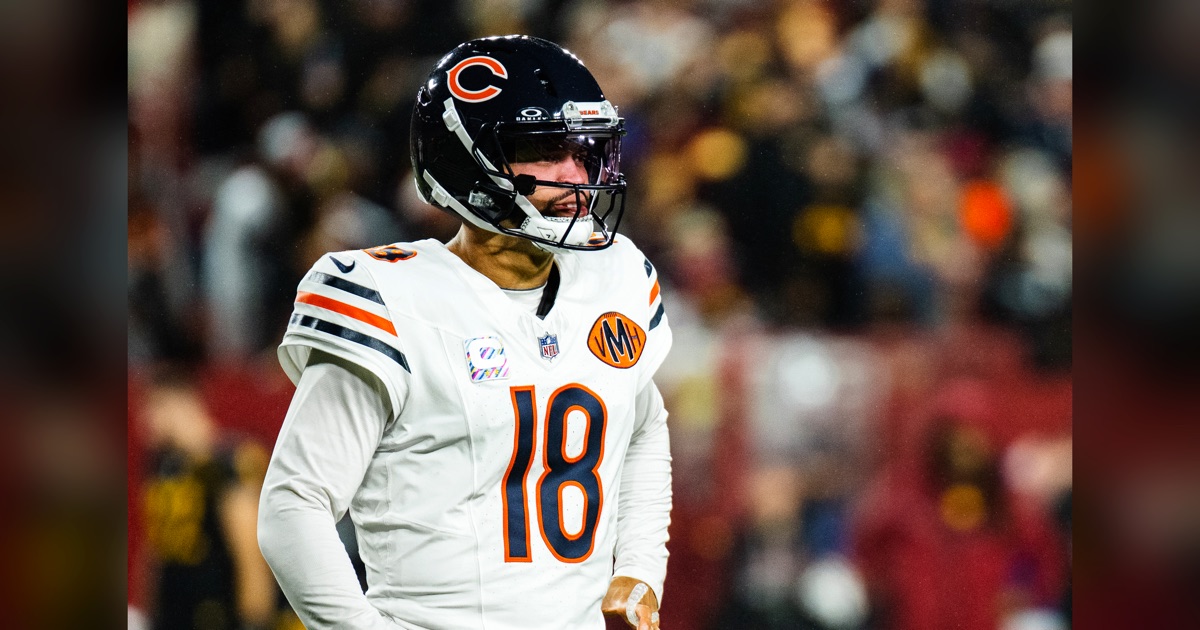
Josh Jacobs has missed five games, and nobody in New York has said when he will play again. Tuesday, October 13, puts him 44 days into the Commissioner's Exempt List with no discipline announced and no timetable; Matt LaFleur's answer on Monday was that he has "no updates" and that the matter is out of his hands. Unless a ruling lands before Sunday night's 8:20 p.m. ET kickoff, Dallas is the sixth game credited against his ban and Detroit on October 25 becomes the floor. The league's review still runs through a public-records request for the video of the incident, which NFL Network's Ian Rapoport reported the league filed in late September. Green Bay is 3-2 without him after a 31-7 win over Chicago in which Jordan Love threw for 367 yards and the running backs went 22 carries for 64. The Packers are a 52-cent favorite at Lambeau on Sunday night, October 18, against a 2-3 Cowboys team that lost to Tampa Bay on Thursday, and the sportsbooks that opened Dallas as the favorite late Sunday night had flipped the line to Green Bay by Monday. Every game he sits is credited against whatever ban the league eventually hands down, and nothing reported points to a ruling this week.
Kalshi prices as of Tuesday, October 13, 2026, 4:10 a.m. ET. There is no contract on his return; the Week 1 contract settled on September 14. These are estimates, not predictions of fact and not financial advice.
| Price | What it says | |
|---|---|---|
| Week 1 "plays" contract | settled No, 2¢ last | 15,429 contracts were open when it settled; the no side was paid a dollar apiece |
| Green Bay without him | 3-2 | lost 39-22 at Minnesota, won 20-17 in overtime at the Jets, lost 35-14 to Atlanta at home, won 17-14 at Tampa Bay, beat Chicago 31-7 at home |
| Reported ban range | 4 to 6 games | ESPN's Jeremy Fowler, September 16; games on the list count against it; the league has filed a public-records request for the video; LaFleur on October 12: "no updates" |
| Earliest return | October 18 vs. Dallas only with a ruling before the 8:20 p.m. ET kickoff; otherwise October 25 at Detroit | five games served through Chicago; a five-game ban announced this week puts him on the field Sunday night, a six-game ban at Detroit; no ruling as of Tuesday morning |
| September 24, Packers to beat Atlanta | settled No, 1¢ last | 68¢ bid, 69¢ ask at kickoff; Atlanta won 35-14 |
| October 4, Packers to win at Tampa Bay | settled Yes, 99¢ last | 62¢ bid, 63¢ ask at the October 2 stamp; Green Bay won 17-14 with 86 rushing yards on 25 carries |
| October 11, Packers to beat Chicago | settled Yes, 99¢ last | 47¢ bid, 48¢ ask at the October 10 stamp, 49¢ bid, 50¢ ask at the 1 p.m. kickoff; Green Bay won 31-7 with 70 rushing yards on 26 carries and five Chicago turnovers |
| October 18, Packers to beat Dallas | 51¢ bid, 52¢ ask | 46/47 at the October 10 stamp, 50 by Sunday evening, 52 by Sunday night; Dallas 2-3; the sportsbooks opened Dallas -1.5 and flipped to Green Bay -1.5 by Monday |
| October 25, Packers to win at Detroit | 27¢ bid, 58¢ ask, no trade yet | the first game a six-game ban lets him play if no ruling comes before Dallas; six is the top of the reported range |
What Moved Since October 10
On Jacobs, still nothing, and the man who would hear first said so. Asked on Monday when his running back comes off the list, Matt LaFleur said he has "no updates" and that the matter is out of his hands (Yahoo Sports). Tuesday is day 44 on the list, and day 18 since FOX 11's public-records request for the video reached the Hobart-Lawrence Police Department under Judge Hammer's order, which gave the department 10 days to decide and the parties 12 more to appeal a release. Nobody has reported a decision on any request, the league's included, and on Rapoport's reporting the ruling waits on the video. The credit math moved by one game this week and the forecast did not: Chicago was the fifth game served, a five-game ban announced this week would put him on the field Sunday night against Dallas, and a ruling that misses the 8:20 p.m. ET kickoff makes Dallas the sixth game and Detroit on October 25 the floor, the top of the range Fowler reported. Xavier McKinney's version of the wait, after a Sunday in which the offense went for 428 yards: "I would assume that he ain't going to be out for the whole season, but we'll see."
The Chicago contract paid out the way the week's climb said it would. The Packers were 47 bid and 48 asked at Saturday's stamp, closed at 49 bid and 50 asked at the 1 p.m. kickoff, and settled yes at 99 cents after a 31-7 game in which the Bears turned the ball over five times and the two quarterbacks who stood in for Caleb Williams, Tyson Bagent and Case Keenum, threw three interceptions between them (ESPN). Jordan Love went 25 of 31 for 367 yards and two touchdowns, both to Christian Watson, who had 143 yards on six catches, and Matthew Golden added 123. The backs went 22 for 64: MarShawn Lloyd 10 for 31 with both rushing touchdowns, Kaleb Johnson 7 for 26 including a 23-yard run, Pierre Strong Jr. 5 for 7. The best day of the season without Jacobs was the one his position had the least to do with, and that is the week's Jacobs story in a sentence: the offense found 428 yards and 31 points without him, and the room he would rejoin averaged under three yards a carry doing it.
The Dallas contract moved on both sidelines. Green Bay was 46 bid and 47 asked to beat the Cowboys at Saturday's stamp, an underdog on Kalshi two days after Dallas had lost 24-16 at home to Tampa Bay on Thursday night, its third loss in five. The contract crossed 50 on Sunday evening, after the Chicago game, has traded between 50 and 52 since Monday, and is 51 bid and 52 asked on Tuesday morning. The sportsbooks made the same turn in public: CBS Sports had the game open late Sunday at Cowboys -1.5 and move to Packers -1.5 by Monday, Green Bay -115 and Dallas -105 on the moneyline, the total 52.5 (CBS Sports). The live odds screen early Tuesday shows Green Bay -110 at Pinnacle, FanDuel and Hard Rock and -115 at DraftKings, with Dallas -102 at Pinnacle and -105 at DraftKings; Pinnacle's pair de-vigs to 50.9 percent on the Packers, a cent under the Kalshi ask, and nothing in either number is about Jacobs; that is the point. The Detroit contract for October 25 is listed at 27 bid and 58 asked and has not traded, and the sportsbooks have not posted the game on the screen yet.
The one Jacobs contract that printed this week printed at 42 cents. The 42-cent offer on his 750-yard rushing rung, untouched since it appeared last week, got hit on Saturday afternoon, the first trade on the rung since September 10, and the book around it moved: the bid fell from 10 cents to 1 and the ask is now 41. The 1,000-yard rung is 1 bid and 70 asked, down from 80; the six-touchdown rung 1 and 97; the Packers team special on his scoring three touchdowns in a game 6 bid and 12 asked, with no trade since October 2. One small trade at 42 is not a market, but it is the first price anyone has paid on his 750-yard rung since September 10, and 42 cents on 750 yards only works if he is back for Dallas or Detroit with eleven or twelve games to get them. The sections below carry the Chicago week and the Tampa Bay game.
What Moved From October 5 To October 10
On Jacobs, still nothing. Saturday, October 10, was day 41 on the list, and the week had produced no ruling, no timetable and no new reporting on the league's review; the most recent word was still Rapoport's September 27 line that the video request "is not something that happens within a couple of days." What got clearer that week was the clock underneath that line. The Hobart-Lawrence Police Department had 10 days under Wisconsin's open records law to decide on the requests filed after Judge Hammer's order was entered on September 25, and if it decides to release the video it has to notify Jacobs and the victim, who then get 12 days to appeal to a judge (FOX 11, FOX 11). Ten days from FOX 11's September 25 request ran out on Monday, October 5, and nobody had reported a decision on any request, the league's included. So the couple of weeks was the floor, not the forecast: a release decision followed by an appeal runs to October 17 on FOX 11's clock and past Dallas on October 18 on the league's later one, if the league's copy comes through that door, and the ruling comes after the league has watched it. Sunday, October 11, would be the fifth game credited unless the league ruled before the 1 p.m. ET kickoff, and the working floor would move to Dallas at Lambeau on October 18, a contract Kalshi listed that Saturday at 46 cents bid and 47 asked.
The price that did move was Chicago's. The Packers contract was 43 at Monday's stamp and printed a 40-cent low on Wednesday morning, the lowest price of the contract's life, then turned late Wednesday afternoon, about half an hour before the Bears' first injury report of the week reached Yardbarker with seven active-roster players who did not practice, Caleb Williams and three starting offensive linemen among them (Yardbarker). Friday's report took most of that back, the linemen practiced in full, and Williams was questionable and would not start, with Tyson Bagent "most likely" to get the start per ESPN's Jeremy Fowler (NBC Sports); the price gave back only a cent, 47 bid and 48 asked at Saturday's pull.
The sportsbooks went out to Bears -3 and came all the way back. SI had the line open at Bears -1.5 on Sunday night and reach -3 by Tuesday once Ben Johnson said Williams would not practice (SI); by Saturday morning the live odds screen showed Bears -1.5 at most of the books it carries, Green Bay +105 at DraftKings. Yahoo Sports noted that the last time Chicago came to Lambeau as the favorite was September 10, 2006 (Yahoo Sports). On Green Bay's side, Chris Brooks was out with an ankle and interior linemen Aaron Banks and Jacob Monk were doubtful (Packers.com), so Kaleb Johnson and MarShawn Lloyd went into the Bears game with a practice-squad body, Damon Bankston, behind them (Heavy). The whole climb from 43 came on Chicago's report, and Green Bay's own report landed Friday into a price that did not move; I read 48 as a price on Bagent, not on the Packers' line.
On the man himself, the asks changed and nobody traded. The 750-yard rushing rung was still 10 cents bid and had not traded since September 10, but the offer came down from 84 at Monday's stamp to 42 cents, and nobody had hit it by Saturday morning. The 1,000-yard rung was 1 bid and 80 asked, the six-touchdown rung 1 bid and 97 asked, and the Packers team special on his scoring three touchdowns in a game 6 bid and 13 asked with no print since the 13-cent trade on the night of October 2. A cheaper offer on his yards with no buyer was the market's version of that week: the price of a Jacobs season moved, and nobody wanted it at the new number until Saturday afternoon. The section below carries the Tampa Bay game and the first slide to 43.
What Moved From October 2 To October 5
On Jacobs, nothing. No ruling, no timetable, and no new reporting since NFL Network's Ian Rapoport said on September 27 that the league had "officially requested the video of the incident" through a public-records filing, a process that "is not something that happens within a couple of days. It's more likely to be within a couple of weeks" (ClutchPoints); he does not expect "an imminent return" (NBC Sports). The video request exists because Brown County Judge Marc Hammer denied the victim's motion to permanently seal it on September 24 and sent the evidence back to the Hobart-Lawrence Police Department to handle public-records requests case by case (WISN), and the league's answer the next day was the same line it has used since the plea: "There's no change to his status and we do not provide a timeline on when a decision will be made" (WISN). Run a couple of weeks from September 27 against the calendar and the video alone arrives around October 11, Sunday's kickoff against Chicago; a ruling comes after the league has watched it. So the credit math changed by one game and the forecast did not: Tampa Bay was the fourth game served, Chicago is the first game a four-game ban would let him play, and a four-game ban announced after Sunday costs him Chicago too. The dates in the table are the floor, not the forecast.
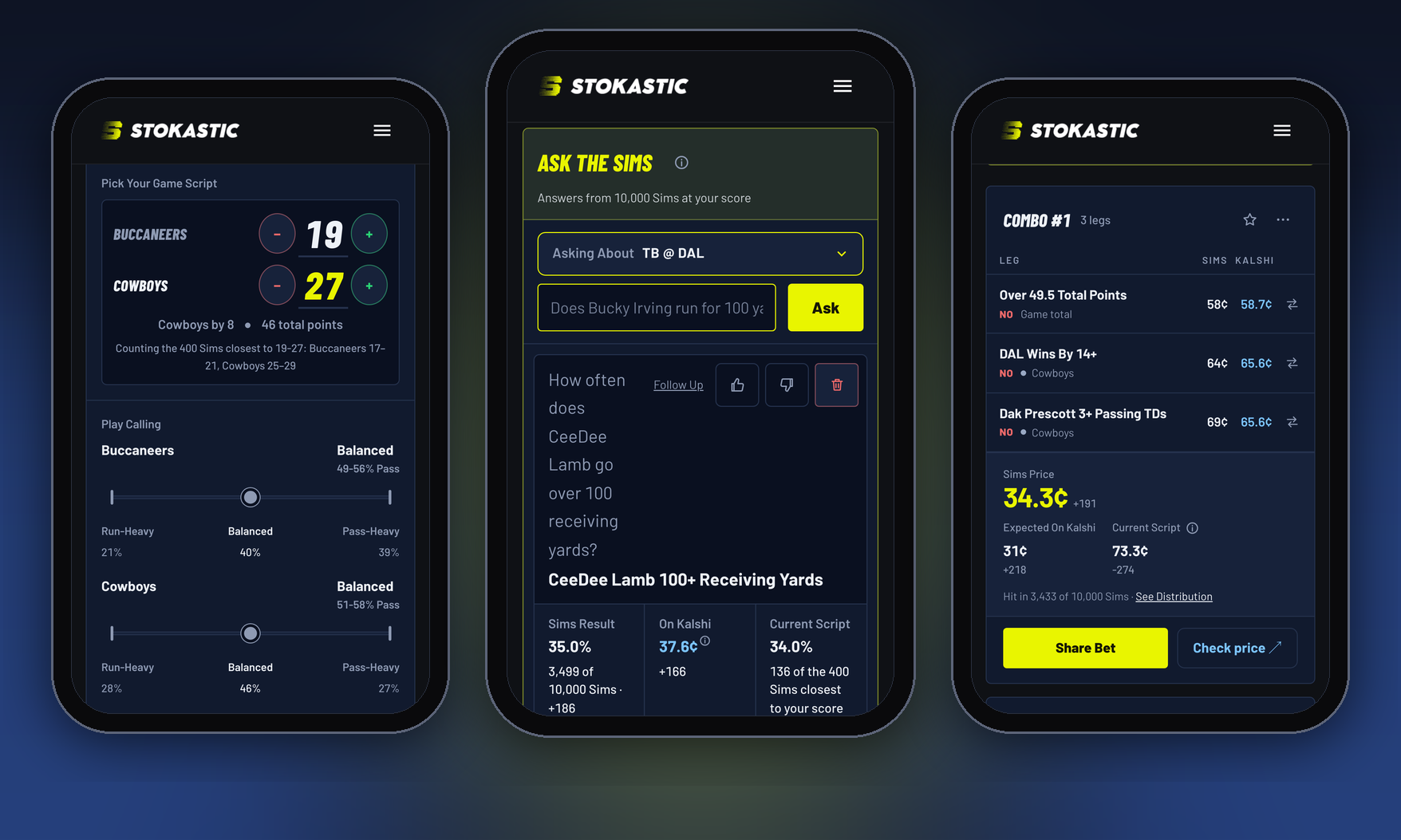 Price the combo before you buy it. The Kalshi Combo Simulator plays this week's NFL game 10,000 times and prices any combo you build next to the price on Kalshi, on your phone, free, no login.
Green Bay's record did move. The Packers won 17-14 at Tampa Bay on Sunday, October 4, and the contract that was 62 bid and 63 asked at the October 2 stamp settled yes at 99 cents. The backfield had its best day of the season: the backs went 19 for 85, the team 25 for 86. Kaleb Johnson went 8 for 42 with a 31-yard run, Chris Brooks 4 for 30, MarShawn Lloyd 7 for 13, and Jordan Love was 22 of 30 for 197 yards with two touchdowns and an interception (ESPN). On the other sideline, Tampa Bay's Jalon Daniels, in the starting debut the team's own preview had announced (Buccaneers.com), went 19 of 27 for 148 yards with a touchdown and two interceptions. Eighty-six yards is still a thin day for a team that traded for a running back the afternoon the league took one away, but it is more than the Jets and Atlanta games produced on the ground put together, and it is the first game this season Green Bay's run game did not have to be explained away.
The next contract had Green Bay on the wrong side of 50 for the first time since the opener, when the Packers closed at 45 cents bid and 46 asked at Minnesota. At the October 5 stamp the Packers traded at 42 cents bid and 43 asked to beat Chicago at Lambeau on October 11, after opening the week at 52 and sliding through Monday morning on heavy volume. The Bears were 3-1, and the price moved on one thing: Caleb Williams, out two games with a hamstring strain, was an outside chance to start on October 11, and the sportsbook line went from Bears -1.5 to -2.5 as the week opened (SI).
His season rungs had not printed since the prior edition, and the asks told the same story they did on October 2: the 750-yard rung was 10 cents bid and 84 asked, the 1,000-yard rung 1 bid and 82 asked, the six-touchdown rung 1 bid and 97 asked. The one Jacobs contract that printed between October 2 and October 5 was the Packers team special on his scoring three touchdowns in a game, a 13-cent trade on the night of October 2, down from 21 cents on September 20; everything else on him was a book with nobody on the other side. Nothing reported pointed to a ruling before the Chicago game, and none came.
How Long He Is Out
The earliest return is Sunday night, October 18 against Dallas, and only a ruling before the 8:20 p.m. ET kickoff keeps it there; with none by Tuesday morning, Detroit on October 25 is the next date, and the last one inside the reported range. Mark Maske reported that games missed on the exempt list before a ban is announced are credited against the suspension (Pro Football Rumors), and ESPN's Jeremy Fowler put the range at four to six games on September 16: "A four-to-six-game suspension could be the range based on a few people I've talked to in the league, but that's obviously fluid and based on the league's findings" (Yahoo Sports). Minnesota was game one, the Jets game two, Atlanta three, Tampa Bay four, and Chicago on October 11 was five. Run the rest against the schedule: a four-game ban is already served and would mean reinstatement the day it is announced, five games puts him back for Dallas on October 18, six for Detroit on October 25. Six is the personal conduct policy's baseline for this class of case, and the top of the range Fowler reported (Pro Football Talk).
Green Bay is planning past one game. The Packers traded a pick to Pittsburgh for Kaleb Johnson, a 2025 third-round pick out of Iowa, on the afternoon the league took Jacobs away (ESPN), gave him no carries in the opener, then handed him the backfield at the Jets, 8 carries for 32 yards, ahead of MarShawn Lloyd's 6 for 20 and Chris Brooks' 4 for 11. Against Atlanta, Lloyd and Johnson split eight carries for 17 yards; at Tampa Bay the room finally ran, Johnson 8 for 42, Brooks 4 for 30, Lloyd 7 for 13; against Chicago, with Brooks out, Lloyd went 10 for 31 with two touchdowns and Johnson 7 for 26. That is a staff building a running game without Jacobs for six weeks, and it is also the argument underneath the Green Bay win total.
The next price is the game, not the man. Green Bay is a 52-cent favorite at home on Sunday night against Dallas, the price above, and the live odds screen shows the sportsbooks' version of the same number, Green Bay -115 at DraftKings and -110 at FanDuel.
The Case
Jacobs pleaded no contest on September 10 in Brown County Circuit Court to two Class A misdemeanors, battery and criminal damage to property. He was convicted on the battery count and fined $1,000 plus costs (ESPN); on the criminal damage count the court accepted a deferred judgment, 12 months of conditions and a review hearing on September 10, 2027. No jail time. "I fully understand the seriousness of the situation, and I take full responsibility," he told the court (NFL.com). The case began with a May arrest on five charges, including felony strangulation (NFL.com), and was charged in August as two misdemeanors.
The plea did not move the league, and the reason is a mismatch most of the coverage skipped. Brown County did not charge the case under Wisconsin's domestic abuse statute: Jacobs and the victim "were never married, did not live together, did not have children in common," the district attorney's office said, "therefore, this case is not a domestic violence case as that term is defined in the state of Wisconsin" (FOX6 Milwaukee). The NFL's personal conduct policy does not borrow Wisconsin's definition. Asked about his status after the plea, the league said the matter "remains under review of the personal conduct policy. There is no change to his status as he remains on the Commissioner's Exempt list."
A Paid Pause
Only the commissioner can put a player on the list or take him off. The player is paid in full, cannot practice or play, and stops counting against the 53-man roster (ESPN's explainer), so nothing on Green Bay's side forces a resolution. The Athletic's Jonathan Jones put the figure on it: a full game check of $566,666 each week he sits, with the games credited as time served against the eventual ban and the checks for those games repaid once it lands (Bolavip). Jacobs' attorneys called it "an administrative procedure used by the NFL while a matter is being reviewed. It is not a final determination" (NFL.com). A suspension arrives with a number of games attached and can be priced; a pause with no length leaves nothing to price except one office's timing, which is likely why no new weekly contract on him has been listed since Week 1.
What Settled
The one Jacobs contract in Kalshi's weekly "plays" series, "Josh Jacobs plays in Week 1," opened near 40 cents in August, fell to 2 cents after the list placement, and settled No on September 14. Kalshi listed no Week 2, Week 3, Week 4, Week 5 or Week 6 version of it; his 750-yard rushing rung went a month without a trade before the 42-cent print on October 10, and the 1,000-yard rung has not traded since September 14. Green Bay lost the opener 39-22 at Minnesota without him, beat the Jets 20-17 in overtime with 18 carries for 63 yards from three backs, lost 35-14 to Atlanta with 17 rushing yards on 9 carries, beat Tampa Bay 17-14 with 86 yards on 25 carries, and beat Chicago 31-7 with 70 yards on 26 carries, Jordan Love throwing for 367.
Where I Land
There is no bet on Jacobs this week, and the useful number is a date: October 18 is the floor only if the league rules before Sunday night's kickoff, October 25 is the date the top of the reported range gives, and a ruling could still land outside both. What can be priced is Green Bay in the meantime, a team 3-2 with a backfield it assembled in an afternoon and a passing game that just went for 367, and that argument lives on the win total page and in the 52 cents on the Packers against Dallas, a price that flipped on a Sunday the Packers won without him. This page updates when the league speaks.
Hero illustration: OddsShopper, a comic redraw of a Josh Jacobs photo by All-Pro Reels, licensed CC BY-SA 2.0; redrawn as an illustration.
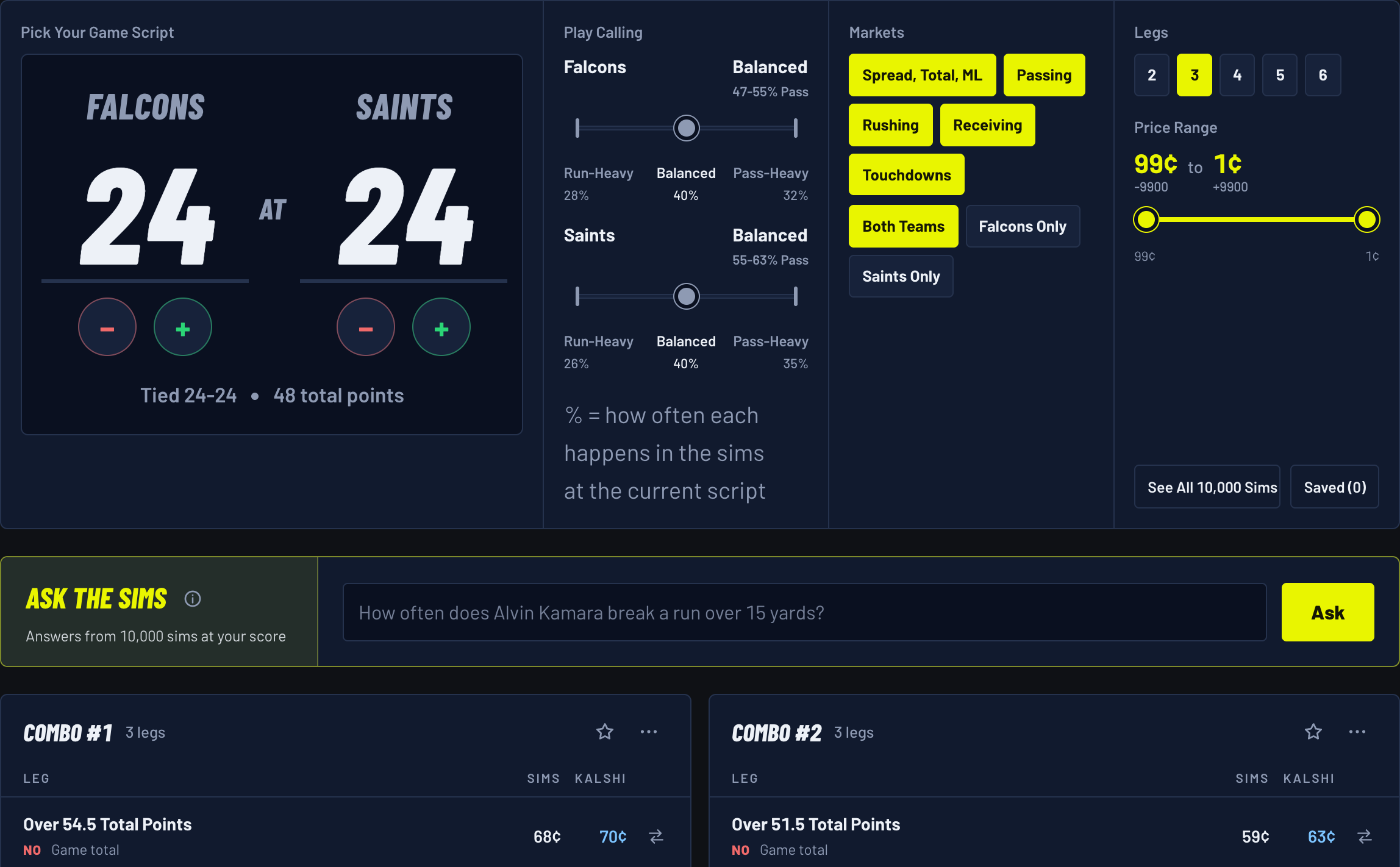
Betting a Kalshi combo on an NFL game this week? Type the final score you expect into the free Kalshi Parlay Simulator and it builds and prices every combo against 10,000 simulated games, each leg next to its Kalshi price. Ask the Sims answers any question in plain English, like "how often does the backup running back go for 80 yards?"
More on this: 2026 Governor Races: Every Kalshi Board We Track · 2026 Senate Races: Every Kalshi Board We Track · Connor Bedard Hart Odds: He's The Captain Now · Florida State vs. Alabama Prediction: Revenge in Tuscaloosa · Kenneth Walker Rushing Leader Odds: Buy The Chiefs Debut?