The Market
| Venue | Kalshi — a CFTC-regulated exchange |
| Ticker | KX250DOLLARBILL-27-JAN01 |
| The Contract | Resolves per the market's official settlement rules: does a bill mandating a $250 Federal Reserve note bearing Donald Trump's portrait become law before January 1, 2027? |
| Closes | On resolution; scheduled settlement January 1, 2027 |
| Current YES Price | 7¢ ≈ 7% implied (snapshot as of July 2026 — confirm the live price on Kalshi before trading) |
Verify it yourself: the live market and price sit on Kalshi's markets, and the underlying legislation is tracked on Congress.gov as H.R. 1761. Only the market's official settlement print counts; a signed law, not a committee vote or a Treasury press release, is what this market pays on.
A $250 Bill With Trump's Face: Will It Become Law Before 2027?
Congress passes coin bills all the time, but paper currency carrying a living president's face has never happened, and a law reaching back to 1866 is the reason why. This Kalshi market asks whether one specific bill, a $250 bill with Trump's face on it, rewrites 160 years of precedent before New Year's Day 2027. The answer runs through a House committee, a 60-vote Senate, and one crowded December calendar.
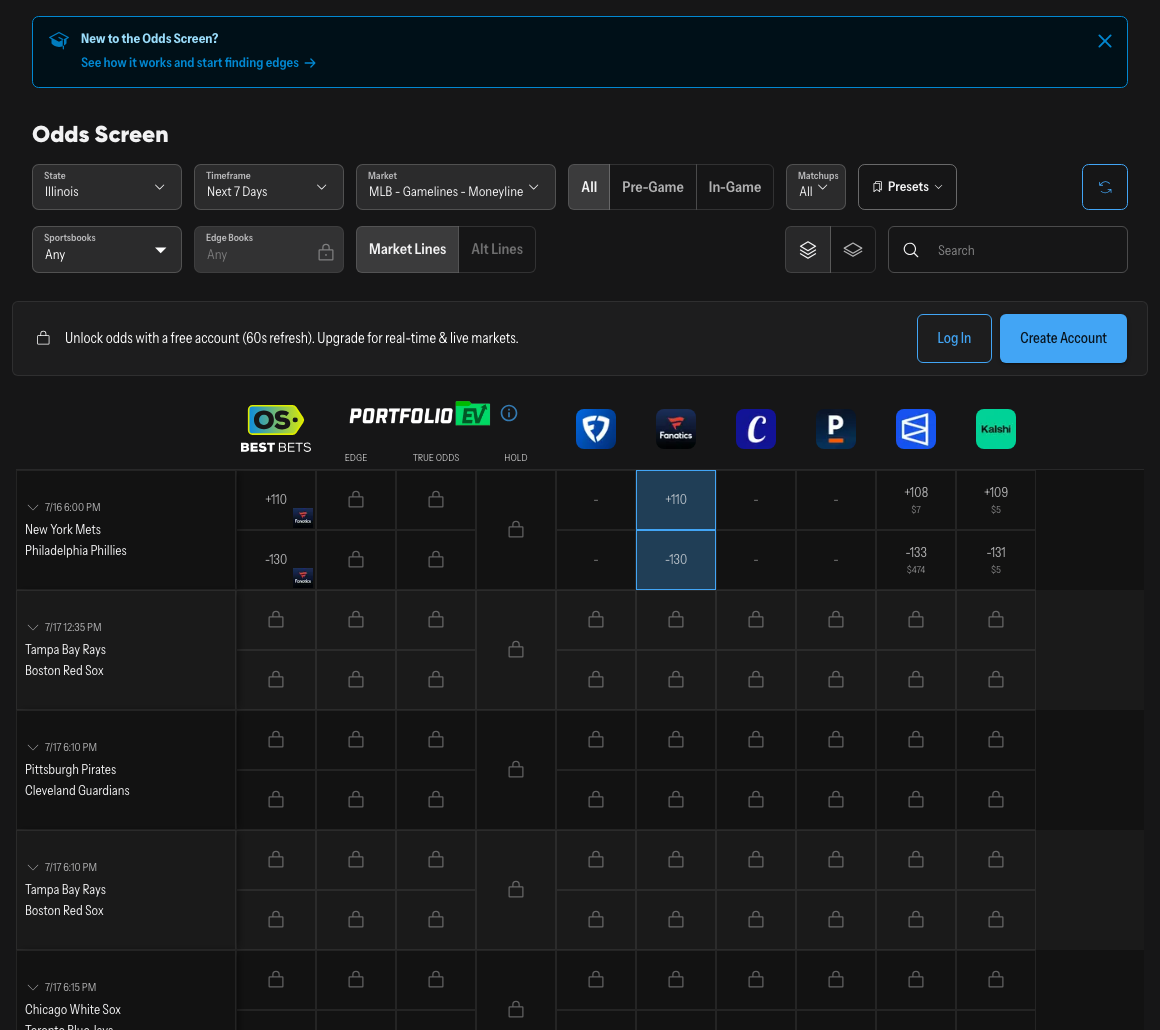 The OddsShopper live odds screen — every book's price on one board, refreshed in real time. Open the live board.
TL;DR
- The Market: Kalshi's YES trades around 7¢, or roughly 7% implied probability that a bill mandating a $250 note with Trump's portrait becomes law before Jan 1, 2027.
- The AI Read: an equal-weight blend of seven models lands at 3%, about 4 points below the market. The models see this as even more of a long shot than traders do — but several of them were working without knowing the real bill even exists.
- The Fact The Models Lacked: the bill is real. It is H.R. 1761, the "Donald J. Trump $250 Bill Act," introduced in February 2025, with 13 cosponsors as of September 2025 but stalled in committee — and the Treasury is quietly doing "due diligence" on the note.
- Why It's SO Narrow: the contract pays only if the bill becomes law before 2027. Committee approval, a floor vote, even a signed design order all settle NO on their own.
- How To Use It: read the 7¢ price as a near no-vig probability, weigh it against the real legislative status below, and treat the 3% model blend as one more opinion, not a verdict.
Stay ahead of the markets.
Daily insights and expert picks on Kalshi, Polymarket, and what's moving markets.
Free forever. Unsubscribe anytime.
The Bull Case (Why YES)
Start with what is already true: the bill is real, introduced, and sitting in the process, which puts it ahead of ideas that never get drafted at all. Congress also legislates on money design more often than people think. Commemorative coin acts clear both chambers routinely, often by unanimous consent, because they cost almost nothing and give members an easy yes. A short currency mandate fits the same mold: no major spending, no new agency, no complicated implementation fight to hold on the floor. Then the calendar helps for once. The window runs through December 2026, which captures a post-election lame-duck session, historically the stretch when Congress packs small provisions into must-pass vehicles like defense authorization and year-end spending bills. A rider that leadership wants attached can go from obscurity to enacted in a single December week, and enactment is all this market requires.
The Bear Case (Why NO)
Most bills die quietly, and the base rate is brutal: the overwhelming majority of introduced legislation never gets a committee vote, much less floor time in both chambers. This one carries extra weight on top of that. Federal law (31 U.S.C. § 5114(b), rooted in an 1866 statute) permits only deceased individuals to appear on U.S. currency, so members are not being asked to approve a design; they are being asked to unwind a rule that has stood for 160 years, and that hands any skeptic a clean procedural objection. The Senate adds its own wall, since most legislation needs 60 votes to end debate, and this bill has drawn no Democratic support at all. History says currency moves slowly even after Washington agrees: the $20 redesign announced in 2016 still was not circulating nearly a decade on. Election-year floor time is the scarcest commodity in the building, and riders that draw controversy tend to get stripped in conference rather than carried through.
What The Market Is Pricing
The shape of that 7¢ price is more instructive than the number itself. If traders thought this was a standalone bill fighting for its own floor vote, the price would sit lower; the premium reflects the rider path, where a small provision hitches onto something Congress has to pass in December anyway. The settlement question is also narrower than the headline suggests. Per the market's settlement rules, what matters is whether the bill becomes law before January 1, 2027, full stop. Nobody needs to engrave a plate or print a note by then; enactment is the whole test. So the base case is a market pricing one specific parliamentary sequence, watching committee action and vehicle attachments, with the lame-duck session carrying most of the remaining hope. That December-vehicle bet has a sibling on the board: our FISA Section 702 verdict prices the identical settlement test, becoming law before 2027. And if you are weighing where to trade markets like these, our Kalshi vs Polymarket comparison covers the venue question.
Model Verdicts
Market: 7¢ · AI blend: 3% — the models sit 4 points below the market.
| Model | YES | Why |
|---|---|---|
| ChatGPT | 2% | A symbolic, unprecedented currency-design bill has little chance of clearing both chambers before the year-end deadline unless attached to must-pass legislation. |
| Gemini Flash | 2% | Such a bill faces extremely high political and practical hurdles, making its passage highly improbable. |
| Gemini Pro | 2% | Messaging bills proposing highly irregular currency denominations face near-insurmountable legislative hurdles, including the Senate filibuster, making passage extremely unlikely. |
| Grok 4.5 | 4% | Extremely short timeline plus need for new denomination and living-person currency ban repeal make passage improbable. |
| DeepSeek V4 | 2% | Novel currency denominations face massive legislative and logistical hurdles; a Trump-specific $250 bill is a low-probability messaging bill with no significant committee momentum. |
| Kimi K3 | 5% | Senate's 60-vote threshold and the very low base rate of standalone symbolic member bills becoming law make enactment by 2027 unlikely despite GOP control and Trump's backing. |
| GLM 5.2 | 3% | No known legislative momentum exists for a novel $250 denomination featuring a living person, and the 18-month window is extremely tight for such a bill. |
| Blended Verdict | 3% | equal-weight mean of 7 models (method always disclosed) |
Every seat on this panel is graded against real market settlements — records to date: GPT 83% on 1,693 graded calls · Gemini 85% on 1,718 graded calls · Grok 79% on 1,529 graded calls · DeepSeek 80% on 1,877 graded calls · Kimi 84% on 1,863 graded calls · GLM 80% on 1,874 graded calls. Recomputed daily; the full scoreboard is public.
The models span just a 3-point range on this one, from 2% to 5%, a near-consensus that the bill does not become law, all of it landing below the market's 7¢.
Model estimates generated 2026-07-20 23:03 UTC. Models are frequently wrong; the market price reflects real traders' money.
The Fact The Models Lacked
Here is the wrinkle the panel mostly missed, and it is the single most useful thing to know before you read that 3% blend. Look closely at the reasons above and you will see it: GLM 5.2 says there is "no known bill or legislative momentum" for it, Gemini Pro treats it as an abstract "messaging bill," and in their full reasoning below several models openly admit they cannot find an introduced bill at all. Only Kimi K3 names it. They were reasoning about a bill they could not confirm existed. It exists.
- It Has A Name And A Number. The legislation is H.R. 1761, the "Donald J. Trump $250 Bill Act," introduced on February 27, 2025 by Representative Joe Wilson of South Carolina.
- It Has Real, If Narrow, Support. By September 2025 it had picked up 13 Republican cosponsors, and zero Democratic ones, which is exactly why the models' "60-vote Senate wall" objection is the sharpest one on the board.
- It Does The Legal Spadework The Market Cares About. Rather than ignoring the currency ban, the bill amends 31 U.S.C. § 5114 to carve out an exception letting current or former Presidents appear on a note, and frames the whole thing as a commemoration of the country's 250th anniversary.
- The Treasury Is Not Sitting Still. As of mid-2026, multiple outlets reported the Bureau of Engraving and Printing is "conducting appropriate planning and due diligence" on a $250 note should the mandate be signed — a detail no model had.
Notice what this does and does not change. It does not flip the verdict: the bill has been parked in the House Financial Services Committee since referral, with no hearing and no markup, and the total absence of Democratic support means the filibuster math the models flagged is real, not theoretical. If anything, the verified status confirms the bear case's spine. But it also explains the market's stubborn 7¢ "pulse" better than a blind model can — a sponsored bill, with a semiquincentennial hook and a Treasury already prepping the plates, is a more plausible December rider than "no known bill" implies. The honest takeaway is not a new number; it is that the market is pricing something concrete the models could only guess at.
The Full Reasoning
ChatGPT (2%): The strongest consideration is legislative inertia: proposals creating unusual currency denominations or honoring political figures are typically symbolic messaging bills, and only a tiny fraction of introduced bills become law, especially without bipartisan support or committee priority. A Trump portrait would be intensely partisan, while a $250 denomination has little practical monetary-policy or payments rationale. Even with Republican control and a supportive president, scarce floor time, Senate procedures, committee review, and competing must-pass legislation make standalone passage very unlikely. Enactment through an omnibus, appropriations measure, or other must-pass vehicle is more plausible but still unusual because currency design provisions are conspicuous and easily challenged. The deadline leaves less than six months, further reducing the base rate. I am uncertain about the bill's exact procedural status as of July 20, 2026—particularly whether it has received a committee markup, leadership endorsement, or inclusion in negotiated legislative text. The single news item that would most increase my estimate is publication of agreed House-Senate must-pass bill text containing the mandate.
Gemini Flash (2%): The primary driver for this low probability is the unlikelihood of bipartisan support for such a highly partisan bill. While a Republican-controlled Congress might introduce it, passing it through both chambers and overcoming a potential presidential veto (if a Democrat is in office) is extremely improbable. Even with a Republican president, the political optics and practical implications of creating a new denomination featuring a living former president would face significant public and institutional resistance. The base rate for bills mandating specific individuals on currency is virtually zero, especially for living individuals. I am most uncertain about the exact political landscape post-2026 midterms, though even a Republican sweep wouldn't ensure passage. The one piece of news that would most change my estimate would be a public endorsement and active lobbying for the bill by a significant number of influential, bipartisan members of Congress and the sitting President.
Gemini Pro (2%): The primary driver of this estimate is the extremely low base rate of partisan messaging bills becoming law. Creating a $250 denomination is highly irregular for U.S. currency, which traditionally follows a standard numbering system, and would face significant logistical pushback from the Treasury and Federal Reserve. Furthermore, even if Republicans hold a legislative trifecta, passing such a bill would likely require 60 votes in the Senate to overcome a filibuster, meaning it would need bipartisan support that is virtually impossible to secure for a bill featuring Donald Trump. The short timeframe of 5.5 months before the end of the 119th Congress further limits its chances, as the legislative calendar is typically crowded with mandatory spending bills and major policy priorities. I am most uncertain about whether a specific $250 bill has recently been introduced or gained unexpected populist traction, as my knowledge of fringe bills may be incomplete. The one piece of news that would most change my estimate would be the bill being favorably reported out of committee or scheduled for a floor vote by congressional leadership.
Grok 4.5 (4%): Key drivers: (1) only ~5 months remain until deadline, insufficient for novel currency legislation; (2) $250 denomination and Trump portrait require overturning longstanding statutes and Fed/Treasury norms against living persons and nonstandard notes; (3) no evidence of introduced bill with momentum. Base rates for vanity or radical currency redesigns succeeding in one session approach zero historically. Most uncertain about exact 2026 congressional composition and Trump administration priority post-midterms. The one news piece that would most change the estimate is rapid bicameral passage of an explicit authorizing bill.
DeepSeek V4 (2%): The strongest driver is the extreme unlikelihood of introducing a new currency denomination, which hasn't happened since the $2 bill was reintroduced in 1976. A $250 bill has no historical precedent and would require overcoming Federal Reserve objections, redesign costs, and vending machine compatibility issues. Second, the political polarization around Trump means such a bill would face unified Democratic opposition and likely some Republican skepticism, making 60 Senate votes nearly impossible. Third, the legislative calendar is extremely tight with only ~5 months remaining in the 118th Congress, and no such bill has passed any committee. Base rate for currency redesign legislation is near zero; the last major change was the $20 bill redesign announced in 2016 (Harriet Tubman) which still hasn't been implemented. I'm most uncertain about whether this could be attached as a rider to must-pass legislation, though even that path seems remote given the specificity. The single piece of news that would most change my estimate would be a major bipartisan currency modernization bill gaining committee approval with this provision included.
Kimi K3 (5%): Primary driver: even with unified Republican control, a standalone bill mandating a $250 Trump note (the Wilson 'Donald J. Trump $250 Bill Act' introduced in 2025) must overcome the Senate filibuster, and Democrats would uniformly block honoring a sitting president on currency; it is not reconciliation-eligible. Second: base rates—only ~1-3% of introduced bills ever become law, and novelty-currency proposals historically stall in committee. Third: the living-person portrait ban (31 U.S.C. 5114(b)) requires an affirmative statutory change, adding friction. Supporting factors keeping this above ~2%: genuine intra-GOP enthusiasm, the 2026 semiquincentennial hook, Trump's signature being certain, and a slim chance it rides a must-pass year-end omnibus where leadership could keep it in. My main uncertainty is post-cutoff status: by mid-2026 the bill may have advanced further than I know, or died entirely; I also don't know post-midterm legislative dynamics. The single most estimate-moving news would be House passage or GOP leadership publicly committing to attach the mandate to must-pass legislation, which would push my estimate toward 25-40%.
GLM 5.2 (3%): Key drivers in order: (1) No known bill or legislative momentum for a $250 bill or Trump currency as of mid-2026; (2) Strong tradition against featuring living persons on U.S. currency, making passage politically awkward even for allies; (3) Legislative process constraints—both chambers plus presidential signature needed within ~18 months; (4) Even a Trump-aligned Congress would likely prioritize other agenda items. Base rate for novelty currency legislation passing is near zero historically. I am most uncertain about whether a specific bill has been introduced that I lack knowledge of, and whether Trump himself might champion it, creating sudden momentum. The market price of 7 cents likely reflects tail-risk speculation rather than concrete legislative progress. The single piece of news that would most change my estimate: a bill with this specific mandate being reported out of committee or placed on a floor calendar in either chamber.
Reading A 7¢ Price The Way A Sharp Bettor Would
A prediction-market price is not a vibe; it is a probability with a dollar sign in front of it. YES at 7¢ is the market's shorthand for "about a 7% chance," the same implied-probability math you would run to de-vig a two-way sportsbook line. What sharp bettors like about a venue such as Kalshi is that the price sits close to no-vig. You are not paying the 4-5% hold a book bakes into a two-way market, so 7¢ is a cleaner read on true probability than a lopsided moneyline would be. If you have never turned a market price into a percentage before, our primer on how prediction markets work walks through it step by step.
The bettor's move from there is the same one you would make on any number: compare the price to your own estimate, and only act when they diverge. The on-topic tool for that here is OddsShopper's EV calculator, which turns any price-plus-estimate into an expected-value number in one step — feed it the 7¢ price and your own probability and it does the arithmetic below for you. If converting between American prices and clean percentages is not yet second nature, OddsShopper's betting calculators handle that conversion too. The same reflex carries over to sports: on a game line you would shop the number across books first, the habit OddsShopper's live odds screen is built for. A prediction market like Kalshi already collapses that shopping step into one near-no-vig price, so here the estimate is the whole job. And before you trade any political or event market, confirm it is available where you live — we keep a running guide to whether prediction markets are legal in your state.
The one number I keep coming back tois the 4-point gap between the market's 7¢ and the models' 3% blend — and that it points the wrong way for anyone buying YES. The market gives this bill a pulse; the models, several of them reasoning without knowing H.R. 1761 even exists, are more dismissive. My read is that both are circling the same truth: a real, sponsored bill with genuine intra-party enthusiasm, stuck in committee behind a filibuster wall with the calendar closing fast.
A Worked Example: Turning 7¢ Into An Expected-Value Read
Say you buy the model blend and set fair value at 3%. Here is the napkin math a bettor runs before risking a dollar, and why it argues against the obvious trade:
| Input | Value |
|---|---|
| YES Price | 7¢ (risk 7¢ to win 93¢) |
| Model-Blend Fair Probability | 3% |
| Break-Even Probability | 7% |
| Expected Value On A YES Contract | (0.03 × $0.93) − (0.97 × $0.07) = −$0.04 |
| Expected Value On The NO Side (93¢) | (0.97 × $0.07) − (0.03 × $0.93) = +$0.04 |
These are illustrative EV figures from a model blend the models themselves built without confirming the bill's status — not trading advice, and not a signal to buy or sell either side.
Read the table's most telling row: buying YES at 7¢ when you believe the true chance is 3% is a losing bet on paper, about four cents of negative edge per contract, because you are paying seven for something the models value at three. The theoretical edge, if you trust the panel, sits on the other side — NO at 93¢ carries roughly four cents of positive expectation. But be honest about what that edge rests on: seven AI models, several of which could not see the actual bill, priced 4 points under a real-money market. Any Kalshi fees shave that thin margin further. I would not fire on a 4-cent edge built on that foundation. Running the number instead of trading the headline is the whole discipline, and it is exactly what the 7¢ price is inviting you to do.
More on this: Why Kurt Alme (R) Will Win the Montana Senate Race · Greenland Acquisition Odds: Will The US Take Any Part? · Why Ashley Moody (R) Will Win the Florida Senate Primary · Why Chris Pappas (D) Will Win the NH Senate Primary · Why John E. Sununu (R) Will Win the NH Senate Primary