A football game gives you two teams and one winner. A golf tournament gives you 150-plus players, four rounds, a cut that sends half the field home on Friday, and a dozen ways to have action on the same event. That is what makes golf betting overwhelming the first time you open the board, and it is also where the edge lives. A solid golf betting strategy is not about memorizing every market. It is about reading the few things the board prices loosely, like weather, tee times, and course fit, and pointing your money at the spots where you can actually be right more often than the odds suggest.
In Summary
- Treat outrights as small-stake lottery tickets. You only need to cash a couple of 40/1-to-100/1 longshots a year for them to pay off, so keep the stakes small and the patience long.
- The first-round leader market is the beginner's best value swing. It is a one-day, one-player bet where a weather or tee-time read can hand you a real edge the board underrates.
- Weather and the draw do the heavy lifting. When the wind kicks up on one half of the field, you can cross off half the names for a one-round bet before you handicap a single golfer.
- Course fit decides outrights. Ball strikers, course-history standouts, and players who suit the grass and layout beat the field far more than name recognition does.
- Two habits win regardless of sport: take the best number across your own books, and stake every play to a small, fixed share of your bankroll.
- For the picks themselves, follow Ben Rasa's golf card on Tails.
Watch: How to Bet and Win on Golf
OddsShopper's Ben Rasa breaks down the full golf board and the strategy behind each market in the video below. It is the fastest way to see how a sharp handicapper actually attacks a tournament.
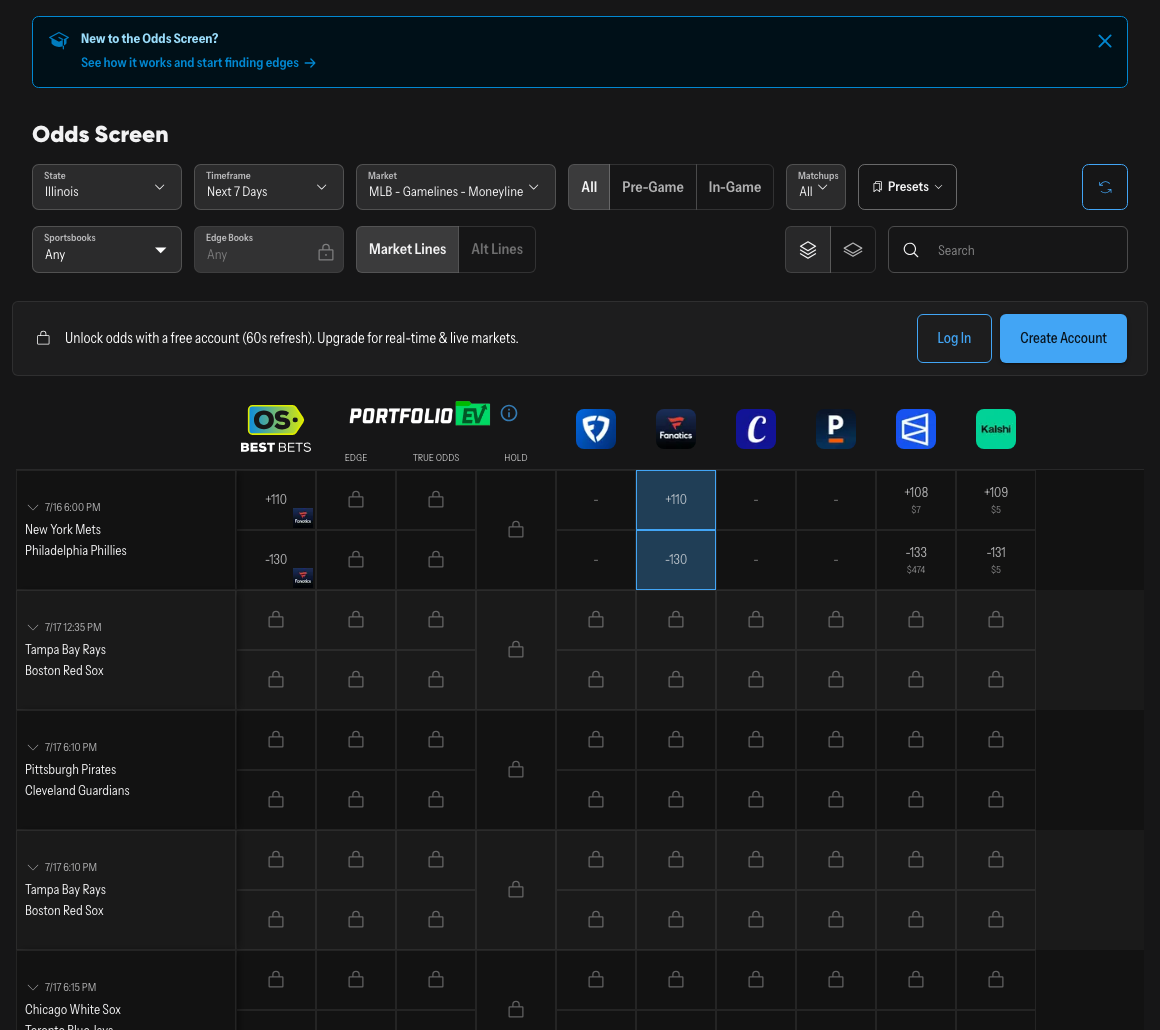
The OddsShopper Odds Screen.
Start With a Plan, Not a Player
Most losing golf bettors start with a name they like and go looking for a market to bet it in. Winning bettors do the opposite. They look at the conditions first, figure out which kind of bet the week actually supports, and only then decide which players fit.
That order matters because golf prices are loose in a way other sports are not. The margin baked into a tournament-winner board is enormous, far higher than on a tightly priced NFL spread, because the book takes a slice on every one of those 150-plus prices. You are never going to out-handicap a sharp on a point spread, but a golf board has soft corners every single week. Your job is to find them. If you are still learning what each market actually asks of you, start with our plain-English how to bet golf guide, then come back here for the strategy that wins inside those markets.
Each week, OddsShopper's PGA show does exactly this kind of field breakdown, walking through the spots where the odds and the conditions disagree. Watching how a card gets built is the quickest way to train your own eye.
Outrights: Small Stakes, Big Patience
An outright is a bet on who wins the whole tournament, and it is the hardest ticket in golf to hit. One player wins out of a full field, so even a strong favorite is usually priced long, and most of your tickets will lose. That is fine, as long as you treat outrights like what they are: high-upside longshots that lose most weeks.
The math is friendlier than it looks. You will see plenty of live names sitting at 40/1, 80/1, even 100/1 every week, and some of them do win. You do not need to hit many. Cash a couple of those a year and they can cover a long stretch of misses. The trap is staking them like core plays. Keep each outright small, spread them across a few weeks, and let the longshot prices do the work when one finally lands.
What separates a smart outright from a dart throw is course fit. Some players post results year after year at specific venues because the layout suits their shot shape, the grass fits their game, or they simply know the track. A good ball striker on a course that demands precision off the tee is a different bet than the same player on a bomber's paradise. Before you back an outright, ask whether the player's game actually fits the week. General good form is not enough on its own.
Want the weekly plays themselves?Ben Rasa's golf card on Tails posts his weekly outright, matchup, and finishing-position targets, with the course-fit and course-history reasoning behind every name. It turns this strategy into actual plays without the handicapping legwork: Follow Ben Rasa's golf card. New to Tails? Code EAGLE15 takes 15% off your first week or month.
The First-Round Leader Market Is Where Beginners Find Value
If outrights are the lottery, the first-round leader (FRL) market is the most interesting longshot on the board for a strategic bettor. You are picking who posts the lowest score after Thursday's opening 18 holes. Same field as the outright, same enormous prices, but a completely different read, because you only have to be right about one day.
That single-day window is the whole edge. Over four rounds, talent and consistency win out and the board prices them accurately. Over one round, variance rules, and the conditions a player happens to draw can matter more than the gap in skill. The FRL market and the outright market shadow each other, since the best players in the world tend to show up near the top of the leaderboard even after one round, but the FRL gives you a way to attack a single day's conditions that the outright never can.
Treat it as a small-stake swing, never a core bet. But of all the longshot markets in golf, this is the one where a sharp weather and tee-time read can move the needle in your favor.
Use the Weather to Eliminate Half the Field
Here is the most actionable golf betting tip there is, and almost nobody acts on it: the weather is a betting edge, especially for one-round markets.
Tee times run all day long. Some groups play in calm morning air on greens nobody has walked on yet. Others draw afternoon wind, or a band of rain, or greens that have been chewed up by a full day of foot traffic. That is a real, measurable difference in scoring conditions, and it is handed out essentially at random by the tee sheet.
For a first-round leader bet, that difference is gold. If the forecast says the wind is going to howl over the second half of the draw, you can cross off every player teeing off in that window before you handicap anyone. Suddenly a field of 150 is a shortlist of 60 or 70 who get the good side of the draw. Books do shade FRL prices toward the morning wave because conditions are usually better early, but in practice they rarely shade it enough. When you spot a genuine weather split the market has underpriced, that is a spot to act.
You do not need a meteorology degree. You need to glance at the forecast, see whether one side of the draw clearly has it easier, and let that trim the field.
Tee Times and the Draw
Tee times are tied directly to the weather, and they carry their own signal. Who a player goes off with, whether they are out in the freezing first group of the morning, whether they catch the wind switch in the afternoon: all of it shapes a single round's scoring.
The draw matters most for short-window bets. For a first-round leader or a single-round matchup, a player on the wrong end of the draw can be eliminated almost regardless of how good he is, while a mid-tier name on the right side becomes a live option. Check the tee sheet against the forecast every time you bet a one-day market. It is five minutes of work that reshapes your entire list.
Course Fit: Match the Player to the Track
For anything that plays over the full tournament, an outright, a top-20, a tournament matchup, course fit is the handicap that matters most. Look for:
- Ball striking on courses that punish wayward tee shots.
- Course history, since some players quietly contend at the same venue year after year.
- Grass type and layout that suit a player's natural shot shape.
The goal is to start eliminating. Cross off the players on the wrong end of the draw, the players in bad form, and the players whose games do not fit the track. Once you do, that intimidating 150-man field shrinks to a manageable group of real contenders. The board is priced for the whole field; your edge comes from betting only the slice of it that actually has a chance this week.
Here is how the three edges line up against the markets they help most:
| Edge | Helps most in | Why it works |
|---|---|---|
| Weather / forecast | First-round leader, single-round matchups | One bad-weather wave can be eliminated outright for a one-day bet |
| The draw / tee times | First-round leader, round matchups | A short window magnifies who got the good side of the tee sheet |
| Course fit & history | Outrights, top-5/10/20, tournament matchups | Over four rounds, the player who suits the track beats the name |
A Realistic Walkthrough: Building a First-Round Leader Shortlist
Say you are eyeing the first-round leader market for a Thursday. Instead of scrolling 150 names, you work top-down. First you check the forecast and see steady afternoon wind building across the back half of the draw. That alone lets you set aside everyone teeing off late, because an 18-hole number is hard to post into a stiff breeze. Now you are looking at the morning wave only.
From that morning group, you keep the better ball strikers and the players with strong history at the venue, since a single clean round is more likely from someone whose game fits the track. You are left with a handful of names, several of them at long prices, because the board has not fully accounted for the weather split. You take two or three of them at small stakes. You will lose most weeks. But you only need this kind of read to hit a couple of times a year at 50/1 or better for the market to pay for itself.
Notice what you did not do: you did not bet a name because you like him, and you did not fire on the whole field. You used the conditions to thin the herd, then bet only the survivors at a price you judged too long. That is the entire strategy in one sequence.
Ready to put it to work?Ben Rasa's golf card on Tails delivers his outright, matchup, and finishing-position picks for every PGA event and major, with the course-fit and weather reasoning behind each name. It is the fastest way to bet golf like someone who studies it for a living: Follow Ben Rasa's golf card on Tails. New to Tails? Code EAGLE15 takes 15% off your first week or month.
The Two Habits That Actually Win: Line Shopping and Bankroll
You can read the weather perfectly and still lose if you ignore the two habits that carry the load in every sport.
Line shop every bet. The same player in the same market carries a different number at different sportsbooks. One book might post your top-10 pick at +650 while another has the identical bet at +750. That is the same wager at a better payout, and grabbing the worse price hands the book free margin you never had to give up. Pull the player up at each of your own books and fire where the number is best. Golf's sky-high hold makes this matter more here than almost anywhere else: a worse price of +650 instead of +750 is a real chunk of long-run profit gone. If reading the prices themselves is still fuzzy, start with how to read golf odds.
Let your bankroll set your stakes. Golf is high-variance by nature. Outrights and first-round-leader bets can go many weeks without cashing even when you bet them well, so they belong at small, fixed stakes, a small percentage of your total bankroll. Lean your bigger units toward higher-probability markets like matchups and make-the-cut, keep the longshots small, and never chase a cold week by jacking up your stakes. That is how a bad Sunday turns into a bad month.
One habit sits underneath both: be selective. Plenty of golf prices are efficient, with both sides shaded enough that there is no edge to take. When the number is not in your favor, the sharpest play is no bet at all.
Frequently Asked Questions
What is the best golf bet for a beginner? For a steady start, make-the-cut bets and head-to-head matchups hit far more often than outrights, since they ask you to be right about one or two players rather than the whole field. When you want a longshot swing, the first-round leader market is the most strategy-friendly, because a weather and tee-time read can give you a real edge on a single day.
How does weather give you an edge in golf betting? Tee times run all day, so different players face different wind, rain, and green conditions. For one-round bets like first-round leader, a clear weather split lets you eliminate the entire half of the field stuck with the worse conditions before you handicap anyone, which the board often underprices.
Why is the first-round leader market good value? Over four rounds, skill and consistency win out and the board prices them accurately. Over a single round, variance and the conditions a player draws matter more, so a sharp weather or tee-time read can find value the market misses. Keep stakes small, since it is still a longshot.
How much should I bet on golf outrights? Treat outrights as small-stake longshots. You only need to cash a couple of long-priced winners a year for them to pay off, so size each one as a small, fixed slice of your bankroll and spread them across weeks rather than loading up on one.
Bottom Line
A winning golf betting strategy comes down to reading the loose parts of the board before you pick a player. Let the weather and the draw thin the field for one-round bets, lean on course fit and course history for anything that plays the full tournament, and treat outrights and first-round leaders as small-stake longshots you only need to hit occasionally. Then take the best number across your own books and size every play to a fixed share of your bankroll. Do that and you are already attacking golf the way the sharp side does.
When you want the actual plays, lean on an expert who does the course-fit, weather, and matchup work every week.
Follow the cardBen Rasa's golf card on Tails posts his outright, matchup, and finishing-position picks for every PGA event and major, with the reasoning behind each name. New to Tails? Code EAGLE15 takes 15% off your first week or month: Follow Ben Rasa's golf card.
Sports betting is legal only in regulated U.S. markets where it is offered, and odds and rules vary by jurisdiction. Bet 21+ and only what you can afford to lose. If gambling stops being fun, call 1-800-GAMBLER.
More on this: Golf Top 20 Parlay Odds: Scheffler Plus Two: Kalshi Odds · LIV Golf Indianapolis Odds: Kalshi Forgot The Champ · Underdog Playoff Best Ball Strategy: Draft To Survive · Golf Betting Odds Explained: Outrights, Top-10S And Matchups · Kalshi Golf Picks This Week: The Longshot Trap At St. Jude