Yes. Different sportsbooks post different odds on the same game every single day, in every sport, and in nearly every market on the board. I have compared prices across books for years, and I can tell you the disagreement between sportsbooks is not a glitch or a rounding error. That disagreement is the most controllable edge available to a regular bettor, and most people betting today have never once looked for it. By the end of this article you will know why the prices split, how wide the splits get, and what the difference is worth across a season of real betting.
The Quick Answer
They do, routinely. The same NFL moneyline is often posted at meaningfully different odds at two books at the same moment, and taking the better number costs you nothing beyond looking. Below: how big the gaps actually run, the season-long math on shopping them, and the single number that tells you which book is quietly cheaper. That number is hold.
Why Sportsbooks Post Different Odds On The Same Game
Sportsbooks are competing businesses, not branches of one central exchange. Each one sets its prices off three inputs that are different at every book.
- Their Own Numbers. Every book either builds or licenses its own power ratings and models. Two models rarely land on the exact same probability, so the opening prices differ from the start.
- Their Own Customers. Once betting opens, a book moves its price based on the money it takes. If one side of a game gets pounded at DraftKings but not at Caesars, DraftKings shifts its number and Caesars does not. The two prices drift apart even if they opened identical.
- Their Own Risk Appetite. Some books hold their number and accept lopsided exposure. Others move fast at the first hint of sharp action. Recreational-focused books also shade prices on popular sides (favorites and overs) because they know their customers will pay it.
None of this is hidden or exotic. It is just what happens when dozens of companies price the same event separately. And I can add one observation from watching our own odds screen every day: the best-price book on any given bet rotates constantly. DraftKings, FanDuel, BetMGM, Caesars, bet365 — none of them holds the best number for long, and the widest splits show up on player props and secondary markets, not marquee NFL sides. The result is a market where, at almost any moment, somebody has a better price on the bet you want than the app you happen to have open. To see how a single book's price wanders on its own, read our guide to line movement; this article is about the gap between books at the same moment.
How Big The Gap Between Sportsbooks Gets
Here is the part that surprises people. The gaps are not theoretical pennies; they show up somewhere on the board every single day. Picture one underdog moneyline across five books. The prices below are a hypothetical shape, not a live quote (real lines move by the minute, which is the point), but this is what shopping a dog looks like:
| Sportsbook | Underdog Moneyline | Profit On A $100 Bet |
|---|---|---|
| Book A | +150 | $150 |
| Book B | +155 | $155 |
| Book C | +158 | $158 |
| Book D | +160 | $160 |
| Book E | +165 | $165 |
The row worth staring at is the bottom one. The bettor who took +165 and the bettor who took +150 made the identical bet on the identical game, and one of them gets paid $15 more per $100 every time it wins. That is a 10% raise on the same risk, and it required no skill beyond looking. To be fair about scale, a 15-cent spread is what props, smaller leagues, and off-marquee games look like; a heavily bet NFL side usually clusters within a nickel or a dime across books, which is still real money at any volume.
The same spread shows up in two other places:
- Juice On The Same Line. Two books post the same total at 47.5, but one charges -110 on the over and another -105. Same bet, and one is simply cheaper.
- Props A Half-Point Apart. A quarterback's passing yards prop might sit at 245.5 at one book and 249.5 at another at the same price. If you like the over, 245.5 is four free yards of cushion; if you like the under, the book at 249.5 is handing you the same four yards. The direction of your bet decides which number is the good one, and that is the whole habit in one sentence.
Either way, somebody nearly always has a better number for the side you want, which raises the obvious question: what is that worth if you collect it every time?
A Worked Example: What Line Shopping Is Worth Over A Season
Let's walk one bettor all the way through it. Say you bet a standard $100 spread bet at a time, about 200 bets across an NFL and NBA season, and you win at an even 50% clip: 100 wins, 100 losses.
- At -110, each win pays $90.91. Your 100 wins return $9,091 against the $10,000 your 100 losers cost you, a net of -$909 on the season.
- At -105, each win pays $95.24. The same 100 wins return $9,524, a net of -$476.
Notice what those numbers are telling you. At a 50% win rate you lose at both prices; that is what the break-even figures below mean. But the -105 bettor finishes the season about $433 better off on the identical picks with the identical luck. Half the bleeding, and shopping did that, not handicapping. The break-even math says the same thing from another angle: a -110 bet needs to win 52.4% of the time to break even, while -105 needs 51.2%. That 1.2-point difference is roughly the entire margin serious bettors grind for, and it costs nothing beyond opening a second app. The implied probability behind each price is what we are really comparing here, and consistently beating the price you could have gotten is the same discipline sharps track as closing line value.
To be clear about what this is not: it is not a projected profit or a promised return. Your results will depend on how well you pick. But every winning bet settles for more at a better price, and over any normal sample of bets, better prices mean better expected value, on winning seasons and losing seasons alike.
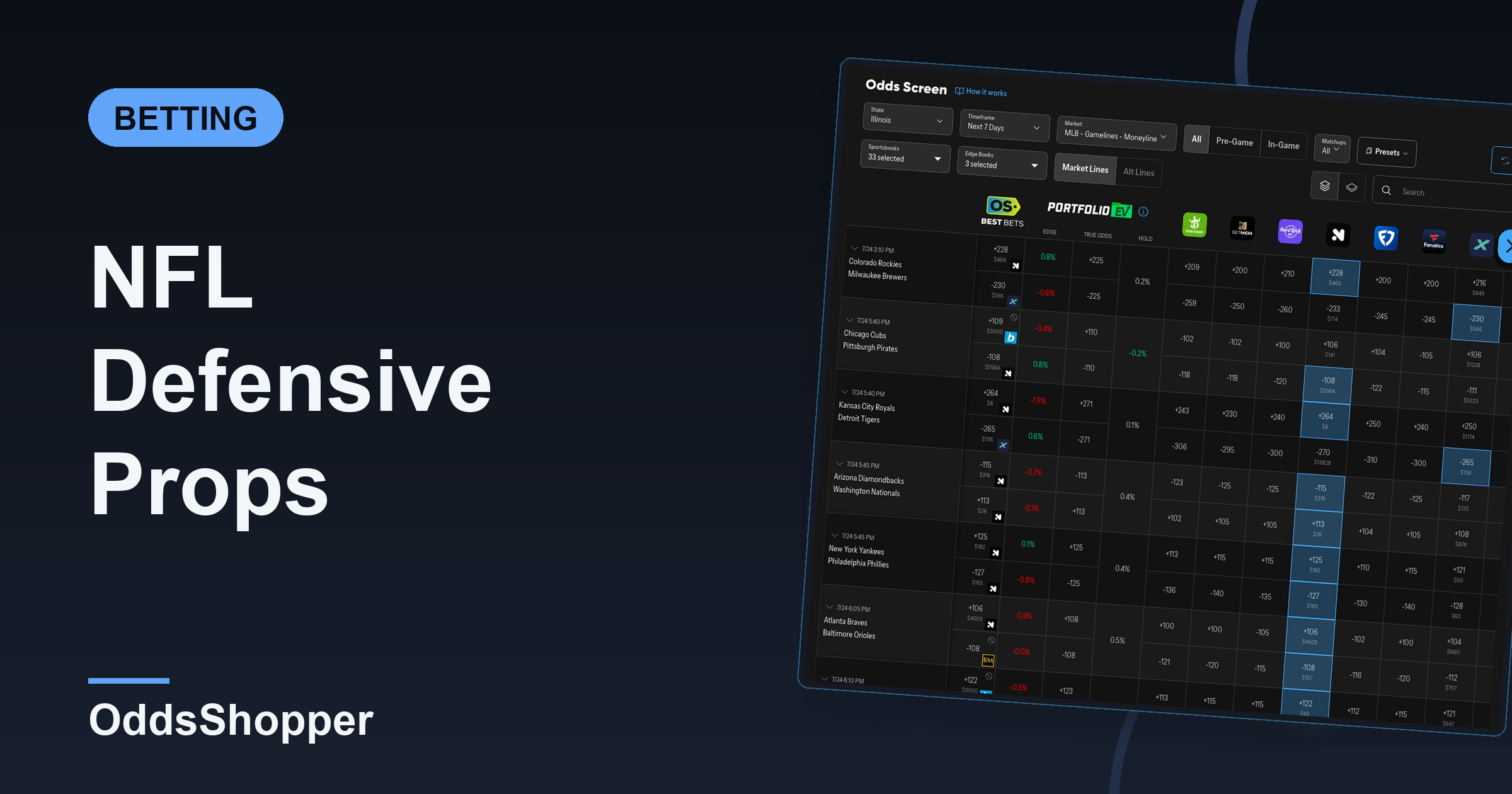
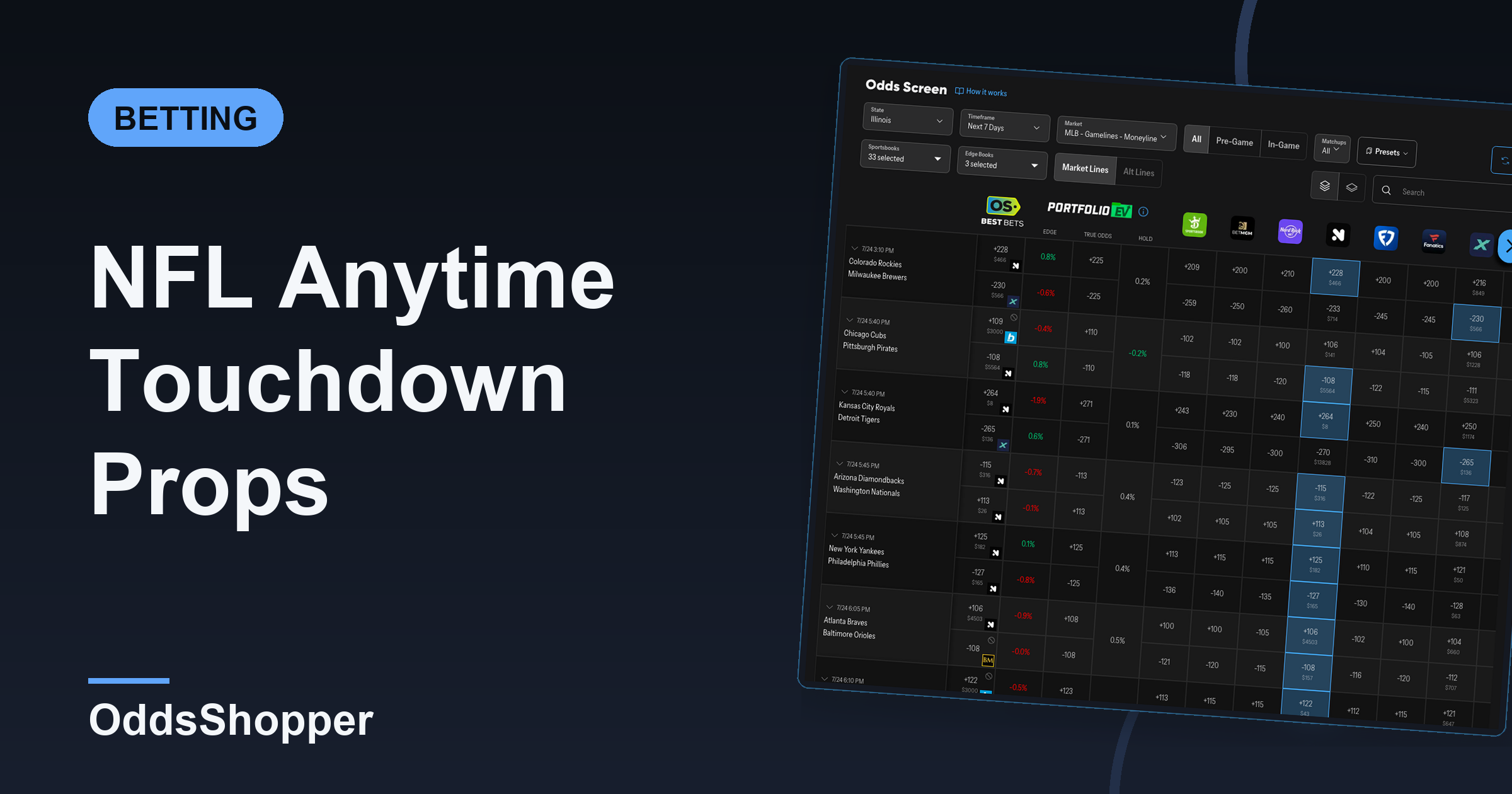
This is exactly the work OddsShopper automates.The Odds Screen lines up prices from 20+ major books across the day's games, so the $15-per-win gaps from the table above are just sitting there highlighted instead of hiding across five apps. New to OddsShopper? Start with the free 7-day OddsShopper Pro trial, and code OS15 takes 15% off your first payment if you stay.
Hold: The Cleanest Way To Compare Sportsbooks
Comparing one price at a time is good. Comparing what a book charges you overall is better, and that number is called hold. Sportsbooks make money by baking a margin into every market: price both sides of a coin-flip market and the implied probabilities add up to more than 100%. The excess is the book's cut.
Run the math on a total posted at -110 on both sides. Each -110 price implies a 52.4% chance, so the two sides sum to 104.8%. That extra 4.8 points is the margin you are paying. Now look at a book posting the same total at -105 on both sides: each side implies 51.2%, the market sums to 102.4%, and the margin is half as large. Side by side, on the identical market:
| Same Total (47.5) | Over Price | Under Price | Combined Implied Probability | Built-In Margin (Overround) |
|---|---|---|---|---|
| Book Posting -110 | -110 | -110 | 104.8% | 4.8% |
| Book Posting -105 | -105 | -105 | 102.4% | 2.4% |
So these figures match what you will see quoted elsewhere: that 4.8% is the overround, the amount the implied probabilities exceed 100%. Divide it by the total (4.8 / 104.8) and you get the hold on a per-dollar basis, roughly 4.6%, which is why the standard figure for a -110/-110 market is quoted as "about four and a half percent." Either way you slice it, two books posted the same headline number of 47.5 and one charges you double the freight.
This is why "which sportsbook has the best odds" has no single answer. A book that is cheap on NFL sides can be expensive on player props, and the ranking reshuffles by sport and by day. Hold is the honest comparison because it ignores the headline number and measures what you actually pay. If you want to run these numbers yourself, our hold calculator guide walks through it, and the Odds Screen displays hold on the markets it covers, so the comparison is done before you arrive.
The True Price Is The Benchmark, Not The Biggest Number
Everything so far compares books to each other. The final step is comparing them to reality, and that lands on the concept this whole discipline rests on: the no-vig price, the true price with the book's margin stripped out.
Take that -110/-110 total. Strip the margin out and the market is saying each side is a true coin flip, a fair price of +100. That fair number is the benchmark. A book posting -105 is closer to fair; a book posting +102 on one side is offering better than fair, which is the definition of a bet worth making. The goal of comparing sportsbooks was never to find the biggest number for its own sake. You are looking for the number that beats the true price, because those are the bets that hold up over hundreds of plays. We cover the mechanics in how to remove the vig and what to do with the result in how to find +EV bets.
This is also where OddsShopper stops being a convenience and becomes the actual answer to this article's question. The Odds Screen shows the no-vig true price next to the prices on offer, so "who has the best odds on this game" becomes a thing you read instead of a thing you calculate. Portfolio EV then tracks the expected value of everything you have bet against those true prices, and Live EV runs the same comparison on in-game markets, where prices often split faster and more noticeably than they do pregame.
Is It Worth Having Multiple Sportsbook Accounts?
Yes, for anyone who bets with any regularity. With one account you can never consistently take the best available number; sometimes your book happens to have it, and you will have no way to know. The one-app bettor settles for the +150 every time the table above comes up, forever.
I will be honest about the trade-offs, because they are real:
- Your Bankroll Gets Split Across Books, which means a little more deposit-and-withdrawal admin and a few more logins to manage.
- Sign-Up Promos Are A Real One-Time Benefit of opening those accounts, and a free bet converter shows what a given promo is actually worth in cash terms and the prices you would need to lock most of that value in, rather than letting it expire unused.
- Books Can And Do Limit Bettors Who Consistently Beat Them, which we cover in our guide to limits and bans (written for arbitrage bettors, but the limiting mechanics are the same). For a bettor shopping lines at normal stakes, that is a distant concern, not a day-one one.
Three to five accounts covering the major books in your state captures most of the available price spread. Past that you are chasing diminishing returns, and the admin grows faster than the edge.
FAQ
Is line shopping legal?
Yes. Comparing prices and placing your bet wherever the number is best is completely legal in regulated U.S. markets where sports betting is available. You are not exploiting anything; you are declining to overpay. Sportsbooks have no incentive to teach you to compare their price against a competitor's, which is why their own education pages stop at how to read a price and never get to shopping one. What books do respond to is sustained winning, a separate topic covered in the limits guide linked above.
How many sportsbook accounts should I have?
The count matters less than the order: open the two or three biggest books live in your state first, since they carry every market you will want, then add a book or two known for competitive prices in the markets you actually bet until you are at three to five. Keep a working balance at each so taking the best number never requires moving money first.
Does line shopping matter for small bets?
Yes, proportionally just as much. A better price pays the same extra percentage on winning bets whether you stake $10 or $1,000; only the dollar amounts shrink. The habit is the point: the bettor who shops at $10 stakes is the bettor who is already doing it right when the stakes grow.
More on this: Kalshi Same Game Parlays: What You Can And Cannot Combine · Same Game Parlay (SGP) Meaning: How SGP Betting Works · How To Build A Same Game Parlay: An NBA SGP Walkthrough · How To Combine Same Game Parlays On FanDuel (SGP+) · Beat The Sportsbooks With A Small Bankroll
The Cheapest Edge In Betting Is Looking
Back to where we started: yes, different sportsbooks have different odds on the same game, and now you know why that one fact matters more than almost anything else a new bettor learns. If you take three habits from this article, make them these: compare at least three books before every bet, expect the widest gaps on props and secondary markets rather than marquee sides, and keep a simple log of three prices on every bet you place: the one you took, the best one that was available, and where the line closed. Regularly beating the close means your shopping is working; keep discovering a better number after the fact, and the log tells you exactly which book you are missing. That last habit is the humbling one, because doing all of this by hand across five apps is tedious and prices move while you are tabbing between them. The Odds Screen runs the comparison continuously and shows the true price next to each offer, so the best number, and whether it beats fair, is one glance away.
Try OddsShopper Pro free for 7 days, and if it earns a place in your routine, code OS15 takes 15% off your first payment.
21+ only. If you or someone you know has a gambling problem, call 1-800-GAMBLER or your state's responsible gambling helpline. Please bet responsibly.