Line Movement Explained: Steam Moves, Reverse Line Movement, And What They Tell You
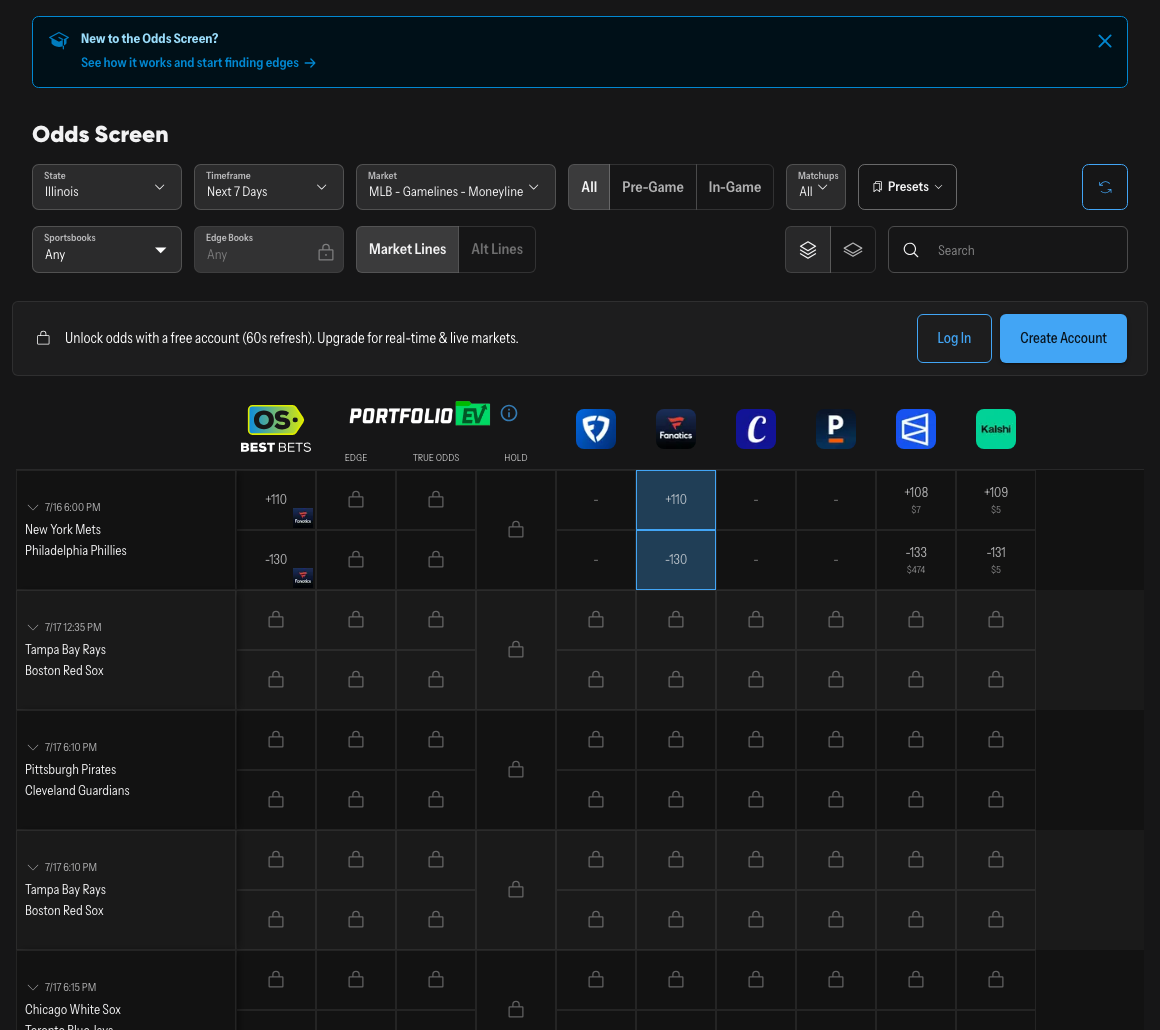 The OddsShopper live odds screen — every book's price on one board, refreshed in real time. Open the live board.
In Summary
Line movement is what happens when a sportsbook changes the price on a bet between the time it opens and the time it closes. A line opens at one number, and by game time it can sit somewhere very different. Reading why it moved is one of the most useful skills in betting, because the move is the market telling you something. The problem is that plenty of bettors read it backwards: they see a line move toward a team and chase it, which usually means buying a worse number than the people who caused the move already got.
This guide covers what most "line movement" articles skip. First, lines move for two very different reasons: a book balancing lopsided public money, or the market reacting to real information, and only the second is a signal you can use. Second, a steam move is sharp money hitting a number across many books at once, fast, and it is the cleanest sign of informed action. Third, reverse line movement (the line moving opposite the public ticket percentage) is a classic sharp tell, because it means a minority of money is overruling the majority of bets. Fourth, and most important, how to use all of this without chasing a stale price. I will walk through a worked example step by step, and show how OddsShopper's Sharp Sportsbook Algorithm and the odds comparison screen let you watch moves across 100-plus books instead of squinting at one app.
What Is Line Movement?
Line movement is simply the change in a betting line over time. The book posts an opening line (its first estimate of the fair price), then adjusts it as bets come in and as new information arrives, until it locks at the closing line right before the event starts.
A move can show up two ways:
- The spread or total changes. An NFL favorite opens at -3 and closes at -4.5. A total opens at 47.5 and closes at 44.
- The price (vig) changes. The spread stays -3 but the juice moves from -110 to -120, which quietly makes that side more expensive to back.
Both are line movement. The point spread getting bigger is the loud version; the price creeping from -110 to -120 is the quiet version, and the quiet one matters just as much because it changes how good your number is. If you want a refresher on how those prices map to implied probability, our how to read betting odds guide breaks down the conversion. Here, the question is not what a number is, it is why it moved.
Why Lines Move: Money Vs. Information
Most line moves trace back to one of two broad forces, uninformed money and informed money or news, and telling them apart is the whole game. (Liability management, copycat moves between books, and bet limits all play a role too, but they mostly fold into these two buckets.)
1. Uninformed money (the book managing its position). When a lot of public money piles onto one popular side, the book often shades the line to make the other side more attractive and pull some action back. Books are not always trying to perfectly balance both sides; they manage price and risk, and they will sometimes hold exposure on purpose. But a move driven by sheer public volume is still about the book's position, not about who is going to win. A popular team on a national broadcast can drift a half-point on public money alone even though nothing about the matchup changed.
2. Informed money or news (the price getting sharper). The other reason a line moves is that the market learned something true, a starting pitcher scratched, a star ruled out, a weather front rolling in, or a respected bettor putting real money on a mispriced number. This move is the market correcting toward the true odds. It is the signal you actually care about.
The trap is that both look identical on the screen, a number changing. A move driven by public money is noise; a move driven by sharp information is signal. The rest of this guide is about telling them apart, and the two clearest tells are steam moves and reverse line movement.
Steam Moves: Sharp Money Hitting A Number Across Books
A steam move is a fast, uniform line move that hits many sportsbooks at nearly the same time. One second a number sits quietly at most books, and within minutes it has jumped at all of them in the same direction. That synchronization is the tell. When a line lurches the same way across the whole market at once, it is rarely the public, who trickle in unevenly. It usually points to informed money, often syndicates firing the same play across every book they can reach before the price corrects, though fast-breaking news (a late scratch, an injury) can move every book at once too, so in a thin market confirm before you trust it.
Why does it move everywhere at once? Because sharp groups bet the same edge at every book that will take it, and books also watch each other. Once a respected book moves on sharp action, the others copy it to avoid being the last stale number on the board, which is exactly the number sharps want to hammer.
Here is the catch, and it is the reason steam is dangerous to a casual bettor: by the time you see the steam, the value that caused it is usually gone. The sharps got the good number. The move toward their side means the price you can still get is worse than the one they bought. Steam tells you where informed money went; it does not hand you their price. So the useful read is not "steam moved this way, so I pile in," it is "informed money likes this side, so if I can still get a number at or near the old, softer price somewhere, that is worth a look, and if I cannot, I let it go." Chasing steam after it has run is how recreational bettors end up consistently on the wrong side of closing line value.
The one rule that keeps you out of troublea steam move points to where the sharp money went, not to a price you can still get. If a lagging book has not caught up, take its number. If every book has already moved and a fair-value read no longer shows an edge, pass.
Reverse Line Movement: When The Line Defies The Public
This is the most useful signal of the bunch, and the most misread. Reverse line movement (RLM) is when the line moves in the opposite direction from where the public is betting.
Normally the two track together. If 80% of the bets (the ticket count) are on the favorite, you would expect the favorite's price to get more expensive. Reverse line movement is when 80% of tickets are on the favorite and the favorite's line gets cheaper anyway, drifting from -7 to -6.5 to -6. That is strange on its face, and the likeliest explanation is also the signal: a small number of large, sharp bets on the underdog are usually outweighing a large number of small public bets on the favorite. The book is moving toward the money, not the tickets.
The key distinction most bettors miss is tickets vs. dollars. Public-betting percentages usually report the share of bets (tickets). Sharp action shows up in the share of dollars. When a side has a small percentage of tickets but a large percentage of the money, that side is usually where the larger, sharper money is showing, and the line tends to follow the dollars. Published splits can be incomplete or skewed by a few big public bets, so read the dollar share as a signal to confirm, not proof on its own. Reverse line movement is what that looks like from the outside: the public on one side, the line walking the other way.
RLM is a tell, not a certainty. Sometimes a line moves against the public for a boring reason, a key injury, a book correcting its own mistake, or a single whale who is not actually sharp. So treat reverse line movement as a flag that says "look closer here," then confirm it with the rest of the picture (is there real steam, does a fair-value tool agree the new number is the better price) before you act. A flag is a reason to investigate, not a reason to bet blind.
The two signals compare cleanly side by side:
| Signal | What you see | What it means | The trap |
|---|---|---|---|
| Steam move | A fast, uniform price jump across many books within minutes | Informed money hit the same number everywhere at once | The good price is already gone, so chasing it buys the worse number |
| Reverse line movement | The line drifts against the side holding most of the tickets | A few large, sharp bets (the dollars) outweigh many small public bets (the tickets) | A flag to investigate, not an automatic bet; confirm before acting |
Steam and reverse line movement overlap, but they are not the same thing. A steam move can cause reverse line movement, when the synchronized sharp money lands on the side the public is fading, but not all reverse line movement comes from steam. A book will sometimes nudge a line against the public on its own, preemptively, out of respect for a few accounts it trusts, well before any market-wide wave shows up. Steam is about speed and synchronization; reverse line movement is about direction relative to the public. Seeing both at once, as in the example below, is the strongest version of the signal.
See the move before it is stale.OddsShopper's Sharp Sportsbook Algorithm tracks live line movement and flags the moves that point to sharp action across the 100-plus books it monitors, so a steam move or reverse line move shows up the moment it starts, not after it has run. It scans those books and surfaces the bets priced in your favor, which is the exact thing this article is teaching you to spot by hand. New here? You can try it free for 7 days, and code EDGE20 takes 20% off your first payment of OS Pro or OS Core if you subscribe.
A Worked Example: Reading An NFL Line Move
Let me make this concrete with a worked illustration that uses real teams. On a regular-season Sunday, the Kansas City Chiefs open as 3-point home favorites over the Buffalo Bills, priced at -110 on both sides of the spread. The teams are real; the line history and betting splits below are illustrative figures chosen to show the mechanic, not a record of an actual game.
Through the week, the public loves the Chiefs. By Saturday night, assume the ticket count sits around 75% on Kansas City, the popular, well-known side. If lines simply followed tickets, the Chiefs should be climbing toward -3.5 or -4. Instead, the number drifts the other way: Chiefs -3 to -2.5, and at a couple of sharp books the spread holds at -2.5 but the price on Kansas City slips from -110 to -105, the quiet version of the same move. That is reverse line movement, three-quarters of the bets on Kansas City, yet the price on Kansas City is getting cheaper.
Now watch what happens Sunday morning. Within a ten-minute window, the Bills' side jumps at book after book, Buffalo +2.5 to +2 to +1.5, all moving together. That synchronized, market-wide shift is a steam move: sharp money pounding the Bills across every book at once. Put the two signals together and the story is clear. The public is on Kansas City, but the money and the informed, fast action are on Buffalo. The market is telling you the true line is closer to a pick-or-Chiefs -1.5 than the -3 it opened at.
Laid out in order, here is the whole move stage by stage (illustrative figures, not a real game):
| Stage | Chiefs spread | What is happening | The signal |
|---|---|---|---|
| Tuesday open | KC -3 (-110) | The book's first posted number | Opener |
| By Saturday | KC -2.5 | ~75% of tickets on KC, yet the price drifts cheaper | Reverse line movement |
| Sunday AM | BUF +2.5 → +2 → +1.5 across books in ~10 min | Sharp money pounds the Bills everywhere at once | Steam move |
| The play | A lagging book still on BUF +2.5 or +3 | Buy the stale, pre-steam number, or pass | Line shopping |
So what is the actual bet? Not chasing Buffalo at +1.5 after the steam, because that is the picked-over number the sharps already left behind. The play, if there is one, is the stale number: a book still showing Buffalo +2.5 or +3 that has not moved yet. That book is offering you the old, softer price the sharps got. Grab the lagging line, or pass. The signal told you where the value was; whether you can still buy it depends entirely on finding a book that has not caught up. This is the difference between using line movement and chasing it.
How To Use Line Movement Without Chasing
The cardinal sin of reading line movement is chasing: seeing a number run toward a side and betting that side at the new, worse price. By then you are buying the very number the sharps created, which is a recipe for negative closing line value. Use the signal the right way instead:
- Treat movement as a pointer, not a green light. Steam and reverse line movement tell you where informed money is. They do not tell you that the current price is still good. Those are two different questions.
- Hunt the lagging book. The real edge in a move is finding a book that has not adjusted yet, still offering the pre-move number. That requires watching many books at once, which is exactly what line shopping and an odds comparison screen are for.
- Mind the key numbers in football. NFL games land on a margin of 3 and 7 far more often than any other number, because so many scores are decided by a field goal or a touchdown. That makes a half-point bought or sold through a key number worth much more than the same half-point elsewhere. When a move crosses 3, like the Chiefs sliding from -3 to -2.5 in the example above, the side of that number you can still get matters a lot: a lagging book holding Buffalo +3 is offering real extra value over +2.5, and chasing a line past 3 in the wrong direction quietly costs you more than the half-point looks like it should.
- Confirm with fair value, not vibes. A move is more trustworthy when an independent fair-value read agrees the new number is the better price. A tool like OddsShopper's Portfolio EV, which de-vigs the market down to a fair price, does exactly that: it confirms whether the new number is better than the market's estimate of the true price, instead of asking you to trust the move on its own.
- Respect liquidity. A move in a deep NFL side means far more than a move in a thin, low-limit prop, where a single bettor can shove the line around with no real information behind it. The same caution applies to grading yourself on the close; see the "artificial CLV" warning in our closing line value guide.
- Know when to pass. If the value is gone and no book is lagging, the disciplined move is to do nothing. A signal you cannot bet at a good price is not a bet.
For the broader playbook on how the people causing these moves operate, our guide to following sharp money and the sharp betting guide cover how sharps bet early and beat the books to the news.
How Line Movement Ties To Closing Line Value
Line movement and closing line value (CLV) are two views of the same thing. CLV asks, after the fact, whether you beat the final number. Line movement is the live, in-progress version of that question: it is the market walking, in real time, from the opening price to that closing price.
The connection is direct. If you can read a move early and get on the right side of it before the line settles, you are positioning yourself to beat the close, which is the cleanest long-run proof that your prices are good. Bettors who consistently land ahead of the move tend to show positive CLV; bettors who chase the move after it runs tend to show negative CLV. So line movement is not a separate skill from CLV, it is how you earn CLV in the moment. We go deep on grading and the no-vig math in the closing line value explainer; this guide is about reading the move while it is still happening. And reading the move is really just applied +EV bet-finding: get a better price than the true number, repeatedly.
Go deeper: Sports Betting Strategy: How to Bet Smarter.
The OddsShopper Tools That Read Moves For You
You can watch one line on one app and try to guess why it moved. What you cannot do by hand is watch every book at once, catch a steam move the moment it fires, and tell a sharp move from a public stampede. That is what the tools automate:
- The Sharp Sportsbook Algorithm tracks live line movement and surfaces the moves that point to sharp action across the books it monitors, in real time. That is what lets you see a steam move or reverse line move as it starts, not after the value has run, and judge whether it came from real sharp action or a thin-market blip you should ignore.
- The odds comparison screen shows the same bet's price at 100-plus sportsbooks side by side, which is how you find the lagging book still offering the pre-move number, the one price in a move that is still worth taking.
- Portfolio EV is the engine that ties it together: it de-vigs the market to a sharp multi-book consensus and flags when a book is offering you better than that true price, so you are confirming a move against fair value instead of trusting the move on its own. That fair-value method is the same logic this whole guide is built on, applied automatically across the market.
The free tools let you compare a handful of prices by hand. OS Pro unlocks the full real-time Sharp Sportsbook Algorithm feed and the complete Portfolio EV slate, the live line data you need to read a move and act on it before it goes stale.
A Few Honest Realities About Line Movement
- A move is a clue, not a result. Knowing where sharp money went does not mean the leftover price is still good. The two questions are separate, and conflating them is how people chase.
- Public percentages usually mean tickets, not dollars. Reverse line movement only makes sense once you know the line follows the money, and the splits you see published are often the share of bets.
- Liquidity decides how much a move means. A steam move on a major NFL side is meaningful; the same move on a low-limit niche prop can be one bettor with no edge.
- No move is a promise. Steam and reverse line movement are signals that informed money is on a side; they do not make any single bet a winner, and they still need confirming against fair value. Judge your process over a large sample, the way you would judge CLV.
- Bet responsibly. Reading the market well is an edge over time, not a shortcut. Only wager what you can afford to lose, and treat this as a long-run discipline, not a way to get even after a cold stretch.
More on this: Reverse Line Movement Betting: How To Spot Sharp Money · Sharp Money Tracker: How To Follow Sharp Betting Action Before The Line Moves · Seahawks Vs Patriots Spread: Kalshi Leans Toward 4. Pinnacle Toward 3. · MLB Run Line Explained · Closing Line Value (CLV) Explained: Beat the Close
Frequently Asked Questions
What is line movement in sports betting? Line movement is the change in a betting line (the spread, total, or price) between when a sportsbook opens it and when it closes right before the event. Lines move for two reasons: money, when a book shades the price to balance lopsided action, and information, when the market learns something true and corrects toward the fair odds. Reading which one caused a given move is the useful skill.
What is a steam move? A steam move is a fast, uniform line move that hits many sportsbooks at nearly the same time. That synchronization across the market is the tell that it is informed (sharp) money rather than the public, who bet unevenly. The catch is that by the time you see the steam, the sharp money already got the good price, so chasing it usually means buying a worse number.
What is reverse line movement? Reverse line movement is when the line moves opposite the public betting percentage, for example 80% of tickets are on the favorite but the favorite's line gets cheaper anyway. It happens because a small number of large, sharp bets (the share of dollars) outweigh a large number of small public bets (the share of tickets). The book follows the money, not the ticket count, which is why RLM is treated as a sharp tell.
How do I use line movement without chasing the number? Treat the move as a pointer to where informed money is, not as permission to bet the current price. The real edge is finding a lagging book that has not adjusted yet and still offers the pre-move number, which takes a side-by-side odds comparison across many books. Confirm with a fair-value read, respect liquidity, and if the value is gone and nothing is lagging, pass.
Does line movement tell me who will win? No. Line movement tells you where money and information are going, which makes the price more accurate, not which team will win a given game. Steam and reverse line movement improve the odds you are on a sharp number over a large sample; they do not make any single bet a sure outcome.
How is line movement related to closing line value? They are two views of the same thing. Closing line value grades, after the fact, whether you beat the final number; line movement is that same journey happening live, from the opening price to the close. Getting on the right side of a move early is how you earn positive CLV, while chasing a move after it runs is how you end up on the wrong side of the close, with negative CLV.
Want to read steam moves and reverse line movement the moment they happen instead of after the value is gone? Watching 100-plus books at once and telling a sharp move from a public stampede by hand is effectively impossible, which is the whole reason most bettors chase the number instead of beating it. OS Pro unlocks the full real-time Sharp Sportsbook Algorithm feed and the complete Portfolio EV slate, plus the odds comparison screen to find the lagging book still offering the pre-move price. Start your free trial and use code EDGE20 for 20% off your first payment of OS Pro or OS Core.