It's the question that comes up in our Discord almost every night: "I like these three sides tonight, do I parlay them or bet them as three singles?" It feels like a small decision. It isn't. The same three bets, booked as a parlay instead of three straight bets, quietly change how much the sportsbook keeps, how often you cash, and how long your bankroll lasts. Here's how the two actually differ, with the math laid out.
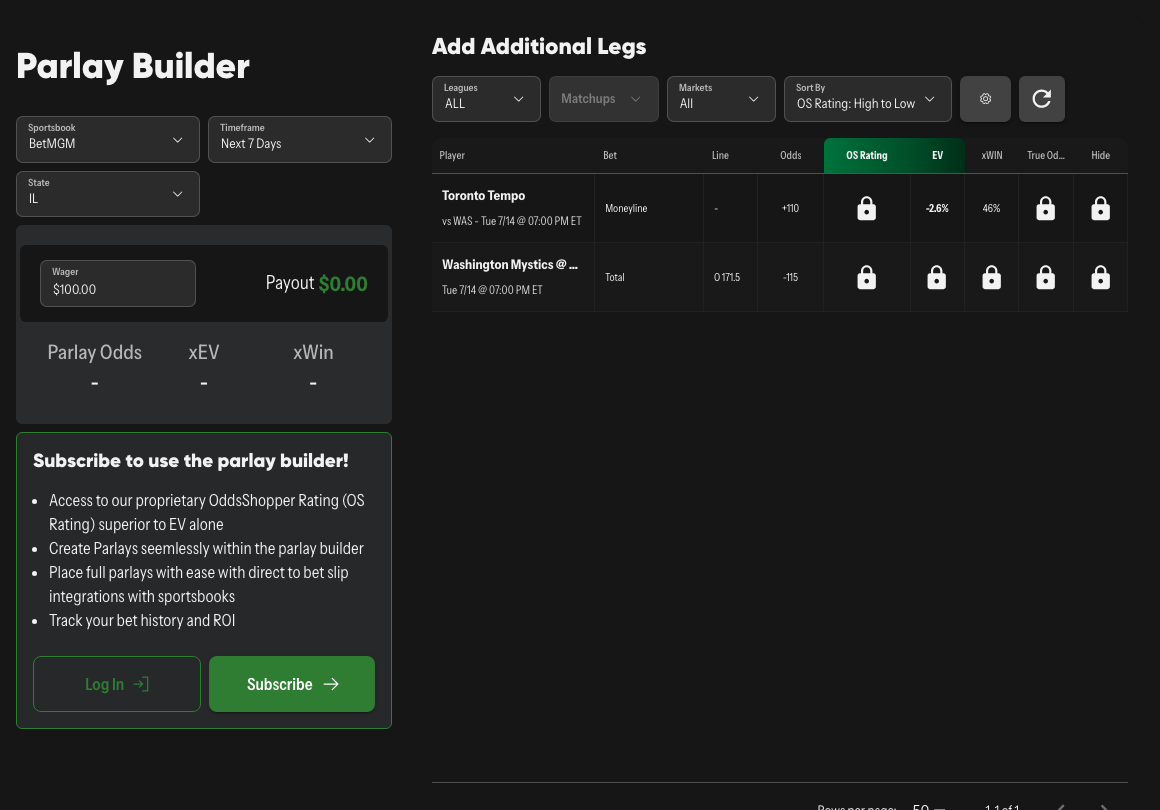 The OddsShopper Parlay Builder — every leg graded live (EV, xWin, true odds) before you lock a ticket. Open the live board.
What's The Difference Between A Parlay And A Straight Bet?
A straight bet is a single wager on one outcome: the Chiefs moneyline, the over, Patrick Mahomes over 1.5 passing touchdowns. It stands on its own. If it wins, you get paid; if it loses, you lose that bet and nothing else.
A parlay links two or more of those bets into one ticket, and every leg has to win for the ticket to cash. Miss one leg out of four and the whole thing loses. In exchange for that all-or-nothing condition, the payout multiplies: three legs that would each pay a little as singles combine into one much bigger number.
| Straight Bet | Parlay | |
|---|---|---|
| Legs That Must Win | 1 | All of them |
| Payout | Fixed per bet | Legs multiplied together |
| Hit Rate | Higher (one thing has to happen) | Lower (everything has to happen) |
| Vig You Pay | The book's hold on one market | The hold, compounded across every leg |
| Best For | Steady bankroll building | Correlated spots, promos, or small flyers |
That last row is the whole ballgame, and it starts with the vig.
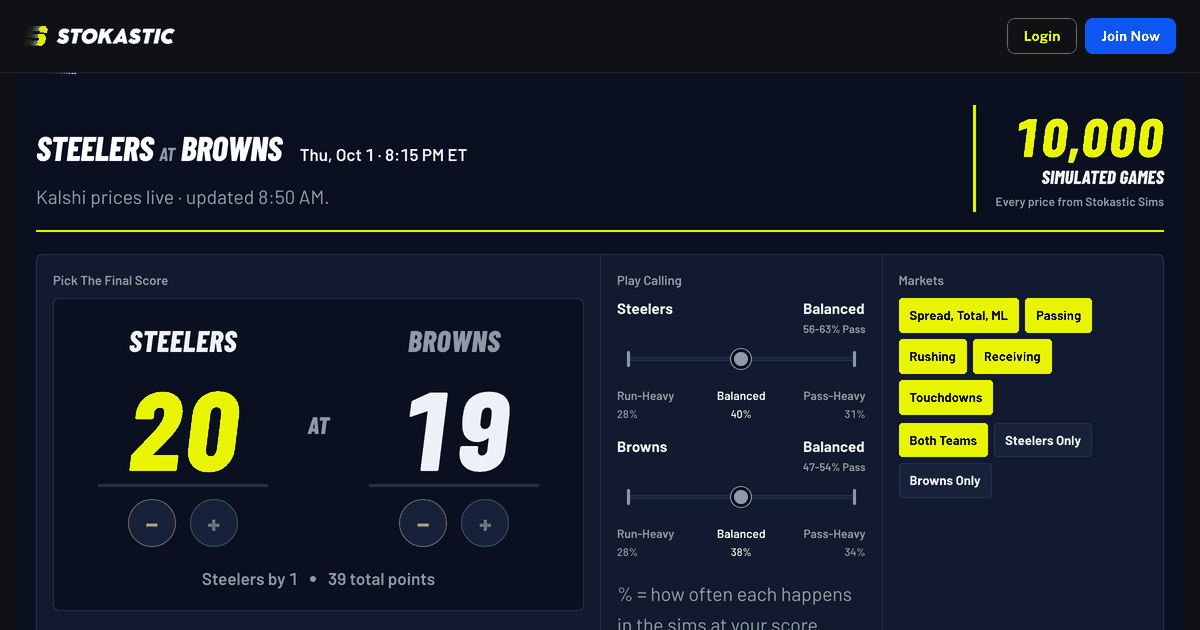 Betting it on Kalshi? Price the combo first. The Kalshi Parlay Simulator prices any combo against 10,000 simulated games of this week's game, next to the price on Kalshi.
The Hold Math: Why A Parlay Compounds The Juice
Every straight bet already has a built-in tax. On a standard -110 line, you risk $110 to win $100. The book is charging you for the privilege, and on a balanced two-sided market that charge, the hold, is about 4.5%. That's the edge baked into a single leg before anyone's ball is even snapped.
Bundle those legs together and the tax doesn't just apply once. It multiplies across every leg.
Take three -110 legs. Each pays 1.909 in decimal terms, so a three-leg parlay pays 1.909 × 1.909 × 1.909, which comes out to about 6.96 in decimal, or +596. A $10 ticket returns $69.58. Sounds great, until you check what a fair, no-vig price would be. If all three legs were genuine coin flips, the true price is 2.0 × 2.0 × 2.0, or +700, and that same $10 should return $80.
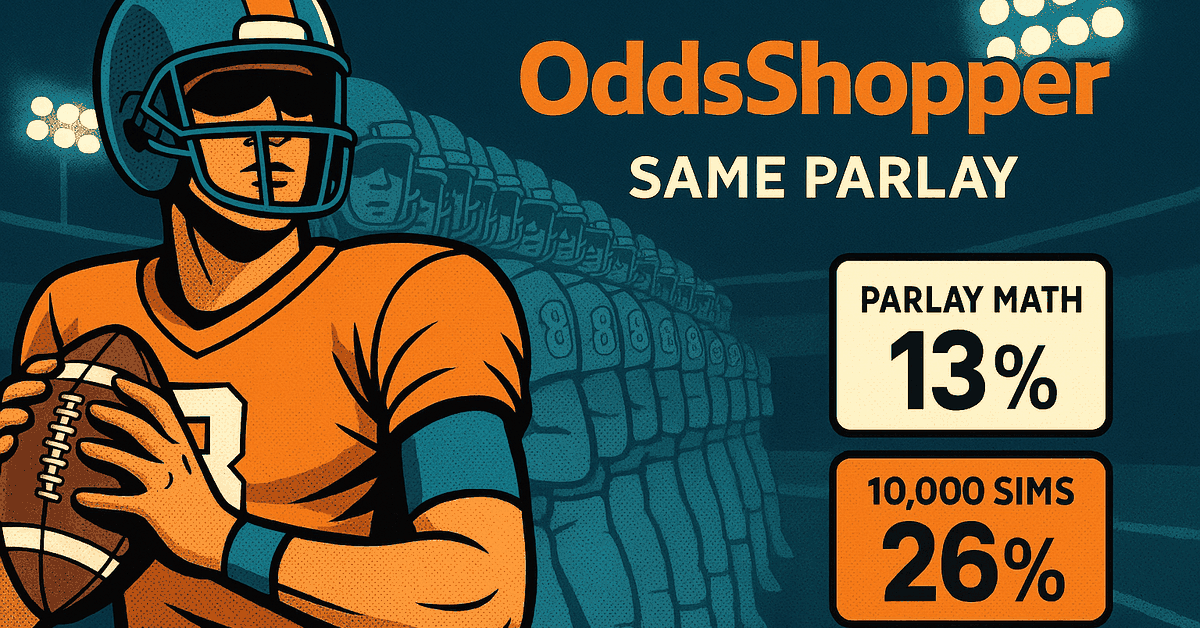
That $10.42 gap on a $10 bet is the compounded juice. Multiplying the hold across three legs turns a ~4.5% tax per leg into an effective hold of roughly 13% on the ticket:
| Same Three -110 Bets | As 3 straight bets | As one 3-leg parlay |
|---|---|---|
| Effective Hold To The Book | ~4.5% | ~13% |
| Chance You Win Something | Very high (each is independent) | ~12.5% (all three must hit) |
| All Three Win | $27.27 profit | $59.58 profit |
| Two Of Three Win | +$8.18 net (two win, one loses) | −$10 (ticket loses) |
One thing to keep straight in that table: the two columns don't stake the same money. Three singles put $30 at risk ($10 a bet); the parlay risks $10 on one ticket. That's the whole point of the comparison, not a flaw in it.
Spreading $30 across three independent bets is what lets you cash part of the night when two of three land; the single $10 ticket risks less but pays nothing unless all three hit. The parlay's headline payout is bigger, but you're paying triple the tax to chase it, and you only collect if all three land. This is the mechanic behind the parlay hub guide, and you can check any parlay's true price against the fair no-vig number with our parlay calculator before you build.
New to OddsShopper?It scans 100+ sportsbooks and shows you the fair, no-vig price on every bet, so you can see exactly how much juice a parlay is piling up before you place it. You can try it free for 7 days, and code STRAIGHTEDGE20 takes 20% off OS Pro or OS Core if you subscribe.
Is It A Parlay Or Three Singles? The Bankroll Answer
Back to the Discord question. You like three sides tonight. Should you parlay them or bet three straight bets?
For steady bankroll building, three singles is the smarter play almost every time. Two reasons:
- You Pay The Hold Once Per Bet, Not Compounded. Three separate -110 bets each carry that ~4.5% tax on their own. Bundle them and you're paying it three times over on a single ticket.
- You Can Win Partially. If two of your three sides hit, three singles books a profit on the night. The parlay pays zero. With three coin-flip legs you'd expect to win about 1.5 of them on average, so most nights you're cashing some of your straight bets while the parlay is a clean miss seven times out of eight.
Straight bets are the smoother ride: more frequent wins, shallower losing streaks, and a bankroll that grows off a small edge compounded over volume instead of a rare jackpot. That's why disciplined bettors default to singles and treat parlays as the exception, not the base bet. If you keep losing tickets, our breakdown of why you can't win parlays walks through the same trap in more detail.
When A Parlay Is Actually The Better Bet
Parlays aren't a sucker bet by definition, and "always bet singles" is too blunt. Booked right, a parlay earns its place in two specific situations — governed by one rule that applies to every parlay you build:
- Correlated legs the book misprices. When two outcomes move together, a QB throwing for 300 yards and his team hitting the over, a straight bet can't capture that relationship but a same game parlay can. The catch: books know this and shade the correlation, so pre-built SGPs are generally priced in the book's favor. They're only worth it when you find one the book has under-priced. That hunt is the whole point of our same game parlay strategy guide.
- Promos and boosts that flip the value. A profit boost, a "bet $X, get a bonus" offer, or an odds boost can push a parlay from negative to positive expected value. But a boost on a bad ticket is still a bad ticket. A boost only helps once you've checked the boosted price against the fair price, caps and terms included; it won't rescue a parlay that's further underwater than the boost is worth.
- The governing rule: every leg is a bet you'd make straight. This isn't a third reason to parlay — it's the non-negotiable condition on the two above, and it's the part most "parlays are dumb" takes get backwards. Two independent bets you love still grow your bankroll faster as singles, because you keep the edge without the all-or-nothing variance. But when you do build a parlay for correlation or a promo, value multiplies across the ticket the same way vig does: a parlay of legs you'd each bet straight carries that edge, while one padded with long shots and heavy favorites just piles up the juice.
The +EV Truth About Parlays
The lazy line is "parlays are for suckers." The accurate version: a parlay is only as good as its legs. (+EV is shorthand for positive expected value — a bet priced in your favor over the long run.) Add a bet the book has priced against you and you compound that disadvantage with every leg you add. Add bets priced in your favor and you compound the advantage.
That's why leg count is the wrong thing to obsess over. "Keep it to two legs to cut the house edge" is a myth if the legs are good bets, and no help if they're bad ones. What matters is whether each leg is a bet worth making by itself. A two-leg parlay of two +EV sides can still be +EV, but unless correlation or a promo improves the price, betting them as singles is usually the cleaner bankroll play. A ten-leg ticket built by tossing in favorites and alt-lines to inflate the payout is where bankrolls go to die, because you've compounded the vig ten times over and handed the book a double-digit hold.
The rule that survives every situation: only put a leg on a parlay if you'd bet it as a straight bet at that price. If you wouldn't, it doesn't belong on the ticket.
How To Bet Both The Smart Way
Whether you're firing singles or building the occasional parlay, the edge comes from the same place: getting the best number and knowing the fair price. Two habits do the heavy lifting.
Shop every bet. The exact same three-leg parlay can pay +580 at DraftKings and +520 at Caesars, purely because of where each leg is priced. On a straight bet the gap is smaller but it's still real, and it compounds on a parlay. Pull up the live NFL odds screen and you'll see the same market priced differently across every book at once. Always take the best number.
Know the fair price before you bet. OddsShopper's Sharp Sportsbook Algorithm strips the vig out of the market to show you the true, no-vig odds, so you can tell whether a leg is actually priced in your favor or just dressed up to look like it. Feed the Parlay Builder only the legs that clear that bar, and you're compounding an edge instead of a tax.
Stop paying triple juice for a payout you'll rarely collect. OddsShopper flags which bets are priced in your favor and builds parlays from those legs automatically, across 100+ books. Try it free for 7 days, then 20% off OS Pro or OS Core with code STRAIGHTEDGE20.
The Bottom Line
Straight bets are the base of a healthy betting strategy: you pay the hold once, you win more often, and a small edge compounds over volume. Parlays multiply both the payout and the vig, so they earn their place only when the legs are correlated and mispriced or a promo tips the value — and even then, every leg should be a bet you'd make straight. When someone in the Discord asks "parlay or three singles?", the honest default is three singles, unless mispriced correlation or a promo is staring you in the face. Bet the number, not the payout, and the choice usually makes itself.
FAQ
Are straight bets or parlays better for beginners? Straight bets. They're simpler, they win far more often, and you pay the sportsbook's hold only once per bet instead of compounding it across several legs. Beginners build a bankroll faster and learn more from the steadier feedback of single bets.
Is it better to bet a parlay or three single bets? For most bettors, three singles. You pay the vig once per bet rather than compounding it, and you can profit even if only two of the three hit. Those same three bets bundled onto one ticket pay nothing unless all three win, and the book charges you a much higher effective hold to chase that bigger payout.
Why do parlays lose more often than straight bets? Because every leg has to win. Three legs that are each 50-50 give the parlay only about a 12.5% chance to cash, even though each individual bet is a coin flip. The more legs you add, the lower the odds all of them land.
Are same game parlays a good bet? Sometimes. Same game parlays let you capture correlation that straight bets can't, but books shade that correlation, so most are priced in the house's favor. They're worth it only when you find one the book has under-priced, which is what the same game parlay tools are built to spot.
Can you make money betting parlays? Yes, but only if every leg is a bet priced in your favor. A parlay multiplies the value of its legs, so one built entirely from good bets compounds that edge. One built from long shots and heavy favorites just compounds the vig, which is why the majority of parlays lose.
More on this: Correlated Parlays On Kalshi: The Team-To-Advance Plus Striker-To-Score Stack · How To Build Winning Parlays (Step-by-Step) · College Football Parlays: Why Most Lose, Build Smarter · How To Combine Same Game Parlays On FanDuel (SGP+) · Why You Can't Win Parlays (And How To Win Them)
Tools for thisKalshi combo builder on Kalshi, or the Polymarket Combo Simulator for Polymarket's book.