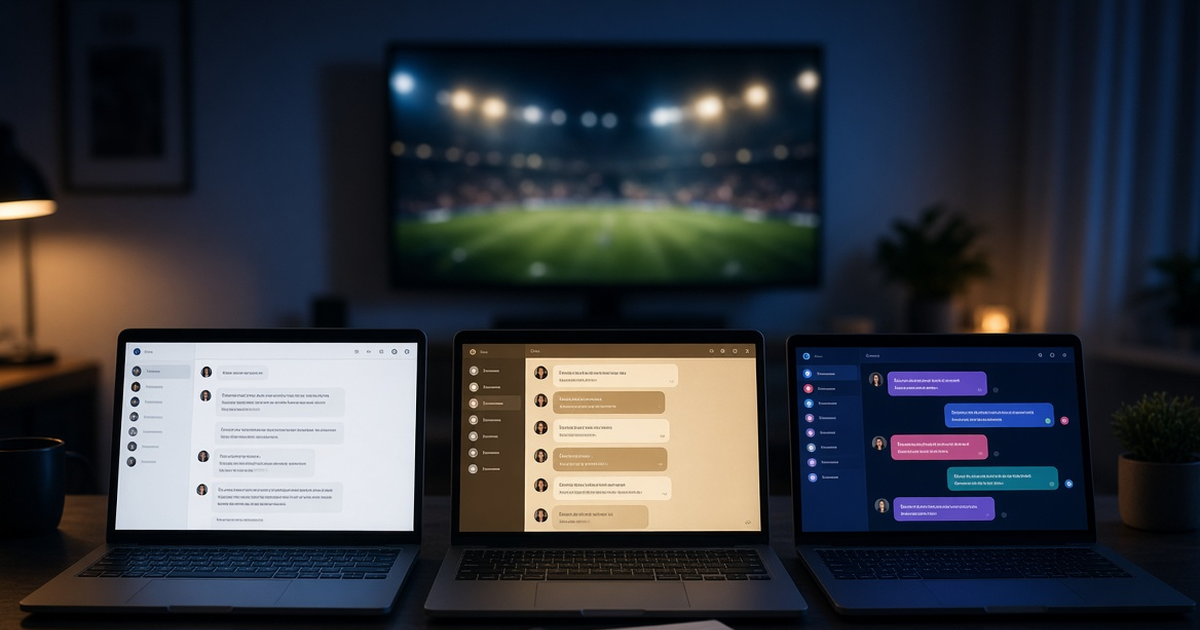
Set your Portfolio, enable notifications, and hammer away at plays 24/7.
That's not our marketing copy. It's the workflow @WSBTradesAlerts, a bettor who calls OddsShopper their go-to for player props, described after the ground-up rebuild we just shipped: set it once, and the plays come to you. PortfolioLab is gone. In its place: OddsShopper Portfolios, a ground-up rehaul by our engineering team that turns a portfolio into exactly what it should have been all along, a saved filter state you switch on once, with a feed that comes to you.
If you're new to the concept, start with what Portfolio EV actually means. The short version: you spread your bankroll across many small positive-EV bets so variance shrinks and results converge on your edge. This rebuild makes that loop faster to run and easier to trust. Six upgrades do the work.
The Quick Answer
OddsShopper Portfolios is the rebuilt PortfolioLab: an updated profit track record, custom devigging alongside the OS presets, a daily swing range read off your own portfolio settings, filters preset on the main screen, quick-access portfolio tuning, and a new Review tab that grades every tracked bet against closing line value. Below: what each of the six lets you do, a worked CLV example with real odds math, and the one number that tells you whether your process is actually winning.
The Rehaul At A Glance
| Upgrade | What it lets you do |
|---|---|
| Updated Profit Track Record | See how each portfolio has performed, right on the portfolio |
| Custom Devigging Vs. OS Preset Devigs | Set your own devig approach or ride the OS presets |
| Daily Swing Range | Know the up-and-down band your settings imply before you fire |
| Filters Preset On Main Screen | Your slice of the board loads already applied |
| Portfolio Quick-Access Tuning | Adjust dials from the feed, no menu digging |
| Review Tab Vs. CLV | Grade every tracked bet against the closing line |
The row that matters most is the last one, and it's where this page ends. First, the six in order.
1. Updated Profit Track Record
Every portfolio you build keeps a running record, and it keeps tracking even when the portfolio is switched off. What's new is how that profit track record is presented: the first thing you see on a portfolio is how it has actually performed. The cleanest use is paper-trading a filter idea: build the portfolio, leave it off for a couple of weeks, and let the record answer whether the idea deserves real money before a dollar is at risk. No spreadsheet, no exporting bet history to a third-party tracker. The record lives where the bets do.
2. Custom Devigging Vs. OS Preset Devigs
Devigging is how a +EV tool decides what a bet is really worth: strip the bookmaker's margin out of the market price to get a fair-odds estimate, then flag the books priced beyond it. At a standard -110 on both sides, the two prices imply a combined 104.8% probability, and that extra 4.8% is the book's margin, which is exactly why a bet that looks fine at face value can be a loser at fair odds. Until now, you rode with OddsShopper's preset devig methods. Now there's a second lane, custom devigging: set your own devig approach for a portfolio instead of taking the preset as given. Sharper bettors who have their own opinion about how a market should be de-vigged can now encode that opinion. Everyone else keeps the OS presets and loses nothing.
Try the rebuilt Portfolios free.OddsShopper Pro comes with a free 7-day trial for new subscribers, and code {CODE} takes 20% off your first payment of OS Pro or OS Core if you stay.
3. Daily Swing Range From Your Portfolio Settings
This is the expectation-setting feature. Based on your portfolio's own settings, the tool shows a daily swing range: the band of up-and-down your portfolio can produce day to day. Downswings are where most +EV bettors quit, usually because nobody ever told them what normal variance looks like at their stake size and volume. Seeing the range before you fire is the difference between "this is broken" and "this is Tuesday."
4. Filters Preset On The Main Screen
Your filters now sit preset on the main screen. Think about the stack a props bettor rebuilds every session: the sport, the market types, the three or four books you actually hold accounts at, a minimum edge threshold. Every minute spent reassembling that is a minute the board moves without you. Now it's already applied when the feed loads. The tool remembers your slice of the board, so you go straight to the plays.
5. Portfolio Quick-Access Tuning
Tuning a portfolio no longer means leaving the feed. Quick-access tuning puts your portfolio's dials within reach from the main screen, so when you notice mid-session that your minimum-edge threshold is letting too much thin stuff through, you tighten it right there without losing your place on the board. An adjustment, not an expedition. A portfolio is a saved filter state: switched on, its bets hit your feed and it can notify you; switched off, we quietly keep tracking its record. Fast tuning is what makes running several of them at once practical.
6. The Review Tab: Every Tracked Bet Vs. CLV
This is the one to care about. The new Review tab analyzes all of your tracked bets against closing line value, the price the market settled on at close and the closest thing betting has to an objective grader. Short-term profit is noisy. A bad process can cash for a month and a good one can lose for a week. Consistently beating the close is the signal underneath. If you've read how to find +EV bets, you know the whole strategy rests on that number, and the Review tab is where you finally get to see yours.
A Worked Example: Reading Your CLV
Say you take a prop at +100 and it closes at -110 on the sharpest number.
| Price | Implied win probability |
|---|---|
| Your Bet: +100 | 50.0% |
| Closing Line: -110 | 52.4% |
| Your CLV | +2.4 points |
You beat the close by 2.4 points, and a bettor who does that across hundreds of bets is very likely a long-term winner, whatever this week's ledger says. One bet tells you nothing. The Review tab runs that comparison across everything you've tracked, and, in @WSBTradesAlerts' words, "you can see how much of your CLV is part of variance …" As one reply put it: "short-term P&L is noisy, but consistently beating the closing price gives you much better EV."
That's the honest pitch for the whole rebuild. Not "we'll make you win tonight"; no tool can promise that. It's: build a portfolio around an edge that's actually positive-EV, let the feed and notifications bring you the plays, and let the Review tab tell you the truth about whether your process beats the close.
Rehaul FAQ
What happened to PortfolioLab? It was rebuilt from the ground up and lives in the Portfolios tab. Your portfolios and their records are saved to your account.
Do I need a paid plan? You can create an OddsShopper account free, and your portfolios and their records are saved to your account. The deeper tools live in OS Pro, and new subscribers get a 7-day free trial of Pro.
What is CLV and why does the Review tab lead with it? Closing line value measures your price against the market's final price. Because the close is the market's most informed number, beating it consistently is the strongest evidence your edge is real, stronger than any one week of profit or loss. If locking in price gaps outright is more your speed, that's a different discipline: arbitrage.
Try The Rebuilt Portfolios
New to OddsShopper? It shops the line across every major sportsbook, strips the vig to find the bets priced in your favor, and now, with Portfolios, feeds them to you and grades your results against CLV. The full setup loop is in our step-by-step Portfolio EV tutorial. Starting a bankroll from scratch? You can earn a free month of PortfolioEV by completing sportsbook promos, and the free bet converter turns any bonus bets you pick up along the way into withdrawable cash.
You can try everything above free for 7 days, and code {CODE} takes 20% off your first payment of OS Pro or OS Core if you stay.
More on this: OddsShopper Winner: 850 Losses, a Five-Figure July · Iran vs New Zealand: World Cup 2026 Odds & Prediction · Patriots Vs Seahawks Odds: Kalshi's Super Bowl Rematch · What Will Trump Say? Kalshi Mention Market Odds · Why Ben Ray Lujan (D) Will Win The New Mexico Senate Race