Hedge Bet Calculator: How To Size Your Hedge And Lock In A Return
By OddsShopper Staff · Last updated: July 21, 2026
In Summary
A hedge bet calculator does one job, and it is not the one most people think. The tool does not tell you whether to hedge (that is a risk-tolerance call, covered in how to hedge a bet). It tells you how much to put on the other side so both outcomes pay the same, right down to the dollar, once both bets are placed at those prices. That sizing is the part most people get wrong. Your original bet and the current price on the opposite side almost never line up evenly, so an eyeballed stake leaves you lopsided, and you can accidentally turn a great spot into a one-sided gamble. A calculator takes your original odds and stake plus the live hedge price and hands back the exact hedge stake and your locked result in a second, which matters because hedge spots (a futures ticket near payout, a live line that swung, a bonus bet you want to bank) close fast. The formula, two worked examples, and the one output number most people misread are all below. OddsShopper's free Free Bet Converter runs the bonus-to-cash conversion math (Example 2 below), and the live arbitrage finder scans every major sportsbook and surfaces the best-priced side to hedge into, the number that decides your locked result.
Not sure whether a spot is even worth hedging?Start with How to Hedge a Bet, which walks the "hedge vs let it ride" decision and when the trade is worth it. This guide assumes you have decided to hedge and just want the stake sized correctly.
What A Hedge Bet Calculator Actually Does
You feed it three things and it gives you back two.
What you put in:
- The odds on your original bet (the futures price, the parlay's combined price, or the live number you already hold)
- Your original stake, the amount already in play
- The current odds on the side you want to hedge, the opposite outcome, priced right now
What it returns:
- The exact hedge stake to place on the other side so both outcomes pay the same once both bets are placed
- Your locked result, what you keep either way, assuming both legs fill at the prices you entered
The math assumes a clean opposite side, a two-outcome market (or a hedge that fully covers the result your original bet needs to lose). A three-way market like soccer, or a futures field with more than two live contenders, needs every covering side priced, which is a bigger job than a single hedge.
The reason you need it is the sizing, not the decision. Confirming you are in a hedge spot is easy: you hold a bet that is live and winning on paper. Splitting the money so the payout matches once both legs are placed is the part that trips people, because your original price and the hedge price are almost always different. That mismatch is the whole problem a calculator solves, along with the chance of fat-fingering the stake while a line is about to move.
The Formula Behind The Calculator
Every hedge calculator runs on one line of math. You never have to do it by hand, but seeing it makes the output make sense.
To lock the same return either way, you size the hedge so its total payout equals your original bet's total return:
Hedge stake = original total return ÷ decimal odds of the hedge side
Your original total return is your original stake multiplied by your original decimal odds, that is, your stake back plus the winnings. Two conversions you will need to get there:
- American plus odds to decimal:
(odds ÷ 100) + 1, so +400 becomes 5.00. - American minus odds to decimal:
(100 ÷ |odds|) + 1, using the odds number without the minus sign, so −150 becomes 1.667.
Once you have the hedge stake, your secured profit on either outcome is original total return − original stake − hedge stake. That covers the entire engine. Now let's run real numbers through it.
Worked Example 1: Hedging A Futures Ticket
Start with the classic hedge, a long-shot futures ticket one game from cashing. Say back in September you put $50 on the Kansas City Chiefs to win the Super Bowl at +400 (decimal 5.00) at DraftKings. They reach the final. Your ticket now pays $250 total if they win it (your $50 back plus $200 profit) and nothing if they lose, so you either win big or win zero.
The Chiefs are favored in the game, so FanDuel prices their opponent at +160 (decimal 2.60) to win it. That is your hedge side, and you place it at whichever book posts the best number, not the one holding your futures ticket. Feed the three inputs to the calculator:
- Original total return:
$50 × 5.00 = $250 - Hedge stake:
$250 ÷ 2.60 = $96.15on the opponent
| Outcome | Winning bet returns | Total staked (both bets) | Net profit |
|---|---|---|---|
| Chiefs Win The Super Bowl | $250 (futures) | $146.15 | +$103.85 |
| Opponent Wins | $250 (hedge, $96.15 × 2.60) | $146.15 | +$103.85 |
Read the interesting row: with both bets placed at these prices, you walk with about $103.85 locked in whichever way the game breaks, instead of "+$200 or nothing," because the calculator sized the $96.15 hedge to make both rows land on the same number. The whole value of the tool sits in that one figure. For a $50 ticket, whether a locked $103.85 is worth giving up the shot at the full $200 is a personal risk-tolerance call, not one the calculator makes for you, and it is the number you will want to remember when we get to the bonus-bet case, because the mechanic is identical even though the goal is not. If your live ticket is an NFL futures or a Sunday parlay, the NFL betting calculator runs this same futures-and-parlay sizing on football numbers.
Worked Example 2: Converting A Bonus Bet To Cash
The second place a hedge calculator earns its keep is turning a bonus bet into real, withdrawable cash, the exact job the Free Bet Converter is built for. A bonus bet only pays you the winnings, not the stake, so you cannot cash it out directly. Hedging the other side at a real-money book converts most of it to cash you can keep either way, once both bets are placed.
Say BetMGM drops a $100 bonus bet in your account. You place it on a team at +200 (decimal 3.00). If that side wins, the bonus returns $200 in cash (winnings only, since the stake is not yours to keep). The opposite side is available at FanDuel at −220 (decimal 1.4545), a realistic price once you account for the book's vig. You hedge with real money there:
- Bonus-bet cash return if it wins:
$100 × (3.00 − 1) = $200 - Hedge stake:
$200 ÷ 1.4545 = $137.50on the other side
| Outcome | Bonus/hedge pays | Real cash out of pocket | Net cash |
|---|---|---|---|
| +200 Side Wins | $200 bonus winnings | −$137.50 hedge | +$62.50 |
| −220 Side Wins | $200 hedge ($137.50 × 1.4545) | −$137.50 hedge | +$62.50 |
Look at the bottom row: your $137.50 hedge returns $200, you spent $137.50 to place it, and the bonus bet cost you nothing, so you net +$62.50 in real cash either way, once both bets are down. In this example that is a 62.5% conversion of a $100 bonus into money you can actually withdraw. The exact rate is not fixed at any one number; it moves with the hedge price you can find and climbs when the bonus bet sits at longer odds, which is why shopping the other side changes how much you keep. The calculator is doing the same return ÷ hedge odds math as the futures example; only the "return" input changed from a full ticket payout to a winnings-only bonus payout.
Size the hedge before the line moves.New to OddsShopper? It scans every major sportsbook, runs the bonus-to-cash conversion math, and surfaces the best price on the side you need to hedge, so you can size the other bet against a live number instead of whatever your one book shows. Try OS Pro free for 7 days, and code HEDGECALC20 takes 20% off OS Pro or OS Core if you stay.
When You'll Reach For The Calculator
The math is the same in every spot; the trigger changes. These are the three where a calculator is worth opening:
- A Futures Ticket Near Payout. The classic (Example 1). One game decides a payout that is large relative to your bankroll, and the current price on the other side gives you room to lock a result.
- A Live Line That Swung Your Way. In-game, the opposite side gets cheap enough to cover. Say you bet a team at +140 pregame and they jump ahead, so the opponent drifts out to +160 live: you can now hedge the opponent to bank a result either way. Prices move fastest here, so the calculator's speed matters most.
- A Bonus-Bet Conversion. Turning a promo into cash (Example 2). This one is not really about risk at all; it is about extracting the most locked-in value from a bonus, which is why we route it through the Free Bet Converter.
For the full "should I hedge or let it ride" decision in any of these, including when hedging costs you expected value and when it does not, the how-to-hedge guide covers it. This page is about sizing the bet once you have decided to place it.
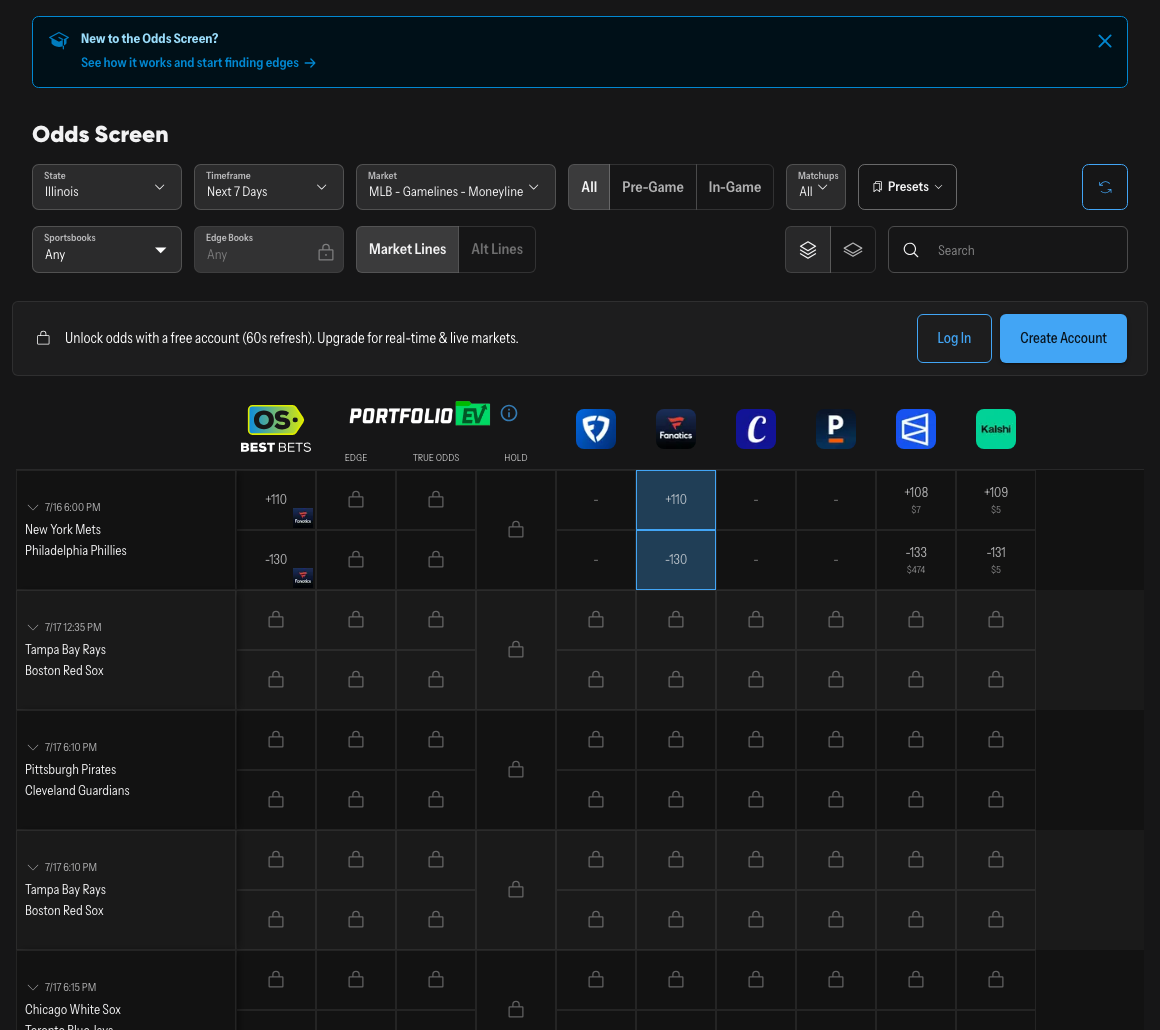 The OddsShopper live odds screen — every book's price on one board, refreshed in real time. Open the live board.
How To Read The Calculator's Output
Enter your three inputs and a good hedge calculator hands you three things. Here is what each means and the one people misread.
- Hedge Stake. The exact dollar amount for the other side. Place this, not a round number you eyeballed. If you round it to whole dollars yourself, your two outcomes will differ by pennies (that is just the rounding, not a mistake).
- Locked Profit / Result. What you keep either way, once both bets are placed. This is the one number most people misread, and the callout below explains the reframe that fixes it.
- Partial-Hedge Option. Better calculators let you hedge less than the full equal-profit stake, keeping some upside on your original side while still taking most of the downside off. There is no single right answer here; it is a slider between maximum certainty and a higher ceiling.
Take that same Chiefs futures ticket from Example 1 and run the slider through the calculator:
| Approach | Hedge stake | If Chiefs win | If opponent wins |
|---|---|---|---|
| Full Hedge (Lock It) | $96.15 | +$103.85 | +$103.85 |
| Partial Hedge (~Half, Keep Upside) | $48.00 | +$152.00 | +$26.80 |
| No Hedge (Let It Ride) | $0 | +$200.00 | −$50.00 |
The half-hedge row is the one I keep coming back to. You drop your floor if the underdog hits (+$26.80 instead of +$103.85) to keep a shot at a bigger win (+$152 here, per the table above), so you are buying back some ceiling with some risk. Where you land on that slider is a personal call, and a good calculator lets you drag it and watch both columns move before you commit a dollar.
A quick sanity habit: the hedge stake should be in the same ballpark as your original total return (your stake times your original decimal odds) divided by the hedge price. If the calculator wants you to stake far more than your entire potential payout, you have almost certainly entered an odds value in the wrong format.
Read the locked number against zero, not the dream.The hedge did not cost you the big win; it bought certainty on the part you were about to put at risk. That reframe is the whole difference between hedging with confidence and second-guessing every one you place.
Mistakes The Calculator Won't Catch
The tool nails the arithmetic. These are the human errors around it that still cost people money:
- Mixing Odds Formats. Entering −150 as +150, or blending American and decimal, produces a confident, wrong stake. Confirm the format before you trust the number.
- Stale Prices. A calculator sizes the hedge you typed in. If the line moved between finding it and placing it, recalculate, because a half-second-old price can shift your locked result or erase it.
- Hedging Into A Juiced Number. The other side's price is the whole ballgame. A worse hedge price means a worse locked result, so shop every book for the best number on the side you need: the tool scans every major sportsbook and surfaces the sharpest hedge price, the same discipline as line shopping any bet. A single point of odds on the hedge side (−220 vs −210) moves your locked result by real dollars.
- Leaving The Hedge Unplaced. A hedge you calculated but did not fire is not a hedge. Place it promptly once the math checks out.
- Book Limits. If a book caps your stake below the hedge the calculator calls for, you cannot fully lock the result, so plan the hedge at a book that will take the whole stake.
If you want the sizing math for two bets placed at the same time because the two prices are already out of line enough to come out ahead either way, that is arbitrage, and the arbitrage calculator splits a single stake across both sides instead. Same family of math, different starting point. And if you would rather have sharp bettors hand you the value directly, browse the free expert picks posted daily.
Frequently Asked Questions
How does a hedge bet calculator work? It takes your original odds and stake plus the current price on the opposite side, converts everything to decimal odds, and returns the hedge stake that makes both outcomes pay the same. The core line is hedge stake = your original total return ÷ the decimal odds of the hedge side.
How much should I hedge to lock the same profit?
Stake the hedge side at original total return ÷ hedge decimal odds, where your original total return is your stake times your original decimal odds. That makes the hedge payout equal your original payout, so you keep the same amount either way once both bets are placed at these prices.
What odds format should I enter?
Whatever the calculator asks for, just be consistent. Most convert to decimal internally because the math is cleaner. If you only have American odds, convert both first (plus odds: odds/100 + 1; minus odds: 100/|odds| + 1, dropping the minus sign) or use a tool like OddsShopper's that accepts the format the book displays.
TipA better price on the side you hedge flows straight through to your locked result. Shopping every book for that number can turn a break-even hedge into a locked gain, so never settle for the first price you see.
Can I hedge only part of my bet? Yes. A partial hedge stakes less than the full equal-profit amount, keeping some of your original upside while still removing most of the downside. It is a slider between maximum certainty and keeping a higher ceiling, and there is no single correct point on it.
Is a hedge calculator free? The bonus-to-cash conversion math inside OddsShopper's Free Bet Converter is free to use, and the free tier also surfaces live value across every major sportsbook (the arbitrage finder flags where the other side is priced well enough to lock a gain). OS Pro adds the full real-time feed and the deeper tools.
Can a hedge calculator lock in a profit? It sizes the bet so every outcome pays the same if both legs fill at the prices you entered, which is why hedging is low-risk rather than risk-free. Lines move, books void or limit bets, and a missed hedge leaves you one-sided. The calculator handles the math; placing the hedge fast and accurately is on you.
*Sizing a hedge on a napkin while a line ticks is how a good spot turns lopsided. Your locked result is only ever as good as the hedge price you find, so OddsShopper prices the other side against every major sportsbook in real time and hands you the exact stake before the number moves. Try OS Pro free for 7 days, then code HEDGECALC20 takes 20% off OS Pro or OS Core if you subscribe.
Start your free trialand size your next hedge in a second, not on a guess.*
Must be 21+ and physically present in a state with legal sports betting to place wagers. If you or someone you know has a gambling problem, call 1-800-GAMBLER.
More on this: Devig Calculator: Find Fair No-Vig Odds From -110 Prices · Sportsbook Hold Calculator: Beat The Vig When You Bet · Free Bet Calculator: Turn Bonus Bets Into Cash · Odds Calculator: Payout, Profit & Probability · Free Parlay Calculator: Calculate Odds & Payouts