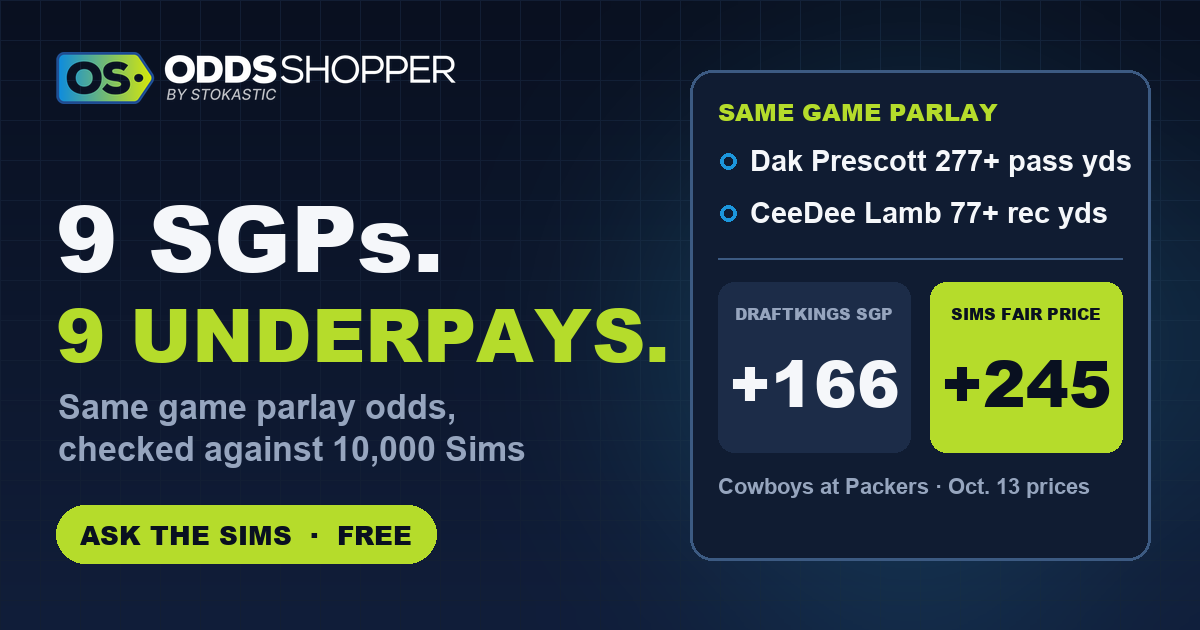
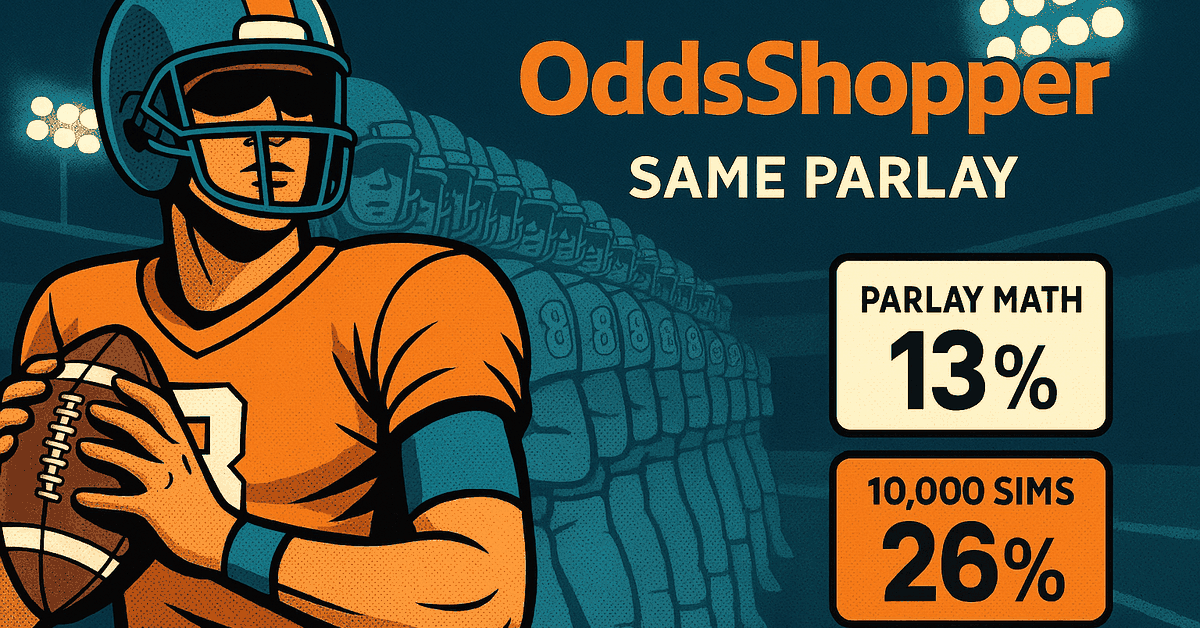
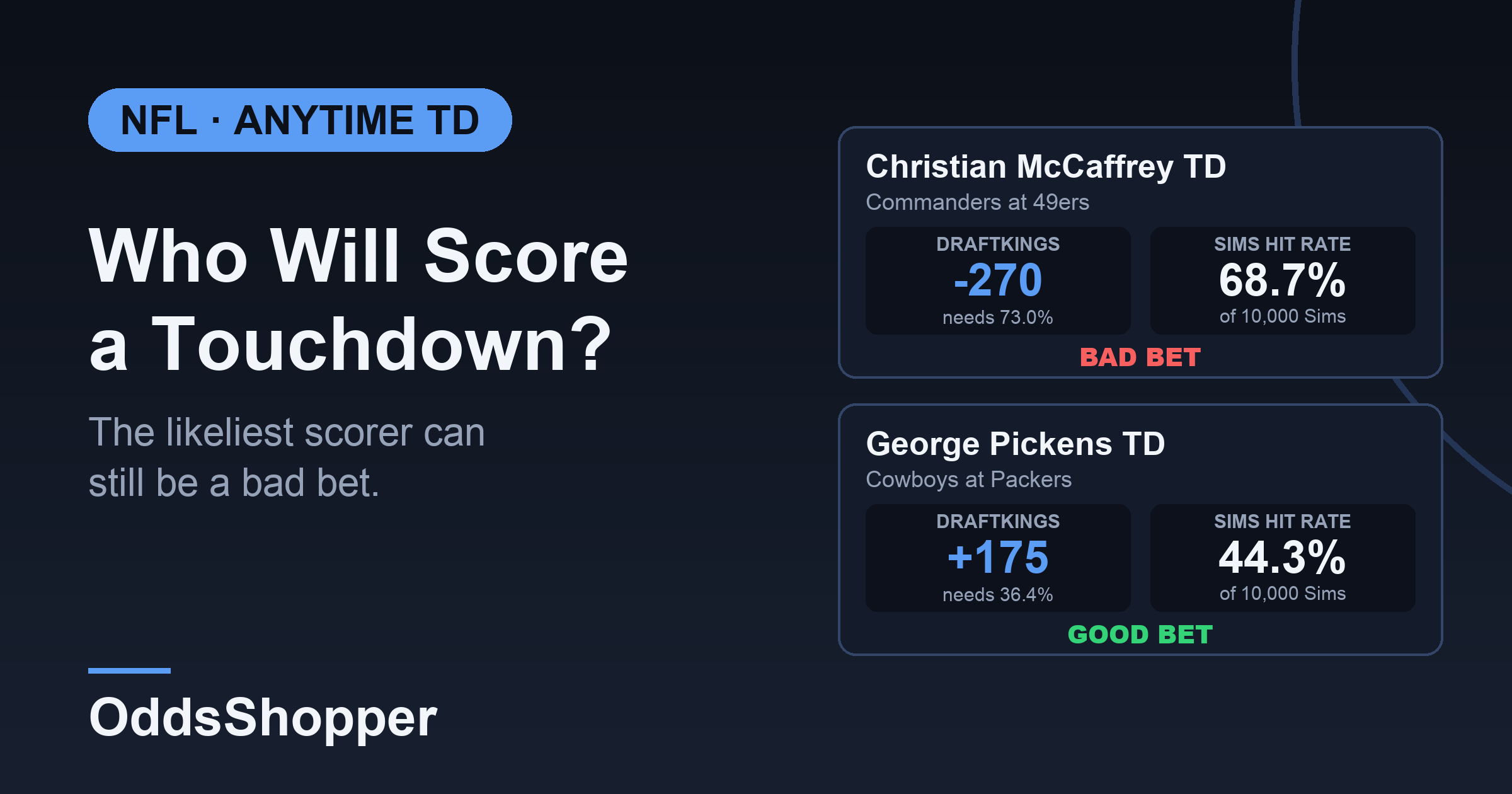
An NFL same game parlay lives or dies on one question, and it is not the one most bettors ask. The question is not "how many legs can I pile onto Sunday's biggest game." It is whether the sportsbook priced the correlation between those legs correctly. Answer that honestly and everything else about the SGP falls into place, because the entire edge, when one exists, is hiding in the gap between how the book priced your legs together and how they actually move together.
I want to be clear up front, because half the internet gets this backwards: a same game parlay is not automatically a sucker bet, and it is not automatically money either. It is a single bet whose value comes down to correlation and margin. Most of the time the book has already done the math and the SGP offers less value than betting the legs straight. Once in a while it has not, and that rare gap is the spot worth finding. This guide is about telling those two situations apart on an NFL Sunday, using the same fair-price math OddsShopper runs, so you stop firing correlated tickets on faith.
Building it on DraftKings or FanDuel instead?The free DraftKings Parlay Simulator and FanDuel Parlay Simulator on Stokastic.com price the same parlay from 10,000 Sims next to that book's odds.
In Summary
- An NFL Same Game Parlay Is One Bet, Not A Lottery Ticket. Its value is the value of its legs, adjusted for how the book prices the correlation between them.
- Parlays Are Not Inherently Negative Expected Value. A parlay built from +EV legs is itself +EV. The problem is the SGP correlation tax layered on top, not the act of combining bets.
- The Edge Is Rare And Specific: it only exists when the book underprices correlation your legs actually have, most often through NFL game script, weather, or a soft cross-prop line.
- The Default Answer Is Skip. When the book has already baked the correlation in (QB passing plus his top receiver, favorite plus its own team total), you are paying a tax and vig, so the straight bets are better.
- Use The Fair No-Vig Price, Not Your Gut. De-vig each leg, estimate the real joint probability, and compare it to the SGP payout before you bet.
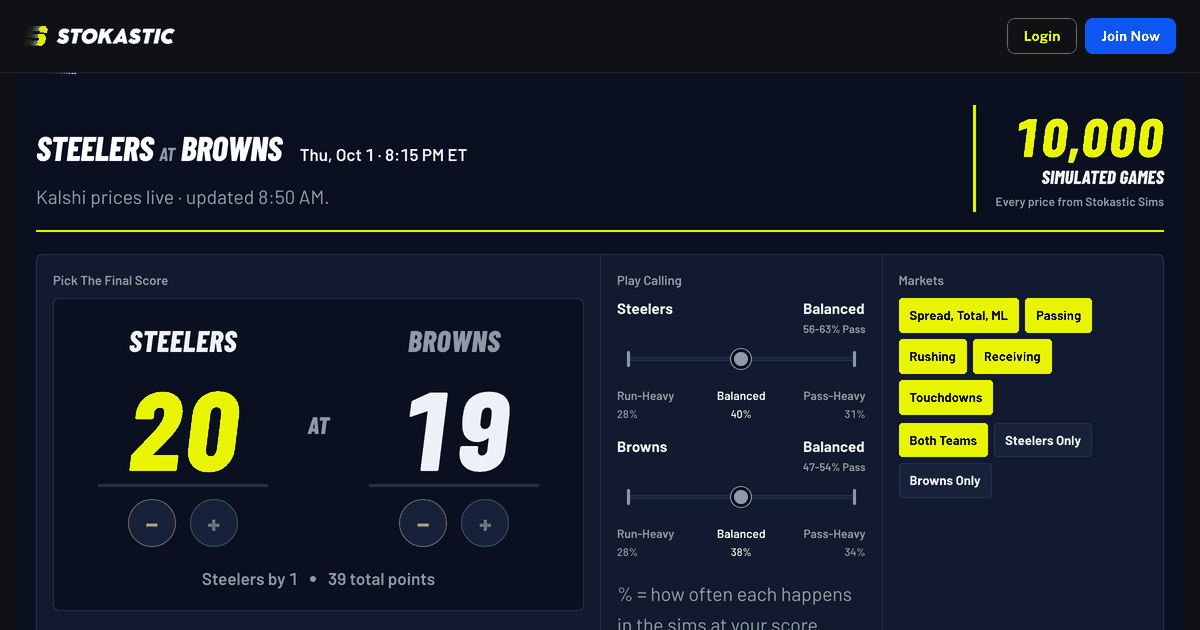 Betting it on Kalshi? Price the combo first. The Kalshi Parlay Simulator prices any combo against 10,000 simulated games of this week's game, next to the price on Kalshi.
What A Same Game Parlay Actually Is
A same game parlay, or SGP, is a parlay whose legs all come from one game: a spread, a total, a QB's passing yards, a running back's anytime touchdown, all riding on the same result. Every leg still has to hit or the ticket loses, same as a standard parlay.
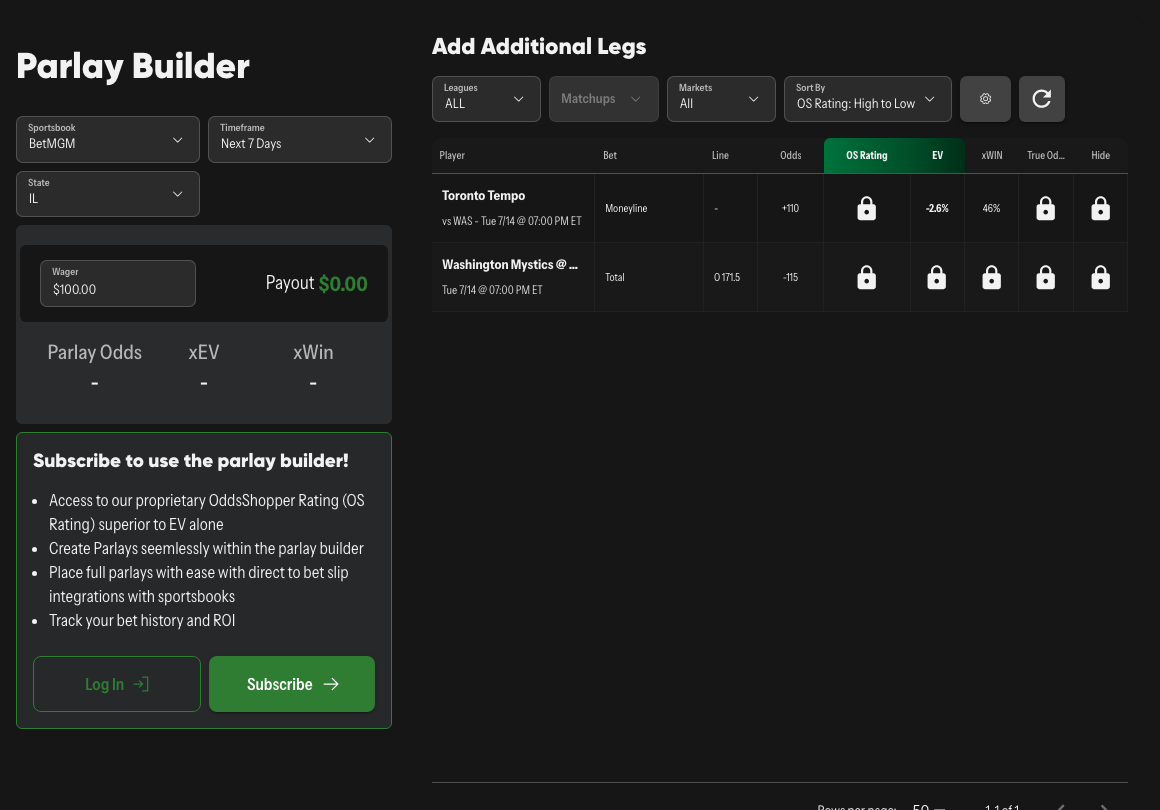
The OddsShopper Parlay Builder.
The word that matters here is correlation, so let me define it plainly the first time it shows up. Two bets are correlated when the outcome of one changes the odds of the other. If a quarterback throws for 320 yards, his top receiver almost certainly had a big day too. Those legs are positively correlated: they tend to win together. Betting them in a straight parlay treats them as independent coin flips, which they are not, and that mismatch is exactly what the sportsbook charges you for.
That charge has a name in this guide: the correlation tax. When two legs win together more often than random chance, a fair price for parlaying them is shorter (a smaller payout) than simply multiplying the two prices. The book knows this. Its SGP engine shortens the obvious correlated combinations before you ever see the number, and then it adds its usual margin on top. That is why a same game parlay so often pays less than you expected: you are paying for correlation the book already captured.
The One Rule: +EV Legs Make A +EV Parlay
Before the NFL specifics, the rule that governs everything. +EV stands for positive expected value, which just means a bet priced in your favor, one that profits over the long run if you could make it over and over. A parlay does not create edge and it does not destroy it. It multiplies whatever edge the legs already have. Combine three +EV legs and the parlay is +EV. Combine three bad legs and you have compounded three bad bets. Garbage in, garbage out.
Two things follow that trip up most bettors. First, leg count is not the villain. "Keep it to two or three legs to cut the house edge" is advice for bad legs, not good ones. If every leg is +EV, adding more +EV legs does not make the parlay worse. What makes an SGP worse is the correlation tax and the vig, not the number of legs. Second, a profit boost or a no-sweat SGP token does not turn a bad ticket into a good one. A boost adds value, and it can be enough to drag a marginally-taxed SGP back over the line, but a boost on a bet that is still negative after the boost is still a negative bet. Bet it only once the math clears zero with the boost included.
If any of that is new, start with the fundamentals in our NFL parlay betting guide and player props explained, then come back for the same-game correlation layer.
Where The Book Prices NFL Correlation In (And You Pay The Tax)
Here is the uncomfortable part for anyone who loves building SGPs: the sportsbook's pricing model is very good at the correlations you find most obvious. The automated SGP pricing on books like DraftKings 🎁, FanDuel 🎁, BetMGM 🎁, and Caesars typically shortens these NFL combinations before you ever see the number:
- A Quarterback's Passing Production Paired With His Own Top Receiver. QB over passing yards plus WR1 over receiving yards is the single most-built NFL SGP, so it is the single most heavily taxed. The book has priced that link tightly.
- A Team's Spread Paired With Its Own Team Total. Backing a favorite to cover and its offense to go over is the same bet twice. The book knows and shortens it hard.
- Game Total Over Paired With Both Offenses Scoring. A shootout narrative, over plus multiple anytime touchdowns, is the correlation the pricing model was built to catch first.
None of these are "wrong" to like. The point is that the book already moved the price to account for them, then added its margin. Hold is the built-in vig on a market, and combining correlated legs stacks it, so an automated SGP builder often carries a combined hold well above what you would pay on the same legs straight. So when you build the SGP everyone would build, you are usually accepting less expected value than betting those same legs on their own straight tickets. None of that is the book being greedy. You are simply paying full retail for correlation you did not discover.
The Narrow Cases Where An NFL SGP Is Actually +EV
So when is it worth it? When you find correlation the book's model underpriced, meaning it treated your legs as more independent than they really are and left the payout too long for how often they truly win together. Across an NFL Sunday, three spots produce this more than any other.
Game script from the spread. The point spread is a script forecast. A touchdown-plus home favorite is expected to lead late, which means fourth-quarter carries and clock-killing runs for its lead back. The book prices the back's rushing over and its anytime touchdown, but the cross-prop link between "this team leads by two scores" and "the back grinds out volume and a short score" is sometimes left softer than the game-lines correlation. When a blowout script is likely and the running back props have not fully absorbed it, that pairing can pay more than it should.
Weather. Wind above roughly 15 mph quietly rewrites a game. Passing volume and efficiency drop, kicks get shakier, and offenses lean on the run. The book will shade the game total down, but its per-prop pricer can be slower to connect a passing under, a lower team total, and a bump in rushing attempts as one weather-driven story. When the forecast is ugly and those markets are still priced like a normal dome game, the negative-passing correlation across them is the underpriced edge.
A trailing script and garbage-time volume. A home underdog you expect to chase points will throw late whether it wants to or not. Its pass-catchers can bank receptions and yardage in the fourth quarter even in a loss. The book prices the dog to lose and prices the receiving props, but the link between "this team trails and passes 40 times" and "its slot receiver clears his receptions number" is a classic soft spot.
The tell across all threethe edge comes from the same source every time, a real football correlation the book's automated model treated as weaker than it is. Spread-driven scripts, wind, and garbage-time volume are where NFL SGPs actually break in your favor. Everything else is the taxed version.
Notice what every one of these has in common. You are not betting a story the book is already telling. You are betting a correlation its automated model treated as looser than the football reality. That underpriced link is the only version of a same game parlay with a real edge, and it is rare. Most weeks, on most games, the read is that the book got there first and you should skip.
A Worked NFL SGP Example
Let me put numbers on the correlation tax so the idea is concrete rather than abstract. Take two legs I actually like in a projected blowout, each priced at even money, +100, which we will call a true 50% shot for the example:
- Leg A: the favorite's lead back over his rushing yards.
- Leg B: that same back anytime touchdown.
If these were independent, the parlay math is simple: 0.50 times 0.50 is 0.25, a true 25% chance, which is a fair price of +300. But they are not independent. In a blowout script the back who piles up rushing yards is the same back who punches in the late touchdown, so they win together more often than 25%. Say the real joint probability is closer to 32%, whose fair price is about +212.
Now watch the two worlds, same two legs, same game:
| Book Price On The SGP | What it implies | Fair joint (32%) | Verdict |
|---|---|---|---|
| DraftKings +180 | ~35.7% | +212 | Taxed. Shorter than fair, before vig. Skip, bet straight. |
| FanDuel +290 | ~25.6% | +212 | Priced like independent legs. Bet it, this is the edge. |
The one line to rememberthe correlation tax is invisible until you compare the SGP price to the fair joint number. On DraftKings above you are paying for correlation the book already captured. On FanDuel you are getting paid as if it does not exist. Read the fair number and the decision makes itself.
The book taxed it on DraftKings by shortening +180 below the +212 fair mark, and shorter still once you remember +212 already ignores vig. FanDuel's builder, by contrast, spit out +290, near the naive independent +300, as if the two legs barely relate, paying you like a 25% shot on a bet that hits 32% of the time. Opposite decisions, and the only variable is whether the price respects the correlation. You cannot eyeball that. You have to read the fair number.
How I Actually Build (Or Skip) An NFL SGP
This is the part where the tools earn their keep, because the whole exercise is a pricing comparison you should not do by hand. Here is my order of operations, and I run it every time before an SGP, not after.
- De-vig each leg first. De-vig means stripping the book's margin, the vig, out of a price to reveal the true, no-vig probability underneath. The OddsShopper odds screen shops every leg across 100+ books and the tool surfaces the fair no-vig number on each side, so I know what a 50% leg actually looks like before it gets buried inside a parlay. If a leg is not +EV on its own, it does not belong in my SGP, full stop.
- Estimate the correlation honestly. Are these legs the obvious pairing the book taxes, or a game-script or weather link it may have missed? If it is the former, I usually stop here and bet straight.
- Price the ticket against the payout. I compare the offered SGP number to my fair joint estimate, and I let the actual per-leg prices, not a story in my head, tell me which leg carries the ticket. If the three legs are priced close together, they are close in probability, and I refuse to pretend one is a safe anchor and the others are longshots when the prices say otherwise.
In practice I lean on the Parlay Builder to assemble the ticket from the +EV legs I have already flagged, then tweak it leg by leg. Before I lock anything, I check the live NFL odds screen to be sure I am on the best available number on each side. When I just want the raw math on a combination, the parlay calculator handles the multiplication.
The through-line from the very top holds here: the SGP is only ever as good as its legs and the price on their correlation. My workflow is just a way to make that value gap visible before I bet instead of discovering it after the fact.
When To Skip The SGP And Bet It Straight
Most of the time, the answer to "should I build this same game parlay" is no, and that is not defeatism, it is the correlation tax doing its job. If your legs are the obvious pairing, bet them straight and keep the full payout on each. If your correlation edge is real but thin, a teaser can be the cleaner NFL structure, because it moves the spread across the key numbers instead of layering a correlation you have to price perfectly. Our Wong teaser strategy guide covers the spots where that beats an SGP outright.
And if you just want the exposure to one game because it is fun to watch with a bet, that is fine. Run it through the same de-vig check from the last section, and if it comes back taxed, size it like the entertainment it is, roughly a quarter to a half of a normal unit, and do not book it in your head as an edge. The discipline is not refusing to build SGPs. It is being honest about which bucket each one falls in: a priced-in ticket you bet small for fun, or an underpriced-correlation ticket you bet because the fair number says to. For the broader framework on the sides, totals, and props that feed these tickets, our NFL betting strategy hub and anytime touchdown props guide are the companion reads.
Price Your Next NFL SGP Before You Bet It
The difference between a taxed SGP and a live one is a number you can read in seconds. OddsShopper shops every NFL leg across 100+ books, shows you the fair no-vig price so you only ever parlay +EV legs, and lets you price the same game parlay before the correlation tax eats it. New users get a 7-day free trial, and code NFLSGP20 takes 20% off your first payment of OS Pro.
Start free and price your NFL SGP with NFLSGP20 →
FAQ
Are NFL Same Game Parlays Worth It?
Sometimes, but far less often than they are built. An NFL SGP is worth it only when the book underprices real correlation between your legs, usually through game script, weather, or a soft cross-prop line. When the book has already priced the correlation in, which is most obvious pairings, you are paying a tax plus vig and the straight bets are the better play.
Are Same Game Parlays Automatically Negative EV?
No. A parlay is only as good or bad as its legs. Combine +EV legs and the parlay is +EV. The reason so many SGPs lose money is the correlation tax the book layers on top of already-vig-heavy props, not some rule that parlays are always bad.
Why Does My NFL SGP Pay Less Than The Legs Multiplied Together?
Because the sportsbook shortens correlated legs before showing you the price. If two legs tend to win together, a fair parlay price is smaller than the naive multiplication, and the book captures that difference. That gap is the correlation tax, and it is the single biggest reason SGP payouts feel light.
Should I Use A Profit Boost On A Same Game Parlay?
Only if the ticket clears +EV after the boost is applied. A boost adds value and can rescue a marginally-taxed SGP, but a boost on a bet that is still negative once you include it is still a losing bet. Do the math with the boost baked in, then decide.
How Do I Find A +EV NFL Same Game Parlay?
De-vig each leg to get its true probability, confirm every leg is +EV on its own, estimate how correlated the legs really are, and compare that joint probability to the SGP payout the book offers. The edge exists only when the payout is longer than your fair joint estimate. The OddsShopper odds screen and Parlay Builder do the shopping and de-vig math so you are comparing real numbers, not guessing.
Tools for thisrun the combo through 10,000 sims on Kalshi, or the Polymarket Combo Simulator for Polymarket's book.
More on this: How Are Same Game Parlay Odds Calculated? 9 SGPs, 9 Underpays · Broncos vs 49ers Same Game Parlay: Bo Nix Under 250 · Cardinals vs Giants Same Game Parlay: Skattebo Under 80 · Chargers vs Seahawks Same Game Parlay: Darnold Stays Quiet · NFL Game Simulator: The 13% Parlay That Hits 26% of the Time