Every NFL Sunday, the money in the market walks in one direction. It piles onto the favorites, it piles onto the overs, and it leaves the underdog sitting there a little cheaper than it should be. That is the whole story of NFL underdog betting, and it is why dogs are one of the most reliably under-bet tickets in football. The edge is not predicting upsets. It is getting paid a better price than the dog actually deserves, over and over, until the math does the work. There is one number on the board that quietly decides whether you should take the points or the moneyline on a given dog, and most bettors never stop to look at it. We will get to that number. First, why the crowd leaves the value on the table in the first place.
Why NFL Underdogs Are Structurally Under-Bet
Sportsbooks are not a neutral scoreboard. They set a price, watch where the money goes, and shade that price to protect their margin. In the NFL, casual money leans heavily one way: toward the favorite and toward the over. People bet the team they expect to win and the shootout they want to watch. That behavior is stable, it repeats every week, and the books know it.
When the popular side is that lopsided, the book does not need to offer a fair price to attract action on the favorite. It needs to nudge bettors back toward the unpopular side. So the underdog's number often carries a little less margin against it than the favorite's does. You are being offered a small, quiet discount for taking the side nobody wants.
Three habits keep the crowd off the dog and keep that discount alive:
- Primetime Bias. Prime-time Sunday and Monday night games tend to draw a flood of recreational money toward the favorite and the over. The bigger the audience, the more the popular side gets over-bet.
- Recency And Narrative. A team that just won by 20 gets bet like it will do it again; a team that just lost gets written off. The market prices the story, and the story is usually already in the number by the time you read it.
- The Win, Not The Price. Most bettors ask "who wins this game," not "is this the right price for that outcome." Those are completely different questions, and only the second one makes money.
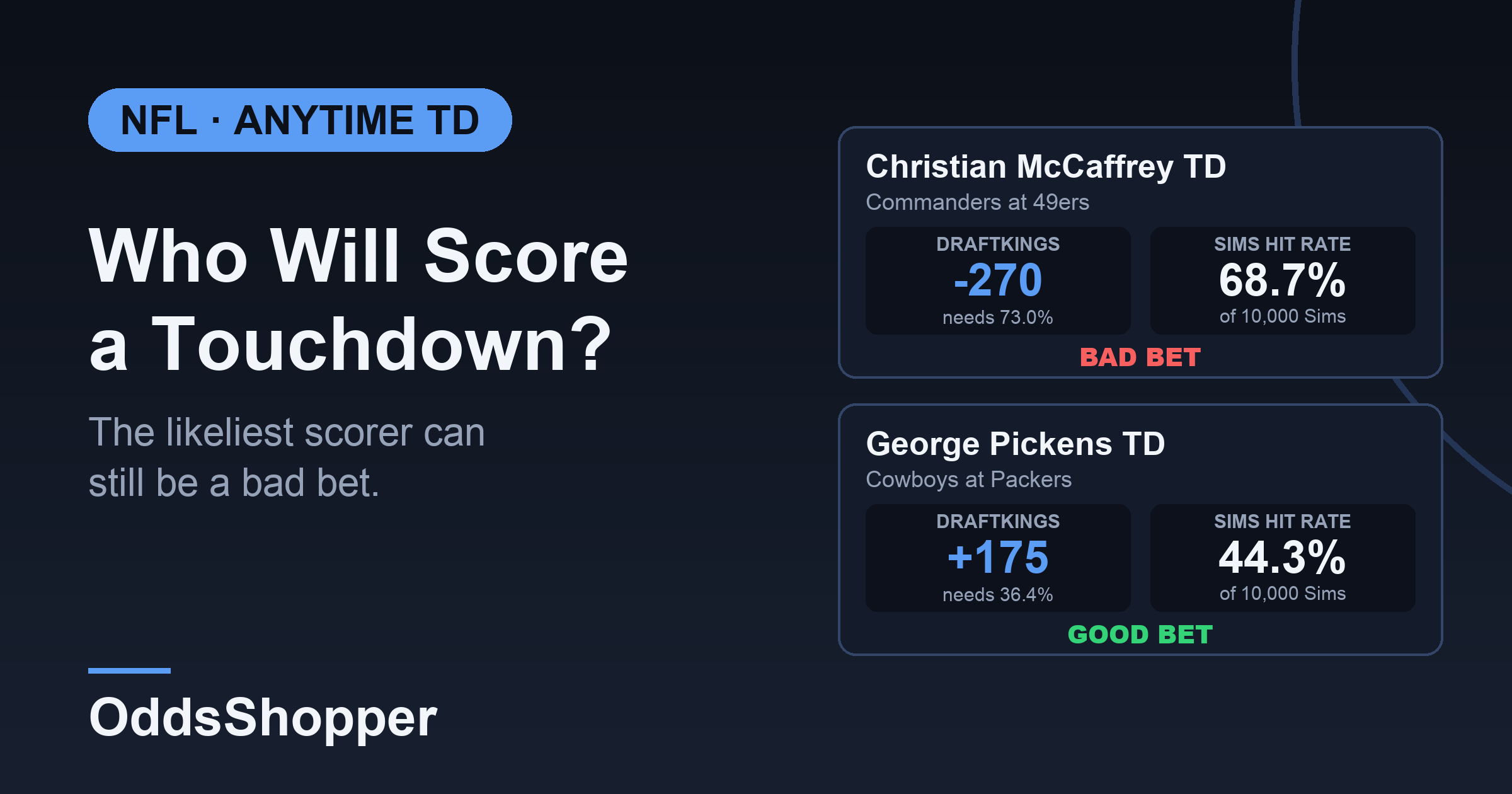
That last point is the entire game. A favorite that wins 60% of the time is a bad bet at a price that implies 70%, and a dog that wins 40% of the time is a good bet at a price that implies 33%. You are not betting the team. You are betting the gap between the price and the truth. NFL dogs are where that gap opens up most often, because the crowd keeps forcing it open.
Spread Or Moneyline? Turn The Spread Into A Fair Dog Price
Here is the number we promised: the key number the spread sits on. NFL games are decided by field goals and touchdowns, so final margins cluster hard on 3 and 7, with 6, 10, and 14 close behind. That is not a hunch, it is how the sport scores. Because so many games land exactly on 3 and 7, where a dog's spread sits relative to those numbers tells you how its moneyline should be priced.
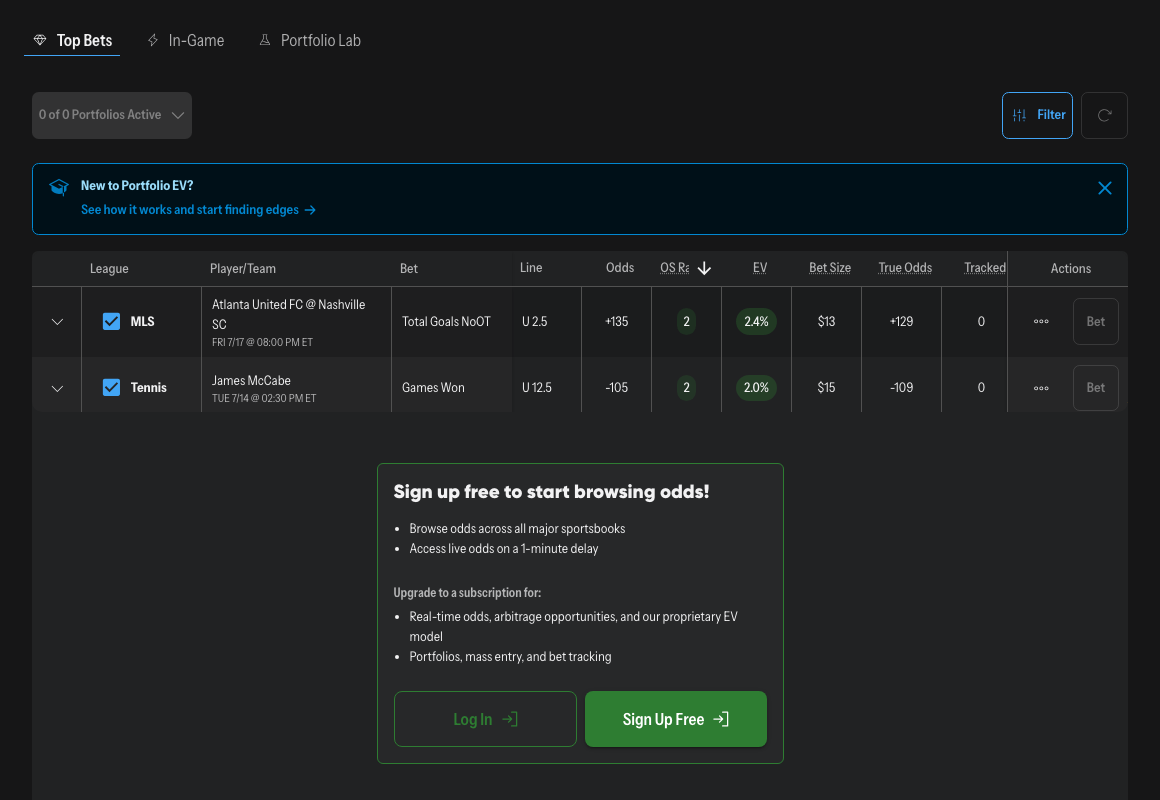
The OddsShopper +EV Screen.
A team getting +3 is one field goal from covering, and the push protection right on 3 makes the spread bet close to a coin flip. The outright moneyline is a different story: it still prices that team as a real dog, usually around +130 to +150. A team getting +7 has to erase a full touchdown, so its moneyline stretches out much longer, often into the mid-+200s depending on the total and matchup. The further the spread runs past a key number, the longer the price to win the game straight up. Converting the spread into a rough fair moneyline is the fastest sanity check you have on whether a dog price is generous or short.
| Underdog Spread | Roughly a coin-flip to win outright? | Typical fair moneyline range |
|---|---|---|
| +1 To +2.5 | Almost even | +105 to +125 |
| +3 (On The Key Number) | A field goal away | +130 to +150 |
| +3.5 To +6 | Below even, still live | +150 to +230 |
| +7 (On The Key Number) | A touchdown away | +250 to +300 |
| +7.5 To +10 | A clear dog | +300 to +450 |
Those ranges are approximate and shift with the total and the matchup, but the general shape is stable from year to year, because NFL scoring itself does not change. The row that matters most is +3. A dog sitting exactly on that key number is a single field goal from cashing the spread, and the push protection at 3 makes that spread bet close to a coin flip even while the moneyline still prices the team as a genuine dog near 40%. That is why +3 home dogs are a spot worth checking carefully before you choose between the spread and the moneyline: the crowd's bias toward favorites is precisely where a dog's price should sit closer to fair than the public treats it. If you want the full breakdown of how a spread and its push points work, our point spread guide covers it, and our implied probability primer shows exactly how to turn any of those prices into a win percentage.
New to OddsShopper?We de-vig every major sportsbook and flag the dogs priced longer than their fair odds, which is the exact thing this section teaches you to do by hand. You can try OS Pro free for 7 days and see today's board of underdog value before you pay a cent. Code NFLDOGS20 takes 20% off OS Pro or OS Core if you subscribe.
When To Take The Points And When To Take The Moneyline
Once you know a dog is live, you still have to choose how to bet it. The points and the moneyline are two different bets on the same team, and the right one depends on how the game is likely to end.
Take the points when the dog sits on or near a key number. A +3 dog wins the spread bet on a loss by two or less, on a push at exactly three you get your money back, and on any upset. That is a wide net. The point spread turns a lot of near-misses into wins or pushes, and near a key number the push protection alone is worth real money. When we cannot decide, a dog resting on +3 is the spot we keep coming back to, because the spread does the heavy lifting.
Take the moneyline when you think the dog wins the game. The points add nothing if your read is a clear outright win, and the moneyline pays far more for the same correct call. A +7 dog you like straight up is worth more as a +280 moneyline than as a spread bet, because you are collecting the full underdog premium for a win you already expect. This is the "live dog" spot: a team the market has written off that you believe has a real path to the outright win.
The trap to avoid is betting the moneyline on a big dog just because the payout looks fun. A +450 ticket is exciting, but it needs an 18.2% win probability just to break even, so a team that wins outright only 15% of the time is still a losing bet at that price. Bet the moneyline because the price beats the true odds, not because the number is big. Save the bankroll math for the size of the bet, which we will come back to.
The takeawaythe points and the moneyline are two different bets on one team. Near a key number, the spread and its push protection usually win the argument; when you truly like the outright upset, the moneyline pays you in full for it.
How To Find The Best Underdog Price With OddsShopper
Everything above assumes you can actually get the best available number, and on a dog that assumption is worth more than on any favorite. Because the crowd hammers favorites, the books stay tightly clustered on the chalk side, but underdog prices drift apart from book to book. The difference between +150 and +165 on the same dog is not rounding. It is a meaningfully bigger payout for being right about the identical outcome, and over a season those extra cents can be the difference between a real edge and none.
Three tools do the work here:
- The NFL odds screen lines up the moneyline for a game across every major sportsbook at once, so you take the top number instead of whatever your one app happens to post. This is line shopping, and any odds screen beats no odds screen.
- De-Vig, Or No-Vig Fair Odds, strips the book's margin out of a market to reveal the true price. Our Sharp Sportsbook Algorithm reads the sharpest books to estimate that fair number, so you can see whether a dog at +165 is actually worth more like +150. If the price you can bet is longer than the fair price, the bet is positive expected value, or +EV.
- The +EV Screen does that comparison for the whole board and ranks the edges by xROI and xWin%, so the dogs priced longer than they should be rise to the top on their own. Hold percentage tells you how much margin a book has baked into a market, which is another way of spotting the softest place to take your dog.
Here is what the same underdog can look like across the market on a single game:
| Sportsbook | Moneyline on the dog | Payout on a $100 bet | Profit vs the fair line |
|---|---|---|---|
| Fair No-Vig Line (Benchmark, Not Bettable) | +150 | $250 | reference |
| DraftKings | +152 | $252 | +$2 |
| Caesars | +155 | $255 | +$5 |
| BetMGM | +160 | $260 | +$10 |
| FanDuel | +165 | $265 | +$15 |
Read the bottom row. The FanDuel 🎁 price at +165 pays $15 more than the fair line and $13 more than DraftKings 🎁 for the same team winning the same game. You did no extra handicapping to earn that. You just refused to take the first number you saw. Do that across a full season of dog bets and the shopped price, not the picks, is what separates a winning account from a break-even one.
A Worked Example: Pricing A Home Dog
Put the pieces together on one bet. Take a home dog listed at +3 on the spread with a moneyline of +165 at the best book.
First, the fair price. De-vigging the market on a home dog getting a field goal puts the fair moneyline near +150, which implies a win probability of about 40% (the implied probability formula is in our primer: 100 divided by 150 plus 100). So the market's honest read is that this dog wins roughly 4 out of 10 times, a live underdog rather than a coin flip.
Now the bet you can actually make. A +165 price only needs to hit about 37.7% to break even. The fair number says the team wins around 40%. You are being offered a price that profits at 37.7% on a team that wins closer to 40%, so every dollar on that dog is +EV. Over 1,000 identical bets of $100, a 40% win rate at +165 turns $100,000 in total wagers into about $106,000 returned, a profit of roughly $6,000, or a 6% edge. That edge is invisible on any single Sunday and decisive over a season.
Notice what did the work. Not a bold upset call, and not a hot take about the matchup. The edge came from converting the spread into a fair price, then shopping until the number you could bet beat that fair price. That is repeatable. A gut feeling is not.
Underdog Bankroll And Discipline
Underdogs lose more often than they win by definition, so betting them means living through longer cold stretches than a favorite bettor ever sees. A +EV dog can go 0-for-6 and still be the right bet every time. The only way to survive that variance is to size every bet to the edge, not to the payout, and to keep each one a small, consistent fraction of your bankroll.
Bet the same modest unit whether the dog is +130 or +450, and never chase a cold run by pressing bigger on the next longshot. The whole thesis of this article, a better price than the dog deserves, only pays off if you are still in the game to collect it a hundred bets from now. Our bankroll management guide walks through unit sizing and how much of your roll a single dog should ever carry.
In Summary: You're Buying A Price, Not An Upset
NFL underdog betting looks like it is about calling shockers. It is not. The crowd floods the favorite and the over every week, and that predictable behavior leaves dog prices sitting a little above where they belong. Your job is to find those spots and take the best number on them. Convert the spread into a fair moneyline to know what a dog should cost, lean on the points near key numbers like 3 and take the moneyline when you truly like the outright win, and shop every dog across the market so you always take the best number offered. Do that with discipline and the upsets take care of themselves, because you were never betting the upset. You were betting the price.
Frequently Asked Questions
Are NFL underdogs a good bet? They can be the best value on the board, but not automatically. A dog is a good bet only when the price you can take is longer than its true, de-vigged odds. Underdogs are under-bet as a group because the public crowds the favorite, which is what creates the value, but you still have to confirm the number beats the fair price before you bet.
Should I bet the underdog on the spread or the moneyline? Take the points when the dog sits on or near a key number like 3, where the spread adds push protection and turns close losses into wins. Take the moneyline when you expect the outright upset, since it pays much more for the same correct call.
What is moneyline value on an NFL dog? It is the gap between the price a book offers and the dog's true odds of winning the game. If the fair line is +150 and you can bet +165, that difference is your value. Finding it means de-vigging the market and shopping every book for the best number.
Why does the underdog price differ so much between sportsbooks? Books cluster tightly on the favorite because that is where the money is, but they price dogs less carefully, so underdog numbers drift apart. That spread between books is exactly why line shopping matters most on the dog side.
How much does buying the best dog price actually matter? On a single bet it looks tiny, a few dollars per hundred. Across a full season of underdog bets, taking the best available number instead of the first one you see is often the entire difference between a profitable account and a losing one.
Ready to stop leaving the better dog number on the table? OddsShopper de-vigs every major sportsbook and surfaces the underdog prices sitting above their fair line, the same edge this guide teaches you to find by hand. Try OS Pro free for 7 days, and code NFLDOGS20 takes 20% off OS Pro or OS Core if you subscribe.
More on this: NFL Moneyline Betting: Prices, Probability & Value · NFL Underdog Picks: A Pick'em Strategy Guide · NFL Preseason Event Contracts, Explained In 60 Seconds · Don't Bet NFL Preseason Totals Before Reading This · NFL Offensive Player Of The Year Odds 2026: Pacheco IR Hands Gibbs