A three-leg home run parlay is a lottery ticket you actually have an opinion on: a tiny stake, a four-figure payout if the bats cooperate, and a quick zero on most nights. The skill is not picking three names you like. It is grabbing the longest price on each one before you chain them, because in a parlay every extra cent of value compounds into the final number. ShanderBets posted three swings at the June 26 MLB slate; here is the first, a three-leg home run parlay, with the actual bet slip below.
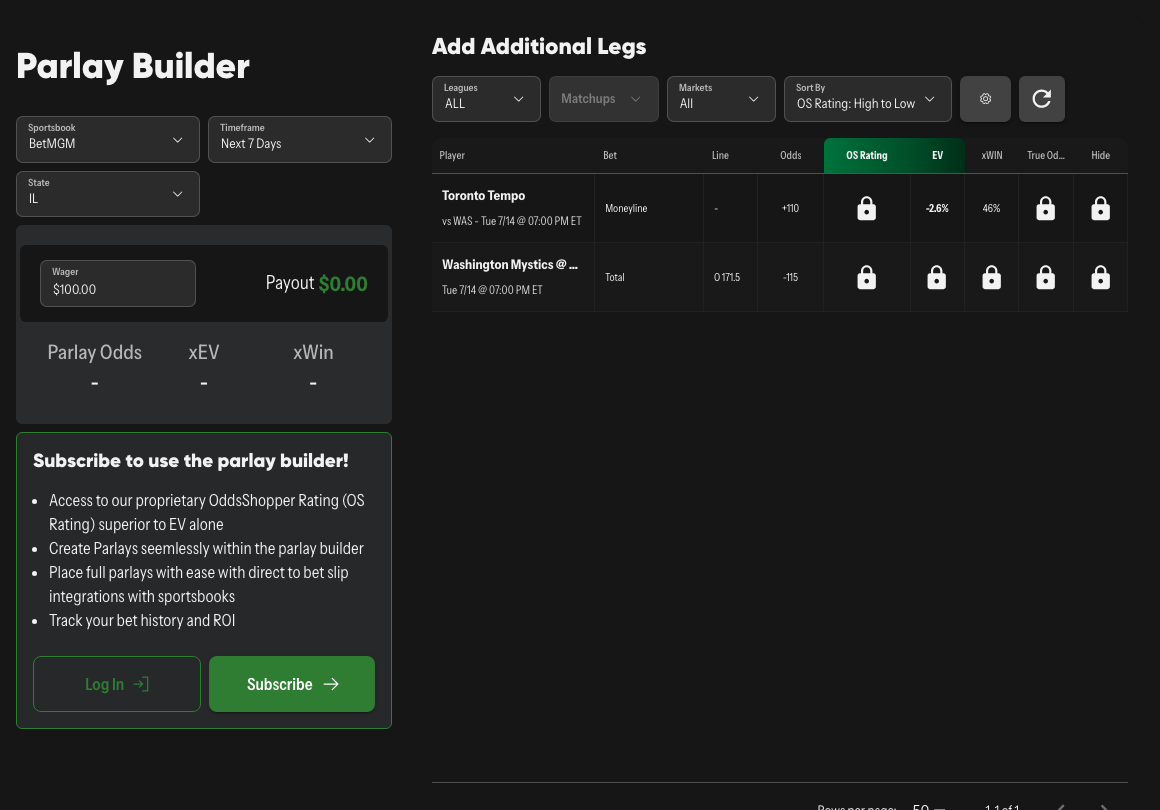 The OddsShopper Parlay Builder — every leg graded live (EV, xWin, true odds) before you lock a ticket. Open the live board.
In Summary
- Today's home run parlay (6/26): Juan Soto (Mets, +350), Sal Stewart (Reds, +750) and Kevin McGonigle (Tigers, +625), all to hit a home run.
- Combined price: +27631. ShanderBets put a $15 bonus bet on it, and the slip shows a net return of $4,144.68 if all three go deep.
- Why the prices run long: Soto is the established power bat and carries the shortest price; Stewart and McGonigle are priced far longer as less-proven power threats, and all three draw a tough right-handed starter. The edge is taking the top price on each leg before you chain them.
- This is a longshot by design. Bet a small, fixed amount, lean on a bonus bet where the stake is not returned anyway, and treat a hit as a bonus, not a plan.
The ShanderBets Home Run Parlay (6/26)
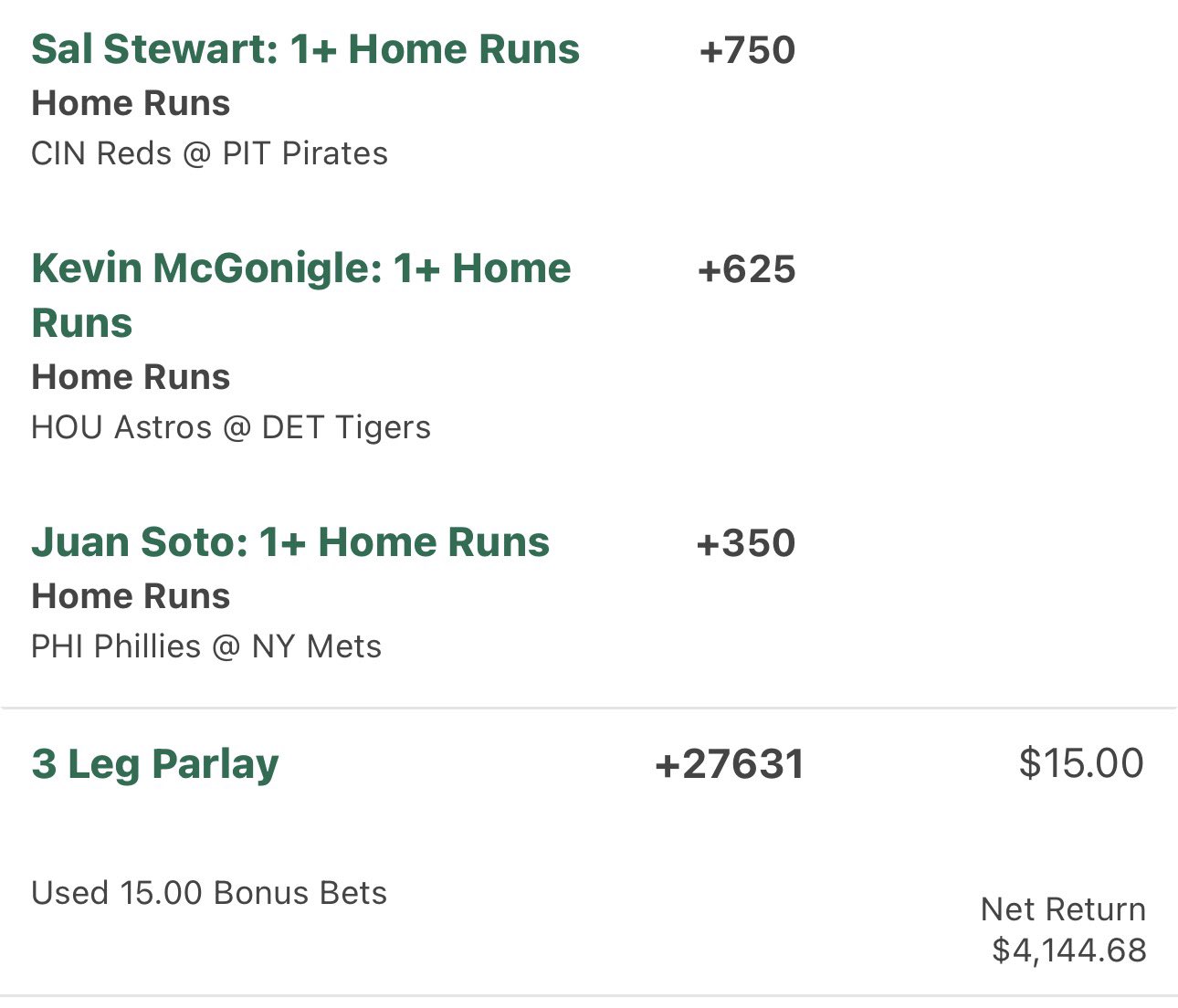
This is a back-the-bombs ticket: three power bats in three different MLB games, all carrying long prices against tough right-handed starters. Soto is the established bat at the shortest number, while Stewart and McGonigle are priced far longer as less-proven power threats. The bet is not riding on one ballpark or one pitcher, though all three still have to clear the fence for it to cash.
The angle in one lineback three power bats the market is pricing long, take the top price on each, then chain them into one +27631 ticket.
Juan Soto · +350 · Philadelphia Phillies at New York Mets
Soto is the anchor and the shortest price of the three, which is the market naming him the most likely of the trio to go deep. He is a left-handed bat for the Mets drawing Phillies right-hander Zack Wheeler, the lefty-on-righty platoon look you want when you are betting power. At +350 the price implies about a 22% chance, a fair number on one of the best left-handed power hitters in baseball even against a front-line right-hander.
Sal Stewart · +750 · Cincinnati Reds at Pittsburgh Pirates
The longest leg on the slip, and the one that turns a solid payout into a four-figure one if it lands. Stewart is a right-handed bat for the Reds facing Pirates ace Paul Skenes, a right-on-right matchup against one of the toughest arms in the league, which is exactly why his number stretches to +750 (about a 12% implied chance). At a price that long he is a small piece of a parlay rather than a straight bet, which is how a longshot should be used.
Kevin McGonigle · +625 · Houston Astros at Detroit Tigers
The middle leg. McGonigle is a left-handed bat for the Tigers lined up against Astros right-hander Spencer Arrighetti, another lefty-on-righty platoon edge. At +625 the price implies roughly a 14% chance, sitting between the other two, a long number on a young hitter the market is not yet pricing as a power threat.
How it breaks downSoto is the anchor with a lefty-on-righty platoon edge, McGonigle adds a second lefty-versus-righty look, and Stewart is the dart against an ace. All three still have to clear the fence for the ticket to cash.
The Numbers, Side By Side
Every leg below is a long home run price, with the implied probability it works out to. Take each one at the longest available price, then run them through the parlay math.
| Leg | Matchup | Opp. Starter | HR Price | Implied Chance |
|---|---|---|---|---|
| Juan Soto | PHI at NYM | Zack Wheeler (R) | +350 | ~22% |
| Sal Stewart | CIN at PIT | Paul Skenes (R) | +750 | ~12% |
| Kevin McGonigle | HOU at DET | Spencer Arrighetti (R) | +625 | ~14% |
| 3-leg parlay | +27631 | ~0.4% | ||
| $15 bonus bet | returns $4,144.68 |
That combined 0.4% is the honest math on a three-leg home run parlay: it misses far more often than it hits. The reason to play it is the price, not the odds of cashing.
Build It Off The Best Number, Not The First One You See
The price is the whole point of a ticket like this. The same home run prop can read +300 at one book and +350 at another, and on a three-leg parlay carrying numbers this long, taking the best price on each leg instead of the first one you see swings the final payout by a serious amount. When you build your own version, OddsShopper scans 100-plus sportsbooks at once and surfaces the longest price on every leg, so you are chaining three best-of-market numbers together instead of three numbers off whatever app you had open.
Two tools do the work:
- Portfolio EV compares each book's home run number against the de-vigged fair odds, so you are backing the bats the market is paying too long, not just the names you like.
- The OddsShopper Parlay Builder prices the full ticket off the best available number for each leg, the same math behind the slip above, in a couple of clicks.
New to OddsShopper?It scans 100-plus sportsbooks and flags the bets priced in your favor, then builds the parlay off the best number on every leg, the exact move behind a longshot ticket like this. Try it free for 7 days, and code DINGER20 takes 20% off OS Pro or OS Core if you subscribe.
If you would rather back a single bat than chain three, our MLB home run picks today breakdown lists the day's best straight home run plays.
How To Bet A Home Run Parlay
Make no mistake, this is a longshot, and you bet it like one. ShanderBets put $15 on it for a $4,144.68 ceiling, and that ratio is the whole idea: keep the stake small and fixed, the kind of number you would not blink at losing, because the value is in the prices, not in any single ticket cashing. If you are still learning the market, the how to bet MLB home run props guide covers why a longer price beats a shorter one on the same player.
There is one more reason this ticket makes sense as written: it was placed with a bonus bet. A bonus bet does not return your stake when it wins, only the profit, so the smart use is the longest odds you can find rather than a short favorite. A four-figure home run parlay is close to the textbook spot for a free bet you would otherwise let expire.
Two rules keep these tickets honest:
- Shop every leg before you lock it. A parlay multiplies your legs, so it also multiplies any bad price you accept. The longest price on each leg is non-negotiable, and on numbers this long the gap between books is large.
- Every leg has to be priced in your favor. Chaining three home run props is only worth doing when you believe each price is longer than the hitter's true chance to go deep. Adding a leg you do not believe in just to fatten the payout drags the whole ticket the wrong way.
The full slate of home run prices lives on the OddsShopper home run prop board, and the day's straight home run picks are in our MLB home run picks today breakdown.
For more on this, see MLB Betting Research: How a Pro Builds His Card.
More on this: MLB Picks Hub: Today's Live Boards and Series · MLB Home Run Picks Today (8/19): Shohei Ohtani & More · How To Bet MLB Home Run Props (And Find The Edge) · MLB Home Run Leader Odds: The Rockies Bat Kalshi Ignores · MLB Home Run Cheat Sheet: Kalshi & Polymarket Contracts (August 19, 2026)