Tuesday hands The Yard a full 15-game card, and the show spends it picking fights with the marquee. This page is the recap of today's episode, and it works the way the sheet does: an information board first, with the bets that were actually fired on air kept separate from the names that are merely popping. The story of this board is contrarian conviction. Three of the four gems are Chicago Cubs bats aimed at Tarik Skubal's Dodgers debut, the fade alert says no to the exact Coors Field names the public loads up on, and the host closes by deliberately betting against his own favorite tool in the one market where its logic bends. Even the OddsShopper pricing engine is in a fading mood: every edge it found tonight points down, and a handful of them sit inside the show's own games. We will get there.
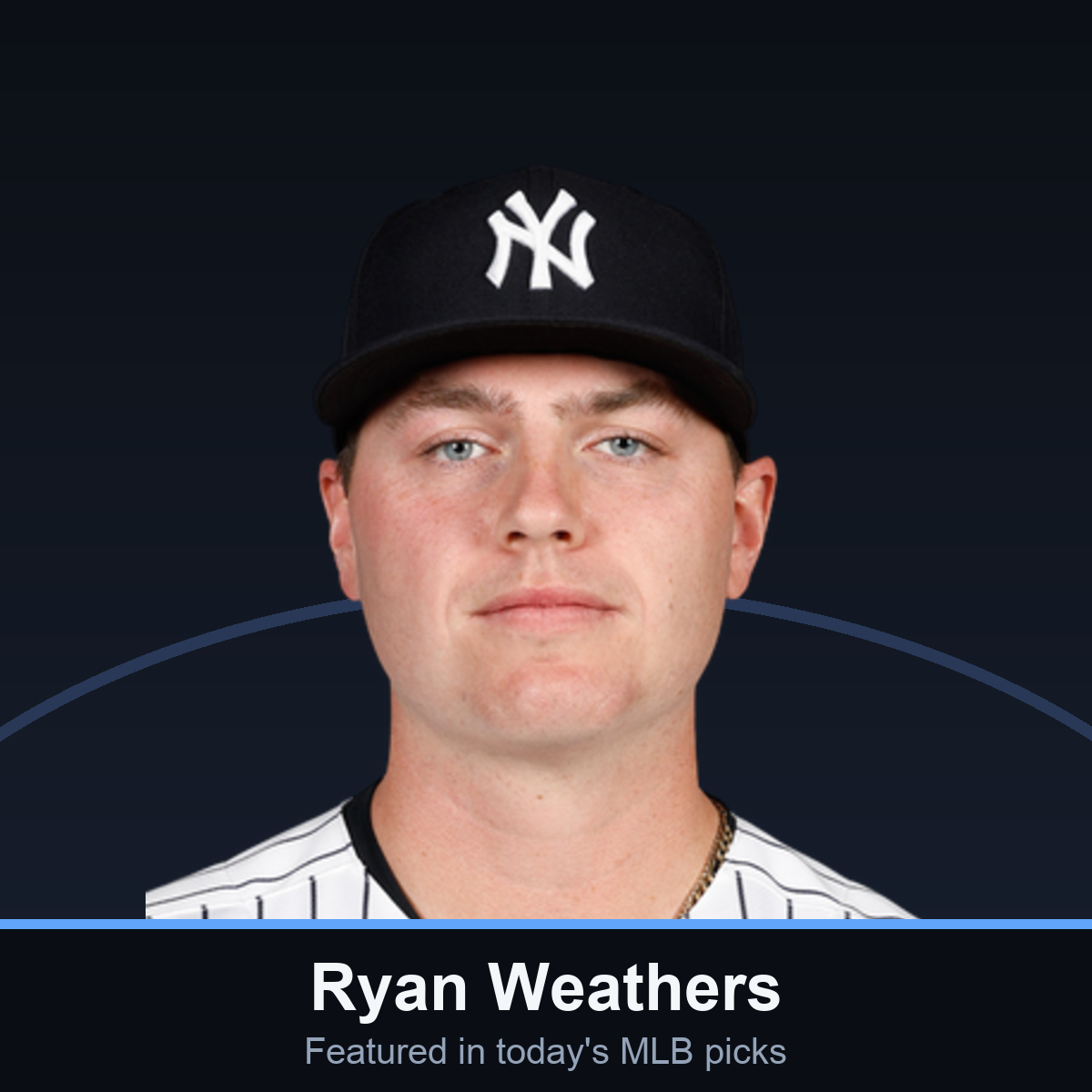
Ryan Weathers — one of the featured players on today's slate.
The Quick Answer
The cheat sheet's gems tab for Tuesday, August 4 opened with Iván Herrera (STL) against Ryan Weathers (NYY), Michael Busch (CHC) and Carson Kelly (CHC) against Tarik Skubal (LAD) in his Dodgers debut, and Max Kepler (AZ), the one gem the host actually bet, at 7-to-1 on Fanatics; a mid-show refresh rotated Dansby Swanson (CHC) onto the four-name tab. The fired ticket of the night is a boosted FanDuel two-legger on Sal Stewart (CIN) and Daulton Varsho (HOU). The fade alert and the +EV board's unders in these same games are below.
In Summary
- The Gems, As The Show Opened: Iván Herrera (STL) vs. lefty Ryan Weathers (NYY); Michael Busch (CHC) and Carson Kelly (CHC) vs. Tarik Skubal (LAD), pitching his first game as a Dodger; Max Kepler (AZ), the former Phillie, against San Diego.
- The One The Host Already Bet: Kepler to go yard at 7-to-1 on Fanatics. That is a placed bet, not a board read.
- The Ticket Built On Air: Sal Stewart (CIN) plus Daulton Varsho (HOU) to homer, a FanDuel profit-boosted two-legger paying nearly 40-to-1.
- The Live Refresh: Dansby Swanson (CHC) rotated onto the gems tab mid-show — the tab holds four names, so an opener rotated off — making it three of four gems fading Skubal's debut.
- Fade Alert: Taylor Walls (TB), Cedric Mullins (TB) and Richie Palacios (TB), the "Tampa Bay sandwich," all popping at Coors Field for the wrong reasons.
- The +EV Board's Verdict On The Same Games: every edge is an under, from Nico Hoerner (CHC) Under 0.5 hits at +175 to Cole Carrigg (COL) Under 0.5 hits at +195 in that same Coors game.
Watch The Video
The full episode, with the live board, the spray charts and the bet slips built on screen, is here: Watch The Yard on YouTube. The recap below covers the reads; the video shows the sheet refreshing in real time.
A Living Board, And A Debut To Attack
The cheat sheet builds its board from contact quality, pitch-mix matchups, spray charts against tonight's park, conditions and projected lineups, and the host's favorite thing about it is that it is a living, breathing document: projections move, lineups lock, weather shifts, and the board refreshes on screen mid-show. Tonight that mattered. The gems tab opened with four names, and by the time the sheet refreshed, Dansby Swanson had entered the conversation — the tab stays four deep, so one of the openers rotated off as projections moved — stacking a third Cub against the same pitcher. Hold that refresh in mind, because the name it added tells you what kind of night the model thinks Wrigley is having.
That pitcher is the headline. Tarik Skubal takes the mound at Wrigley Field for the first time as a Dodger, the splashiest arm on the card for a Los Angeles team the show describes as reeling, and the sheet's response is not reverence. Michael Busch's case is pitch mix: the read on air is that Skubal leans on sinkers and cutters close to 40% of the time, and Busch punishes exactly that family of pitch. It is a lefty-on-lefty look, the textbook downgrade, but the sheet grades the specific damage pattern rather than docking the handedness column. Busch projects near the top of the Cubs lineup, and the price told its own story: the number at Hard Rock towered over the rest of the market, far enough that the book would only take pocket change on it. Carson Kelly's case is simpler, a right-handed bat with a 19% pull-side profile, a breeze blowing out at Wrigley at about 5 mph, and a catcher's realistic path to two or three looks at Skubal as the lineup turns over.
The honest counterpoint belongs on the page: Skubal has allowed just a 7.5% barrel rate and a .349 expected slugging this season, elite contact suppression. This is not a "bad pitcher" case. It is a bet that a specific pitch-mix leak, a warm August afternoon and a new uniform are worth more than the name on the back of it. All of that is context, not an edge; every book pricing this market can see the same things. The only edge worth claiming on a home run prop is price, so shop any of these numbers against the live home run prop odds screen before you commit.
The Cubs stack is the loud part of the gems tab. The quiet part is a repeat customer.
Iván Herrera, Back On The Gems Tab
Herrera popped on yesterday's gems tab and is right back on it today against Ryan Weathers in the Bronx. The case is the baseline power edge: Herrera is a right-handed bat getting the platoon look at a left-hander who has allowed a 9.1% barrel rate and a .431 expected slugging this season, the softest contact profile of any arm the show touched tonight. The sheet's projection for Weathers' evening was blunt, and blunter than we need to repeat. The best number on Herrera sat at 7-to-1 over at Fanatics, per the show.
One gem, though, came with money already on it.
The Gem That Was Already Bet: Max Kepler
Max Kepler, the old friend from Philadelphia now wearing an Arizona Diamondbacks uniform, is the one gem the host put real money on: Kepler to go yard at 7-to-1 on Fanatics. That distinction matters on this page. Board names are information; this one is a placed bet. The matchup supports it: a left-handed bat with a 46% hard-hit rate this season getting the platoon advantage against San Diego right-hander Randy Vásquez. The show left that matchup on screen rather than talking it through; the day's schedule fills in the name. The lean-versus-play line the show draws is the one we keep: Kepler was fired, the rest of the gems tab was not.
Want the full board, the gems tab and the fade alert every morning? Code YARD30 gets you 30% off your first OddsShopper purchase, plus a free week of OS Pro and two weeks of The Yard cheat sheet.
The Two-Legger The Host Built Himself
Most nights the parlay randomizer builds the ticket. Tonight the host skipped the button, because two board names lined up too cleanly to leave to chance. Leg one is Sal Stewart, and Stewart is the single biggest Statcast outlier on the entire show: a 14% barrel rate, a .474 expected slugging and a 40% hard-hit rate, the best contact quality of any bat the sheet surfaced tonight. He gets J.T. Ginn at Great American Ball Park, one of the smallest parks in baseball, on an 88-degree Cincinnati day where the ball carries, and the show's verdict on Ginn was that he is going to get lit. The fair note is that Ginn's own contact numbers, a 6.3% barrel rate allowed and a .363 expected slugging allowed, are perfectly ordinary; the case is Stewart's bat, the park and the heat, not a broken arm.
Leg two is Daulton Varsho, now top-11 on the big board and, as the host put it, not a name that pops every day. The Houston outfielder brings a 31% pull-side profile into a 7 mph wind blowing out behind him, against Toronto rookie Trey Yesavage, who throws four-seam fastballs over half the time and gives a left-handed bat the platoon look. Christian Walker (HOU) popped in the same game, but the host skipped the same-game route because the straight two-leg build priced better, and boosted it at FanDuel: a two-legger paying nearly 40-to-1 after the profit boost, a small stake to win close to a grand. His words on hitting the button: "Can you dig it? I'm in." That is a fired ticket.
There is history behind the confidence. Yesterday's DraftKings randomizer three-legger, Derek Hill (PHI), Luis García Jr. (NYY) and Jake Burger (TEX), went two-for-three, and Hill did not just homer, he hit a grand slam, which happened to be the qualifying bet for the grand-slam payout promo running at DraftKings. The host spent a full minute on air lobbying for his parlay leg to count. If you are building tickets at that book anyway, check DraftKings' current offer and how to claim it before you do, and if a promo leaves you holding bonus bets, the free bet converter hedges them across two books into withdrawable cash.
The show pairs all that aggression with a list of names it wants no part of.
Fade Alert: The Tampa Bay Sandwich At Coors
The fade alert lists Taylor Walls, Cedric Mullins and Richie Palacios, two Rays wrapped around a third, all popping in the market for tonight's trip to Coors Field against Gabriel Hughes. The show's argument is about why they are popping: Tampa Bay is a heavy favorite, the game is at altitude, and the market prices every bat in a Coors game as if, in the host's words, every game there equals 50 home runs. The sheet's grade on the bats themselves disagrees. The host said the Savant numbers on Mullins would back him up, and they do: a 3.9% barrel rate, a .297 expected slugging and a 31% hard-hit rate is not a power profile, altitude or not. Hughes, for his part, has allowed a 2.9% barrel rate this season, the stingiest contact line of any starter on the show's card. Coors makes every cheat sheet glow; a live contact profile is a different thing entirely. This is the priced-in trap in miniature, information about where the public's homer money leaks tonight, not a bet against anyone. Don't load them up.
The strangest discipline on the show came last: the host betting against his own favorite tool, on purpose.
Fading The Tool, On Purpose
The host's favorite tool on the site is the Liquidity Tool, which reads resting exchange orders as sharp intent: an offer parked on one side of a market usually means a sharp is trying to get down on the other. His caveat, offered live, is that home runs are the one market where that logic can bend, because books sometimes open homer markets precisely to invite the other side, and homers are, in his words, ridiculously improbable to begin with. So as a demonstration, and only for home runs, he faded the tool's read at Bet365: back to that same Coors game, taking Junior Caminero (TB), the one Tampa Bay bat that had not popped anywhere on the sheet, on a small two-leg flyer with a second bat whose name did not survive our audio check, so we will leave that leg to the video rather than guess. He was explicit that the fade applies to this market only; the tennis play sitting at the bottom of the tool's screen, he said, was one to jump on, not against.
Zoom out from that single bet, though, and the whole pricing engine turns out to be leaning the very same way.
What The +EV Board Says About The Same Games
The same OddsShopper pricing engine that stamps a best book on every cheat sheet row also runs a de-vigged +EV screen across every market, and as of Tuesday afternoon (August 4, 15:26 UTC) its board was wall-to-wall pessimism: a dozen edges across the slate, every single one an under. The biggest sits outside the show's games, Brandon Nimmo (TEX) Under 0.5 hits at +202 on Bet365 against a fair price of +172, an +11.0% edge. But six of them live inside games the show just spent half an hour on:
| Bet | Fair Odds | Best Price | Edge |
|---|---|---|---|
| Nico Hoerner (CHC) Under 0.5 Hits | +154 | +175 (Bet365) | +8.3% |
| Cole Carrigg (COL) Under 0.5 Hits | +172 | +195 (Bet365) | +8.5% |
| Tyler Soderstrom (ATH) Under 0.5 Hits | +170 | +195 (Bet365) | +9.3% |
| Tommy White (ATH) Under 0.5 Hits | +173 | +200 (Bet365) | +9.9% |
| Ryan Waldschmidt (AZ) Under 0.5 Hits | +113 | +135 (Bet365) | +10.3% |
| Tim Tawa (AZ) Under 0.5 Hits | +138 | +155 (Bet365) | +7.1% |
The row that earns prose is Carrigg, because it closes the loop on the fade alert. The market that prices every Coors bat like a homer waiting to happen is the same market hanging +195 on a Rockies hitter to go hitless in that very game, when the de-vigged fair price is +172. Altitude inflates the offense prices across the board, and the under is where the overpay shows up. Soderstrom and White are the Athletics' side of the Sal Stewart game, Waldschmidt and Tawa share the Arizona game with Kepler's fired homer, and Hoerner is a Cubs bat priced to go hitless in the same Wrigley game where three gems are chasing Skubal. There is no contradiction in that pair, a homer prop and a hits under answer different questions, but it is a useful reminder that the sheet's optimism about Wrigley is a read on specific bats, not a blanket call on the ballpark.
A Worked Example: Pricing The Hoerner Under
Strip the vig from every book's price on Hoerner's hits market and Under 0.5 comes back at fair odds of +154, an implied 39.4%. Bet365 was still hanging +175, an implied 36.4%. Getting +175 on a +154 outcome is an +8.3% edge, and that arithmetic, price against true probability, is the only kind of edge this page will ever claim. Park factors, pull-side percentages and pitch mixes explain a price; they never beat one. If de-vigging is new territory, the odds screen walkthrough shows where these numbers live.
The Bottom Line
Tuesday's board tells one coherent story: the sheet earns its keep by disagreeing with reflexes. It stacks three Cubs against the best-credentialed arm on the card because pitch mix and conditions outrank a name. It fades the Coors bats everyone else is loading up because altitude is not a contact profile. And the pricing engine underneath it spent the whole afternoon finding value on the word "under," including inside the very games the show was betting homers in. The two postures are not in conflict; both are the same refusal to pay a price just because the story attached to it is loud. For the full daily board beyond the show, today's MLB home run picks board runs every slate.
The Yard airs daily on the OddsShopper YouTube channel with the sheet updating live, and subscribers get the full board at 9 a.m. every morning. Code YARD30 takes 30% off your first purchase and comes with a free week of OS Pro and two weeks of the cheat sheet.
More on this: MLB Home Run Cheat Sheet: Kalshi & Polymarket Contracts (September 6, 2026) · MLB Home Run Picks Today (8/25): Yordan Alvarez & More · How To Bet MLB Home Run Props (And Find The Edge) · MLB Home Run Leader Odds: The Rockies Bat Kalshi Ignores · Jaxon Smith-Njigba Is The Chalk. Jadarian Price Is The Number Worth