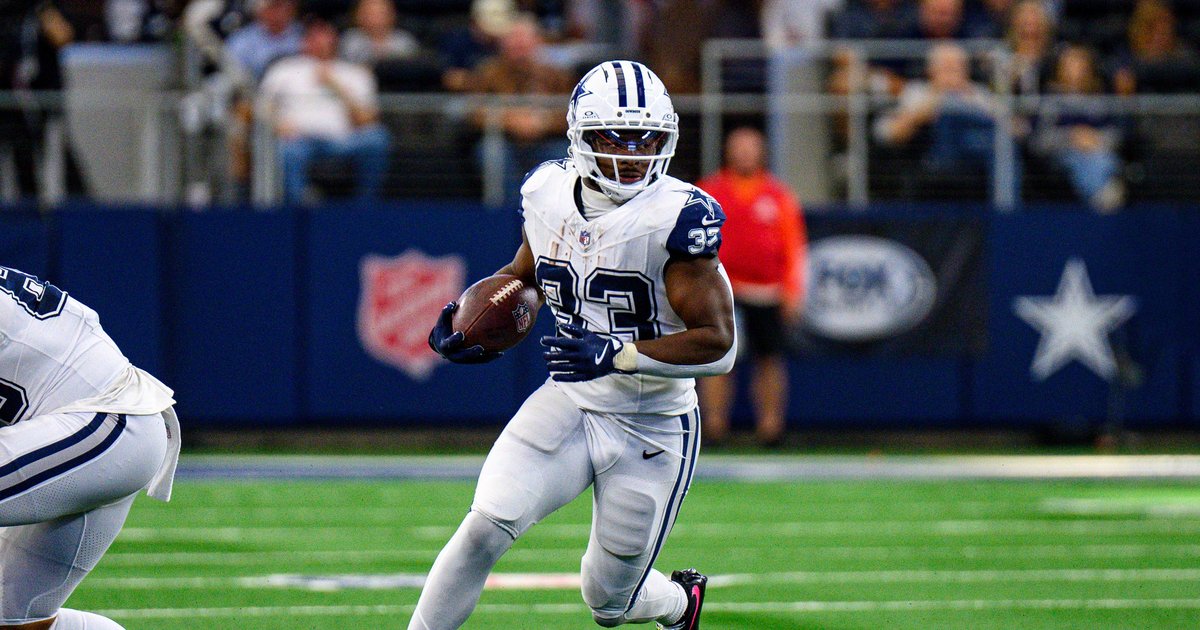
Stefany Shaheen won the Democratic nomination in New Hampshire's 1st congressional district on September 8, 2026. The Associated Press called it at 12:35 a.m. ET on September 9 with 88 percent of the vote counted. Shaheen had 37.2 percent to Maura Sullivan's 34.9, per the New Hampshire Bulletin, and Carleigh Beriont was third at 22. Sullivan went into the close of the polls as the Kalshi favorite, trading between 82 and 85 cents. Her contract's last print before this edition, at 5:42 a.m. ET on September 9, was a tenth of a cent. Shaheen's, which was 15 bid at 2:56 p.m. the afternoon before, was 99.3 bid.
This page has spent 16 days on one question: how much a Sullivan lead of two to six points in three polls was worth. The market's answer on primary day was 82 cents bid. The count's answer was that the lead was inside the noise, and the noise broke toward the name. Below: the vote against the numbers this page carried into the night, the price history from the first returns to the last trade, what still has to happen before the exchange pays out, and how the nine price-blind AI models that priced this race on August 24 grade against a board that beat them and then lost.
Stay ahead of the markets.
Daily insights and expert picks on Kalshi, Polymarket, and what's moving markets.
Free forever. Unsubscribe anytime.
Where The Panel Landed
Nine models, none of them shown a price, each priced all nine candidates on the ballot on August 24, then read each other's anonymized reasoning and revised. The blend is the median of the nine seats after that round. It was frozen on this page so it could be graded against the result, and the result is in.
| Outcome | Aug. 24 Launch Price | Sept. 8, 2:56 p.m. Bid / Ask | Sept. 9, 5:52 a.m. Bid / Ask | AI Blend (Aug. 24) | Result |
|---|---|---|---|---|---|
| Stefany Shaheen | 57¢ | 15 / 18 | 99.3 / 99.7 | 36.0% | Won, 37.2% |
| Maura Sullivan | 42¢ | 82 / 84 | 0 / 0.1 | 40.0% | Second, 34.9% |
| Carleigh Beriont | 2¢ | 0.6 / 1.4 | 0.1 / 0.2 | 10.0% | Third, 22% |
| Everyone Else (Six Names) | not listed | not listed | not listed | 12.4% | Did not win |
Each seat's own nine numbers were required to sum to 100; a set of column-wise medians does not have to, which is why the blend comes to 98.4.
Read the Shaheen row left to right. The panel said 57 was too expensive, the market agreed all the way down to 15, and she won. Every number in that row before the count was wrong about the winner, and the one that was least wrong was the launch price the panel was built to argue with. The count is sending her contract to 100.
Here is what has and has not settled. As of 5:52 a.m. ET on September 9 all three contracts still show as active on the exchange, with no result posted. Each one resolves Yes if that candidate "wins the nomination for the Democratic Party to contest the 2026 NH-01 House seat," in the exchange's words, and Kalshi lists the Democratic Party of New Hampshire as its settlement source, so the network call is not the settlement; the party's result is. The market can close early once that result is in, and its listed close is November 3, 2026, with an expected expiration of January 1, 2027. The prices in the third column are traders pricing a settlement they expect, not a settlement that has happened. The Sullivan book had no bid at all at the fetch, only asks from a tenth of a cent up.
More live boards from the same panel: New Hampshire Senate odds, the general-election board Shaheen's November ballot shares, where the Democratic side is 82¢ bid as of the same fetch after Chris Pappas and John E. Sununu won their primaries on the same night. NH-01 Primary: Shaheen Fell From Favorite to Coin Flip, Dave Loughran's August 25 record of this same race, written the week Shaheen was still 54¢. Rhode Island governor primary, which votes Wednesday, September 9, with Helena Foulkes at 99.1¢ bid.
Prices are as of September 9, 2026, 5:52 a.m. ET unless a sentence says otherwise. This page takes no side in any race and analyzes prices only. New to this kind of market? Start with how election prediction markets work.
The Vote Against The Numbers
The number this page told you to watch was Sullivan's share against the 30.4 percent she finished with in 2018. She beat it. She also lost, and both halves of that sentence are the result.
| 2018 Democratic primary | 2026 Democratic primary | |
|---|---|---|
| Winner | Chris Pappas, 42.2% | Stefany Shaheen, 37.2% |
| Maura Sullivan | 30.4% (second) | 34.9% (second) |
| Names On The Ballot | 11 | 9 |
The 2026 shares are the count at the AP call with 88 percent in, per the New Hampshire Bulletin; the two campaigns were fewer than 2,000 votes apart at that point, per NHPR, whose running count carried Shaheen at 18,930 votes to Sullivan's 18,399 when the call came. Later counting, in the Washington Post's tally past 95 percent, moved Beriont toward 23 and left the top two at 37 and 35.
Sullivan's row is the one the panel argued from. Its case for her was that a candidate who had already reached the low 30s here was most of the way to a nine-way plurality, and she went four and a half points past her 2018 share. What the case missed was on the other side of the ledger: the winner's share fell five points from Pappas's 42.2, and the third-place share was 22. Beriont held a fifth of the electorate that the two polls publishing a number for her had at 12 percent, and that was the fifth Sullivan needed.
Shaheen's 37.2 is the lower half of the story. Her mother's name did not carry the district the way the 82-cent price of August 19 assumed; it carried a plurality by two points against a field that spent the last three weeks converging on her. Politico reported that nearly $740,000 of her campaign money, 39 percent of her itemized dollars, came from donors who had given to Senator Jeanne Shaheen before. The Republican side settled early: Anthony DiLorenzo, a Portsmouth businessman who founded the Key Auto chain and self-funded $1.6 million, won his primary with about 51 percent, per NHPR, and Shaheen faces him in November for the seat Pappas left to run for Senate.
What Took 25 Cents Off Stefany Shaheen
The first thing this page recorded, on August 24, was how a front-runner lost 25 cents in five days. That record matters more now, because the poll that started it turned out to be the most accurate reading of the margin anyone published, even as it understated both leaders' levels.
Two things hit this market inside three days in August, and it treated them very differently.
The first was an ad. On Tuesday, August 18, Shaheen ran the race's first negative spot of the cycle, which the New Hampshire Union Leader reported that afternoon. The next morning her contract slid 11 cents, and traders put nine of them back before the close. A front-runner going negative was read as noise.
The poll was not read as noise. Saint Anselm College released its August survey on the evening of August 20, and it was the first poll in the history of this race that Shaheen did not lead. It had Sullivan two points ahead inside a margin of error of plus or minus 5.2 points, which makes it a tie rather than a lead. Shaheen's contract closed at 80 that evening and at 61 a day later, and this time nothing came back. Sullivan's contract, which had not traded in two days, went from 15 to 35 in the same window.
Shaheen kept sliding through the weekend and reached 57 by midday on August 23, where she sat through the August 24 fetch. Over five days the gap between the two on last-traded prices went from 67 cents to 15.
The ordering matters. Saint Anselm was in the field on August 17 and 18 and the ad aired on the afternoon of the 18th, so the survey that moved this market was collecting most of its answers before the spot it now gets discussed with. The poll is not a reading of how the ad landed.
The ad itself was the sharpest thing either campaign said out loud. Per the Union Leader, the spot accused Sullivan of raising 90 percent of her money from outside the state, including bundled AIPAC donors and Jeff Bezos's PAC, and closed on "New Hampshire's not for sale." Sullivan's campaign manager Natalie Silver called it desperate, said Sullivan "doesn't take a dime from corporate PACs, ICE vendors, or AIPAC," and pointed at the $158,000 she said Shaheen had taken from DC lobbyists. Two days later Jewish Insider reported that AIPAC had made no endorsement in this race and had not been directly involved.
Several of the models read the timing of that ad the same way: front-runners with comfortable internal numbers do not usually fire the first negative shot of a primary three weeks out. One seat, Claude Fable, read it the other way, and its argument is below in the grading section, because it is the argument the count agreed with.
The other item in Shaheen's file is older. In February, InDepthNH reported that her role as chief strategy officer at ARMI, the federally funded biomanufacturing institute founded by Dean Kamen, had become a campaign issue after Justice Department files showed Kamen kept regular email contact with Jeffrey Epstein after Epstein's 2008 conviction. Shaheen said "the ARMI Board needs to address this matter independently." That story had been in front of voters for six months, she led every poll until August 20, and she won the primary with it still in the file.
What Took The Next 40 Cents
The first poll cost Shaheen 25 cents. The next two cost her 40 more by September 3. Saint Anselm's two-point lead was inside its 5.2-point margin, UNH called its five-point lead a statistical tie, and Tavern's six was the widest of the three and still smaller than Beriont's miss.
| Pollster | In the field | Sullivan | Shaheen | Beriont | Sullivan lead | Result |
|---|---|---|---|---|---|---|
| Saint Anselm College | Aug. 17-18 | 26% | 24% | 12% | +2 | Shaheen +2.3 |
| UNH Survey Center | Aug. 20-24 | 24% | 19% | — | +5 | Shaheen +2.3 |
| Tavern Research | Aug. 28-31 | 33% | 27% | 12% | +6 | Shaheen +2.3 |
The UNH Survey Center poll, released August 26 and reported by InDepthNH, sampled 463 likely Democratic primary voters in the district with a margin of error of 4.6 points and called Sullivan and Shaheen statistically tied, with Beriont third. The market did not read it as a tie. Shaheen's contract went from 54 at the close on August 26 to 38 a day later and 32 the day after that, while Sullivan's went 46, 56, 64 over the same two days. Tavern Research, in the field August 28 to 31 and published September 2, had Sullivan 33, Shaheen 27, Beriont 12, Christian Urrutia 4 and Heath Howard 2, with 22 percent unsure. Shaheen closed September 2 at 20 and September 3 at 17, and she did not close a day above 18 again until the polls closed. Sullivan closed September 3 at 80.
Tavern's 22 percent unsure is the number to hold next to the result. Beriont finished with 22 percent of the vote. The pollsters were not wrong about the top two; they were wrong about where the undecided fifth was going, and it went to the third name and to Shaheen in roughly the proportion that beat Sullivan.
The ballot shrank while the polls came in. Howard suspended his campaign on August 24 and endorsed Beriont, NHPR reported, saying the race was "bigger than both of us." Urrutia dropped out on September 6 and endorsed Shaheen, NHPR reported, a day after former Rep. Carol Shea-Porter did the same. Both withdrawn names stayed on the ballot. Senator Maggie Hassan endorsed Shaheen in late August, per Jewish Insider, between the two polls that moved against her. None of the four endorsements showed up on the price history: Shaheen's contract closed at 18 on September 6, the day Urrutia got out, and at 17 the next day.
The lever the panel named did get pulled, quietly. Claude Opus raised Shaheen on August 24 partly because a sitting senator can campaign for a daughter in the final two weeks. Roll Call reported on September 2 that Shaheen had not campaigned alongside her mother or put her in an ad. Punchbowl News reported on September 7, citing sources with direct knowledge, that Senator Jeanne Shaheen had instead worked the phones, urging lobbyists and donors to back her daughter and calling VoteVets, the veterans group backing Sullivan, to object to its advertising. Punchbowl's report did not move the price: Shaheen closed at 18 the day before it ran and 17 the day it did. Roll Call's read of the closing week was money rather than mothers: a $49,000 digital buy for Beriont from Live Free PAC, the bitterest ad exchange in the state between the top two, and Sullivan calling it "a two-person race." It was a three-person race, and the third person is why the second one lost.
The Primary-Night Tape
The afternoon edition of this page closed with Sullivan at 82 bid, 84 ask at 2:56 p.m. ET, with 43,198 of her contracts traded by 2:47 p.m. By the last print of September 8 she had traded 245,815 more, Shaheen 185,516, and Beriont 121,741, on a contract that never left two cents. Here is the night in order, all times ET, all prices the Yes side.
Through 7 p.m. the board barely moved. Sullivan traded between 81 and 85 for four hours, and a 3,500-contract No block at 84 at 6:16 p.m. was the only print of size before the polls closed. Shaheen traded between 15 and 18. Beriont's last afternoon prints were between four-tenths and 1.5 cents.
The first returns broke it open at 7:27 p.m. Inside the same minute, Shaheen printed 57 and then 93.9 in the same second, on lots of 79 and 46 contracts, her first prints above 50 in two weeks, and Sullivan printed 48 on a lot of 17. Six minutes later Shaheen printed 2.1 on 19 contracts. Those are the extremes of thin early-return books, not the market's read, and the read in the 7:15 to 7:30 window was a coin flip: Sullivan closed those 15 minutes at 51 and Shaheen at 51. Then the count turned back. Between 7:30 and 8 p.m. Sullivan traded 30,000 contracts between 46 and 98, the 98 on a 31-contract print at 7:51 p.m., and closed the hour at 48, while Shaheen closed it at 45 after touching 24 and 63 in the same half hour.
The 8 p.m. hour was the last one Sullivan led. She opened it at 50, went to 77 by 8:15 on 3,300 contracts, and then gave all of it back: a 37 print before 8:30, a 12 print before 8:45 that recovered to 30, and 30 at the top of the hour. Shaheen went the other way, 23 at 8:15, 56 at 8:30, 69 at 8:45 and 72 at 9.
At 9:04 p.m. the market decided. Sullivan printed under 10 for the first time, a 9 on 112 contracts, and Shaheen had taken a 5,485-contract Yes block at 91 cents 13 seconds earlier. The 9 p.m. hour was Shaheen's busiest of the night, 61,808 contracts, and it took her from 74 to 95. Sullivan's 55,782 in that hour, 38,641 of them from No buyers, took her from 30 to 5.3, and her own busiest hour came next: 74,794 contracts in the 10 p.m. hour as the book ground her to a tenth of a cent. From there it was cleanup. A 5,000-contract No block at 1.7 on Sullivan at 10:26 p.m., 4,822 at 1.0 at 10:34, a 10,000-lot at 0.2 at 10:38 where the No buyer paid 99.8 cents, and 5,000 more at a tenth of a cent two seconds later. Her last print of the day, at 11:54 p.m., was a tenth of a cent. Shaheen's, at 11:59 p.m., was 99.9. The AP call came 36 minutes later; the market had priced it three and a half hours before that.
The open interest tells you how much money is waiting on the party. Sullivan's contract carries 244,789 open contracts, Shaheen's 173,052 and Beriont's 217,412 as of the fetch. Most of Beriont's is No bought at 98 or 99 cents, a position that risks 99 cents to make one and has not been paid yet. On the Sullivan side that is a favorite bought at 80-plus and sold at pennies, or held to a zero the exchange has not yet posted.
The Poll Number That Moved Seven Of Nine Seats
In the revision round on August 24, seven of the nine seats independently landed on the same piece of arithmetic, and none of them got it from us. Between the June and August Saint Anselm polls, the undecided share fell 20 points, the largest block of votes that moved in this race all summer. Here is where it went, and where the result says the rest of it went:
| Candidate | June 24-25 | August 17-18 | Change | Primary result |
|---|---|---|---|---|
| Maura Sullivan | 15% | 26% | +11 | 34.9% |
| Carleigh Beriont | 3% | 12% | +9 | 22% |
| Stefany Shaheen | 22% | 24% | +2 | 37.2% |
| Heath Howard | 9% | 7% | −2 | withdrew Aug. 24 |
| Christian Urrutia | 3% | 3% | 0 | withdrew Sept. 6 |
| Sarah Chadzynski | 1% | 0% | −1 | — |
| Undecided | 47% | 27% | −20 | — |
Shaheen had universal name recognition in this district, the endorsement list, and a sitting United States senator for a mother. When a fifth of the electorate made up its mind in the summer, she got a tenth of it. Grok called it the fact that "directly weakens the thesis that remaining late and undeclared voters default to the famous name." The last 27 percent, the ones still undecided on August 18, did not behave like the first 20. Shaheen went from 24 in that poll to 37.2 on the ballot, Sullivan from 26 to 34.9 and Beriont from 12 to 22, so the late deciders split closer to evenly than the summer ones had, and even was enough for the name.
The caveat, which most seats raised themselves, was that the June poll sampled registered voters and the August poll sampled likely voters, so part of that release was method rather than mind-changing. Kimi held its Shaheen number partly on that ground, and Kimi finished the second-best seat on this board.
Maura Sullivan Ran This Race Before
The mechanic that decided who showed up is the one no poll could model. Undeclared voters, the largest registration bloc in the state, can ask for a Democratic ballot on primary day and change back before they leave, so every "likely Democratic primary voter" screen was a pollster's guess about a walk-in electorate. The secretary of state's own guess going in, per NHPR, was 145,751 Republican ballots against 103,024 Democratic ones statewide, and the three pollsters, each guessing at a different pool, disagreed on Shaheen's level by eight points and on Sullivan's by nine. The one that guessed the pool least friendly to Shaheen, Saint Anselm at 24, missed her finish by 13.
There is no runoff in New Hampshire, so whoever gets the most votes out of the names on the ballot is the nominee, even at 37 percent, and this district ran the same experiment in 2018 with Sullivan in it: 11 candidates, Chris Pappas at 42.2, Sullivan second at 30.4 while raising 96.7 percent of her individual contributions from outside the state, which InsideSources reported was the highest out-of-state share of any major U.S. House candidate in the country that cycle. The carpetbagger charge followed her both times, and both times she finished in the low-to-mid 30s.
The panel treated 2018 as a benchmark rather than a ceiling, and on the arithmetic it was right: 34.9 is a plurality-sized number in a nine-name field. It was not a plurality in this one, because the field was really three names, and in a three-name field 34.9 finishes second to 37.2.
Was Carleigh Beriont Too Cheap At Nine-Tenths Of A Cent?
Yes and no, and the difference is the whole business of pricing a contract.
Beriont was the one name every seat said was too cheap. Her last trade at this page's August 24 launch, a 2-cent print from the afternoon before, sat against a panel median of 10, and the lowest seat, Claude Fable, still had her at 7. At the 2:56 p.m. fetch on primary day her last trade was nine-tenths of a cent against a Tavern number of 12 percent, and she closed the night at two-tenths. She finished with 22 percent of the vote, nearly double her best poll.
None of that pays a Yes holder a cent. The contract asked one question, whether she would win the nomination, and the answer was no by 15 points. The market's nine-tenths of a cent was a better price for that question than the panel's 10 percent, and the scoreboard will say so. What the market got wrong was not her contract; it was what her 22 percent would do to the other two. A candidate polling 12 who finishes at 22 takes ten points from somewhere, and the price history had priced Sullivan as if every one of them would come from Shaheen.
How The Scoreboard Grades The Nine Seats
The full scoreboard grades every seat the same way on every settled board: a Brier score, the squared miss against the actual result on each contract, averaged across the board, where zero is perfect and lower is better. Each seat's score is then set beside the market's own Brier at the price prevailing when the panel scored, a price the panel itself never saw. It will pick this board up when the party's result settles the contracts. Here is the arithmetic in advance, with Shaheen graded at 100 and Sullivan and Beriont at zero.
| Seat | Shaheen | Sullivan | Beriont | Brier (3 contracts) |
|---|---|---|---|---|
| Aug. 24 Market (57 / 42 / 2) | 57¢ | 42¢ | 2¢ | 0.121 |
| Claude Fable | 47.0% | 42.0% | 7.0% | 0.154 |
| Kimi | 39.2% | 37.1% | 11.3% | 0.173 |
| Claude Opus | 39.4% | 42.4% | 11.1% | 0.186 |
| Panel Blend (Median) | 36.0% | 40.0% | 10.0% | 0.193 |
| GLM | 34.7% | 37.8% | 10.2% | 0.193 |
| GPT | 36.0% | 42.0% | 10.0% | 0.199 |
| Grok | 34.0% | 40.0% | 9.0% | 0.201 |
| Claude Sonnet | 32.3% | 36.4% | 13.1% | 0.203 |
| Gemini | 38.0% | 48.0% | 8.0% | 0.207 |
| DeepSeek | 30.0% | 36.0% | 10.0% | 0.210 |
| Sept. 8, 2:56 P.m. Board (16.5 / 83 / 1) | 16.5¢ | 83¢ | 1¢ | 0.462 |
Every seat is graded against real market settlements; the full scoreboard is public and recomputed daily.
Read the first and last rows before the nine between them. The price the panel never saw and called too high, 57 cents on Shaheen, beat every seat on this board, because every seat had her lower and she won. The price the market reached after two more polls, 16.5 cents at the midpoint of the 2:56 p.m. spread on primary day, lost to every seat by a wide margin, because the market had spent three weeks turning ties into a lead. The panel was wrong in the same direction as the market and less wrong than the market ended up.
Inside the nine, the seat the scoreboard credits most is Claude Fable, the only one that kept Shaheen above 45. Kimi is second, on a lower Shaheen number offset by the lowest Sullivan number of the top three. On the Sullivan contract alone, five seats beat the 42-cent launch price by having her under it: Kimi, GLM, Grok, Sonnet and DeepSeek. On the Beriont contract the 2-cent launch price beat all nine seats, which is the cost of the "too cheap" call above. No seat beat the launch board across all three, and no seat lost to the primary-day board.
Fable was one of two seats, with Kimi, that kept Shaheen in front after the revision round. Its explanation is the sentence on this page that aged best:
"Moved Shaheen 52 to 47 and Sullivan 38 to 42. What moved me was the decomposition of the undecided collapse. I did not flip the top two: the strongest opposing argument, that the first attack ad proves her internals show Sullivan ahead, is consistent with a campaign that is still ahead and knows the trend." — Claude Fable
"Trimmed Sullivan 45 to 42 and raised Shaheen 37 to 39. A peer-raised asymmetry I had not priced: an active sitting U.S. Senator can personally campaign for a daughter in the final two weeks, a closing-consolidation lever with no Sullivan equivalent." — Claude Opus
Both of the things the panel said to watch happened, and neither moved the price. Two more pollsters reproduced Sullivan ahead, inside their margins, and the senator's help arrived by phone rather than on a stage. Fable's argument, that a campaign can be ahead and still fire first, was the one the primary-day board rejected hardest and the one the count backed.
The Bottom Line
The market took one poll seriously in August and moved 25 cents; it took the next two the same way and took 40 more off Shaheen, and at 82 cents bid on primary day it had priced three single-digit leads as a better-than-4-to-1 favorite. The count read them as noise. Shaheen won by two points with 37.2 percent, Sullivan beat her own 2018 share and finished second again, and Beriont's 22 percent, at a contract price under a penny, was the number that decided which of the other two got the plurality. The nine seats were closer to the result than the primary-day board and further from it than the launch board, which is a specific kind of wrong: right that the market had overreacted to a poll, wrong about which way. The contracts pay out when the Democratic Party of New Hampshire's result settles them, and this page's grade goes onto the public scoreboard the same day. Every price on this page was fetched September 9, 2026, at 5:52 a.m. ET unless its sentence says otherwise.
The panel's calls are on the record. Our AI panel puts a graded, public verdict on the New Hampshire Senate race Shaheen now shares a November ballot with — see the live model verdict.

More on this: New Hampshire Senate Odds: Is 88 Cents Too Confident? (now 82¢) · Why Chris Pappas (D) Will Win the NH Senate Primary · Why John E. Sununu (R) Will Win the NH Senate Primary