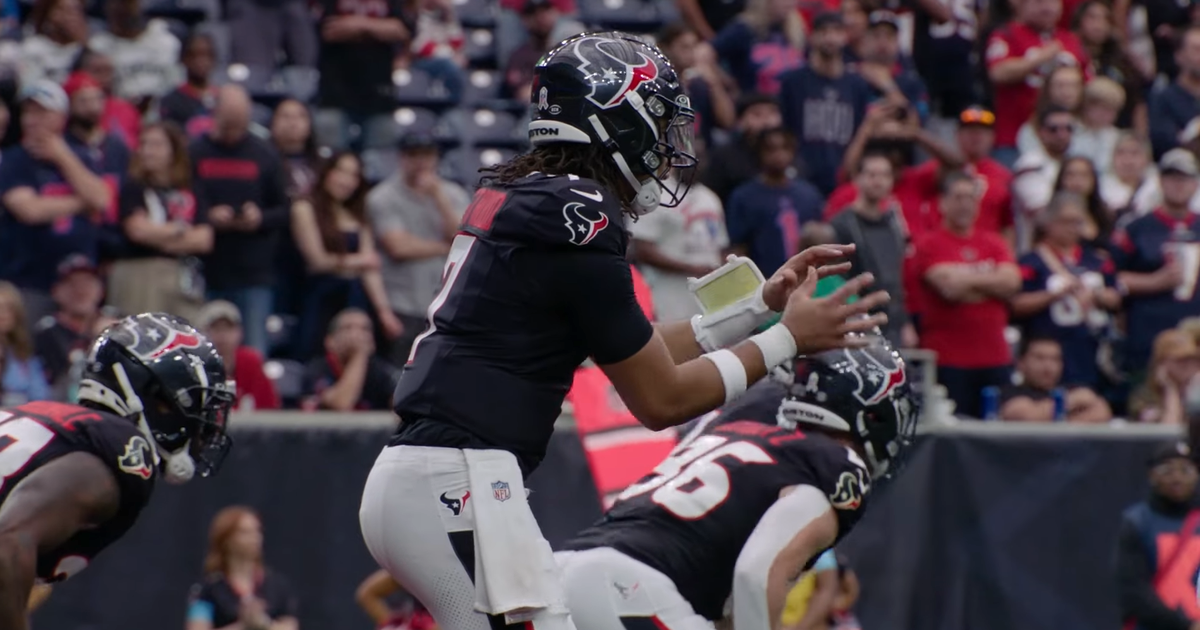
Let's not bury the lead: No. 23 Houston is laying 20.5 at noon ET Saturday, on ESPN, to an Oregon State team that has more questions than answers. It may not be the 2-10 team from last year, that team is mostly gone, but has there been improvement? Is three touchdowns too much to lay into that fog? Writing this Tuesday evening, September 1, the number at DraftKings is Houston -20.5 at -112, and the movement story is one-directional: this spread opened -18.5 and climbed, and the moneyline climbed right along with it, -1200 at the open to -1800 now. When the spread and the moneyline march together like that, there's no divergence to squint at. The market has been deciding it likes the Cougars more, and it hasn't blinked yet.
Over on Kalshi, where a price in cents is a probability, Houston trades at 93 cents to win the game. Call it 93%, before fees. The contract that matches my actual bet, "Houston wins by over 20.5," sits at 51 to 52 cents, a coin flip, which is what a spread is supposed to be. So the market is near-certain Houston wins and completely unsure Houston rolls, and I'm here to take a side on the second question. This one, to me, is a buy of Houston, not a short of Oregon State, and I want to be clear about that difference before we go one step further. I'm not betting against a 2-10 record; that record belongs to a roster that largely doesn't exist anymore. I'm betting on the one team on this field we actually know something about. If you're in a rush, there's a short version near the bottom.
Free: The Weekly PM Market Brief. The week's biggest market-vs-model gaps and what's spiking next. One email, Sundays. Sign up in the box at the end of this article.
The Game Lines
Kalshi in cents, DraftKings in American odds.
| Line | Kalshi | DraftKings |
|---|---|---|
| Moneyline: Houston Wins | 93¢ | -1800 |
| Moneyline: Oregon State Wins | 8¢ | +1000 |
| Spread | "Houston wins by over 20.5" — 51/52¢ | Houston -20.5 (-112) / Oregon State +20.5 (-108) |
| Total | "Over 49.5 points scored" — 50/51¢ | O/U 49.5 |
Always shop it. My side is Houston -20.5 at -112 on DraftKings as I write this, and if you find a -19.5 or a cheaper -20.5 hiding somewhere, more power to you, take yours instead of mine. Run the game through the +EV top bets screen and let it line up every book's number before you click anything; the stray -19.5s exist, and the screen finds them faster than you will. What Kalshi adds here is that it prices my exact question directly: "Houston wins by over 20.5" is its own yes/no contract, no juice column, just cents. The biggest key number in this game is 21. College margins pile up on 3, 7, 10, 14, 17 and 21, and out in the twenties, 21 is the cluster that matters at this price, and the market is sitting half a point under it. That matters a lot in a minute. The total has moved too — it opened 50.5 and sits 49.5 as I write this, a point down on a game the market expects Houston to control — and that's all I'm going to say about it here, because the total is not part of my card in this game.
Now the venue math, because this is the part most previews skip. Kalshi asks 52 cents for "Houston wins by over 20.5" as I write this Tuesday evening — and translated into the American odds a book would show you, 52 cents is about -108. But Kalshi charges a taker fee, seven percent of price times one-minus-price, about 1.8 cents on a coin-flip contract that gets rounded up to a full two cents, so the effective price is closer to -117. That loses to DraftKings' -112 by about five cents of juice on my side. Going the other way it flips: taking Oregon State +20.5 on Kalshi means buying the "no" at about 49 cents, roughly -104 after the fee, while DraftKings posts +20.5 at -108. The exchange wins the dog side. Do the math when you bet, not when you read, because a cent on either side flips this.
The venue verdictDraftKings wins the Houston -20.5 side (-112, against about -117 on the exchange after the fee). Kalshi wins the Oregon State +20.5 side (about -104 after the fee, against -108 at the book). The exchange beats the book on one side of this game and loses on the other — "the exchange is cheaper" as a blanket statement is just wrong. Convert both sides, subtract the fee, then decide. Two caveats before you sprint over there. Check that there's real size behind the Kalshi quote before treating it as a bet, because a mispriced quote you can't fill is a screenshot, not a bet (as I write this the 20.5 contract carries roughly 16,000 contracts of open interest, so this one is real). And know the legal backdrop: on August 28 a federal appeals court ruled that Kalshi's sports contracts are sports bets that Nevada can regulate under its own gaming laws, which splits with an earlier ruling out of New Jersey that went the other way, so what you can trade, and where, is genuinely in flux and depends on your state. And if the moneyline tempts you, 93 cents is a dramatically better price than -1800, fee and all. It doesn't tempt me, and here's the whole reason in one line: I think Houston wins this game far more often than not, and that's exactly why the ticket is the spread and not the moneyline. Houston winning doesn't pay me fourteen-to-one on anything; Houston winning by three touchdowns is the only question with a real price on it, and it's the question I'm paying to answer.
A Look Back At 2025
With the portal, teams can look a whole lot different in just one season, but it still can be useful to see where teams were a year ago, as long as we agree on what this is: a look back, not a proof. Half of what follows still matters, half of it belongs to players who aren't on these rosters anymore, and I'll tell you which half is which as we go. Rattle through it with me.
Houston went 10-3 last year, 9-4 against the spread, scoring 29.1 a game and allowing 22.8. The late-season results in front of me: a 30-27 win at UCF, a 14-17 rock-fight loss to TCU at home, a road win at Baylor, 31-24, and then the season-ending bowl, where they beat LSU 38-35. That bowl win is the resume line that matters. This is not a program that needed cupcakes to get to ten wins; the last thing they did in 2025 was beat an SEC brand in the postseason. Notice something else in those scores, though, and file it away, because I'm going to hand it to the other side later: 30-27, 14-17, 31-24, 38-35. Every one of those four games was a one-score game.
Oregon State went 2-10, 3-9 against the spread, 18.2 scored and 29.4 allowed, and I'll lead with the game that defines the floor: in week 11 the Beavers lost at home to Sam Houston, 17-21, as a 21-point favorite. Laying three touchdowns at home to Sam Houston and losing the game outright. That happened. The next week they lost 14-31 at Tulsa, and they closed the year with an 8-32 loss at Washington State, eight points of road offense. The ceiling win was a 10-7 escape against that same Washington State team back in week 10, and I'm naming it and discounting it rather than counting it as evidence of anything. (And yes, these two programs met last season, a three-point Houston win in overtime in Corvallis, on rosters that barely exist anymore.)
So that's where these teams were. Only half of it still matters, and figuring out which half is the entire handicap.
What's Actually New In Houston — And What's Brand New In Corvallis
In Houston, the honest answer is: almost nothing, and that's the whole sales pitch. Willie Fritz retained 12 starters, six on offense and six on defense, plus all three coordinators, and Houston sits top 15 nationally in returning production — in the Big 12, only BYU and Texas Tech, with 13 returning starters each, bring back more. Conner Weigman is back, a veteran starter running the same offense for the same play-caller. Left tackle Alvin Ebosele is back, First Team All-Big 12 receiver Amare Thomas is back off a 966-yard year along with Second Team pick Will James, and the offensive line is entirely third-year-or-older players, headlined by its one significant new piece: guard Shadre Hurst, a portal addition who was a two-time First Team All-AAC pick at Tulane and is Houston's top All-American candidate. That's the substance behind "ton of returning production." It's not a vibe. It's 12 starters and the same three coordinators from a team that just beat LSU.
In Corvallis, everything is new, including the job titles. Oregon State hired JaMarcus Shephard away from Alabama in late November, where he was the co-offensive coordinator, assistant head coach and receivers coach. He takes over a program entering its first year back in a reconstituted Pac-12. At quarterback, the Beavers named Braden Atkinson the starter on August 24 after a three-man race with Maalik Murphy and Brady Jones that stayed open deep into camp. Atkinson is the Mercer transfer who won the Jerry Rice Award as the best freshman in all of FCS, and his freshman line was real: 3,611 yards and 34 touchdowns. The offensive line that struggled last season has been rebuilt through the portal, with a quartet of new linemen billed as "a revamped line of protection".
Now the part of this game I keep coming back to. The headline addition is Atkinson, and what he brings is a genuinely decorated year of quarterbacking: the best freshman season in FCS football, a big arm, house money. To be fair to the kid, he won a quarterback competition, not a coronation, and it stayed open deep into camp. I'm also not going to dress up what I don't know: one great year against Southern Conference defenses is one great year against Southern Conference defenses, and Saturday he debuts as Oregon State's starter, on the road, against a No. 23 team returning six defensive starters. Nobody has game film on this version of Oregon State. Not me, not you, not the books. This group could be better by mid October, a Shephard offense with a live arm behind a revamped line, playing loose because nobody expects anything. It could also be a team that has another 2-10 campaign. Both of those are live outcomes, nobody on earth knows which one shows up Saturday, and that is the whole point of the price.
Houston is breaking in a guard. Oregon State is breaking in everything.
The Bet On The Board
Houston -20.5 (-112 at DraftKings) — on the card.
I want to say precisely what I'm buying, because the classification matters: this is a buy of Houston, the known quantity on the field, in the one week of the season when known quantities trade at a premium. I am not shorting Braden Atkinson, and I'm not shorting a rebuild as if change were proof of decline. I'm buying 12 starters, three coordinators and a veteran quarterback against a team that is, in the most literal sense, still introducing itself. If you think this continuity story runs deeper than one Saturday, the Big 12 futures board is the same thesis in a different wrapper, and the playoff odds market will tell you quickly whether the rest of the world catches on.
The triggers, stated in advance so the line makes the decision for me (and keep the live odds screen open this week, because these numbers will not sit still): -20.5 is the play. At a flat -21 I want reduced juice, -105 or better, because the hook that was winning me a 21-point game now only ties it. And if this climbs through -21.5, I'm out, simple as that. At that point I'm laying through the 21, the only real number out here, and if I still want Houston at that price I'd rather go looking through the alt prices or a Houston team total than pay to be on the wrong side of the cluster.
Timing: I'm betting it now, not Saturday morning, and here's the reasoning. Everything about this line's history says it isn't coming back to me. It opened -18.5 and sits -20.5; the moneyline went from -1200 to -1800 alongside it; and ranked-favorite money on a holiday-weekend noon kick tends to show up late, not early. (One housekeeping note while you wait on your own number: if a book has you sitting on signup credits for opening week, the free bet converter turns them into real money instead of a souvenir.) I already missed the best number, the -18.5 is on the hall of shame, and I'm not compounding a missed entry by waiting around for a retracement the market has shown zero interest in giving me. If this closes -21.5, my -20.5 was the closing-line-value side of the bet. If it closes -19.5, I'll grade myself honestly next week and tell you I timed it badly.
Score scenario, not a certainty: something like Houston 38, Oregon State 13. I wouldn't be stunned by a tight, sloppy first quarter, new offense on one side, noon kick, opening-week rust everywhere. What I would be stunned by is Atkinson, in his first look at a defense that returns six starters, still having Oregon State inside two scores midway through the fourth quarter.
More on this: SMU Vs Florida State Picks: A Labor Day ACC Showdown · Oklahoma State Vs Tulsa Picks: Does The No. 1 Offense Show Up On Day One? · Why David Brock Smith (R) Will Win the Oregon Senate Race · Why Jeff Merkley (D) Will Win the Oregon Senate Race · 51st State Odds: Eight Bills, Not One Has Moved
The Short Version
Short version, because I always like to do this if you're in a rush: Houston brought back 12 starters, all three coordinators and its veteran starting quarterback from a 10-3 team that closed last season beating LSU in a bowl game. Oregon State has a first-year head coach, a quarterback making his first start as a Beaver, a portal-rebuilt offensive line, and is coming off a 2-10 season. This is a mismatch on paper, and I'm laying 20.5 to bet it's a mismatch on the field too.
Good luck, and enjoy the opener: for me, for Houston, and honestly for college football being back at all.
Sports betting is for adults 21+ where legal; if you or someone you know has a gambling problem, call 1-800-GAMBLER. Kalshi is a CFTC-regulated event exchange, and the legal status of sports event contracts is contested and varies by state; event contracts are for adults 18+. Prices cited here are timestamped market snapshots, and any probabilities are model estimates, not predictions of fact and not financial advice.
Hero illustration: OddsShopper, in the house collage style. TDECU Stadium photo by Cvgs 0007, licensed CC BY-SA 4.0; photos cropped, toned, and composited.