The Quick Answer
The Russell Westbrook next team market is settled, and the answer was nowhere. Westbrook announced his retirement on August 12, 2026, and Kalshi's Retires/No Team contract resolved YES and paid $1, with the last trade before the halt printing at 99 cents. When I first wrote this column, that same contract was quoted at 42 cents bid, 47 cents offered: the favorite, but nothing close to a consensus. The final board, the Polymarket version of this question that had almost no money in it, and the strange, fitting way the most argued-about career of his generation finally produced an answer everyone agreed on, are all below.
In late July, @KalshiHoops, Kalshi's basketball account on X, was passing around a Sports Illustrated item from Eric Jay Santos arguing the Houston Rockets could pitch Russell Westbrook on a veteran minimum: "Considering Westbrook's willingness to accept a vet minimum and leadership aspect, the Rockets can pitch themselves to him as a serious destination to potentially win his 1st NBA championship." Fun idea, and Houston sat at 12/15 cents on the board. But the market that actually priced Westbrook's NBA future was not buying it, and neither was I.
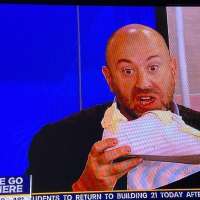
He's done. That was my opinion when this column first ran, my name next to it. Not because the skill vanished. Because the fit never existed, and I believed the veteran-minimum offers had stopped coming. On August 12 he made it official, in a video narrated by Michael B. Jordan, and the market that priced his future closed for good the same afternoon. Stay with me, because before we are through I will still show you the strangest number ever attached to his future, and it was never on Kalshi at all.
Stay ahead of the markets.
Daily insights and expert picks on Kalshi, Polymarket, and what's moving markets.
Free forever. Unsubscribe anytime.
How The Russell Westbrook Market Settled
Kalshi listed Westbrook's NBA future as one event, KXNBANEXTTEAM-26RWESTBROOK18, "Russell Westbrook's Next Team," with 31 NBA outcomes: 30 franchises plus Retires/No Team. (The exchange also carried one non-NBA novelty listing on the event, Israeli club Hapoel Tel-Aviv, which settled to zero along with every franchise.) Each contract settles at $1 if that outcome happens and $0 if it does not, the standard structure I break down in how prediction markets work. The rules were plain: if Westbrook officially retires, or is not signed to any team before October 21, 2026, Retires/No Team resolves to Yes.
He did not make the market wait for the deadline. Trading halted on the afternoon of August 12, 2026, the same day as the announcement, and the exchange settled the whole board: Retires/No Team at $1, every team contract at zero. Here is how the question looked when I read it live on July 31, 12 days before the answer arrived, next to how each contract settled:
| Outcome | Bid / Ask (Jul 31) | Contracts Traded (Jul 31) | Settled |
|---|---|---|---|
| Retires / No Team | 42¢ / 47¢ | 2,018 | Yes, $1 |
| Miami Heat | 23¢ / 26¢ | 1,716 | No, $0 |
| Houston Rockets | 12¢ / 15¢ | 924 | No, $0 |
| Washington Wizards | single-digit ask | 503 | No, $0 |
| Oklahoma City Thunder | single-digit ask | 441 | No, $0 |
July 31, 2026 prices are bid and ask as I read them live that day; the event had traded 6,793 contracts at the time, and 15 of the 31 outcomes had never traded a single contract. The market closed and settled on August 12, 2026. Nothing on this board can be bought or sold now.
The row that mattered was the top one the whole way. Retires/No Team was both the priciest contract on the board and the most traded, with 2,018 contracts of volume and 1,653 still open at my read. The crowd's single most likely answer to "where does Russell Westbrook play next" was nowhere, and nowhere is what happened. Kalshi runs this event family for other stars too, and those boards do not always end this cleanly; the Bronny James next team market is the same structure pointed at a much younger career. A 42-cent contract is closer to a coin flip than a certainty, and every crowded next-team market has room for a surprise. This one landed anyway, and the path it took from 47 cents to a dollar is worth a minute, because it teaches you how these markets die.
How To Read A 42/47 Quote, Worked Through To The Dollar
On July 31 the Retires/No Team contract was bid 42¢ and offered at 47¢. Because every contract on the board settles to a dollar or to nothing, a price here is a probability wearing a dollar sign: the 47-cent ask implied roughly a 47% chance, the bid implied 42%, and what the market believed sat somewhere inside that five-cent spread. The same arithmetic framed the rest of the board: Miami at 23¢/26¢ read as roughly a 23% to 26% chance, Houston as 12% to 15%. That spread is why I kept describing retirement as slightly less likely than a coin flip rather than quoting one tidy number.
Settlement removes the spread and the argument at the same time. Retires/No Team went to its full dollar, and every team contract went to zero, Miami's 26-cent hope and the 1,716 contracts traded on that idea included. By the time the halt came, the last trade had printed at 99 cents, an implied 99%, which is what convergence looks like: the market drifted from "probably" to "obviously" as the news arrived, and the settlement just made it official. So those were the market's claims about the real world, graded. Now let me grade mine.
My Call Held Up. One Detail Did Not.
The reporting through late July agreed with the liquid book. Westbrook was unsigned deep into free agency, described as "not generating much, if any, interest," and likely to open 2026-27 without a team. His last contract was a one-year, $3.6 million veteran minimum with the Sacramento Kings. Asked about his free agency this summer, Westbrook said he honestly does not think about it, that he loves playing basketball, "and if it happens, it works." I wrote that it was not the answer of a man with a signing date circled, and it was not.
I also want to be honest about the part I had wrong, because the disagreement I signed up for was real. At 42/47, retirement was the single most likely outcome but not a consensus; better than half of the priced probability still said he signs somewhere, and Miami's 1,716 contracts traded, with 1,702 still open, actually outran the retirement contract's 1,653 open interest at my read. I said the minimum offers had stopped coming and the silence was the whole answer. Then came the postscript: ESPN's reporting on retirement day said the Kings and the Wizards both had offers on the table this offseason, and he chose to walk away anyway. There was no silence at the end. There were offers, and he answered them himself. I got the ending right and the reason half-wrong, and I will take that trade, because the truth was kinder than my version. He was not unwanted. He was finished, on his own terms, which is the more Westbrook ending by a mile.
To be clear, nothing in this column was ever a recommendation to buy or sell any contract, and the market is closed now regardless. It was one analyst telling you where he landed on a question a market priced every day, and admitting the market was less sure than he was. This time the analyst and the settlement agreed. And that settlement is exactly the standard this lane holds itself to: our market calls are publicly graded, and the running graded track record lives on the Kalshi markets hub, which is rebuilt through the day, rather than frozen onto permanent pages like this one. That record is still young and far too small to prove an edge in either direction, which is exactly why it belongs on a page that updates instead of one that does not. Retirement questions are a genre these markets keep returning to, and not always with this much conviction behind the answer; the Aaron Rodgers retirement market is the natural companion read.
The Same Question On Polymarket Had Almost No Money In It
Now the number I promised you. On the same day I read the Kalshi board, Polymarket's 30 Westbrook team markets showed a combined lifetime volume of $223.30. Not $223,000. Two hundred 23 dollars and 30 cents, across 30 markets, over the entire life of the question. Twenty-one of those markets had never traded at all, and the listed YES prices summed to 252%, which is not a probability distribution. It was a row of unattended vending machines.
That book's nominal favorite was Washington at 48%, a number resting on $8.39 of lifetime volume. Miami showed 34.5% on $34.08. Sacramento showed 19.5% on $125.34. Liquidity is the thing that decides whether a price means anything, and this book had none. Here is the postscript that makes the lesson stick: the retirement-day reporting revealed Washington really had made an offer, so the empty book was accidentally pointing at something real. It still resolved NO, along with all 29 of its neighbors, because a price nobody paid for cannot process the difference between interest and an answer. The liquid book leaned toward retirement and got paid; the empty book shouted a number and got settled to zero. When a liquid book and an empty one disagree, that is not a controversy. One of them was furniture.
This is the lesson I keep coming back to in the Kalshi vs Polymarket comparison: a price is only an opinion if someone paid for it. It is also why the honest answer to whether prediction markets are accurate always begins with "which market, and how much has it traded." And since I am comparing venues, the disclosure belongs right here, not in a footer: OddsShopper carries a sign-up offer for Polymarket and has no commercial relationship with Kalshi. The incentive points at the platform I just called an empty room, which should tell you the comparison is straight.
Thirty-Three Weeks From Starter Props To A Settled Career
What still makes this whole arc land, at least for me, is how fast the question changed shape. Our Polymarket archive holds 200 Westbrook markets. In December 2025, his live props were Points Over 17.5, Assists Over 8.5, Rebounds Over 7.5. Those are lines you write for a man running an offense. About 33 weeks separate those prop lines from a settlement that says he never runs one again.
From "how many assists tonight" to a closed market on whether he had a team at all: that is a stunning distance to travel in roughly the span of a single NBA season, and by his own account he still wanted to play the whole way through. The markets did not do that to him. They just kept score of it faster and more coldly than the rest of us were willing to.
More on this: J.J. McCarthy Next Team Odds: The Roster Said Stay, the Market Says 39% Trade · Bennedict Mathurin Next Team Odds · Kyrie Irving Next Team Odds: Everyone Else Left Dallas · Klay Thompson Next Team Odds: He Chose Miami, And The Market Barely Blinked · NFL Last Undefeated Team Odds: The Rams Drew The Wrong Path
The Career The Board Could Not Price
Pull back far enough and the strangeness is the story, and I mean that generously, because he has earned generosity. Russell Westbrook averaged a triple-double across four different seasons and retires as the NBA's all-time leader with 209 of them. He won the 2016-17 MVP as the first player since Oscar Robertson in 1962 to average a triple-double for a full season, made nine All-Star teams, and leaves the game fifth all-time in assists and 14th in points with 27,176. He also spent a decade attached to the phrase "yeah, but." The box score, the eye test and the win column almost never agreed on him, and everyone simply picked whichever one fit the argument they already wanted to have. That is not a bad player. He is the hardest player of his generation to evaluate, which made him just as hard to price, and the argument around him was always weirder than anything he actually did on the floor.
So it fits that the final market on his career spent its whole life as an argument: a liquid book leaning no while keeping nearly half its probability on yes, an empty book across the street shouting a number nobody paid for, and one television analyst with his hand up saying he's done, name attached. Westbrook almost never produced a consensus in 18 years. Then, on August 12, he produced the only one that ever mattered, and every venue, every holder and every argument settled to the same dollar. "Sometimes you don't even know when you've already watched the end," his retirement video said. "You had to be there. And now it's over."
New to this corner of the site? OddsShopper's tools compare odds and prices across every major sportsbook, our analysts post free expert picks today, and OddsShopper Pro comes with a free week trial whenever you are curious enough to look under the hood.
And if you want to go deeper on how these markets work in practice, our Kalshi markets hub is the place to start.