How To Bet On College Basketball (A Beginner's Guide)
College basketball can be one of the best sports on the board to bet, and a forgiving one for a newcomer who plays it smart. The catch is that it punishes anyone who treats it like the NBA. If you are coming over from pro hoops or stepping into your first hardwood season, a handful of habits separate the bettors who build an edge from the ones who quietly bleed money to the sportsbook's cut. This guide from the OddsShopper team walks through the four that matter most.
Why College Basketball Is One Of The Best Sports To Bet
The thing that makes college basketball great to bet is the same thing that makes it intimidating: there is a flood of it. The sport runs more than 360 teams across 30-plus conferences. Pull up a typical Tuesday "lobby" of games and you will see names most casual bettors have never heard, schools like Northern Iowa, UNC Asheville, Florida A&M, or Presbyterian sitting right next to the blue bloods.
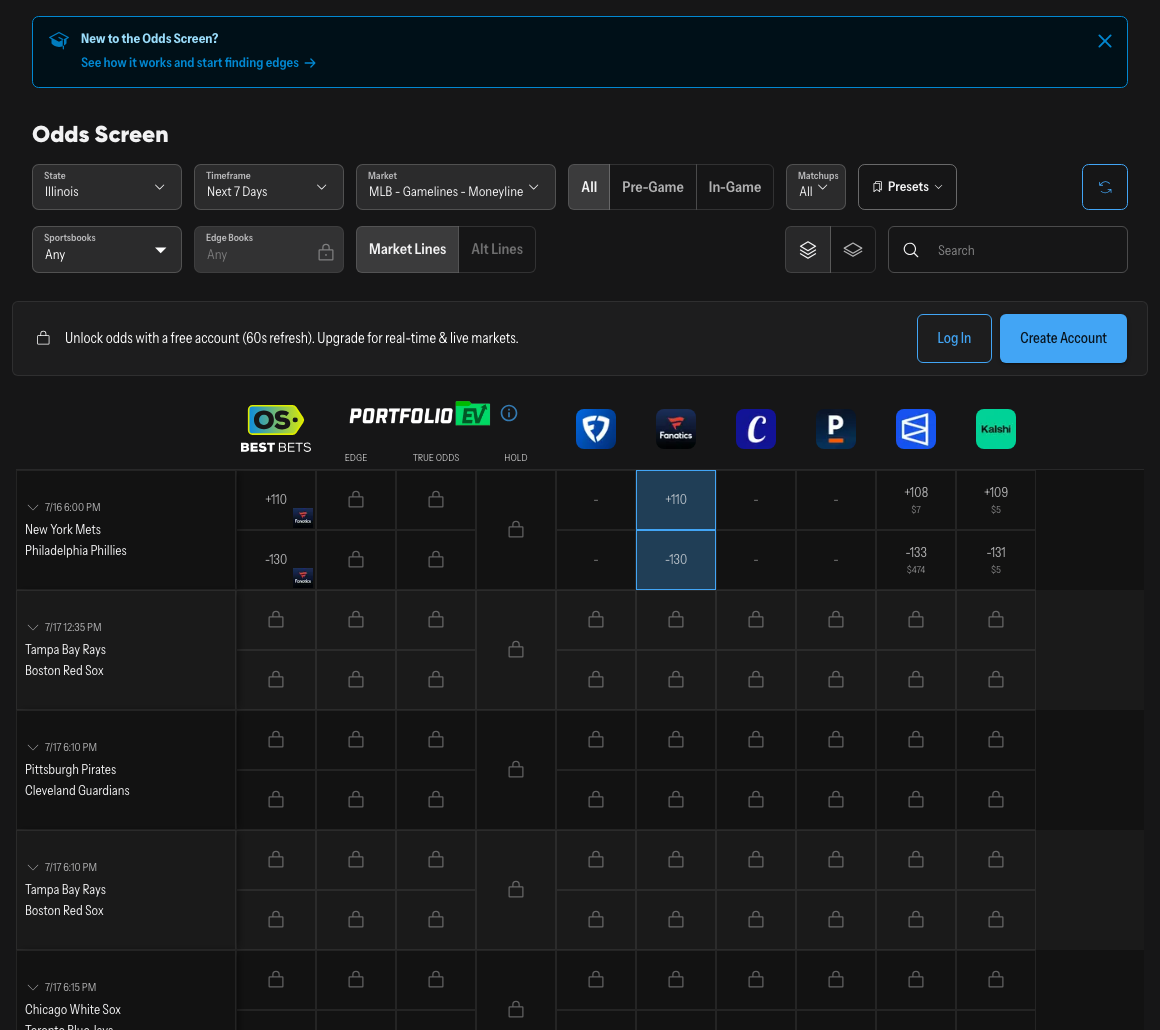
The OddsShopper Odds Screen.
That volume is the opportunity. With so many games and so many obscure teams, a bettor who specializes can find spots the broader market may not price as tightly as it does an NFL Sunday or an NBA marquee matchup. Reliable public-facing data on a lot of these programs is thin, which is exactly why a disciplined, focused process pays off. The trick is not trying to drink from the whole firehose at once.
Narrow Your Focus: Pick A Conference, Not All 360 Teams
The single most important habit for a new college basketball bettor is to narrow your focus, especially early in the season. Nobody knows the ins and outs of all 360-plus teams. Convince yourself you are going to bet every conference and every type of game, and you will be guessing on most of them, and guessing against a number is how a bankroll disappears.
Ask yourself which is actually more manageable: knowing a little about 360 teams, or knowing a ton about 10 or 20? Pick one conference. Maybe two. Learn those teams cold:
- Rotations — who plays, who closes games, who sits in foul trouble.
- Coaching — tempo, defensive scheme, how a staff handles a lead or a deficit.
- Injuries And Availability — the news that moves a number before the public catches up.
When you live inside a couple of conferences, you stop missing the information that decides games. You become the sharper side of the bet instead of the casual the line is built to beat. The wider college landscape is, in a word, lawless. You are not going to find reliable, public-facing data on a mid-major's bench, so build a confined process and stay inside it rather than firing on a Tuesday-night game between two teams you cannot name a single player on.
This is also where your money management does the quiet work. Diving into a new sport comes with inevitable cold stretches, so size your bets to survive them. New to that side of it? Start with our guide to bankroll management for sports betting.
Track The Transfer Portal And Freshmen (Returning Minutes Lie)
Here is the trap that catches even experienced bettors who are new to college: returning production does not mean what it means in the pros. The NBA gives you a franchise player for a decade. College basketball gives you constant turnover, and the transfer portal has only made it wilder. A roster can be reshaped significantly in a single offseason.
Take a blue blood like Kentucky. Every year the casual read is the same: "They only return one guy from the rotation, so they must be taking a step back." What that surface-level take misses is the four NBA-ready freshmen who just walked in the door, or the two star transfers who arrived ready to start. Lean on returning minutes alone and you will badly misprice the big programs.
The flip side matters too. At the mid-major and lower-major level, where players are not jumping to the NBA, stability and senior leadership carry more weight. A veteran-led mid-major that brings everyone back is a different (and often underrated) situation than a one-and-done factory.
The takeaway is simple: before you break down a team, know who is in and who is out. Freshmen, especially top-end recruits, and impact transfers reshape a program more than any returning stat line tells you. It is a leak a lot of bettors never plug. A few minutes on a team's roster news closes it.
TipEarly in the season is when "returning minutes" reads are most wrong and the lines are softest. That overlap, public misreads against a soft number, is often one of the better windows on the college basketball calendar.
Shop Your Odds: The Single Biggest Edge
If you take one thing from this guide, take this one. Shop your odds. You have almost certainly heard it before and told yourself you would get around to it. Getting around to it can be the difference between keeping more of your edge and quietly handing value back to the book, and it matters more in college basketball than almost anywhere else.
Think about it away from sports for a second. You would never pay $8 for the exact same item at one store when it is $5 across the street, especially if you had to buy it every single day. That $3 gap, every day, adds up to real money. Betting is identical. The same bet, the same side, the same outcome, priced differently at two books, and one of them quietly hands you more money for doing nothing different.
Because the college market is less consensus than the NBA, those price gaps are wider. Different sportsbooks land on different numbers for the same game. This habit has a name, line shopping, and it is the most reliable edge a beginner can build.
A Worked Line-Shopping Example
Here is what line shopping looks like in practice:
| Bet (Same Side, Same Game) | Book A | Book B | Why it matters |
|---|---|---|---|
| Favorite Moneyline | -134 | -145 | Book A risks less to win the same amount |
| Underdog Moneyline (Per $100) | +390 | +325 | Book A pays $65 more on a winner |
| Point Spread | +19 | +17 | The extra two points wins you push-and-loss games |
None of those edges feel huge in isolation. Stacked across a full season of bets, they are the difference between beating the vig and feeding it. This is also the core of betting with positive expected value: a better price always improves your expected value and lowers your break-even win rate, which is the entire game. (It does not, on its own, turn a bad bet into a good one, but it makes every good bet better.) If you want the deeper version of why the number you take is everything, our guide to reading betting odds covers it.
To shop well you need accounts at multiple sportsbooks (DraftKings 🎁, FanDuel 🎁, BetMGM 🎁, Caesars, and so on) so you can compare. You do not need every book on earth, but more is better, because every extra book is another shot at the best number. Then you need a fast way to compare them, which is exactly the job the free OddsShopper odds screen does for every college basketball game on the board.
For the level beyond best-price, OS Pro adds the Portfolio EV tool and the Sharp Sportsbook Algorithm, which compare each book's number against a fair, de-vigged market price and flag the bets that are in your favor, not just the prettiest line on the screen. In a soft market like college basketball, that is where the real mispricings hide.
New to OddsShopper?It scans 100-plus sportsbooks and instantly shows you which one is offering the best price on the bet you already want to make, the manual work this section just described, done in seconds across every NCAAB game. You can try it free for 7 days, and code SMARTBET20 takes 20% off OS Pro or OS Core if you subscribe. Start your free trial
During the season, you can pull up the free OddsShopper college basketball odds screen and compare the best available price on every game on the board. Track the difference for a month, and the gap becomes obvious without you making a single different pick.
Learn The Rules: College Basketball Isn't The NBA
This one sounds obvious, but it trips up more new bettors than any other: the rules are different from the NBA, and the differences move betting numbers. The rules below are for men's college basketball (NCAAB), which is what most "how to bet college basketball" content refers to; women's college basketball uses quarters and a different bonus structure. Here is the quick comparison:
| College Basketball | NBA | |
|---|---|---|
| Game Clock | Two 20-minute halves | Four 12-minute quarters |
| Typical Total | Often in the 130s | Usually 200 or more |
| Bonus Free Throws | One-and-one at 7 team fouls | Two shots in the penalty |
A few of those differences in detail:
- Two 20-Minute Halves, not four 12-minute quarters. The game is shorter, which feeds directly into the next point.
- Lower Totals. Because the clock structure is different, college totals sit well below NBA totals, and numbers in the 130s are common. See one and your first instinct is "easy over." It is not. That is simply where college totals live, so price each one against the sport's baseline, not the NBA's.
- The Foul Rules And Free-Throw Situation Are Different. When a team reaches seven team fouls in a half, the other team shoots a one-and-one: make the first free throw and you get a second; miss it and the ball is live for a rebound. That single quirk swings the end of close games, which makes it essential if you bet live, totals, or player props.
Understanding these basics before you fire is what keeps you from making a "value" bet that was never value at all. That is the floor, not the ceiling, but you cannot skip it.
Put It Together
College basketball rewards bettors who play it on its own terms. Narrow your focus to a conference or two and actually know those teams. Read the transfer portal and the freshmen instead of trusting returning minutes. Shop every number, because the soft college market makes the best price worth more here than almost anywhere. And learn the rules that make the sport tick. Do those four things, stay disciplined through the cold stretches, and you give yourself a real, repeatable edge.
When you are ready to go from solid to sharp, our sharp betting guide is the next step.
Frequently Asked Questions
Is college basketball good for beginners to bet? Yes, for a beginner who narrows their focus. The sheer volume of games and obscure teams leaves softer, less-sharpened lines than the NBA, which creates spots a disciplined newcomer can attack. The catch is that trying to bet everything is how new bettors lose, so pick a conference or two rather than firing on the whole board.
What is the most important college basketball betting tip? Shop your odds. Because the college market is less consensus than the pros, the same bet is often priced noticeably differently across sportsbooks. Always taking the best available number adds up to real money over a season without changing a single pick.
Why are college basketball totals so low compared to the NBA? College games are two 20-minute halves instead of four 12-minute quarters, so there is less game time and fewer possessions. Totals in the 130s are normal. Price each total against the college baseline, not what you are used to in the NBA.
Why can't I just look at how many minutes a team returns? The transfer portal and one-and-done freshmen reshape college rosters every offseason, so returning production is misleading. A blue blood that "returns one guy" may have added several NBA-caliber freshmen or star transfers. Always check who is in and who is out before you bet.
How many sportsbooks do I need to bet college basketball? You do not need every book, but more is better, because each extra book is another chance at the best price. A few major ones, compared on a tool like the OddsShopper odds screen, is enough to consistently catch the best number.
New to OddsShopper? It scans 100-plus sportsbooks and flags the bets priced in your favor, so you never leave the better college basketball number on the table again. Try it free for 7 days, and code SMARTBET20 takes 20% off OS Pro or OS Core if you subscribe. Start your free trial
More on this: \ud83c\udfc8 College Football Week 0 Odds: All 8 Games, Priced Early · College Football Betting Tips: 3 Edges The Market Is Slow To Price · Kalshi College Football Picks This Week: Every Board, Scored · How To Bet College Football On Kalshi: Markets, Prices And Where The Value Is · College Football Parlays: Why Most Lose, Build Smarter