This is Lindy's Long Balls: every night I dig through the prediction-market home run board looking for MLB dingers priced like gas station scratch-offs. This column is both things at once, an information board you can shop from and the three plays I'm actually on. Wednesday, August 12 handed me something clean: three hitters, three different flavors, all sitting at 13 cents on Kalshi to leave the yard when I pulled the board. It's the value menu at Taco Bell circa 2004: everything's cheap, and somehow it all slaps. The story of this card is one number beating another. Thirteen cents works out to roughly +625 after fees, and on my scan that beat the best sportsbook price on all three names. Everything else in this article is context that explains the prices; the price gap is the only edge I'm claiming. One thing to keep in your head as you read is the number 18. It decides the Rodríguez and Albies writeups; Cole Young gets to ignore it entirely, and that's the whole point of his.
All numbers below are from my scan as of Wednesday morning, August 12, 2026. Prices on Kalshi and at the books move all day, so treat them as a snapshot rather than a live quote, and check the current price before you touch anything.
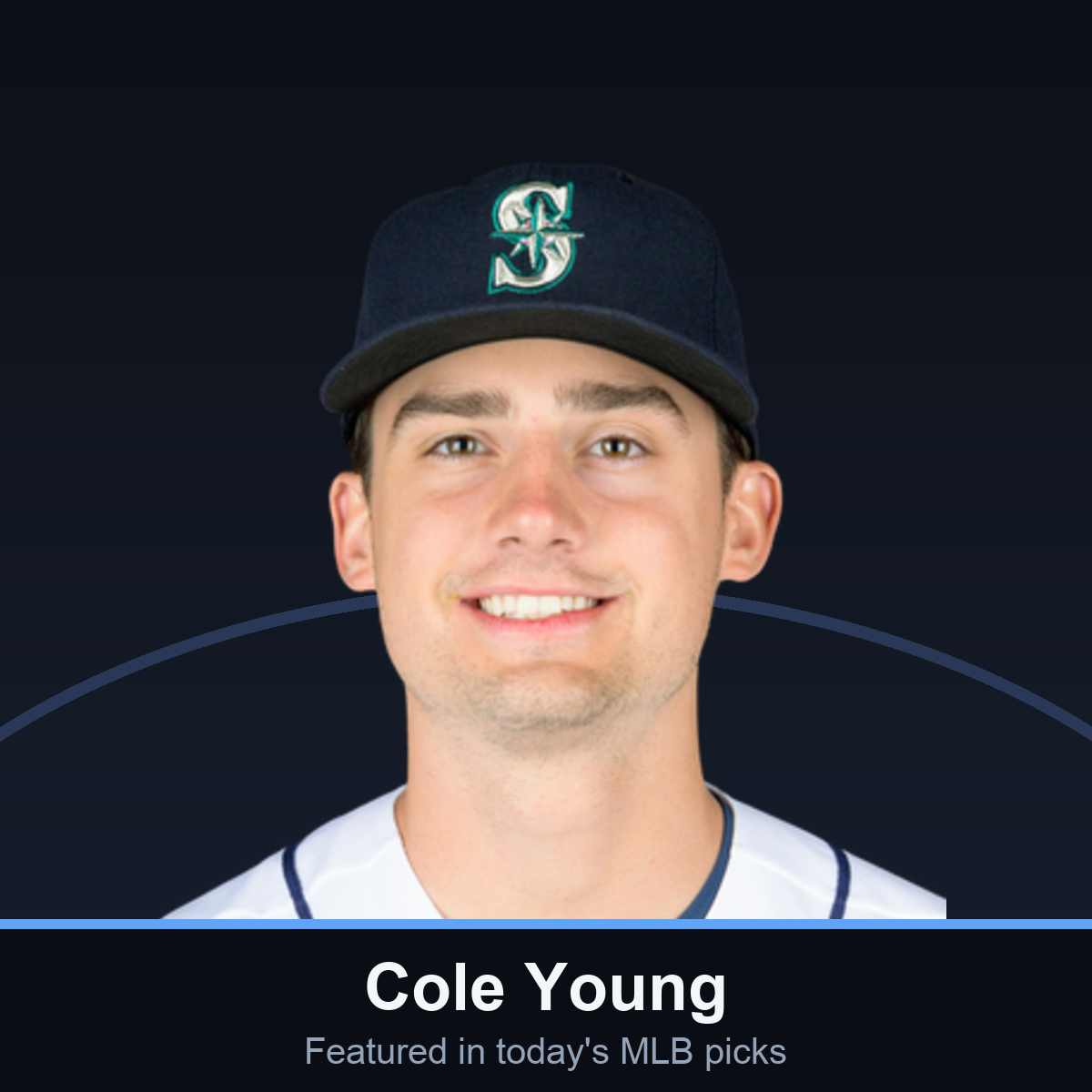
Cole Young, one of the featured players on today's card.
The Quick Answer
My three Kalshi home run picks for Wednesday, August 12: Cole Young (Mariners at Yankees), Héctor Rodríguez (Reds at White Sox) and Ozzie Albies (Braves vs. Mets), each at 13 cents on my scan, roughly +625 after Kalshi's taker fee, which beat every sportsbook home run price I found on all three. The fee math, the full board and why an 18-degree launch angle decides two of these plays are below.
The Board
| Hitter | Game | Kalshi Yes (at scan) | Effective odds after fees | Best book (at scan) |
|---|---|---|---|---|
| Cole Young (SEA) | Mariners @ Yankees | 13¢ | ~+625 | +600 (FanDuel) |
| Héctor Rodríguez (CIN) | Reds @ White Sox | 13¢ | ~+625 | +549 (DraftKings) |
| Ozzie Albies (ATL) | Braves vs. Mets | 13¢ | ~+625 | +500 to +550 (most books) |
The row that matters most is the bottom one. Young at +625 versus +600 is a real but modest gap. Albies at +625 versus a book consensus near +500 (with Caesars down at +380, which you can ignore) is a 125-point difference on the same outcome, and that gap is the whole reason he's on my card. If you want every name beyond my three, the full MLB home run board runs the entire card of prices.
The Fee Math Worked Example: Why 13 Cents Isn't Really +669
A 13-cent Yes looks like +669 on its face: risk 13 to win 87. But Kalshi charges a taker fee of roughly 7% × price × (1 − price). Worked through at 13 cents, that's 0.07 × 0.13 × 0.87 ≈ 0.79 cents per contract, so your true cost is about 13.79 cents, and 86.21 ÷ 13.79 converts to roughly +625. A winning contract settles Yes and pays a flat $1 no matter what you paid for it, which is why the fee-adjusted entry price is the number that has to win the comparison against a sportsbook prop. The sticker price flatters every cheap contract; the adjusted one is the honest quote. If that adjustment is new to you, the Kalshi fees breakdown and the de-vig guide for Kalshi prices cover it in full.
One nerd-corner note before the picks, because it's the promised number 18: sweet-spot% counts batted balls launched between 8 and 32 degrees, but a big chunk of that band is the 8-to-18-degree line drives that become doubles, not dingers. The launch window that actually clears fences starts around 18 to 20 degrees. So whenever I cite contact quality, I'm asking one question: does this guy's good contact live in the doubles band or the seats band?
The rule this column lives bypark factors, platoon splits and barrel rates explain a price; they never beat one. The only edge worth betting is the number itself, and on my Wednesday scan the fee-adjusted 13 cents beat every book on the board.
Cole Young, 1+ HR — Mariners @ Yankees
Young is the one pick where the case isn't the hitter's batted-ball profile. His Statcast line (5.0% barrel rate, .417 xSLG per Savant) is ordinary, and I'm not pretending otherwise. The case is 14 home runs already this year from a lefty bat, an ISO that jumps to .169 against right-handed pitching, and the single most lefty-friendly building in baseball: Yankee Stadium, with its right-field porch at 314 feet.
The other half is Will Warren. On my scan of his season, ten of the 15 homers he's allowed have come off left-handed bats, who are slugging .456 with a .186 ISO against him, and his strikeout rate against lefties craters from 27.6% to 19.5%, meaning more balls in play from the side doing the damage. Savant has him at 7.4% barrels allowed and a .421 xSLG against. Warren does suppress launch angle overall, and that's exactly where the porch matters: a lefty pull hitter at Yankee Stadium doesn't need to live above the 18-degree line. He needs 315 feet in the correct direction, and the building does the rest. This is the Happy Gilmore of home run setups. It doesn't have to be pretty. It just has to travel.
Héctor Rodríguez, 1+ HR — Reds @ White Sox
Full honesty first: Rodríguez is a couple of weeks into his big-league career, still looking for homer No. 1, and his early MLB sample is thin enough that his .183 xSLG so far tells you nothing except that it's early. What I'm buying is the tool: top-of-the-Reds-system bat speed, talked about in the same breath as Elly De La Cruz, with pull-side power that produced 27 minor-league homers and an .880 OPS last season.
Because Young's writeup was a matchup case, this one is too, and it's stronger. Rodríguez bats left-handed, and Luis Castillo has been demolished by lefties this year: 13 of his 17 homers allowed, with a .533 SLG against left-handed bats on my scan. The season-long numbers agree, from a 2.25 HR/9 to a 9.7% barrel rate allowed and a .452 xSLG against per Savant. And here's the callback: Castillo's average launch angle allowed has climbed to 16.6 degrees, drifting right up toward that 18-degree line where doubles turn into dingers. Elite bat speed, from the side of the plate Castillo can't put away, at Rate Field in thick August humidity. When homer No. 1 comes, I want to be holding the ticket.
Ozzie Albies, 1+ HR — Braves Vs. Mets
The most established name of the trio, and the cleanest platoon read on the board. The Mets are starting lefty Zac Thornton, which flips the switch-hitting Albies to the right side, and right-handed Ozzie is a different hitter: a .295 average and .489 slug against lefties this year, a .194 ISO in that split versus .167 from the left side.
Here's where the number 18 pays off a second time. Albies runs a 33.5% sweet-spot rate with an 18.3-degree average launch angle, so his quality contact isn't pooled in the doubles band; it's sitting on the threshold where balls start leaving. His blended Statcast line (4.5% barrel, .363 xSLG per Savant) is what drags his market-wide price down, but that blend is polluted by his weaker left-handed swings. The books price full-season Ozzie; tonight the matchup serves up right-handed-only Ozzie, at Truist Park, a night after he homered. The honest risk is Thornton himself, whose 2.52 ERA and 0.69 HR/9 say he keeps the ball in the yard, though his 8.8% barrels allowed and .423 xSLG against suggest he's been more hittable than that surface line. Getting roughly +625 on the good half of a platoon split the market averages away is as clean a price gap as this column finds.
More on this: Lindy's Long Balls: 107 In The Shade, A Comeback Arm Walks Into The Furnace · LINDY'S LONG BALLS: The Show Got There First \u2014 Soup-Thick Air At Camden · LINDY'S LONG BALLS: The Account Has Officially DOUBLED · LINDY'S LONG BALLS: Free Bombs To Start The Week \u2014 Coors Does · LINDY'S LONG BALLS: Four Straight And Feeling Dangerous \u2014 Double-Dipping
The Wrap
Three swings at 13 cents apiece, and two of them ride the same engine, a starter who serves up left-handed power facing a lefty bat, while the third buys the strong side of a platoon the books are pricing as a blend. You won't hit all three, and you probably won't hit two; at these prices you don't need to. One ball in the seats pays for the whole night with change left over. Before you tail any of them, do what the fee-math section preaches: confirm the current Kalshi price still clears the book side on the live odds screen, where you can shop the number across every major book, and if prediction markets are new territory, start with how to bet MLB on Kalshi. My full Wednesday card of sides, totals and props is in Lindy's MLB Picks for August 12, and there are more free expert picks today from the rest of the OddsShopper crew.
Sprinkle responsibly. And if Héctor runs into one tonight, remember who told you the power was coming.