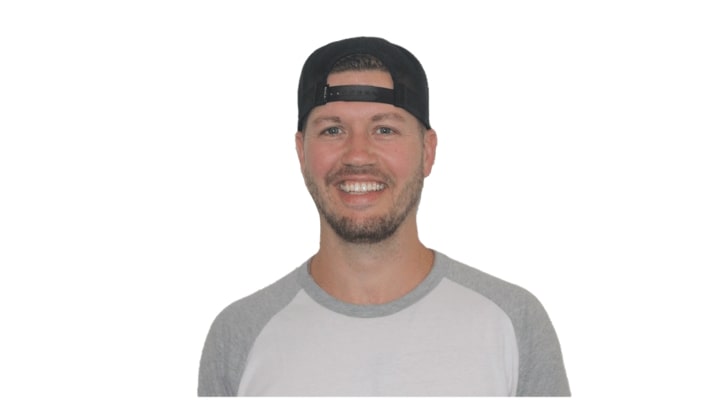
This is the steelman case for John Shulli. The companion piece argues the other side: Why Michael Katz Will Win the Delaware Republican Senate Primary.
Prices as of August 12, 2026, 2:15 p.m. ET
The Quick Answer
Kalshi's Delaware Republican nominee market, KXSENATEDER-26, prices John Shulli at an 11-cent bid against a 15-cent ask, an implied chance somewhere between 11% and 15%, with the last trade down at 10 cents. Michael Katz, the other name on the exchange's board, quotes 86 to 89, an implied 86% to 89%, though his last trade printed at 90.1. At the midpoints the book splits the event roughly 13% to 87%. There is no AI-panel board for this primary, so the market itself is the read, and it leans on a strange fact: the 15-cent candidate is the one leading the money race. FEC reports through June 30 show Shulli, an instructor at the U.S. Army War College, out-raising Katz $105,295 to $70,152, outspending him nearly two to one, and carrying more cash into the final stretch. The primary is Tuesday, September 15, 2026, just under five weeks from these prices. The full nominee board, the worked math on the trade, and the honest bear case are below.
The Market Right Now
The event is a pair of candidate markets, one per Republican the exchange lists. Per the contract rules, each resolves Yes if that candidate wins the Republican nomination to contest Delaware's 2026 Class II Senate seat, the one Democratic incumbent Chris Coons holds while seeking a third full term. Katz's contract is bid 86 against an 89-cent ask. Shulli's is bid 11 against a 15-cent ask. This book, unlike some primary boards, has real activity: about 2,200 contracts of lifetime volume and roughly 1,330 of open interest on Shulli, about 2,450 and 1,250 on Katz. Real, but not deep. The two asks sum to 104 cents while the two bids sum to 97, a seven-cent band of honest uncertainty, and the last prints on both sides sit outside today's quotes: Shulli last traded at 10, a point under his current bid, and Katz last traded at 90.1, just over his current ask. Both gaps lean the same direction, toward the challenger, since the last time anyone actually traded.
One more piece of context the nominee board sits inside: Kalshi's November winner market for this seat prices the Republican side at 1.6 to 2.5 cents, an implied 1.6% to 2.5%, with the Democratic side at 97 to 98.5 cents, an implied 97% to 98.5%. Republicans last won a Delaware Senate race in 1994. Whoever wins on September 15 inherits a steep November question, and that fact does real work in the case below.
Stay ahead of the markets.
Daily insights and expert picks on Kalshi, Polymarket, and what's moving markets.
Free forever. Unsubscribe anytime.
The Case
A 15-cent ask is only worth writing about if there are real mechanisms that could fill it. Here they are, one at a time.
The Money Is On The 15-Cent Side
Start with the number that usually belongs to the favorite. Through June 30, per the FEC, Shulli had raised $105,295 to Katz's $70,152, spent $59,182 to Katz's $32,148, and held $46,112 in cash on hand to Katz's $38,004. Every column of the money table belongs to the underdog. In most states a $35,000 fundraising edge is a rounding error; in Delaware, a single small state where a statewide primary is fought at retail scale, it buys a meaningful share of all the mail, gas and radio a race like this will see. The spending gap matters as much as the raising gap: Shulli has already put nearly twice as many dollars to work introducing himself, and he still enters the last five weeks with the bigger reserve. Markets price this kind of underdog at 15 cents when the favorite has machinery the money can't match. Katz's filings show no such machinery.
A Party Primary Prices Party Pedigree
Katz's résumé is statewide in a way Shulli's is not, and the bear case below gives it full credit. But look at its labels. He served in the state senate from 2009 to 2013 as a Democrat. He ran for U.S. Senate in 2024 as the Independent Party of Delaware's nominee. In 2026 he is asking Republican primary voters for the nomination, his third ballot line in three acts. The mechanics of that switch show up in his own endorsements: when the Independent Party of Delaware backed him again in May, it urged its supporters to act before the May 29 registration deadline, because a closed-primary electorate has to be joined before it can be borrowed. Shulli, by contrast, arrives without a cross-party history to explain, and his campaign has the money lead to make that contrast the argument. A primary is the one election where partisan pedigree is not a tiebreaker but the actual question on the ballot, and one candidate on this ballot has run under two other banners in the last three cycles.
The Prize Context Softens The Establishment Case
Katz's strongest institutional asset is the Republican State Committee of Delaware's endorsement, won at the delegate level in April. The usual force of a party committee's blessing is electability: back the tested name, win in November. Now look back at the November board from above. The general-election market prices the Republican side at an implied 1.6% to 2.5%, and no Republican has won this race since 1994. The November margin-of-victory ladder says the same thing more loudly: it prices Democrats winning by 28 or more points at an implied 51% to 58%, and by 14 or more at an implied 87% to 93.8%. When the market says November is close to unwinnable either way, the electability argument that powers an establishment endorsement loses most of its practical force, and the primary becomes a choice of messenger instead. That is the terrain where a first-time candidate with a national-security teaching résumé and the bigger war chest can beat a thrice-relabeled statewide veteran: not by out-organizing the party, but by out-spending and out-introducing him in a race the party's own pragmatic logic no longer dominates.
The Book Says Soft, Not Settled
Put the mechanisms together and look at the quote again. A 15-cent ask implies Shulli wins about one time in seven; the 11-cent bid implies one in nine. Those would be defensible numbers against a favorite who led the money race and carried a clean party history. Against a favorite who trails every FEC column, they read like a price built on name recognition and left unattended. The book's own shape says as much: a four-cent-wide underdog quote, a seven-cent uncertainty band across the event, and last trades on both sides that today's quotes have already drifted past, toward Shulli. Under 5,000 contracts of lifetime volume across the whole event means a few determined buyers, one local poll, or a well-covered candidate forum could move this price by multiples. Thin books do not drift, they jump.
A Worked Example Of The Trade
Suppose a trader buys the steelman at the quote. One hundred Yes contracts on KXSENATEDER-26-JSHU at the 15-cent ask cost $15.00 and pay $100.00 if Shulli wins the nomination: $85.00 of gross profit, about 5.7 times the stake, before exchange fees. Unlike a primary-week binary, this position has five weeks of calendar to work with, and that changes the underdog math. With an 11-cent bid already standing under the position, any repricing event, a strong pre-primary FEC report, a public poll, a debate moment, could lift the contract into the 30s or 40s and offer an exit long before settlement risk arrives on September 15. The position can still ride to zero, and the bear case below is the reason. These are model estimates, not predictions of fact and not financial advice.
The Bear Case
Every steelman owes you its weakest link, and this one has a clear one: Katz is the only candidate on this board who has ever won an election, and his statewide presence is current, not historical. He was on a Delaware-wide ballot as recently as 2024, campaigns with a doctor's title as Dr. Mike Katz, and holds the endorsements that structure a small-state primary: the Republican State Committee of Delaware, the Independent Party of Delaware, and the University of Delaware College Republicans. Money is Shulli's whole measurable edge, and $105,295 is a lead over Katz, not machinery in any absolute sense; nothing in the fetched record shows Shulli on a prior statewide ballot. The board also lists only what the exchange lists: a third Republican, Alec Coppola, has an FEC file but no Kalshi market, and his share of the vote is priced nowhere. And the strongest signal on the board is the simplest: real buyers hold Katz at 86 cents with about 1,250 contracts of open interest behind them, conviction the Shulli book has not answered. If name recognition and party endorsement do what they usually do in low-turnout primaries, 15 cents was the fair side of this quote all along.
What Would Confirm It
Three observable markers, in order of arrival. First, prints: the Shulli ask lifting into the 20s on actual trades, rather than quote drift, would mean the money case started registering; his bid has already firmed a point past the last trade. Second, the filings: the next FEC reports covering the run-up to the primary either extend Shulli's money lead into the decisive stretch or show Katz's institutional support finally converting into dollars. Third, the favorite's floor: Katz's 86-cent bid slipping under 80 would say the conviction holding this price is thinner than the open interest suggests. Primary night itself, September 15, is the last and only signal that matters, and the certified nomination settles the contract.
More on this: 2026 Senate Races: Every Kalshi Board We Track · Why John E. Sununu (R) Will Win the NH Senate Primary · Why Michael Katz (R) Will Win the Delaware Senate Primary · Why Raymond McKay (R) Will Win the Rhode Island Senate Primary · Why John Deaton (R) Will Win Massachusetts' Senate Primary
The Board
The full Republican nominee field as the exchange lists it, with the November inventory it feeds into. Nominee quotes as of the timestamp above; general-election, margin and turnout quotes from the same snapshot:
| Market | Contract | Bid | Ask | Last |
|---|---|---|---|---|
| Republican Nominee (KXSENATEDER-26) | Michael Katz | 86¢ | 89¢ | 90.1¢ |
| Republican Nominee (KXSENATEDER-26) | John Shulli | 11¢ | 15¢ | 10¢ |
| DE Senate Winner, Nov (SENATEDE-26) | Democratic party | 97¢ | 98.5¢ | 98.1¢ |
| DE Senate Winner, Nov (SENATEDE-26) | Republican party | 1.6¢ | 2.5¢ | 2.5¢ |
| Margin Of Victory, Nov | Democrats by 14+ | 87¢ | 93.8¢ | 93.8¢ |
| Margin Of Victory, Nov | Democrats by 28+ | 51¢ | 58¢ | 52¢ |
| Margin Of Victory, Nov | Democrats by 34+ | 25¢ | 32¢ | — |
| DE Senate Turnout, Nov | Above 440K votes | 25¢ | 32¢ | 38¢ |
The margin and turnout boards are November markets and price the general election, not this primary. Alec Coppola has filed with the FEC but carries no Kalshi market. Model estimates, not predictions of fact and not financial advice.
Where this race fits on the wider map: the 2026 Senate election odds board tracks every seat, the 2026 balance-of-power verdict prices the four chamber-control outcomes, and today's Kalshi picks carries the day's live reads. Election markets are their own lane here; if sports is yours, the free expert picks today hub carries the day's board. Once the nomination is decided, the general-election steelmen for this seat take over: Why Democrats Will Win the Delaware Senate Race and Why Republicans Will Win the Delaware Senate Race.