Houston by 3 or more at Indianapolis was the widest gap on the Week 3 board, 54.5 cents on Kalshi on Tuesday against 32 from six AI models that priced the game without seeing a price, and it paid nothing: Colts 19, Texans 17. All 16 contracts have settled and the models' side closed Week 3 at 11-5. The last row in was Monday night, Bears 27, Eagles 7, so Philadelphia by 4 or more paid nothing on a row the models had passed. The nine picks went 5-4, and every one of the five wins was an outright upset. Graded through Saturday, October 3; the Week 3 numbers below are frozen. Week 1 went 8-6 for the models' side and Week 2 went 7-9; all three weeks are graded below.
The Nine Picks
These are the rows where the models and the market are far enough apart to matter. Kalshi prices are the bid-ask midpoint at 7:15 a.m. ET on Tuesday, September 22, the morning the picks were made; the models' numbers never changed and the market's did. The price at kickoff and how each row paid are in the graded table under the board. On every row the models' side was the underdog, so a pick paid when the favorite failed to cover the number.
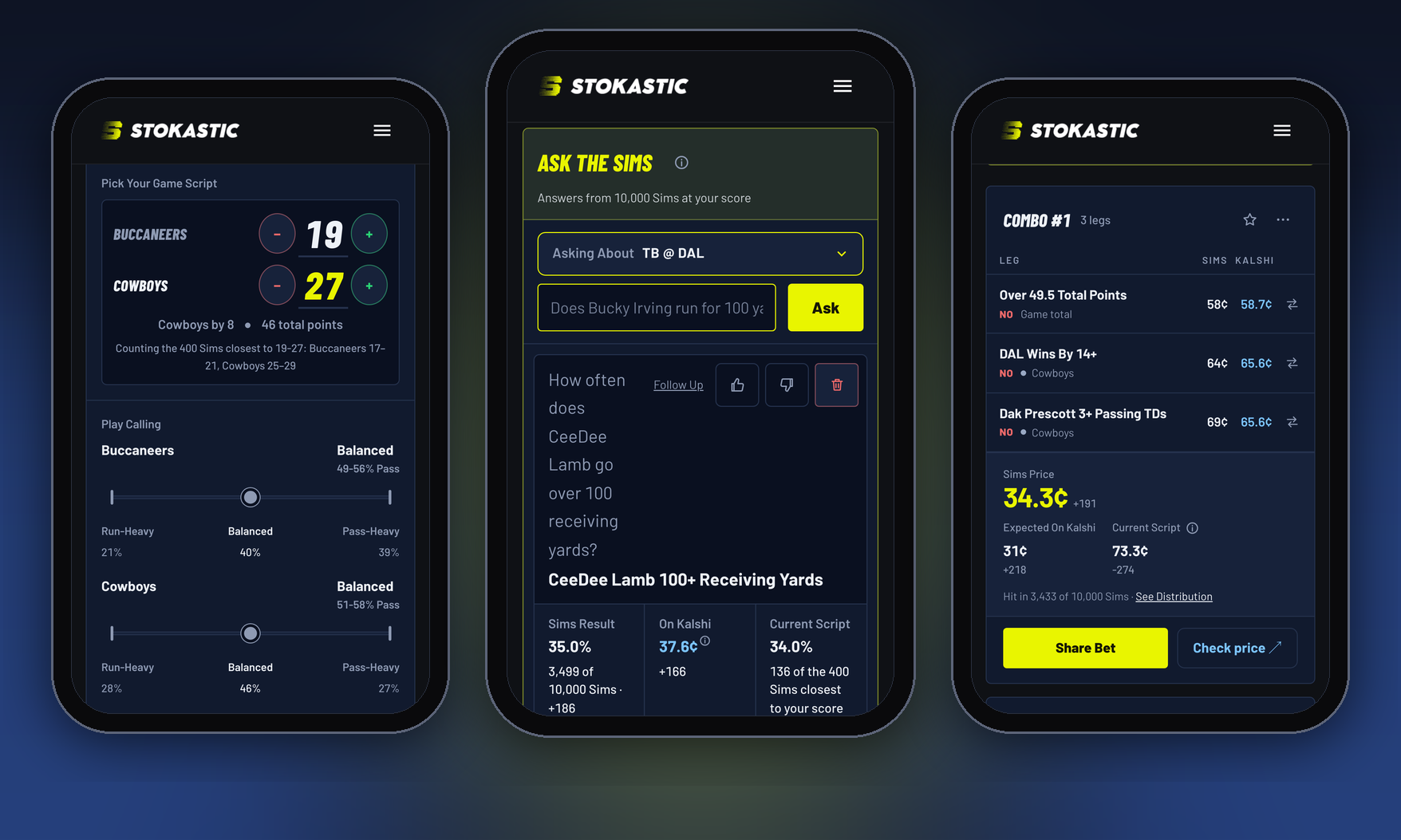 Price the combo before you buy it. The Kalshi Combo Simulator plays this week's NFL game 10,000 times and prices any combo you build next to the price on Kalshi, on your phone, free, no login.
| Game | Contract | Models | Kalshi Tue | Difference |
|---|---|---|---|---|
| Texans at Colts | Houston by 3+ | 32¢ | 54.5¢ (about -120) | -22.0 |
| Rams at Broncos | Los Angeles by 3+ | 34¢ | 51.5¢ (about -106) | -17.5 |
| Chiefs at Dolphins | Kansas City by 11+ | 34¢ | 49.5¢ (about +102) | -15.5 |
| Raiders at Saints | New Orleans by 4+ | 32¢ | 46.5¢ (about +115) | -14.5 |
| Patriots at Jaguars | Jacksonville by 3+ | 42¢ | 55.5¢ (about -125) | -14.0 |
| Panthers at Browns | Carolina by 3+ | 40¢ | 52.5¢ (about -111) | -13.0 |
| Titans at Giants | New York by 4+ | 34¢ | 47¢ (about +113) | -13.0 |
| Jets at Lions | Detroit by 7+ | 43¢ | 51.5¢ (about -106) | -8.5 |
| Bengals at Steelers | Cincinnati by 4+ | 40¢ | 48.5¢ (about +106) | -8.0 |
Two of the nine are the same argument as the winners board: the models make Denver a home favorite over the Rams while the Rams by 2.5 trades at 51.5, and they make Raiders at Saints a coin flip while New Orleans by 3.5 trades at 46.5. The other seven are margin calls, where the models agree on the favorite and refuse the number.
The Four Games Worth Your Time
Texans at Colts: Houston Has Not Scored
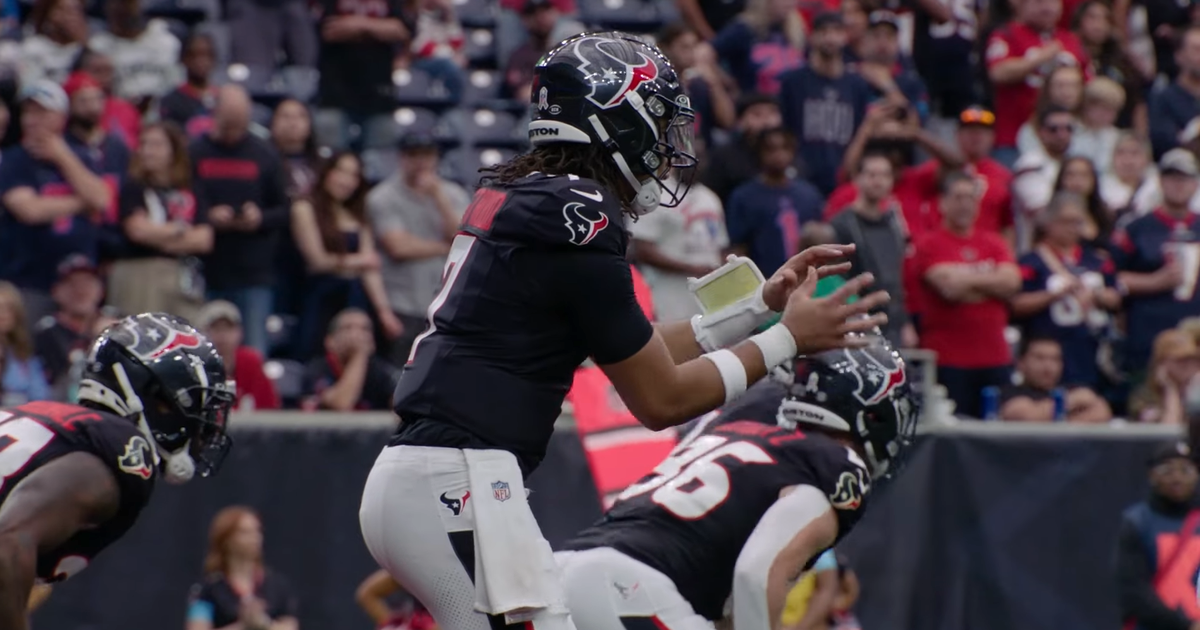
The widest gap on the board, 22 cents. Houston went 12-5 last season, and a three-point road win still trades as a coin flip. The models will not pay it because the 2026 Texans have not scored: 37 points in two games, a 20-6 home loss to Cincinnati, and a Sunday without Nico Collins, Jadeveon Clowney and Ed Ingram. Indianapolis lost at Kansas City in overtime and played 10 one-score games last year. The six numbers on Houston by 3 run from 28 to 36.
Settled: Colts 19, Texans 17. Houston by 3 paid nothing from 46 cents at kickoff, the models' 32 was closer by 14, and Houston has now scored 54 points in three games.
Rams at Broncos: The Models Have Denver Winning
The Rams are a 2.5-point road favorite on Kalshi, 51.5 cents for Los Angeles by 3 or more at Mile High. The models put that contract at 34, and their winners board has Denver at 62% to win outright, so the disagreement is about who wins, not the margin. Denver went 14-3 last season as the AFC's top seed with Bo Nix off the injury report; the Rams' report carries Puka Nacua, Jordan Whittington and Kamren Kinchens. A 28-6 win over the Giants on Monday night is what the market is paying for.
Settled: Broncos 30, Rams 26. Denver won outright, the way the models' winners board had it; the Rams by 3 paid nothing from 45 cents at kickoff, and the models' 34 was closer by 11.
Chiefs at Dolphins: Eleven Is A Lot
Nobody on the panel thinks Miami is good; the Dolphins' quarterbacks are Malik Willis, Kyle McCord and Brady Cook. The disagreement is the number. Kansas City by 11 or more trades at 49.5 cents; the models range from 32 to 44 and settle at 34. Kansas City finished 6-11 last season, needed overtime to beat Indianapolis, and won by a touchdown or more only five times in 2025. The highest of the six was 44.
Settled: Chiefs 24, Dolphins 10. Kansas City by 11 paid from 44 cents at kickoff, and the market was closer than the models' 34 by 10.
Raiders at Saints: A Coin Flip Priced As A Favorite
New Orleans just won at Baltimore, and the Saints by 4 or more at home trades at 46.5 cents. The models price the contract at 32, with a high of 36. Las Vegas has Kirk Cousins at quarterback, won at the Chargers in Week 2, and the Saints' quarterback room is Spencer Rattler, Tyler Shough and Zach Wilson. Two teams that finished 6-11 and 3-14 last year, and the 14 cents between them is one win apiece: New Orleans at Baltimore, Las Vegas at the Chargers.
Settled: Raiders 35, Saints 27. New Orleans by 4 paid nothing from 52 cents at kickoff, and the models' 32 was closer by 20, the widest gap on the board.
The Full Week 3 Board
All 16 games, widest difference first as they sat on Tuesday morning. Each row is the contract that traded nearest a coin flip in that game on Kalshi, which is why the Kalshi column sits near 50 cents on purpose. Models is the median of six prices set without seeing the market.
| Game | Contract | Models | Kalshi Tue | Difference | Kickoff |
|---|---|---|---|---|---|
| Texans at Colts | Houston by 3+ | 32¢ | 54.5¢ (about -120) | -22.0 | Sun 1:00 p.m. ET |
| Rams at Broncos | Los Angeles by 3+ | 34¢ | 51.5¢ (about -106) | -17.5 | Sun 8:20 p.m. ET |
| Chiefs at Dolphins | Kansas City by 11+ | 34¢ | 49.5¢ (about +102) | -15.5 | Sun 1:00 p.m. ET |
| Raiders at Saints | New Orleans by 4+ | 32¢ | 46.5¢ (about +115) | -14.5 | Sun 4:25 p.m. ET |
| Patriots at Jaguars | Jacksonville by 3+ | 42¢ | 55.5¢ (about -125) | -14.0 | Sun 1:00 p.m. ET |
| Panthers at Browns | Carolina by 3+ | 40¢ | 52.5¢ (about -111) | -13.0 | Sun 1:00 p.m. ET |
| Titans at Giants | New York by 4+ | 34¢ | 47¢ (about +113) | -13.0 | Sun 1:00 p.m. ET |
| Jets at Lions | Detroit by 7+ | 43¢ | 51.5¢ (about -106) | -8.5 | Sun 1:00 p.m. ET |
| Bengals at Steelers | Cincinnati by 4+ | 40¢ | 48.5¢ (about +106) | -8.0 | Sun 1:00 p.m. ET |
| Ravens at Cowboys | Baltimore by 4+ | 40¢ | 45.5¢ (about +120) | -5.5 | Sun 4:25 p.m. ET |
| Chargers at Bills | Buffalo by 8+ | 50¢ | 46.5¢ (about +115) | +4.0 | Sun 1:00 p.m. ET |
| Seahawks at Commanders | Seattle by 8+ | 50¢ | 45.5¢ (about +120) | +4.0 | Sun 1:00 p.m. ET |
| Vikings at Buccaneers | Minnesota by 2+ | 52¢ | 48.5¢ (about +106) | +4.0 | Sun 4:05 p.m. ET |
| Cardinals at 49ers | San Francisco by 9+ | 46¢ | 49.5¢ (about +102) | -3.5 | Sun 4:05 p.m. ET |
| Eagles at Bears | Philadelphia by 4+ | 44¢ | 46.5¢ (about +115) | -2.0 | Mon 8:15 p.m. ET |
| Falcons at Packers | Green Bay by 7+ | 46¢ | 47.5¢ (about +111) | -1.0 | Thu 8:15 p.m. ET |
A spread contract pays only if the named team wins by more than the listed number. The Houston contract reads "more than 2.5 points," and since scores are whole numbers that is a three-point win. Every model priced all 16 games in one pass from the same fact sheet: last season's game-by-game margins, every 2026 result so far, each quarterback room and injury designation, and the exact settlement rule for each contract. No prices, no spreads. The Difference column was taken from the models' unrounded medians, which land on a half-cent whenever the middle two of the six seats sit a cent apart; the Models column rounds them, so a row can sit half a cent off the two columns beside it.
Stay ahead of the markets.
Daily insights and expert picks on Kalshi, Polymarket, and what's moving markets.
Free forever. Unsubscribe anytime.
Trade the number on ProphetX.ProphetX is a peer-to-peer sports exchange with prices shown as percentages, the same scale as the cents on this page. New users: Trade $50, Get $75 with code ODDS2.
What Moved Since September 28
Monday night closed the board. Philadelphia by 4 or more at Chicago, the one row still open when this page last graded, paid nothing in a 27-7 Chicago win, with Case Keenum starting and going 24 of 34 for 247 yards and two touchdowns while Jalen Hurts threw for 153 with an interception. It never got back to 52 after mid-morning Monday. It sat at a 50-to-51 book from then into the early afternoon, eased to 47-to-48 by 6 p.m. ET, and the last print before the 8:15 p.m. kickoff was 48 cents, a buy of about 250 contracts on the Eagles side at 8:14:59. In the eleven hours before 8 p.m. ET on Monday, 4.3 million contracts changed hands on that one rung, more than half of the 7.6 million it traded in its life. The models' 44 was closer by 4, and the models' side, Chicago, won outright, another upset on their side of the ledger, though a pass rather than a pick under the 8-cent rule.
That makes Week 3 final at 11-5 for the models' side across all 16 rows, their price closer on ten, the market's on five, and the 49ers row even. The picks stay 5-4. Week 4 has started without this page's models: Steelers at Browns on Thursday night went Browns 27-24, so Cleveland by 3 or more paid and Cleveland by 4 or more did not, and 15 Week 4 spread boards are open on Kalshi through Falcons at Saints on Monday, October 5. The models have not priced Week 4 here; the numbers above stay frozen from the moment they were made. The open slate runs from Rams at Eagles and Chiefs at Raiders on Sunday to the Monday night game in New Orleans, and the site's Week 4 Kalshi read on the touchdown side is live on the anytime touchdown props board for Week 4. The full Week 3 ledger, with Monday night's row filled in, follows.
What Moved Since September 25
Thursday night moved first. Green Bay by 7 or more traded at 43 cents at kickoff, and the Falcons won 35-14 at Lambeau, so the one-cent row paid nothing. Sunday settled 14 more, and the Monday-night row was the only price left: Philadelphia by 4 or more at Chicago last traded at 55 cents Thursday night and sat at 50.5 at 11:05 a.m. ET on Monday, September 28, against the models' 44. Caleb Williams was ruled out Sunday with a hamstring strain and Case Keenum was in line to start for the Bears; the Eagles ruled out Dallas Goedert, Hollywood Brown and Fred Johnson. A 6.5-cent difference was short of this page's 8-cent rule, so the models passed on Monday night.
Same order as the board, with the last Kalshi trade before each kickoff and which side ended nearer the payout.
| Game | Contract | Paid | Kalshi before kickoff | Models | Closer |
|---|---|---|---|---|---|
| Texans at Colts | Houston by 3+ | No, $0 | 46¢ | 32¢ | models by 14 |
| Rams at Broncos | Los Angeles by 3+ | No, $0 | 45¢ | 34¢ | models by 11 |
| Chiefs at Dolphins | Kansas City by 11+ | Yes, $1 | 44¢ | 34¢ | market by 10 |
| Raiders at Saints | New Orleans by 4+ | No, $0 | 52¢ | 32¢ | models by 20 |
| Patriots at Jaguars | Jacksonville by 3+ | Yes, $1 | 54¢ | 42¢ | market by 12 |
| Panthers at Browns | Carolina by 3+ | No, $0 | 49¢ | 40¢ | models by 9 |
| Titans at Giants | New York by 4+ | Yes, $1 | 42¢ | 34¢ | market by 8 |
| Jets at Lions | Detroit by 7+ | Yes, $1 | 53¢ | 43¢ | market by 10 |
| Bengals at Steelers | Cincinnati by 4+ | No, $0 | 44¢ | 40¢ | models by 4 |
| Ravens at Cowboys | Baltimore by 4+ | No, $0 | 47¢ | 40¢ | models by 7 |
| Chargers at Bills | Buffalo by 8+ | Yes, $1 | 46¢ | 50¢ | models by 4 |
| Seahawks at Commanders | Seattle by 8+ | No, $0 | 53¢ | 50¢ | models by 3 |
| Vikings at Buccaneers | Minnesota by 2+ | Yes, $1 | 48¢ | 52¢ | models by 4 |
| Cardinals at 49ers | San Francisco by 9+ | No, $0 | 46¢ | 46¢ | even |
| Eagles at Bears | Philadelphia by 4+ | No, $0 | 48¢ | 44¢ | models by 4 |
| Falcons at Packers | Green Bay by 7+ | No, $0 | 43¢ | 46¢ | market by 3 |
The row I keep coming back to is New Orleans. The Saints by 4 or more traded at 52 cents at kickoff, the models had it at 32, and the Raiders won 35-27; that 20 cents is the widest gap on the board. Denver was the row where the models argued about who wins, not the margin, with their winners board at 62% for the Broncos outright, and Denver won 30-26. The four picks that lost were four favorites that covered: Kansas City by 14, Jacksonville by 29, the Giants by 5, and Detroit by exactly 7, which pays because the contract reads more than 6.5.
The nine picks went 5-4, the first week the picks themselves finished ahead: Week 2's nine went 4-5 and Week 1's widest six went 3-3. Every one of the five wins was an outright upset, the Colts, Broncos, Raiders, Browns and Steelers, which is the same shape as Week 2, when three of the four pick wins were upsets too. When the models refuse a favorite's number and are right, it has mostly been because the favorite lost.
Week 2, Graded
All 16 rows have settled. The models' side is the underdog on every row but Philadelphia, so a row counts as right when the favorite fell short of the number. Week 2 is 7 right, 9 wrong. Kalshi before kickoff is the last trade before the game; closer means nearer to the $1 or $0 the contract paid. The market was closer on 9 rows, the models on 7.
Sunday was the market's day on the wide rows. Of the nine picks, 4 paid the models' way, and three of those were outright upsets: Cleveland at Tampa Bay, Las Vegas at the Chargers, Minnesota at Chicago. The five favorites the models argued about, San Francisco, Seattle, Dallas, Denver and Carolina, won by 22, 24, 17, 7 and 31. The fourth came Sunday night: Kansas City needed overtime to beat Indianapolis 33-30, so Kansas City by 7 or more paid nothing; the market was at 46 before kickoff against the models' 38, and the models were closer by 8. Monday night the Rams beat the Giants 28-6, so the Rams by 8 or more paid; the market was at 45.5 against the models' 40 and was closer by 5.5. The narrow rows, the ones under 8 cents, went 3-4.
| Game | Contract | Paid | Kalshi before kickoff | Models | Closer |
|---|---|---|---|---|---|
| Browns at Buccaneers | Tampa Bay by 9+ | No, $0 | 48¢ | 27¢ | models by 21 |
| Dolphins at 49ers | San Francisco by 13+ | Yes, $1 | 51¢ | 35¢ | market by 16 |
| Seahawks at Cardinals | Seattle by 5+ | Yes, $1 | 46¢ | 31¢ | market by 15 |
| Raiders at Chargers | Los Angeles by 7+ | No, $0 | 51¢ | 36¢ | models by 15 |
| Commanders at Cowboys | Dallas by 4+ | Yes, $1 | 53¢ | 38¢ | market by 15 |
| Jaguars at Broncos | Denver by 3+ | Yes, $1 | 52¢ | 39¢ | market by 13 |
| Panthers at Falcons | Carolina by 2+ | Yes, $1 | 53¢ | 42¢ | market by 11 |
| Vikings at Bears | Chicago by 6+ | No, $0 | 46¢ | 37¢ | models by 9 |
| Colts at Chiefs | Kansas City by 7+ | No, $0 | 46¢ | 38¢ | models by 8 |
| Packers at Jets | Green Bay by 4+ | No, $0 | 46¢ | 41¢ | models by 5 |
| Steelers at Patriots | New England by 5+ | Yes, $1 | 48¢ | 46¢ | market by 2 |
| Saints at Ravens | Baltimore by 8+ | No, $0 | 52¢ | 48¢ | models by 4 |
| Eagles at Titans | Philadelphia by 8+ | No, $0 | 44¢ | 45¢ | market by 1 |
| Bengals at Texans | Houston by 2+ | No, $0 | 55¢ | 54¢ | models by 1 |
| Lions at Bills | Buffalo by 5+ | Yes, $1 | 53¢ | 48¢ | market by 5 |
| Giants at Rams | Los Angeles by 8+ | Yes, $1 | 45.5¢ | 40¢ | market by 5.5 |
Week 1, Graded
Week 1 cut the other way. The same models called the right side in 8 of 14 games, with two rows priced at exactly 50 cents counting for neither side, and on the six they argued hardest about they went 3-3. The three they lost were the expensive ones. So the narrow differences are noise, the wide ones are the argument, and the wide ones are what this page is about.
Every Week 1 contract has settled. Each row shows how it paid, the last Kalshi price before the game, and the models' price from September 3. Closer means nearer to the $1 or $0 the contract paid.
| Game | Contract | Paid | Kalshi before kickoff | Models | Closer |
|---|---|---|---|---|---|
| Patriots at Seahawks | Seattle by 4+ | No, $0 | 47.5¢ | 47¢ | models by 0.5 |
| 49ers at Rams | Los Angeles by 4+ | No, $0 | 50.5¢ | 48¢ | models by 2.5 |
| Falcons at Steelers | Pittsburgh by 4+ | Yes, $1 | 58.5¢ | 50¢ | market by 8.5 |
| Ravens at Colts | Baltimore by 4+ | Yes, $1 | 45.5¢ | 43¢ | market by 2.5 |
| Bills at Texans | Buffalo by 2+ | Yes, $1 | 49.5¢ | 44¢ | market by 5.5 |
| Bears at Panthers | Chicago by 3+ | Yes, $1 | 54.5¢ | 53¢ | market by 1.5 |
| Browns at Jaguars | Jacksonville by 8+ | Yes, $1 | 53.5¢ | 53¢ | market by 0.5 |
| Saints at Lions | Detroit by 7+ | No, $0 | 54.5¢ | 46¢ | models by 8.5 |
| Jets at Titans | Tennessee by 2+ | No, $0 | 48.5¢ | 50¢ | market by 1.5 |
| Buccaneers at Bengals | Cincinnati by 4+ | Yes, $1 | 50.5¢ | 44¢ | market by 6.5 |
| Cardinals at Chargers | Los Angeles by 10+ | No, $0 | 48.5¢ | 36¢ | models by 12.5 |
| Packers at Vikings | Minnesota by 2+ | Yes, $1 | 51.5¢ | 53¢ | models by 1.5 |
| Dolphins at Raiders | Las Vegas by 4+ | Yes, $1 | 46.5¢ | 36¢ | market by 10.5 |
| Commanders at Eagles | Philadelphia by 5+ | No, $0 | 53.5¢ | 51¢ | models by 2.5 |
| Cowboys at Giants | Dallas by 3+ | No, $0 | 55.5¢ | 45¢ | models by 10.5 |
| Broncos at Chiefs | Kansas City by 3+ | Yes, $1 | 49.5¢ | 40¢ | market by 9.5 |
The two rows the models argued hardest about in Week 1 went opposite ways. The Chargers by 10 or more over Arizona was the widest difference on that board, 48.5 against 36, and the Chargers lost by 12. The Raiders by 4 or more over Miami was next, 46.5 against 36, and Las Vegas won by 14. The one that stings is Kansas City: the models had the Chiefs by 3 or more at 40 cents on a coin-flip line, arguing about a brace on Patrick Mahomes' knee, and Kansas City won by 21.
How It Closed
The seven rows the 8-cent rule kept off the picks list went 6-1 for the models' side, a better record than the nine picks managed, and the one that will sting is Monday night: a 2-cent gap on Tuesday, a 4-cent gap at the last trade, and the Bears won by 20. The one miss among the seven was Seattle by 8 or more at Washington, where the models sat above the market at 50 and the Commanders won 33-31. The rule exists so the picks are only the rows the models argue about; this week the rows they shrugged at paid better.
Week 3 is closed. The next board the models price goes up on the same URL; their numbers stay frozen from the moment they were made, and only the market column and the results change.
More live boards from the same models: all 16 Week 3 winners, priced by the same panel · Kalshi's NFL player props · how NFL contracts work on Kalshi.
The models' numbers are estimates, not predictions of fact and not financial advice. Event contracts involve risk, and you can lose money trading them.
More on this: NFL 2026 on Kalshi: 49 Live Boards, 10 Days To Kickoff · NFL Week 1 Player Props: The Money Is All On Longshots · NFL Passing Yards Leader Odds: The Champion Nobody Is Buying · Seahawks Vs Patriots Spread: Kalshi Leans Toward 4. Pinnacle Toward 3. · How To Bet NFL Futures On Kalshi (And Get Paid To Wait)