Lisa Demuth won the 2026 Minnesota Republican governor primary, and it wasn't close. The Minnesota House Speaker beat Mike Lindell 43.4% to 32.5% on the near-final official count, a 10.9-point margin, with convention-endorsed Kendall Qualls third at 21.4%. On the DFL side, US Senator Amy Klobuchar took 89.7% of her primary. The August 11 vote set the November 3 general election for the open seat: Demuth versus Klobuchar.
That result graded two very different forecasts. Kalshi's actively traded board closed with Demuth near 74 cents, and it was right. Our price-blind, six-model AI panel made Lindell its 47.5% favorite off his polling lead and Trump endorsement, and it was wrong. This page originally published as that panel's board, scored price-blind before the polls closed; we keep every number and grade the miss below, because a forecast you can't grade is a forecast you can't trust. A few brackets on this primary are, somewhat improbably, still trading six days after the vote, and one of them is the best illustration on the page of what these markets actually settle on. We'll get to it.
New to Kalshi event markets? Start here → how Kalshi's yes/no contracts work.
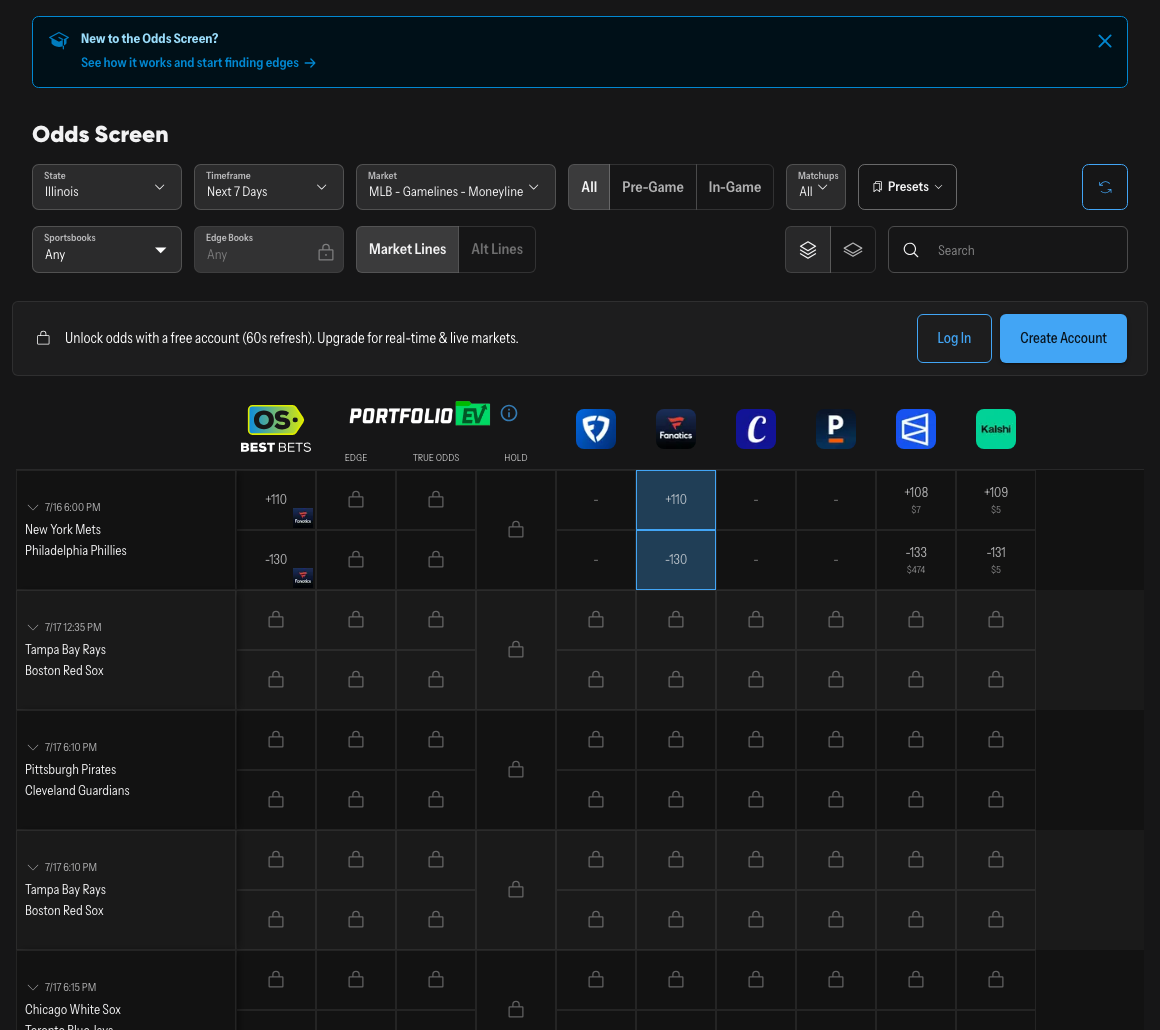 The OddsShopper live odds screen — every book's price on one board, refreshed in real time. Open the live board.
The Quick Answer
Lisa Demuth is the 2026 Republican nominee for Minnesota governor, winning the August 11 primary 43.4% to Mike Lindell's 32.5%, with Kendall Qualls at 21.4%; Amy Klobuchar is the DFL nominee after taking 89.7% of her primary. Kalshi's nominee contracts are finalized, Demuth YES at one dollar, everyone else zero, which means the market's 74-cent Demuth close beat our panel's Lindell-first read outright. The full graded board, the still-open vote-share brackets, and what Kalshi is already pricing for Demuth versus Klobuchar in November are below.
Stay ahead of the markets.
Daily insights and expert picks on Kalshi, Polymarket, and what's moving markets.
Free forever. Unsubscribe anytime.
What Changed Since Election Night
- The Result Is In And Awaiting Certification: Demuth 43.4%, Lindell 32.5%, Qualls 21.4% on roughly 414,000 Republican ballots; Klobuchar 89.7% on roughly 686,000 DFL ballots, which was a notably bigger primary electorate than the Republican one.
- Kalshi Finalized The Nominee Markets: Demuth's contract resolved YES, all others NO, on the Republican event; Klobuchar's resolved YES on the DFL event. The 74-cent favorite paid one dollar.
- Our Panel's Miss Is Graded: the six-model blend had Lindell 47.5% and Demuth 34.1%. Wrong favorite, logged as such in the public Model Verdict scoreboard.
- The Vote-Share Brackets Are Still Live: as of August 17, the market is near-certain Demuth's final share lands between 41% and 44% (the "at least 41%" bracket trades at 99 cents, "at least 44%" at a penny), while Klobuchar's "at least 90%" bracket trades at 3 to 7 cents with her at 89.7% — a pure certification sweat.
- November Is Already Priced: the Minnesota Governor-Senate combo market puts a Democratic sweep in the high 80s of cents, implying a mid-90s chance of Governor Klobuchar, and the margin-of-victory board centers her winning margin in the mid-teens.
All prices in this article were fetched from Kalshi's public API on August 17, 2026.
The Final Board, Graded
This is the table this page existed to produce: what the market said, what the price-blind panel said, and what Minnesota's voters actually did.
| Candidate | Vote share (near-final count) | Market close: price to WIN (Aug 11) | Panel: chance to WIN | Who was right |
|---|---|---|---|---|
| Lisa Demuth | 43.4% — winner | ~74¢ | 34.1% | Market |
| Mike Lindell | 32.5% | ~25¢ | 47.5% | Market |
| Kendall Qualls | 21.4% | ~1¢ | 13.6% | Market |
| Scott Jensen | not on the ballot (ended his campaign to run for state auditor) | ~1¢ | 2.7% | Market |
| John Krhin, Ross Nova, Raul Estrada, Loner Blue | 2.7% combined | no contracts listed | not scored | — |
The single most interesting row is Qualls's, and it needs its units read carefully. The market priced Qualls, the party convention's own endorsed candidate, at a penny to win; the panel gave him a 13.6% chance to win; he lost. On the only question both numbers answer, the market's penny was right and the panel was 13.6 points of probability wrong. His 21.4% of the vote is a different quantity altogether, a vote share, and it doesn't grade either forecast. What it does do is warn you off a tempting misreading: a penny contract means "almost certainly doesn't win," not "has no constituency." More than one Republican ballot in five went to the penny candidate. Keep those two truths separate and a field board gets much easier to read. And in the spirit of grading everything: the panel also spent 2.7% of its probability on Scott Jensen, who had already ended his campaign to run for state auditor and appears nowhere in the primary results. The market had him right at a penny.
Kalshi event contracts trade on a CFTC-regulated exchange; you must be 18 or older and in an eligible state to participate, and this article does not advocate for or against any candidate or party. Every number here is graded in the full Model Verdict scoreboard linked above.
Why The Market Beat The Panel
Before the vote, this board was a clean experiment: the last public polls had Lindell ahead by six, and a deep, actively traded market priced Demuth at 74 cents anyway. Real money was betting the polls were wrong. The polls were wrong.
The panel's pre-election case for Lindell was the arithmetic of a plurality primary: he led the final SurveyUSA poll 34-28, he carried President Trump's endorsement, and Minnesota nominates by plurality with no runoff, a rule that rewards the most committed base. Six models scored the field price-blind on that record and blended Lindell to 47.5%.
What actually decided it was the thing the market kept pricing and the toplines kept missing: composition and conversion. Demuth reported roughly $544,000 cash on hand as of the July 20 filing, money available for the late voter-contact push that decides primaries. Turnout came in notably high, with strong participation both through mail-in balloting in the weeks before the election and at the polls on Election Day, and a broad electorate on either channel is the opposite of the low-turnout, activists-only primary Lindell's path needed. Demuth finished more than 15 points above her final poll number, which is what a late consolidation of undecided and anti-Lindell voters looks like, and it's the scenario the market's 74 cents had been pricing all along. And the electability worry that some Minnesota Republicans voiced publicly about Lindell, in a state Trump lost three times, reads in hindsight like a preview of how late deciders actually voted.
The panel's original numbers stay on the record. Six seats, scored price-blind on August 11, revised once after reading each other's anonymized reasoning:
| Candidate | Market close | Fable | Opus | Sonnet | GLM | Kimi | DeepSeek | Blend | Result |
|---|---|---|---|---|---|---|---|---|---|
| Mike Lindell | ~25¢ | 51.0 | 44.0 | 50.0 | 46.0 | 52.0 | 41.8 | 47.5% | 32.5% — lost |
| Lisa Demuth | ~74¢ | 32.0 | 33.0 | 33.0 | 35.0 | 33.0 | 38.8 | 34.1% | 43.4% — won |
| Kendall Qualls | ~1¢ | 10.0 | 15.0 | 12.0 | 13.0 | 13.0 | 18.4 | 13.6% | 21.4% |
The spread inside the panel is worth a sentence. Opus, at 44% among the most cautious seats on Lindell alongside DeepSeek's 41.8 (whose reasoning we don't have on record), was cautious for exactly the right reason: it flagged that the seats clustered higher were "treating the SurveyUSA lead plus Trump endorsement as near-decisive" while discounting the undecided bloc. That undecided bloc is where the race was decided. The lesson we're logging isn't "polls bad, markets good"; it's that when a liquid market disagrees with thin primary polling this loudly, the disagreement is itself evidence, and a price-blind method that can't see the disagreement is flying without one of its instruments. That's a known trade-off of price-blind scoring; it's why the method gets graded in public, and this page is now one of the grades.
A note on the panel. Our standard Model Verdict lineup runs eight seats; on this run the ChatGPT and Gemini seats were unavailable, so six models scored the field: Claude Fable, Claude Opus, Claude Sonnet, GLM, Kimi, and DeepSeek. Every number sits in our back-tested ledger, where settled results grade past calls, this one included.
The One Market Still Trading On A Settled Primary
Here's the payoff on the bracket we promised up top. The nominee contracts are finalized. But Kalshi's vote-share brackets settle on the certified count, not the election-night call, so six days after the primary a handful of markets are still open, and they've become something unusual: markets about arithmetic.
- Klobuchar "At Least 90%" trades at a 3-cent bid against a 7-cent ask as of August 17. She sits at 89.7% on the near-final count. Three-tenths of a point of late-counted and certified ballots is the entire question. Below that bracket, "at least 85%" sits at a 96-cent bid against a 99-cent ask, which is the market calmly confirming the count.
- Lindell "At Least 32%" trades at a wide 87-94 spread with Lindell at 32.5%, close enough to the line that the market won't fully commit until certification.
- Demuth's Margin-Of-Victory Bracket, "9-12%," trades at 99 cents against her actual 10.9-point margin, and her "at least 41%" share bracket is 99 cents against the 43.4% count. Settled in every sense but the paperwork.
These are thin, low-stakes markets, and that's the point of showing them: after the votes are counted, all the drama left in a prediction market is the gap between "counted" and "certified." If you ever wanted a clean look at what these contracts literally settle on, this is it.
What Kalshi Prices For Demuth Vs. Klobuchar
The reason this page stays alive after settlement is that the primary was the undercard. Demuth, with running mate Ryan Wilson, now faces Klobuchar, with running mate Ben Schierer, on November 3 for the seat DFL Governor Tim Walz is vacating, and Kalshi has already built out the November board. Prices below fetched August 17, 2026:
| Market | Contract | Price (bid/ask) | What it implies |
|---|---|---|---|
| MN Governor-Senate Combo | Democrats sweep | 85¢ / 90¢ | The base case: Klobuchar wins and the DFL holds the Senate seat |
| MN Governor-Senate Combo | Democratic governor, Republican senator | 6¢ / 10¢ | Adding the split puts an implied Democratic governor in the mid-90s of cents |
| MN Governor-Senate Combo | Any Republican governor scenario | ~9¢ combined at last trade | The two Republican-governor contracts last traded at 7¢ and 2¢; bid-side midpoints put Demuth nearer 5%, and the gap between the two reads is the thinness of the board, not a disagreement |
| Governor Margin Of Victory | Democrats by 14+ points | 58¢ / 63¢ | The median priced outcome is a mid-teens Klobuchar win |
| Governor Margin Of Victory | Democrats by 2+ points | 90¢ / 95.7¢ | A Demuth win or photo finish is priced as a longshot |
| General-Election Turnout | Above 2.5 million votes | 52¢ / 59¢ | A coin flip on turnout clearing 2.5 million votes; the 2.6M and 2.7M rungs are priced as the real stretch |
The row that connects back to the primary is the margin board. The same market that priced Demuth's organizational and electability edge as decisive against Lindell prices it as nearly irrelevant against Klobuchar, a sitting US senator who just posted an 89.7% primary and whose party's primary electorate outnumbered the GOP's by roughly 270,000 ballots on the same day. That turnout gap is a real, counted number, not a poll, and it's the simplest explanation for why the November board opens this lopsided. One honest caveat: the combo market has traded around 14,000 contracts on its biggest line, real but far shallower than the primary board, where Lindell's contract alone had traded roughly 588,000 contracts by election day, and the margin and turnout markets are thinner still, so expect wider spreads and softer signal there until the fall campaign brings volume in.
Minnesota is one board on a wider open-seat governor map the panel has scored this cycle, alongside the Michigan governor model verdict and the Ohio governor model verdict, and the chamber-level picture lives in the 2026 midterms balance of power model verdict. The DFL side of this same race has its own graded board: the Minnesota DFL governor nominee model verdict, where Klobuchar's contract also resolved YES.
How To Read These Prices
A settled board is the best classroom these markets offer, because for once you can check every price against an answer key.
Work the example that just resolved. Demuth closed near 74 cents. Taken at face value, that implied a 74% chance she'd win the nomination. She won, so YES holders collected one dollar per contract, roughly a 35% return before fees for anyone who bought at the close, and NO holders lost their stake. But the honest lesson isn't "the 74-cent side won, so 74 cents was right." A 74% favorite should lose about one time in four; this market was right in the useful sense that its favorite was the actual winner while the polls pointed the other way. Judging any single settled price requires a graded track record across many boards, ours included, which is what the graded scoreboard exists to accumulate. The mechanics of turning cents into implied percentages, and de-vigging a field so it sums to 100, live in converting Kalshi's cents into real odds.
The transferable skill from this board is sizing a disagreement. Demuth's contract carried a 40-point gap between the market's 74 cents and the panel's 34.1%, on a deep, tightly quoted board; that combination, wide gap plus real liquidity, was the market telling you it knew something the polls didn't, and it did. A wide gap on a thin board is a very different object, which is why the November table above comes with volume caveats attached. That price-versus-fair-value discipline is the same one behind line shopping and finding the +EV side; OddsShopper's live odds screen — shop the number across every major book and free expert picks today apply it to the sports slate, and election futures like this one live on Kalshi.
A few honest points before reading too much into the November prices above:
- Eligibility. Kalshi is a CFTC-regulated event-contract exchange, not a sportsbook. You must be 18 or older and located in an eligible state, and availability varies by state and can change.
- Liquidity And Spread. The primary board was deep; the November boards are not yet. Several quotes above carry 5-to-7-cent spreads, and thin markets move on small money.
- A Long Runway. November 3 is 11 weeks out. Debates, spending, and national environment will reprice this board repeatedly; treat today's prices as a starting line, not a call.
- Not Advice. Everything here is analysis for information, not a recommendation to trade or to vote. Settled results are settled; model estimates were and are estimates.
Settlement Timeline
| Primary Settlement | The August 11, 2026 primary decided both nominations; Kalshi's nominee contracts finalized with Demuth (GOP) and Klobuchar (DFL) resolving YES |
| Still Open | Vote-share and margin brackets settle on the certified count; as of August 17 the Klobuchar 90% and Lindell 32% brackets remain the live questions |
| Next Event | The November 3, 2026 general election: Demuth (GOP) vs. Klobuchar (DFL) for the open seat; Kalshi's combo, margin-of-victory, and turnout boards are already trading |
| Re-Score Policy | The panel's primary numbers are final and graded. If we run the panel on the general election, it will publish as its own board with fresh, price-blind estimates |
The Bottom Line
The 2026 Minnesota governor primary is settled: Demuth 43.4%, Lindell 32.5%, Qualls 21.4% on the Republican side, Klobuchar 89.7% on the DFL side, and a Demuth-Klobuchar general election on November 3. As a forecasting scorecard, the verdict is just as clean. The market's 74-cent Demuth beat our panel's price-blind Lindell call, the polls that fed the panel missed the electorate that actually showed up, and Qualls's 21.4% vote share next to his penny win-price is a standing reminder that what a contract settles on and what a candidate's support looks like are different questions. The miss is logged where all of ours go, in the graded Model Verdict scoreboard, and the same market that just aced this test is already pricing the main event at mid-90s for Klobuchar with a mid-teens margin. Eleven weeks is a long time on a thin board. If this method is your thing, the Maine Senate model verdict and our guide to Kalshi versus Polymarket are the natural next reads.
Hottest Prediction Markets Right Now
- 2028 Democratic presidential nominee · $166M traded
- Rocket Classic Winner · $124M traded
- 2027 Pro Football Champion · $51M traded
- Pro Baseball Champion · $40M traded
- Bitcoin price at the end of 2026 · $30M traded
- 2027 Pro Basketball Champion · $19M traded
Every market above links to our full AI model verdict; browse them all on the OddsShopper prediction markets hub, and see how every settled call actually scored on the full graded scoreboard.
Prices on this page are Kalshi's book. If you also trade on Polymarket, code OS4 gets new users a $50 trading bonus on a $10 deposit — affiliate link; terms as stated by Polymarket; 18+, availability varies by state.
More on this: 2026 Governor Races: Every Kalshi Board We Track · Rhode Island Governor Primary: McKee Says 'I Am the State · Alaska Governor Odds: Dropping Out Won't Clear The Field · Wyoming Governor Primary Odds: Kalshi Fades Trump's Pick · Minnesota Governor And Senate Odds 2026