Parlay Builder: How To Build Smarter +EV Parlays
Last updated: July 13, 2026
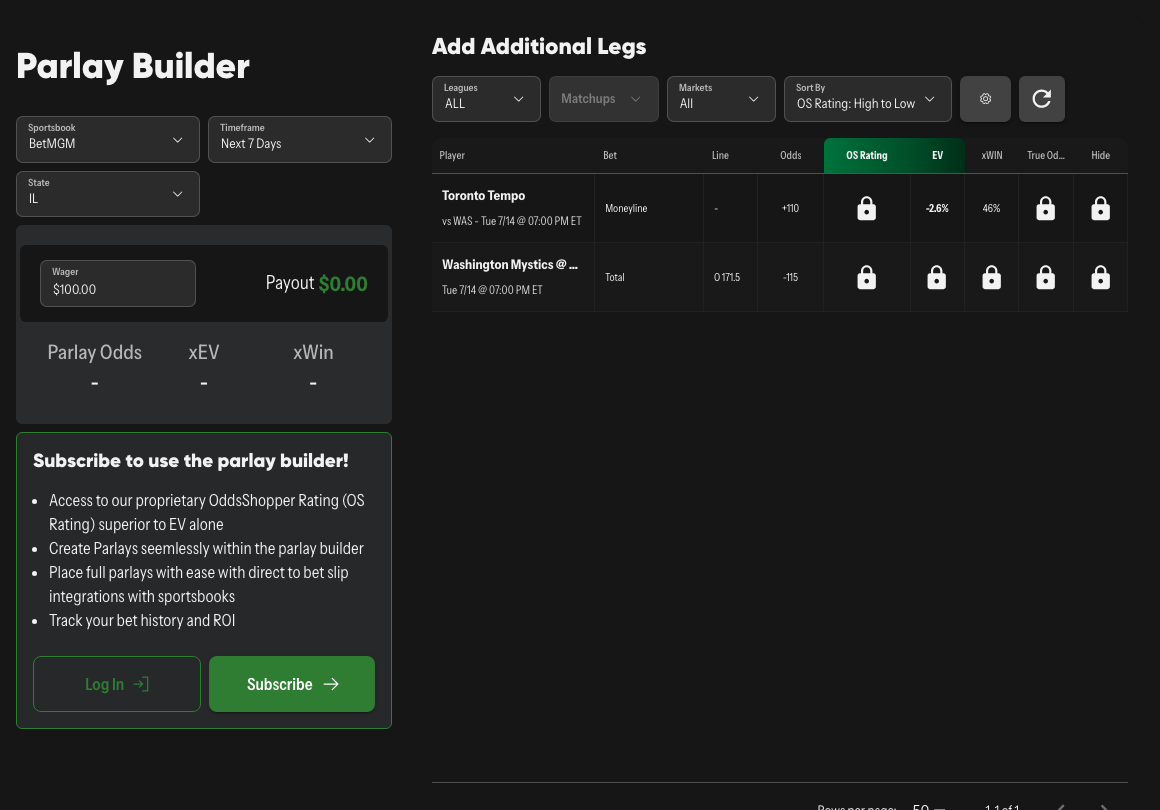 The OddsShopper Parlay Builder — every leg graded live (EV, xWin, true odds) before you lock a ticket. Open the live board.
Building it on DraftKings or FanDuel instead?The free DraftKings Parlay Simulator and FanDuel Parlay Simulator on Stokastic.com price the same parlay from 10,000 Sims next to that book's odds.
In Summary
A parlay builder is the feature that lets you combine several bets into one ticket where every leg has to hit. The one built into your sportsbook is convenient, but it has a quiet flaw: it only ever shows you that book's price, on legs that book wants you to take. Build the exact same parlay somewhere else and it often pays meaningfully more. So the smarter way to use a parlay builder is to treat the build and the price as two separate jobs. First decide which legs are positive expected value, then shop that whole build across books for the best number. Because a parlay multiplies the edge of its legs, good legs at the best price can compound in your favor over time, while padded longshots at a single book's price compound the vig against you. Below is how to build one that works. (New to parlays entirely? Start with parlay betting explained for the mechanics, then come back.)
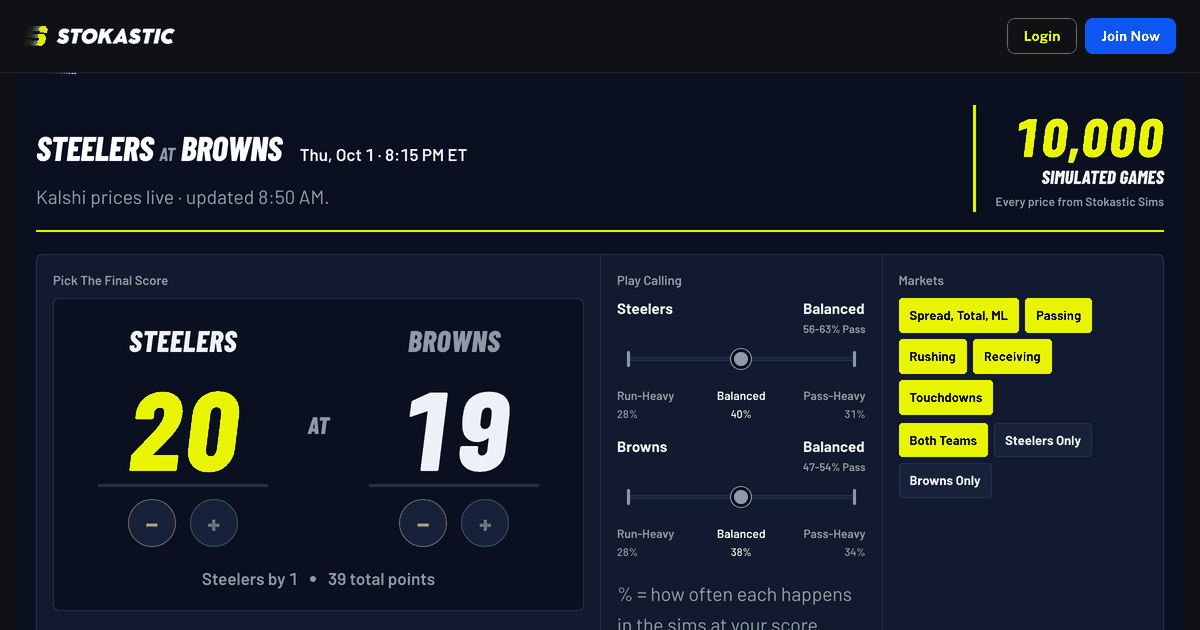 Betting it on Kalshi? Price the combo first. The Kalshi Parlay Simulator prices any combo against 10,000 simulated games of this week's game, next to the price on Kalshi.
What A Parlay Builder Actually Does
The tool takes the individual bets you select and rolls them into a single wager with one combined price. Because every leg has to win, the payouts multiply: three -110 favorites that would each pay a touch under even money combine into a parlay paying around +596. That multiplying effect is the appeal, and it is also where the trouble starts, because the same multiplication that grows your payout also grows whatever margin is baked into each leg.
Most builders fall into two camps:
- The Sportsbook Builder — the "add to bet slip" tool inside FanDuel, DraftKings, or BetMGM that prices and books the parlay on the spot.
- The Same-Game Parlay (SGP) Builder — a specialized version that lets you combine legs from one game, where outcomes are linked and the book prices in that correlation.
Both are handy for assembling a ticket fast. Neither is built to get you the best deal, because the book that runs the builder is also your counterparty.
The Hidden Flaw In Most Parlay Builders
Here is the part the convenience hides: a sportsbook's parlay builder only knows one set of prices, its own. Tap three legs into the FanDuel slip and you see the FanDuel number. You never see that DraftKings would have paid more on the identical combination, because the tool has no reason to show you.
And the gaps are not small. Because the payout multiplies across legs, a little extra margin on each one compounds into a big swing on the final price. The same three legs can pay one number at one book and a much fatter number at another, and you would never know unless you priced the build in more than one place. The builder that is easiest to use is rarely the one paying the most.
That is the whole case for separating the two jobs. Use a builder to figure out what you want. Use price comparison to decide where you actually place it.
The takeawaya parlay builder is for assembling the bet, not for getting the best price on it. The book that runs the builder is your counterparty, so let it help you pick the legs, then price that same build everywhere before you place it.
| Sportsbook parlay builder | Price-shopping parlay builder | |
|---|---|---|
| Prices Shown | Only that one book's | The same build across every major sportsbook |
| Leg Quality | Whatever the book is promoting | Filtered to +EV legs |
| Correlation In SGPs | Priced by the book, in the book's favor | You can see where the link is mispriced |
| Who It Serves | The book (your counterparty) | You |
| Best For | Speed and one-tap convenience | The best number on the bet you were making anyway |
Build The Parlay, Then Shop It
Splitting the build from the price is not theory, it shows up as real money on a real ticket. Take a three-leg parlay you have already decided you like. The prices below are illustrative of how far the same build can spread across books on a popular parlay, not a single transcribed ticket, but the spread itself is ordinary:
- Book A: +369
- Book B: +420
- Book C: +540
- Book D: +580
Same three legs, four very different numbers. On a $100 stake, Book D returns about $580 in profit if it cashes versus roughly $369 at Book A, a difference of more than $210 on one bet. That looks minor until you stretch it across a season of parlays.
The deeper cost is hidden in the break-even rate, the share of these bets you would need to win just to break even. For any positive-odds bet:
Break-even % = 100 ÷ (odds + 100).So +580 needs 100 ÷ 680 = 14.7%, while +369 needs 100 ÷ 469 = 21.3%.
Read that twice. At +580 this kind of parlay only has to hit about 15% of the time to break even. At +369 the same legs have to win over 21% of the time. The worse price quietly raises the bar your picks have to clear, on every ticket, forever. To put numbers on it: if this kind of parlay hit at a 20% clip over 100 tickets (a rate chosen only because it clears +580's break-even but not +369's), the +580 version would net roughly +$3,600 while the +369 version would lose about $620, the identical legs, separated only by where you placed them. The build was the same. The price is what separated them.
New to OddsShopper?It scans every major sportsbook in real time and flags the bets priced in your favor, then its line shopping and odds comparison price the exact parlay you are building at each book so you take the best number instead of your own book's. That is the work this section just did by hand, in one glance. Start OS Pro free for 7 days, and code BUILDSMART20 takes 20% off your first payment if you continue.
Only Build With +EV Legs
Shopping the price is the floor. The ceiling is what you put in the parlay to begin with, and this is where the "parlays are a sucker bet" reputation is both earned and avoidable.
Understand the mechanism and the sucker-bet myth falls apart: a parlay is not a special kind of bad bet. It simply multiplies the expected value of its legs. Fill it with legs priced better than their true probability and that edge can compound in your favor over a long run of bets. Fill it with random juiced longshots, the lottery-ticket legs a builder happily strings together for you, and the house edge compounds against you. The parlay never was the problem. The legs are. A few rules follow from that:
- Every Leg Has To Be +EV. A four-leg parlay where all four legs are priced in your favor has stronger expected value than a two-leg parlay carrying one no-edge leg, because each +EV leg adds edge, though the longer ticket also carries more variance. The old "never go past three legs" advice exists only because people pad builders with bad longshots to chase a payout.
- It Is The Number Of +EV Legs That Matters, Not The Leg Count. What extra legs really add is variance, a lower hit rate and bigger swings. So size longer parlays smaller, and never tap in a filler leg just to lengthen the ticket.
- No +EV Legs Means No Parlay. Plenty of markets are priced efficiently with no edge on either side. When the builder cannot be filled with legs that are truly in your favor, the move is to pass. Having action is not a strategy.
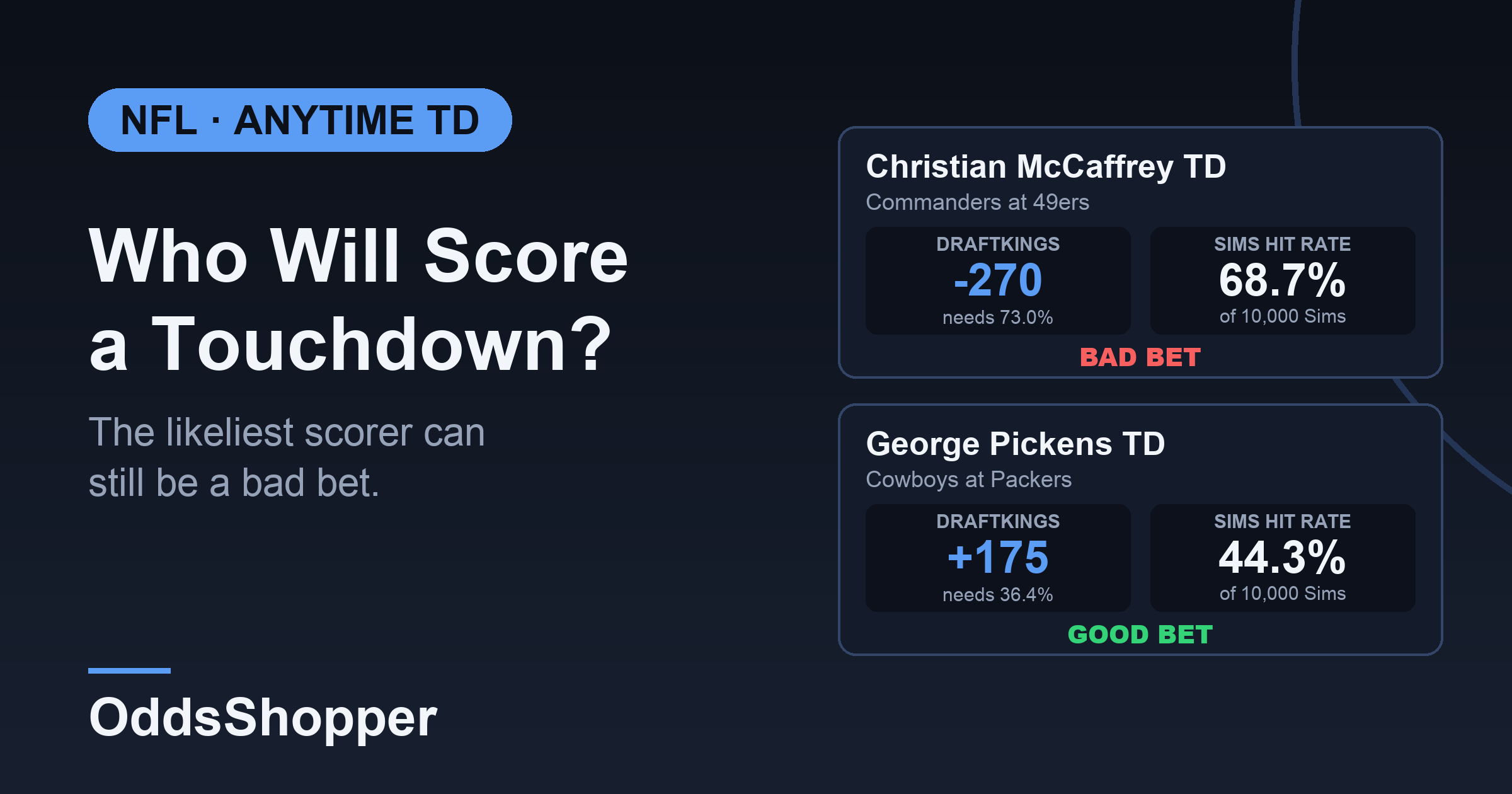
Finding +EV legs by hand across every market and book is the hard part, and it is exactly what an EV tool is for. OddsShopper's algorithm tracks the market in real time and surfaces only the legs priced in your favor, each ranked by its expected ROI (xROI) and win probability (xWin%), so you build on top of real value instead of guessing. Pair that with the de-vig math behind it and you can see how much edge a leg really carries before it goes on the ticket. For the full framework, our parlay betting strategy guide goes deeper on combining +EV legs and beating the closing line.
Correlation: Where A Same-Game Builder Earns Its Edge
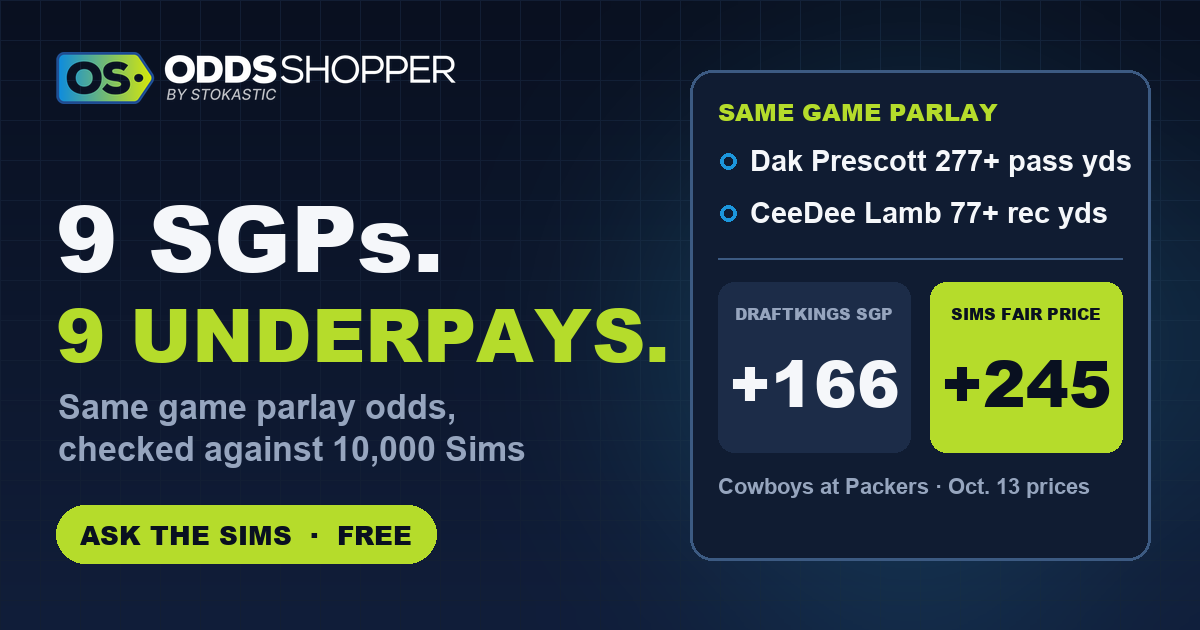
One place a builder can hand you an edge instead of taking one is correlation, and it lives in same-game parlays. When two legs in the same game are linked, a quarterback going over his passing yards and his top receiver scoring, say, they tend to hit together. Combine linked legs and the true odds of the parlay are shorter than the math of independent legs would suggest.
Here is the catch: the books know this. A same-game parlay builder already shades its prices to account for correlation, which is why an SGP usually pays less than the "same" legs would as a standard parlay. So correlation is a real edge only where the book's model is off, where it underprices how strongly two outcomes move together. That is a needle to find, not a green light to mash linked legs. Treat it as an occasional opportunity, price the build against other books like any other bet, and read our same game parlay strategy guide for the full correlation breakdown.
Size The Parlay To Its Variance
None of this matters if a cold streak ends your bankroll first. Parlays hit less often than straight bets by design, so they swing harder, which means each one belongs at a smaller slice of your bankroll than your single bets. Size each parlay to its edge and its variance, lean on a fractional-Kelly approach rather than a flat unit, and never chase a loss by piling into a bigger build to win it back. A real edge only shows up over a long run of bets, and disciplined sizing is what keeps you in the game long enough to see it. Our bankroll management guide has the full framework.
The sizing rule of thumbtreat every parlay as a higher-variance bet than a single, and stake it accordingly. A rough starting point: if you'd put one unit on a straight bet, a three-leg build of the same conviction belongs closer to a quarter of that, and a longer ticket smaller still, because you are trading a lower hit rate for a bigger payout. Let the edge compound over volume, not over stake size.
How To Build A Smarter Parlay, Step By Step
Put it together and the routine is short:
- Decide the legs first, on their merits. Pick only bets you would make on their own, each one +EV in its own right. The payout comes second.
- Filter out the dead weight. Drop any leg you cannot justify as priced in your favor. A shorter ticket of real edges beats a long ticket of hope.
- Mind correlation if it is a same-game build. Only lean into linked legs where the book looks to have underpriced the link, not just because they "go together."
- Price the whole build across books. Run the exact parlay through the odds comparison tool and take the best total number. This is added expected value on a bet you were already making.
- Size it small and place it. Stake it as the higher-variance bet it is, then let the edge compound over volume rather than betting bigger to feel it faster.
Do those five things and you are no longer using a parlay builder the way the book hopes you will. You are using it the way it should be used: to find the build you believe in, then to take it where it pays the most.
Frequently Asked Questions
What is a parlay builder? A parlay builder is the tool that lets you combine several individual bets into one ticket where every leg must win, with the odds multiplied into a single bigger payout. Sportsbooks build one into their app, and there are same-game versions for combining legs from a single game. The trade-off is that a book's builder only ever shows you its own price.
What is the best parlay builder? The best builder is the one that lets you see the full picture: which legs are truly +EV and what the same build pays across every book, not just the one you happen to be in. A sportsbook builder is fine for assembling a ticket quickly, but pricing that build across every major sportsbook is how you avoid leaving money on the table on a bet you were going to make anyway.
Why does the same parlay pay different odds at different books? Each sportsbook prices a parlay with its own margin and its own read on the legs, so the identical combination can pay one number at one book and a much higher one at another. Because a parlay multiplies its legs, small per-leg differences compound into a large swing on the final price, which is why building in one app and pricing across many is worth the extra step.
Is a same-game parlay builder worth using? It can be, but only when the book misprices the correlation between linked legs. Same-game builders already shade their odds to account for outcomes that move together, so the edge exists only where their model is off. Treat correlation as an occasional edge to hunt for, not an automatic one, and shop the build like any other bet.
How many legs should I put in a parlay? There is no magic number. What matters is that every leg is +EV, not how many there are. More +EV legs compound more edge but also add variance and lower your hit rate, so size longer parlays smaller. The real mistake is adding a bad, vig-inflated leg just to chase a bigger payout.
Stop letting your sportsbook's builder pick the price for you. The OddsShopper Parlay Builder assembles your ticket from only +EV legs and prices that build across every major sportsbook, so your edge can compound in your favor instead of leaking out as vig. Start OS Pro free for 7 days, then code BUILDSMART20 takes 20% off your first payment. Bet 21+ where legal, and only what you can afford. Start your free trial
More on this: How To Build A Same Game Parlay: An NBA SGP Walkthrough · Golf Top 20 Parlay Odds: Scheffler Plus Two: Kalshi Odds · Kalshi Same Game Parlays: What You Can And Cannot Combine · What Is SGP In Betting? Same Game Parlay Strategy · What Happens To Your Kalshi Parlay When A Leg Voids
Tools for thisrun the combo through 10,000 sims on Kalshi, or the Polymarket Combo Simulator for Polymarket's book.