The Quick Answer
The MRI was the good version. Sam Darnold's right hip is structurally intact, the injury is muscular, per head coach Mike Macdonald on Thursday morning, and the Seattle Seahawks expect him to miss Week 2 at the Arizona Cardinals on September 20 with a return "sooner rather than later" after that, per team sources to ESPN's Adam Schefter. His NFL MVP contract on Kalshi (KXNFLMVP-27-SDAR) did not care. As of 3:08 p.m. ET on September 10, 2026, it is still 0 cents bid and 1 cent ask, exactly where it closed on game night, and it has not printed a single trade since 2:34 a.m. ET, hours before the scan was read. The best news the market could have gotten arrived, and nobody put up a penny to buy it.
Ten days ago this page argued Darnold was too cheap at 3 cents. Last night it argued the case was closed until the MRI, laid out three scan outcomes with a price on each, and told you to hold what you own and not add. Today's edition is the payoff on that setup. My whole approach is bet the price, not the team, and the thing I want you to notice is that the price did nothing on the day the team got its best possible news. That is not a bug in the market. It is the market telling you what a missed game is worth on a 1-cent contract, which is nothing you can see. Why the clean MRI emptied the offer instead of reopening the bid, which of last night's three scenarios actually came in, and what the rest of the Seattle board did with the same news are below.
Stay ahead of the markets.
Daily insights and expert picks on Kalshi, Polymarket, and what's moving markets.
Free forever. Unsubscribe anytime.
What The MRI Said
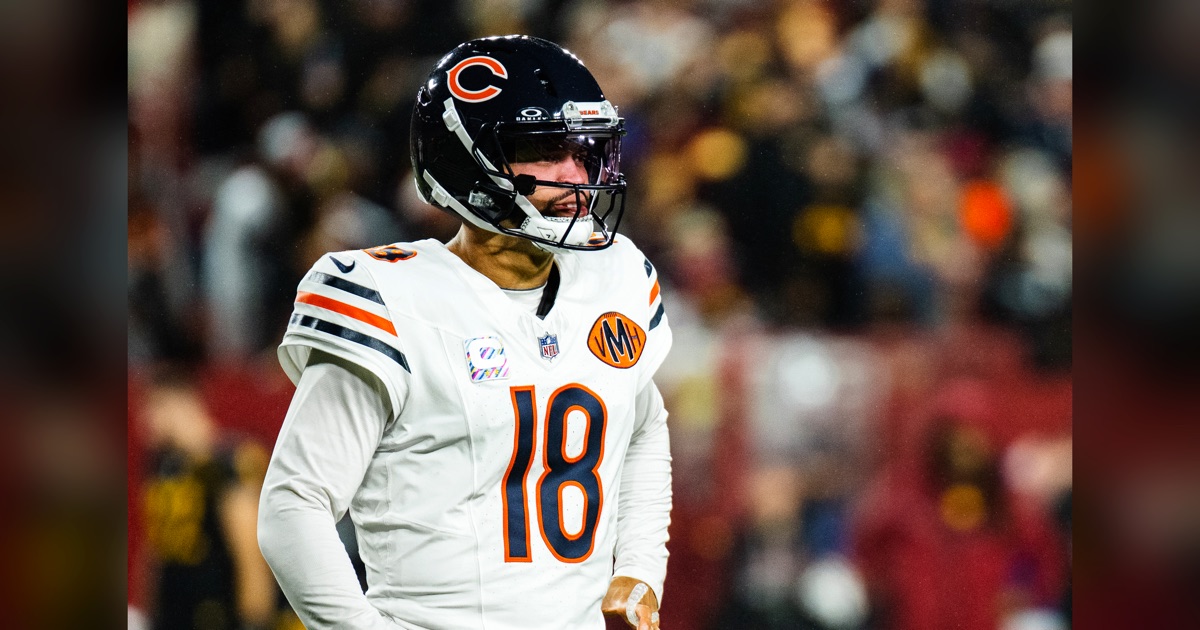
The injury record as of Thursday afternoon, every item with a source: Darnold hurt the hip on Seattle's sixth play of Wednesday's 13-10 win over the New England Patriots, on a sack by Patriots defensive lineman Dre'Mont Jones, the former Seahawk. He was downgraded to out before halftime, and Drew Lock finished the game. A CT scan at Harborview Medical Center on Wednesday night ruled out a fracture, which Macdonald confirmed after the game while saying more tests were coming. ESPN reports Darnold spent the night at Harborview because of significant discomfort.
The MRI came Thursday morning. Schefter reported that the hip is intact and the injury appears muscular, that Seattle expects him to miss the Week 2 game at Arizona, and that team sources believe he "dodged a bullet" and should be back "sooner rather than later." Macdonald, on Seattle Sports 710 AM, called it "really, really good news" and said the hip is intact and the problem looks muscular. On the timeline he committed to nothing: "Now, how long that [he's out], we don't know yet." NFL Network's Ian Rapoport also reported the expected Week 2 absence.
So the record says one game, probably, with the door open to two. That's the scenario I priced last night as the middle one, and I'll come back to what I said about it, because the market's answer today was more interesting than mine.
The Tape: One Buyer At 2:34 A.M., Then Silence
The Darnold contract has printed in exactly one burst since I filed last night, and it happened before anyone had seen the MRI. The tape from the last pregame print Wednesday through Thursday afternoon, pulled from the Kalshi API at 3:08 p.m. ET. (Wednesday afternoon's five earlier prints, 9,692 contracts, all buyers at 3 cents, are the rest of the 24-hour volume.)
| Time (ET) | Price | Contracts | Side taking |
|---|---|---|---|
| 7:50 P.m. (Wed., Pregame) | 3¢ | 156 | Yes (buyer) |
| 8:39 P.m. (Wed.) | 3¢ | 13 | Yes (buyer) |
| 8:41 P.m. (Wed.) | 2¢ | 5,132 across seven prints | No (seller) |
| 8:42 P.m. (Wed.) | 2¢ | 49 | Yes (buyer) |
| 9:20 P.m. (Wed.) | 1¢ | 10,462 across six prints | No (seller) |
| 2:34 A.m. (Thu.) | 1¢ | 1,901 across 12 fills | Yes (buyer) |
The row that matters today is the last one. At 2:34 a.m. ET, what looks like one order swept the 1-cent offer: 12 fills in the same second, 1,901 contracts, every one of them a buyer lifting the ask. When I filed at 12:10 a.m. there were 1,917 contracts offered at a penny. By 3:08 p.m. Thursday, after that buy, what's resting on the ask is 4.8 contracts. Somebody paid about $19 for contracts that pay $1,901 if Darnold wins the MVP, and they did it hours before the MRI was read, which means they bought before the scan could tell them anything.
Then the news landed, and the tape went quiet. No print when the Schefter report moved, none when the Macdonald interview aired, none by 3 p.m. The bid is still zero. The 24-hour volume of 27,249 contracts is Wednesday afternoon's pregame trading plus Wednesday night's selling plus the one overnight buy; open interest is 181,762 contracts. Fifteen prints on game night, 15,656 contracts, 13 of them sellers hitting bids. One print overnight, 1,901 contracts, a buyer. Zero prints since the scan.
A clean MRI did not reopen the market. It emptied the offer and left the bid where it was.
That's the sentence I'd want a holder to sit with. I said last night that the reopen would start with whoever was resting offers at a penny, and that you should let them trade first. They traded first, at 2:34 a.m., to one buyer, at a penny, and the offer is nearly gone. The offer side of this book is 4.8 contracts. The next print in either direction will be a brand-new price, and the market has spent an entire news cycle declining to make one.
Why Good News Is Worth Nothing At A Penny
Here's the mechanics, and it's the whole reason the page reads the way it does. Run the de-vig math I walked through in August: the 45 asks on the MVP board sum to 138 cents this afternoon, so a 1-cent ask is a 0.7% market-implied chance. On August 31 the 3-cent ask on a 139-cent board was 2.2%. A penny is the smallest price the board can display, and with no bid there is no floor under it at all. The clean MRI moved Darnold's true chance up from wherever it sat at 12:10 a.m., when a fracture was still live. It did not move it far enough to be worth a second cent, because the board's minimum tick is bigger than the whole improvement.
Do the base-rate math and you see why. No MVP since 1990 has played fewer than 14 games (Joe Montana's 13 in 1989 is the last shorter season), and the three who played exactly 14 (Emmitt Smith in 1993, Marshall Faulk in 2000, Steve McNair in 2003) did it in 16-game seasons. Darnold missing Week 2 puts his ceiling at 16 of 17, which the base rate doesn't punish. Missing Weeks 2 and 3 puts him at 15, still fine on the ruler. Three missed games puts him at 14, the floor those three precedents sit on. The base rate only bites at four missed games, and nobody in Seattle is projecting four. So on availability alone, the MRI took the worst outcome off the table.
But availability was never the only thing being priced. The award goes to a quarterback with the best numbers on one of the best teams, and a quarterback who sits out a game hands the voters' attention to the rest of the league's starters for a week while he does nothing. Joe Burrow is 10 cents bid and 11 ask, Josh Allen the same, Lamar Jackson 9 and 10, Justin Herbert 8 and 9. Every one of them plays Sunday. The question the market answered today isn't "will Darnold be healthy?" It's "does a quarterback who starts his MVP campaign in Week 3, on a hip everyone will watch, deserve a second cent against that group?" The market's answer is that it can't even find a buyer for the first cent.
I'll be direct about my own position again, because that's the point of writing this page in the first person. I own this at 3 cents, sized at a tenth of a unit, and after the best news I could have hoped for, my exit is still settlement, which Kalshi expects around March 14, 2027. The tenth-of-a-unit rule is why that's a shrug. If you sized this like a real position on the August case, the MRI didn't fix anything for you either. The scan was never the lesson; the sizing was.
Which Scenario Came In, And What I Said About It
I priced three MRI outcomes last night. The one that arrived, in my own words from the earlier edition:
Scenario two was "he misses one to three games," and I wrote that the base rate never comes up if he misses one, that at a 1-cent ask "the price is already as low as it can print," that the contract was "fairly priced in this scenario, as a lottery ticket with a real but tiny path," and that I'd "hold what I own and not add." That's the scenario. That's still the read. The market confirmed it by doing nothing, which is what a fairly priced contract does when the news matches the price.
The scenario I said I kept coming back to was the first one, a clean MRI and a start at Arizona, because it was the only one where the market would have to make a new price. We got half of it. The scan was clean, but the start isn't happening, so the market never had to make the new price, and it didn't. If Darnold had been cleared for September 20, I'd have expected a bid to reappear near the 3-cent level the contract held on Tuesday and Wednesday before kickoff. With a missed game on the record, I wouldn't pay 2 cents for him now and I wouldn't expect anyone else to for a while. The honest number for a flagged hip and a Week 3 debut is the penny he's at, and the honest bid is the zero that's there.
There's a version of this where the market is wrong, and it's worth naming. If the 2:34 a.m. buyer knew something, if "muscular" means ten days and not four weeks, and Darnold plays Week 3 and looks like the quarterback who went 14-3, then the first bid back will show up in October and it'll be above a penny. That buyer paid $19 to find out. At those stakes, being early is free. Being early with a real position is how you end up in the 9:20 p.m. row.
What The Rest Of The Board Did With The Same News
Darnold's contract wasn't the only Seattle number on the board Thursday, and the other three tell you how much of the injury was already priced before the MRI.
| Market | Ticker | Game night | Now (buyers bid / sellers ask) | 24h contracts |
|---|---|---|---|---|
| Seahawks At Cardinals, Sept. 20, Seattle Wins | KXNFLGAME-26SEP20SEAARI-SEA | 82¢ pregame, 75¢ in the 9 p.m. hour | 73¢ / 74¢ (last print 74¢) | 2,474 |
| Seahawks To Win Super Bowl LXI | KXSB-27-SEA | 5¢ / 6¢ | 6¢ / 7¢ (last print 7¢) | 280,388 |
| Bills To Win Super Bowl LXI | KXSB-27-BUF | 8¢ / 9¢ | 8¢ / 9¢ (last print 9¢) | 152,896 |
| Drake Maye NFL MVP | KXNFLMVP-27-DMAY | 7¢ / 8¢ | 6¢ / 7¢ (last print 6¢) | 386,266 |
| Sam Darnold NFL MVP | KXNFLMVP-27-SDAR | 0¢ / 1¢ | 0¢ / 1¢ (last print 1¢, 2:34 a.m.) | 27,249 |
Prices fetched September 10, 2026, 3:08 p.m. ET.
The row to read twice is the game. Seattle's Week 2 contract was 82 cents on Wednesday afternoon, sold off through the first half with nothing but sellers in the 9 p.m. hour, and found buyers in the mid-70s between 11 p.m. and 2 a.m. It has sat in that same band all day Thursday, before the MRI news and after it. The clean scan bought back nothing, because the market repriced the game on Wednesday night on the assumption Drew Lock would start it, and Thursday's news confirmed that assumption rather than changing it. Eight cents is the market's Darnold-to-Lock gap for a road game at Arizona, and it was settled before the scan. This is a thin market, 3,576 contracts of open interest, so treat that gap as a sketch and not a measurement, but the direction is unmistakable. It is also the contract with the most information in it right now, because it's the only Seattle market that resolves before Darnold plays again.
The Super Bowl row recovered one cent, and the timing matters. In the 24 hours to 12:10 a.m., 306,887 contracts traded on Seattle's championship contract, and it fell from 8 cents to a 5-cent bid during the game. The cent came back overnight: from 1 a.m. ET on, every print was 7. Then the MRI news hit, and the 11 a.m. hour was the contract's busiest of the day, 7,583 contracts, most of them sellers, with the price dipping to 6 and closing the hour back at 7. Read that plainly: the good news drew sellers, not buyers, and the market held its overnight level rather than adding to it. The Bills didn't move. The market's read on Seattle's season is that it lost a small piece of it Wednesday and got a smaller piece back Thursday, which is exactly what "misses Week 2, back soon" should be worth on a February contract.
The Maye row is the tell nobody's talking about. On Wednesday night I noted that three interceptions on New England's last three drives hadn't moved him at all, still 7 bid and 8 ask. Thursday the market got around to it: down a cent to 6 bid and 7 ask, on 386,266 contracts in 24 hours, the heaviest volume of any name on the MVP board. Burrow slipped a cent in the same window. So the board did move overnight; Darnold just wasn't part of it. Drew Lock is still not one of the 45 names, so there's no Seattle contract to rotate into. Shop the full 45-name MVP board if you want the panel's numbers on the names that did move. For the four-board version of Wednesday night, the ripple across Kalshi's NFC board is the companion piece.
What The August Case Got Right, And What It Still Misses
I'm keeping the August record on the page because a column that deletes its wrong calls isn't worth reading. Here's what the eight-model panel said on August 22, price-blind, when Darnold was trading at 2 cents:
| Seat | First pass | After reading the room |
|---|---|---|
| DeepSeek | 9.0% | 7.1% |
| Claude Fable | 3.0% | 4.7% |
| Gemini | 6.5% | 7.5% |
| GLM | 4.0% | 4.4% |
| ChatGPT | 5.8% | 4.5% |
| Kimi | 3.5% | 5.5% |
| Claude Opus | 2.8% | 5.5% |
| Claude Sonnet | 10.0% | 7.0% |
The most conservative finishing seat was GLM at 4.4%, and all 16 scores landed above the 2-cent price. The shape of the case was right: MVP is a quarterback award attached to a team result, Seattle had the team result, and 3 cents was thin for the returning quarterback of the defending champion. Nothing in Thursday's MRI makes that reasoning wrong. It makes it a Week 3 argument instead of a Week 1 argument, and the market is telling you a Week 3 argument on a flagged hip is worth less than a cent of new money.
What the panel missed is the thing I flagged last night and can now put a number on. Eight seats scored a full season, and none of them modeled a missed game, because a season-long probability assumes the season. Today we know the cost of the first missed game: the bid died on game night, and the missed game is what's keeping it from coming back. The de-vig doesn't see that. The panel doesn't see that. The tenth-of-a-unit sizing rule is the only place on this page that ever did.
More live boards from the same panel: the full 45-name NFL MVP board, where Joe Burrow and Josh Allen now share the top at 10¢ bid and 11¢ ask · NFL Coach of the Year · Defensive Rookie of the Year. MVP prices fetched September 10, 2026, 3:08 p.m. ET.
The Rules, One Day Later
The nine-step checklist from August is still on the public scoreboard with the numbers frozen next to it, and the first step did the work on Thursday. Form your number before you look at the price. With the MRI in hand, my number for Darnold is a healthy 14-3 quarterback's chance marked down for one missed game, a hip every voter will watch, and a Week 3 start against a field that's already a week ahead. That lands somewhere between a penny and 2 cents, and the board only prints whole cents, so the market and I agree by rounding. When this contract next prints, the number worth having is the panel's 5.5% discounted for the games he doesn't play, and today that discount is one week and one asterisk.
The shopping habit is the rule that matters most this week, because the Darnold contract isn't the one worth trading. The Seattle-Arizona game is. Award futures and game lines trade on Kalshi and at sportsbooks, the prices differ across venues, and the exchange-versus-sportsbook math means Kalshi's 74 cents on Seattle is one number among many. The live odds screen lets you shop the Seahawks-Cardinals number across every major book before you take anyone's ask, and with a backup quarterback starting on the road, that's a line the books will disagree on all week.
Where This Read Can Go Wrong
The way this page ages badly is Darnold back for Week 3, Seattle 2-0 behind Lock, a 300-yard debut, and a 2-cent bid on the board by the first week of October, at which point "the market didn't care about the MRI" reads like the market was simply slow. I think that's the most likely good outcome, and I still wouldn't pay 2 cents for it today, because a bid that appears in October is a bid you can hit in October. The other way it ages is the quiet one: "muscular" turns into a month, Lock wins games, and the story becomes the backup's, which ends scenario two without Darnold ever being ruled out for anything. Either way, the next print on this contract will be the first new price since Wednesday night, and it will be thin, because the book is 4.8 contracts deep on one side and empty on the other. This page is written off the MRI and will be updated when Seattle sets a return date or a bid appears, whichever comes first. If you want the foundation for reading a board in this state, start with how prediction markets actually work, then how NFL boards trade on Kalshi.
More on this: NFL 2026 on Kalshi: The Live Boards · Five Snaps, Ten Cents: The Sam Darnold Ripple Effect On Kalshi's NFC Board · NL MVP Odds: The Wrigley Night The Market Turned On Ohtani · NFL MVP Odds: Kalshi Prices Josh Allen Cheaper Than Polymarket · NL MVP Odds 2026: Ohtani, Crow-Armstrong Dead Heat At 52-51
The Bottom Line
Sam Darnold got the MRI result Seattle wanted, and his MVP contract got nothing out of it. The hip is intact, the injury is muscular, he's expected to miss the Arizona game and the coach won't put a number on the rest, and the contract is still 0 bid and 1 ask with no trade since a single buyer took out nearly the whole penny offer at 2:34 a.m. The August case was a read on a full season, Wednesday night took a week off it, and Thursday's scan gave back the fracture risk without giving back the week, which on a penny contract is the difference between nothing and nothing. Hold what you own if it was sized right, don't add, and put your attention on the Seattle-Arizona line, which is the only Seattle market with a decision in it before Darnold plays again. To see how the pros around here handle a week when the number they want isn't the one that moved, the free expert picks page is where I'd start. The picks there are free; the fuller toolkit behind them is OS Pro, and new users get a free 7-day trial.
These are model estimates, not predictions of fact and not financial advice, and the market price reflects real traders' capital at risk. The scenario prices are one trader's read. Kalshi is a CFTC-regulated event-contract exchange for users 18 and older, and availability varies by state.