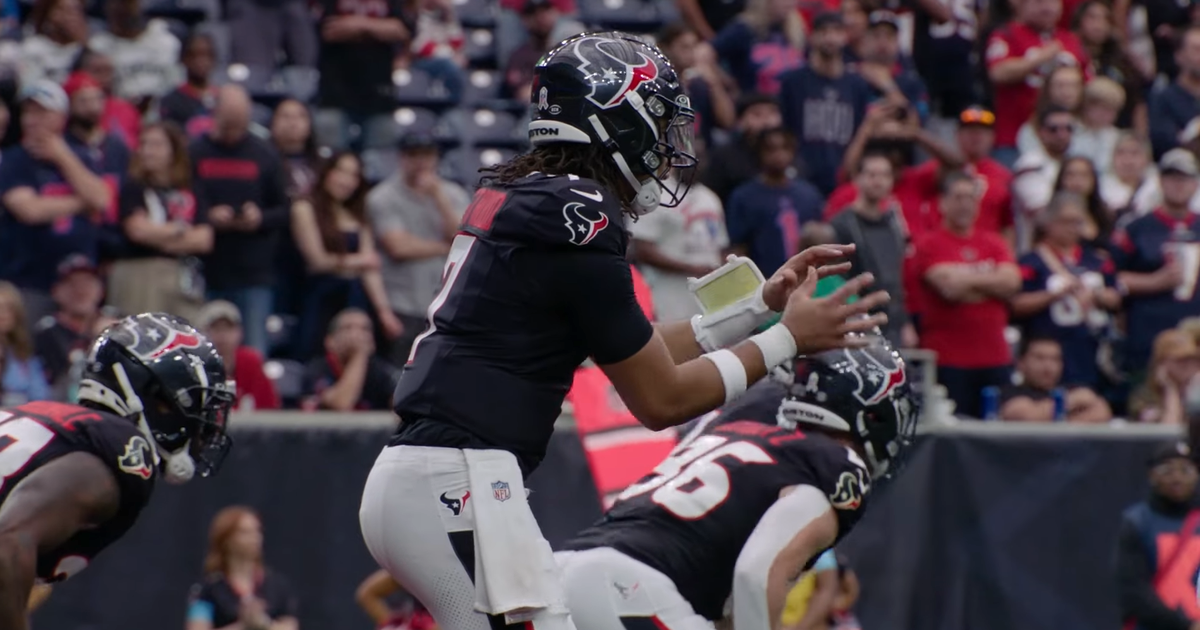
Will the Patriots win 11 games in 2026? Kalshi prices it at 41 cents bid and 42 ask as of September 6, about 42%, against sportsbook lines of 10.5 wins at DraftKings and FanDuel; the full win ladder is below.
Find a market that takes money on the New England Patriots and ask it how many games they win this year. DraftKings says ten and a half, and charges you to bet the under. FanDuel says the same. Kalshi, where the crowd has built a 17-rung ladder of yes-or-no contracts on the question, works out to a hair under ten. Three venues, two very different kinds of pricing, one answer: a team that just went 14-3 and lost the Super Bowl by two scores is being priced as a ten-win team, and nobody with money at stake is pricing it much higher.
Back on August 22 we asked eight AI models to score New England's season from the same facts with the prices hidden, and every one of them landed above the market: the lowest projection was 11 and a half wins, the median was 12, and three seats reached 13. On our full 32-team scoring of Kalshi's NFL win-total board that day, no ladder sat further from the panel than New England's, in either direction. The gap is the reason this page exists, and one rung on that ladder carries the entire argument: not the 12 the panel picked and not the ten the books post, but 11.
Stay ahead of the markets.
Daily insights and expert picks on Kalshi, Polymarket, and what's moving markets.
Free forever. Unsubscribe anytime.
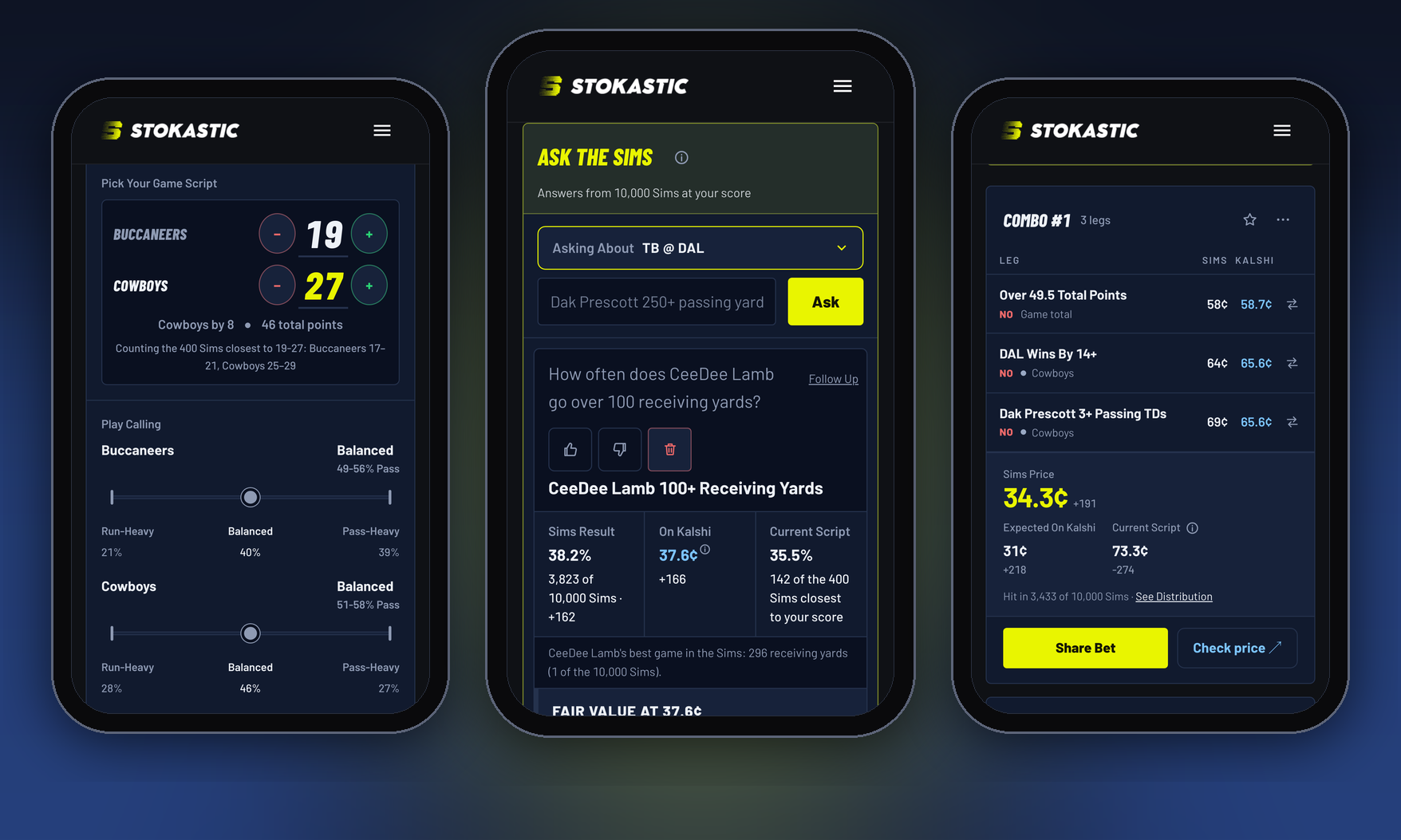 Price the combo before you buy it. The Kalshi Combo Simulator plays Raiders at Patriots 10,000 times and prices any combo you build next to the price on Kalshi, on your phone, free, no login.
The Market Card
Kalshi does not post a single win total. It lists 17 separate contracts for New England, one for each threshold from "wins at least 1 game" through "wins at least 17," and each pays $1.00 if the team reaches that number of regular-season wins. Ties count as nothing, playoff games count as nothing, Week 18 on January 10, 2027 is the last game date that counts, and the contracts list an expiration of January 18, 2027. Read the 17 prices top to bottom and you get the crowd's full opinion of the season, not just a line.
| Venue | Kalshi |
| The Market | KXNFLWINS-27NE, 17 yes/no contracts on New England winning at least N regular-season games in 2026-27 |
| Settlement | Regular-season wins only, ties do not count, listed expiration January 18, 2027 |
| Traded SO Far | About 114,300 contracts across the 17 rungs, with roughly 89,000 still held open |
| Prices As Of | September 6, 2026, best bid and best ask on the order book |
| Sportsbook Line | DraftKings 10.5 wins, over at 2.15 and under at 1.71 in decimal odds (CBS Sports, September 1); FanDuel over 10.5 at 2.20 |
A quick translation for anyone new to the exchange: a contract priced at 42¢ means the crowd puts roughly a 42% chance on that outcome, and $100 of it returns about $238 if it pays and nothing if it does not. The "bid" is what a buyer will pay right now, the "ask" is what a seller wants, and the gap between them is the cost of getting in and out.
Why Every Venue Lands On Ten
The market's case against a repeat is the same case in every venue, and it starts with who New England played. The 2025 opponents finished with a combined .391 winning percentage, the softest schedule in football, and only three of the 17 games came against teams that finished with winning records. Our Patriots win total guide walked through what that schedule produced: a 7-3 record in one-score games, a perfect 8-0 on the road, and the healthiest roster in the league by adjusted games lost, the stat that prices what injuries cost a team. Each of those is the kind of number that drifts back toward normal on its own, before anyone plays worse.
The 2026 slate replaces that cushion with the sixth-toughest schedule in the league by last year's records, a combined .531 opponent winning percentage. The season opens Wednesday, September 9, at Seattle in a rematch of the Super Bowl the Seahawks won 29-13. Buffalo comes in Week 4, on the road. Detroit comes in Week 10 on a neutral field in Munich, which leaves New England with eight true home games instead of nine, and New England goes to Kansas City on a Monday night in Week 15. There is a fair counter-reading of the schedule: rank the 2026 opponents by their projected win totals instead of last year's records and DraftKings' own analyst has New England 21st in opponent strength, a middling slate. Both methods are defensible. The one the market appears to be using is the harder one.
Then there is the roster the market can see right now. Per ESPN's roster-cutdown coverage on August 30, Drake Maye did not play in any preseason game, outside linebacker Harold Landry III was on the physically-unable-to-perform list at the cutdown, and tight end Julian Hill is out for the year with a knee injury; ESPN flatly called them "not a very deep team." Running back TreVeyon Henderson has been managing a foot and ankle problem, per DraftKings' own August 26 preview, the same preview whose writer took the over. Each of those lands on a different rung. Landry's absence is a pass-rush problem, and pass rush is what keeps a defense's floor up in the close games that turn the 9- and 10-wins contracts. A thin backfield is a fourth-quarter problem, the kind that turns a lead into a loss and takes a rung off the top. Maye skipping the preseason is mostly a Week 1 problem, which matters for the opener price more than for a 17-game median. None of it changes who starts at quarterback. All of it shaves the margin for error on a team that had almost none of its margin tested last year.
Put the schedule swing and the regression flags together and ten wins is where you land, which is exactly where DraftKings, FanDuel and the Kalshi order book have landed. The market is unusually unanimous about this team.
What Eight Models Saw Instead
That August 22 run handed the same season to eight AI models, one at a time, with a data card of facts and no market prices: the 2025 record and point differential, the offseason arrivals and departures, the 2026 schedule strength, the injury notes, and one constraint that the 32 team projections had to add up to roughly the 272 wins a 17-game season actually produces. Each seat wrote its number and a one-sentence reason, then read the other seven and got one chance to revise.
They all started from the same fact, and it is a fact the market discounts more than they do. New England outscored its opponents by 170 points last season, the best differential in the AFC. One seat ran that through the standard formula that converts a season's scoring into the record it usually produces and came out near 13.4 wins, which is to say the 14-3 record ran only about half a game ahead of the scoring. The models took that seriously. Then they read the offseason: A.J. Brown, acquired from Philadelphia in June after a 78-catch, 1,003-yard season, plus Romeo Doubs at receiver; offensive lineman Alijah Vera-Tucker from the Jets in front of a quarterback who took 47 sacks last year; Kevin Byard and Dre'Mont Jones on defense. And they read the quarterback: Maye's 4,394 yards, 31 touchdowns and eight interceptions, a 113.5 passer rating, and an MVP runner-up finish in his second season.
… A.J. Brown, Vera-Tucker, Byard, Doubs added. 14-3 slightly outran diff, so a small regression. — Fable
… Maye sharp in camp, Vrabel entrenched, added A.J. Brown/Doubs/Byard; some regression from 14-3 against a .5311 slate but the core is elite. — Kimi
Nearly every seat's first line leans on the plus-170 differential; Kimi's is the exception, and it is the seat closest to the market. Those two mark the panel's floor and its center. Fable landed on 12. Kimi, the most cautious seat in the room, landed on 11.5. The three seats at 13 read the same facts and declined the haircut almost entirely. Every model applied a regression haircut to the 14 wins; the argument between them and the market is how big a haircut a plus-170 team with an improved receiving corps deserves. The market's haircut is about four wins. The lowest seat's is two and a half.
The Ladder, Rung By Rung
The full 17-rung table is at the bottom of the page. The five rungs that matter are these, because between nine and 13 wins is where the price actually moves and where the sportsbook lines can be laid on top.
| Patriots Win At Least | Kalshi bid | Kalshi ask | Crowd's read | Same bet at a sportsbook |
|---|---|---|---|---|
| 9 Games | 66¢ | 70¢ | About 68% | Over 8.5 (not currently a main line) |
| 10 Games | 55¢ | 60¢ | About 58% | Over 9.5 (DraftKings' June line, since moved) |
| 11 Games | 41¢ | 42¢ | About 42% | Over 10.5: DraftKings 2.15, FanDuel 2.20 |
| 12 Games | 28¢ | 34¢ | About 31% | Over 11.5 (not a main line) |
| 13 Games | 19¢ | 22¢ | About 21% | Over 12.5 (not a main line) |
Add up the crowd's read on every rung and you get the exchange's expected win count: 9.74 at the midpoint of each bid and ask, 10.04 if you pay every ask, 9.44 if you sell at every bid. Ten if you pay the offers, a hair under ten any other way you slice it. The same sum came to 9.99 on September 2, but about half of that quarter-win drop is a thin quote on the 5-wins rung, not an opinion; the rungs that actually trade, 9 through 13, account for about eight cents of it, and the near-empty 15-to-17 rungs for most of the rest.
The rung the argument lives on: 11 wins, priced at 41¢ bid and 42¢ ask. Strip the sportsbook's cut out of DraftKings' 10.5 line, the standard two-way math where you divide the over's implied chance by the sum of both sides, and DraftKings' de-vigged opinion of "11 or more wins" is 44.4%. The exchange crowd and one of the two biggest sportsbooks in the country, using completely different machinery, have priced the same outcome to within two or three cents of each other, and for the first time since this page went up the exchange sits a shade below the sportsbook rather than beside it. Two separate pools of money, one number, and the pool that can move is moving down.
The panel's median of 12 wins amounts to a claim that the rung is wrong by a lot: a 12-win team clears 11 games more often than not, so every seat on the panel would have "at least 11 wins" priced well above 42¢, and most of them would have "at least 12" priced above the 34¢ ask too. The 11-wins contract has traded about 32,800 contracts since it listed in late June, second only to the 10-wins rung on this ladder, and its price has spent that whole stretch between 35¢ and 48¢. On August 21, its busiest day, nearly 4,000 contracts changed hands and the price finished at 38¢. Traders keep testing the middle of this ladder, and they keep settling back to the same neighborhood.
What Moved Since September 2
Nine through 13 all came off at the bid, most by a cent or two. The 11-wins rung came off four cents at the ask, and that is the one that matters, because the middle of the ladder slid while the takers were mostly buying.
| Rung | September 2 | September 6 | Move at the ask |
|---|---|---|---|
| 9 Wins | 68¢ / 69¢ | 66¢ / 70¢ | +1¢ |
| 10 Wins | 57¢ / 60¢ | 55¢ / 60¢ | Flat |
| 11 Wins | 44¢ / 46¢ | 41¢ / 42¢ | −4¢ |
| 12 Wins | 29¢ / 36¢ | 28¢ / 34¢ | −2¢ |
| 13 Wins | 20¢ / 24¢ | 19¢ / 22¢ | −2¢ |
The 11-wins rung is where the week happened. It closed September 2 at 44¢ bid after a pair of 170-contract sells at 43¢ that morning, traded no higher than 41¢ on Thursday, September 3, went quiet Friday, and then on Saturday, September 5, at 5:05 p.m. ET a single buyer lifted 2,242 contracts at 42¢ in one print, the second-busiest day in the contract's history behind August 21. The price did not move on it. The offer at 42¢ refilled, and as of this fetch about 3,600 contracts are resting there, so a buy that size on most of this ladder would have moved the price three or four cents and here it moved none. The 10-wins rung tells the same story in a lower key: buyers took roughly 600 contracts at 55¢ Thursday evening, two prints of about 600 each at 56¢ late Friday, and 444 at 59¢ Saturday afternoon, and its bid still sits two cents below where it was on September 2. Open interest across the ladder grew from about 80,300 contracts to about 89,000, so this was new money rather than old money leaving; the price fell while takers were lifting offers, which means the resting sellers were the ones with size. The opener did not move: New England is still 38¢ to 39¢ to win Wednesday at Seattle. The AFC East did, barely: Buffalo up a cent to 56¢ to 57¢. Summed across every rung, the crowd's expected win count went from 9.99 to 9.74, but about half of that is the 5-wins rung, where the bid dropped from 95¢ to 77¢ and the ask from 99¢ to 93¢ on a book with about 50 contracts resting, a quote and not a view. Count only the rungs that trade, 9 through 13, and the move is eight cents at the midpoints, 0.08 of a win: small, all in one direction, and made without a single injury report or depth-chart change to explain it.
Every Seat's Number
The full panel, scored August 22 before any of these prices were shown to the models, alongside what the ladder implied at the time.
| Seat | Projected wins | Reason, in one line |
|---|---|---|
| Fable | 12.0 | AFC-best differential, Vrabel in year two, five additions named; 14-3 slightly outran the scoring |
| Opus | 12.0 | The additions outweigh the losses, which were depth; a .531 slate and eight home games keep it out of the 13s |
| Sonnet | 13.0 | A.J. Brown, Dre'Mont Jones, Byard and Doubs added to a plus-170 roster |
| ChatGPT | 11.8 | Plus-170 was the AFC's strongest signal; the additions offset the .531 schedule and some defensive injuries |
| Gemini | 12.0 | A plus-170 differential is a powerhouse signal, and Brown makes them a contender despite the schedule |
| Kimi | 11.5 | Some regression from 14-3 against a .531 slate, but the core is elite |
| GLM | 13.0 | Its own scoring-formula arithmetic came out near 13.4 wins; the schedule is the only drag |
| DeepSeek | 13.0 | Elite differential, Brown and Doubs added; 13 is reasonable |
| Panel Median | 12.0 | Ladder implied about 9.45 wins on August 22; about 9.7 today |
Every seat on this panel is graded against real market settlements — records to date: Claude Fable 87% on 1,549 graded calls · Claude Opus 87% on 1,621 graded calls · Claude Sonnet 85% on 1,597 graded calls · GPT 85% on 7,942 graded calls · Gemini 86% on 6,624 graded calls · Kimi 84% on 3,119 graded calls · GLM 82% on 2,941 graded calls · DeepSeek 81% on 2,985 graded calls. Recomputed daily; the full scoreboard is public. Figures as of September 6, 2026.
- The panel priced the season without seeing a market number; every fact it used came from the data card, and each seat committed to a number before reading the others.
That record line deserves a plain reading, because it cuts against this page. Those percentages are how often each seat lands on the right side of a market's eventual settlement, and they count every market, including the many where the seat and the crowd agreed. When the two disagree by ten points or more, our graded record (3,762 settled markets through August 24) says the market has been right about seven times in ten, and at 30 points or more it is about eight in ten. A two-win gap on a 17-game ladder is a big disagreement, and on the 11-wins rung it is bigger than it looks: when the panel scored it, every seat sat 30 to 51 points above the market's price, squarely in the bucket where the market has been right about 84% of the time. If you read this page as "the machines found a bargain," you have read it backwards: eight independent readers of the same facts could not find a way down to ten wins, the crowd found it easily, and history says the crowd's number is the one to trust until the crowd is shown to be wrong.
More live boards from the same panel: all 32 NFL win totals has Indianapolis as the next-widest high-side split · Patriots at Seahawks, the Wednesday opener has New England at 39¢ to win · NFL playoff qualifiers scores all 32 teams to make January. Prices fetched September 6, 2026.
Where The Panel Changed Its Mind
Nowhere on the number, and that is the finding. After the first round, every seat read the other seven and had the chance to revise; all eight kept their projection to the decimal. What did change was the reasoning. Two first-round notes, DeepSeek's and Gemini's, described Mike Vrabel as a new arrival in New England. A third seat, Fable, flagged the error in the second round and pointed back to the data card: Vrabel is in his second season with the Patriots and his eighth as an NFL head coach, and the Coach of the Year turnaround was last year's story. Gemini repeated the error in its second note; DeepSeek dropped the phrasing without addressing it. Neither moved its number, and nobody else did either, which tells you the models were not leaning on the coaching change to begin with. They were leaning on the scoring.
How I Would Shop This Number
I am not buying eleven-plus at 42¢ on the strength of my own panel; our graded record says that size of argument loses about eight times in ten, and the crowd has had all summer to find the same plus-170 the models found. My own line is lower: below 38¢, where the rung printed as recently as August 30, a small starter position ahead of the Seattle opener would interest me, and at 42¢ it does not, even after the four-cent slide since September 2. What these prices reward in the meantime is precision about which version of the market you are buying, because the same opinion is on sale at three prices.
A Worked Example: The Same $100 At Three Venues
If your own read of the Patriots is above ten wins, the position is "at least 11" and the venues disagree only on the vig, the built-in cut each one takes. Kalshi's ask is 42¢, so $100 returns about $238 if New England wins 11, before Kalshi's trading fee, which comes off the top and is not baked into the price the way a sportsbook's cut is; at that price and size the fee runs about $4, so call it $234 net. DraftKings' over 10.5 pays 2.15, so $100 returns $215. FanDuel's 2.20 returns $220. A week ago FanDuel was the best of the three by a few dollars. The book prices here are the September 1 postings and were not re-pulled for this update, so treat this as a comparison against that snapshot: on it, the exchange's slide to 42¢ would make Kalshi the best of the three by about $14 even after its fee, which is what a four-cent move on a 17-game ladder is worth to the buyer. Check the two books' current numbers before acting on that ranking. The live odds screen shows every book's NFL number side by side so you can shop the line across the whole market rather than trusting the two books quoted here. One caution that separates the venues: a sportsbook total is a half-win line, so it never pushes, and a Kalshi contract is a whole-number threshold, so a 10-6-1 season counts as ten wins in both places (DraftKings' posted house rule for regular-season wins reads "any ties are to be treated as a loss," which matches Kalshi; other books differ, and some grade a tie as half a win, which would turn 10-6-1 into a push at 10.5) while a sportsbook that posted "10" would refund you. Neither of the books above posts a whole number, but some do.
If your read is below ten, the under is where the venues split. DraftKings' under 10.5 pays 1.71, so $100 returns $171. Kalshi's version of the same bet is the "No" side of the 11-wins contract, and the No you can actually buy is the 59¢ ask, so $100 returns about $169 before a fee of roughly $3, call it $166 net. On September 2 the exchange was cheaper on the under by a meaningful margin; the slide in the Yes price has flipped that, and at today's quotes DraftKings is the better under by about $4 after Kalshi's fee. The exchange's edge is on the over side only. And if your read is ten on the nose, the ladder gives you a bet the sportsbook cannot: the crowd's own read on exactly ten wins is about 16%, the single most likely outcome on the board, and you can express that view by buying "at least 10" at 60¢ and selling "at least 11" at 41¢, which pays only when the season lands on the number the whole market agrees on. At the posted quotes the two legs cost 19¢ against a 16% read, so it is only worth doing if you can get in better than the screen, and it is two legs, so two spreads and two fees.
Win totals are separately priced alternate lines rather than a spread you buy points on: DraftKings' 9.5 in June, its 10.5 now, and Kalshi's 17 rungs are each their own bet at their own price. Shop the posted numbers as different bets, and take the free expert picks for the individual games that will decide this ladder one Sunday at a time.
OddsShopper Pro puts every book's Patriots line on one screen with the vig stripped out, so you can see which book is actually cheapest on the number you want, and after the free 7-day trial, code PATSBOARD20 takes 20% off your first month.
What Would Change The Number
Four things move this ladder, each with a date attached and a direction.
- Wednesday, September 9, at Seattle. Kalshi prices New England at 38¢ to 39¢ to win the opener. A win moves every rung from 9 through 13 up together, because a road win over the champion is the single result the ten-win read is least prepared for. A loss moves the 11 and 12 rungs down more than the 9 and 10, since it eats the margin the panel's twelve-win case needs.
- Harold Landry III and TreVeyon Henderson. A player on the physically-unable-to-perform list at the cutdown sits out at least the first four games under the league's rules, so the earliest Landry restores the pass rush is Week 5, against the Raiders on October 11; a Henderson setback thins a backfield that is already short. Either report moves the 10 and 11 rungs a few cents in the obvious direction.
- Week 4 at Buffalo, October 4. Kalshi has Buffalo at 56¢ to 57¢ to win the AFC East and New England at 39¢ to 40¢. The division title and the win total are the same argument, and this is the first game that decides it.
- Week 10 in Munich, November 15. A neutral-site game against Detroit is the one the eight-home-games discount is built on. If New England is 7-2 going in, the 12-wins rung, now 28¢ bid, reprices on its own.
| Date | What it does to the ladder |
|---|---|
| Wednesday, September 9, 2026 | Season opener at Seattle, a standalone Wednesday game and the first result that counts |
| Sunday, October 4, 2026 | Week 4 at Buffalo, the first AFC East game |
| Sunday, November 15, 2026 | Week 10 vs. Detroit in Munich, the home-designated game played an ocean away |
| Sunday, January 10, 2027 | Week 18, the last game that counts toward any rung |
| January 18, 2027 | Listed expiration of every KXNFLWINS-27NE contract |
The Bottom Line
One team, three venues, one number. Ten wins for the Patriots is as unanimous a price as we have found on Kalshi's NFL board, and the 11-wins contract that sits two or three cents under DraftKings' own number, once its cut is stripped out, is the proof. Eight models given the same season without the prices could not get there, and they could not get there for a reason the crowd has already weighed and discounted: a plus-170 differential says the 14 wins were earned on the field, and the 2026 schedule says it will not get to play that field again. The market is betting on the schedule. The panel is betting on the scoring. Our own graded record says the market wins a disagreement this size about eight times in ten, and the plain thing to do with the other two is to watch the one rung where the two sides are furthest apart and see which side moves first after Wednesday night at Seattle.
This page is re-scored when the story moves and gets a graded retrospective on the same URL after Week 18. The running comparison of exchange ladders and sportsbook totals for every team is in Kalshi vs DraftKings vs FanDuel on NFL win totals, every Kalshi board we track this season is indexed on the NFL 2026 prediction markets hub, and the panel's full public record lives on the scoreboard.
The Full Ladder
Every rung, best bid and best ask on the Kalshi order book as of September 6, 2026. Rungs at the extremes trade rarely and mostly one-sided; the 8 through 14 rungs are where 96% of the 89,000 open contracts sit.
| Patriots Win At Least | Bid | Ask |
|---|---|---|
| 1 Game | 98¢ | 100¢ |
| 2 Games | 99¢ | 100¢ |
| 3 Games | 95¢ | 100¢ |
| 4 Games | 94¢ | 100¢ |
| 5 Games | 77¢ | 93¢ |
| 6 Games | 93¢ | 95¢ |
| 7 Games | 86¢ | 88¢ |
| 8 Games | 78¢ | 80¢ |
| 9 Games | 66¢ | 70¢ |
| 10 Games | 55¢ | 60¢ |
| 11 Games | 41¢ | 42¢ |
| 12 Games | 28¢ | 34¢ |
| 13 Games | 19¢ | 22¢ |
| 14 Games | 12¢ | 13¢ |
| 15 Games | 3¢ | 4¢ |
| 16 Games | 0¢ | 2¢ |
| 17 Games | 0¢ | 1¢ |
Rungs 1 through 6 are quoted one-sided with almost nothing resting, so they cross each other on the screen: the 2-games bid sits above the 1-game bid, and the 5-wins rung shows a 77¢ bid under a 93¢ ask on a book of about 50 contracts. Treat those rows as untraded and read the crowd's opinion from 7 up; the expected-win sums higher on this page use the raw midpoints, which is why the thin rungs can nudge the total without anyone changing their mind.
The row to read is 12 games: a 28¢ bid against a 34¢ ask is the widest spread on the useful part of the ladder, six cents between what a buyer will pay and what a seller wants. That is the market's way of saying it has the least conviction about exactly the outcome the panel is most confident in.
Hero illustration: OddsShopper, in the house collage style. Gillette Stadium photo by jmwests, licensed CC BY 2.0; photos cropped, toned, and composited.
More on this: Browns Win Total 2026: The Panic Lasted One Week · Cardinals Win Total 2026: The Ladder Kept The Chargers Win · Dolphins Win Total 2026: Even Harsher After Two Losses · Giants Win Total 2026: The Buying Lasted One Week · Jets vs Patriots Picks: Is A.J. Brown Back?