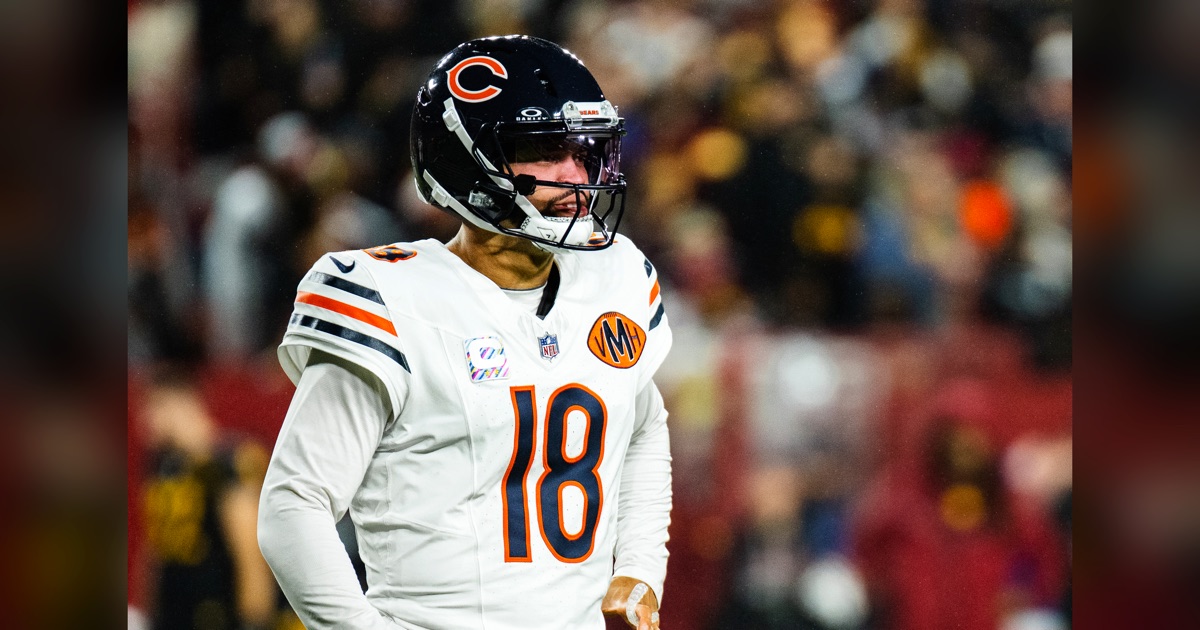
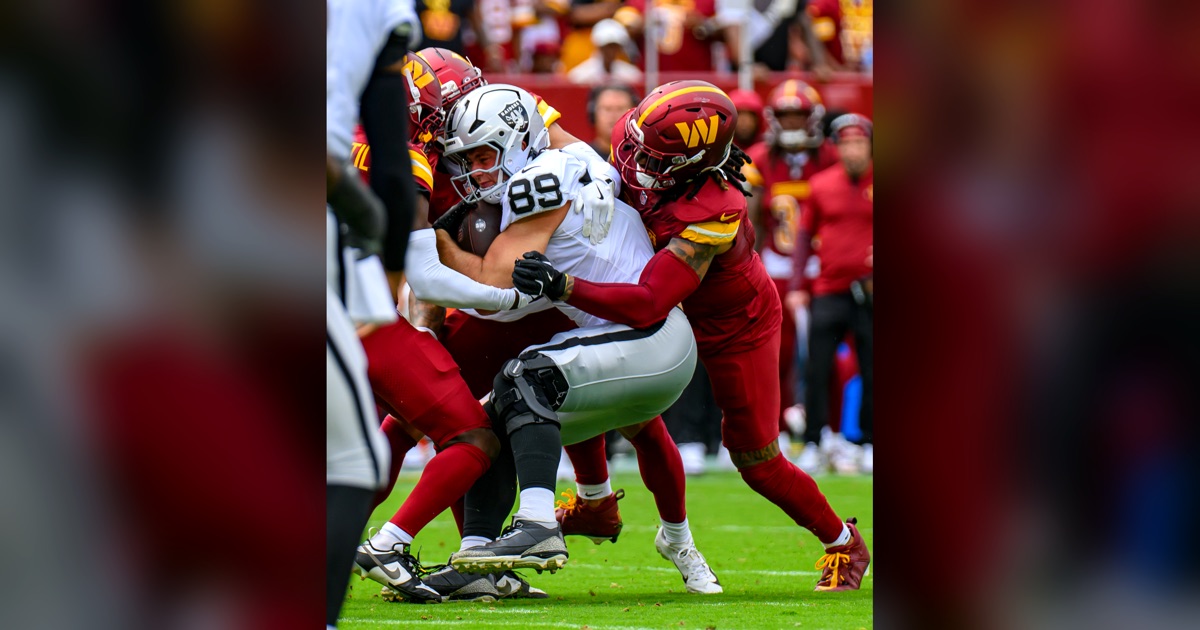
Who won Patriots vs Seahawks, and how did the prediction grade? Seattle beat New England 13-10 at Lumen Field on Wednesday night, September 9, 2026, in the NFL Kickoff game, only the third Super Bowl rematch to open a season and the first since Denver beat Carolina in 2016. The Patriots vs Seahawks final score settled all 46 Kalshi lines this page priced. Kalshi had the Seahawks at 62.5¢ at the page's September 8 stamp and the seven-model panel had them at 58.2%, so the winner went the market's way. The panel was closer than the market on 31 of the 46 lines, including every one of the nineteen total-points rungs, because 23 combined points came in under the lowest total on the board. The full scorecard, the in-game tape and what the win did to Seattle's season prices are below.
Both things are true and they need to be said in that order. The panel's headline lean, that the market was too confident in Seattle, lost: the Seahawks won, and they won by exactly the margin the market had priced higher than the panel did. Its second argument, that this game would be lower-scoring than a 43.5 total, won by more than twenty points. Whether the first or the second matters more depends on which lines you were trading, and the grading below keeps them separate.
The game itself was a Super Bowl rematch decided by the quarterback who was not supposed to play. Sam Darnold hurt his right hip on a third-down sack on Seattle's opening drive and did not return. Drew Lock, who threw three passes all of last season, went 16 of 22 for 187 yards, and Seattle scored the last 13 points after trailing 10-0. New England lost a player of its own: A.J. Brown, the receiver it acquired from Philadelphia in June for a 2028 first-round pick, left early in the third quarter with a right ankle injury and did not return. Drake Maye threw three interceptions after that, all in the fourth quarter, the last of them a toe-tap by Josh Jobe in the end zone on New England's final drive. Then the strangest part: Seattle won, and by midnight its Super Bowl contract had lost two cents.
Stay ahead of the markets.
Daily insights and expert picks on Kalshi, Polymarket, and what's moving markets.
Free forever. Unsubscribe anytime.
New to event contracts? Start here → how to bet NFL on Kalshi.
How The Call Graded: Seattle 13, New England 10
A Kalshi contract settles at $1 if the thing happens and $0 if it does not, so every row on the board can be scored the same way: the column that was nearer to $1 on a Yes and nearer to $0 on a No was the better price. Three of the 46 lines settled Yes: Seattle wins the game, Seattle wins by 2 or more, and Seattle wins by 3 or more. The other 43 settled No.
| Group | Lines | Market closer | Panel closer | What settled |
|---|---|---|---|---|
| Winner (both sides) | 2 | 2 | 0 | Seattle, Yes at 62.5¢ vs 58.2% |
| Seattle margin rungs | 14 | 2 | 12 | By 2 and by 3 Yes; by 4 and up No |
| New England margin rungs | 11 | 11 | 0 | All eleven No |
| Total-points rungs | 19 | 0 | 19 | All nineteen No; 23 points |
| All 46 lines | 46 | 15 | 31 | Brier score: market 0.186, panel 0.177 |
The row that decides how you read this table is Seattle by 3 or more. The market had it at 57.5¢ and the panel at 52.0%, the widest gap on the margin ladder, and the page said on September 8 that the market called a field-goal win more likely than not while the panel called it a coin flip. It settled Yes, by a field goal, on a 26-yard kick with 5:50 left. The market was right about the exact rung it had pushed hardest.
Those 31 panel wins are real but they are cheap ones. Twelve of them are Seattle margin rungs from 4 points up, where the panel was a point or two under a market that was already under 50¢, as much as three and a half on the by-7 rung. Nineteen of them are the totals, where the panel was under the market on every rung and the game came in at 23 points, under the lowest rung on the board. Over 23.5 was 95.5¢ on Kalshi and 95.3% on the panel, so both columns were about as wrong as a price can be on that row, and the panel wins it by two tenths of a cent. On the eleven New England rungs the panel was above the market on every one, and every one settled No.
Put plainly: the market was better on who won and by how much, the panel was better on how many points there would be, and the Brier gap of nine thousandths across 46 lines is the total we run in public on the full graded scoreboard, not a verdict.
Worked Example: How One Line Gets Graded
Take the row the market pushed hardest, Seattle by 3 or more, priced 57.5¢ by the market and 52.0% by the panel. It settled Yes, so the settled value is 1. Each column's error is its distance from 1: the market missed by 0.425 and the panel by 0.480. Square them for the Brier contribution and the market's 0.181 beats the panel's 0.230 on that row. Now run the same arithmetic on Over 23.5 total points, 95.5¢ against 95.3%, which settled No, so the settled value is 0. Both columns missed by more than 0.95, the market carries 0.912 and the panel 0.908, a difference that is a rounding error, and yet it counts as one of the panel's 31 wins in the scorecard above. Average the 46 squared errors in each column and you have the 0.186 and 0.177 in the table.
That is why the win count and the Brier score tell two different stories on the same board: the count treats a two-tenths-of-a-cent edge on a hopeless row the same as a five-and-a-half-cent edge on the row the market pushed hardest, and the Brier score does not. The Brier score is the more honest number, but on this board it is almost entirely the totals: take the nineteen total rungs out and the market wins the other 27 lines on Brier too, 0.085 to 0.090 per line. That is the grade I carry forward, the market reading the game better and the panel reading the scoring lower. The same arithmetic runs on every game on the AI NFL predictions Week 1 board.
The Board: Every Kalshi Line On Patriots-Seahawks
Each model got the same fact card, built on September 8, 2026. The card carried both teams' complete 2025 scoring ledgers, every meeting in the series since 2018, and Seattle's home ledger since 2021. It also carried the ledger of every Super Bowl rematch since 2000, the league's margin and total base rates, both 2026 rosters, the live injury feed, and a dated status record for both teams. It got no prices, no spread and no total, because a model that can see the price drifts toward the price. After a blind round, each seat read the other six seats' numbers and reasoning, anonymized, and revised or held.
Market is the midpoint between best bid and best offer as of September 8, 2026 at 8:12 AM ET, the page's original stamp, kept as it was so the grade is honest. Our AI is the blended verdict, the middle number of the seven seats. A Kalshi price in cents is the market's probability, so the two columns compare directly. Settled is how Kalshi resolved the contract on the 13-10 final. Kalshi listed 225 contracts on this game; the winner, the winning-margin ladder and the total-points ladder are the 46 the panel priced, because the player markets need game logs the card does not carry.
| Question | Market | Our AI | Gap | Settled |
|---|---|---|---|---|
| Seahawks win the game | 62.5¢ | 58.2% | -4.3 | Yes |
| Patriots win the game | 37.5¢ | 41.5% | +4.0 | No |
| Seahawks win by 2 or more | 59.5¢ | 55.5% | -4.0 | Yes |
| Seahawks win by 3 or more | 57.5¢ | 52.0% | -5.5 | Yes |
| Seahawks win by 4 or more | 47.5¢ | 44.8% | -2.7 | No |
| Seahawks win by 5 or more | 44.5¢ | 42.0% | -2.5 | No |
| Seahawks win by 6 or more | 41.5¢ | 40.0% | -1.5 | No |
| Seahawks win by 7 or more | 39.5¢ | 36.0% | -3.5 | No |
| Seahawks win by 8 or more | 32.5¢ | 31.5% | -1.0 | No |
| Seahawks win by 10 or more | 29.5¢ | 27.7% | -1.8 | No |
| Seahawks win by 11 or more | 27.0¢ | 25.1% | -1.9 | No |
| Seahawks win by 14 or more | 21.5¢ | 21.0% | -0.5 | No |
| Seahawks win by 15 or more | 18.5¢ | 18.4% | -0.1 | No |
| Seahawks win by 17 or more | 16.5¢ | 15.8% | -0.7 | No |
| Seahawks win by 18 or more | 14.5¢ | 13.5% | -1.0 | No |
| Seahawks win by 21 or more | 10.5¢ | 9.7% | -0.8 | No |
| Patriots win by 2 or more | 35.5¢ | 38.0% | +2.5 | No |
| Patriots win by 3 or more | 33.5¢ | 35.3% | +1.8 | No |
| Patriots win by 4 or more | 26.5¢ | 29.7% | +3.2 | No |
| Patriots win by 5 or more | 23.5¢ | 27.1% | +3.6 | No |
| Patriots win by 6 or more | 22.0¢ | 24.8% | +2.8 | No |
| Patriots win by 7 or more | 19.5¢ | 22.0% | +2.5 | No |
| Patriots win by 8 or more | 15.5¢ | 18.7% | +3.2 | No |
| Patriots win by 10 or more | 13.5¢ | 15.0% | +1.5 | No |
| Patriots win by 11 or more | 10.5¢ | 13.0% | +2.5 | No |
| Patriots win by 14 or more | 8.5¢ | 9.8% | +1.3 | No |
| Patriots win by 15 or more | 7.5¢ | 8.3% | +0.8 | No |
| Over 23.5 total points | 95.5¢ | 95.3% | -0.2 | No |
| Over 26.5 total points | 92.5¢ | 91.7% | -0.8 | No |
| Over 29.5 total points | 88.5¢ | 87.2% | -1.3 | No |
| Over 32.5 total points | 82.5¢ | 80.7% | -1.8 | No |
| Over 35.5 total points | 76.0¢ | 72.9% | -3.1 | No |
| Over 38.5 total points | 67.5¢ | 63.5% | -4.0 | No |
| Over 41.5 total points | 59.5¢ | 54.5% | -5.0 | No |
| Over 42.5 total points | 56.5¢ | 50.5% | -6.0 | No |
| Over 43.5 total points | 53.5¢ | 48.2% | -5.3 | No |
| Over 44.5 total points | 48.5¢ | 45.0% | -3.5 | No |
| Over 45.5 total points | 45.5¢ | 41.3% | -4.2 | No |
| Over 46.5 total points | 43.5¢ | 38.3% | -5.2 | No |
| Over 47.5 total points | 40.5¢ | 35.7% | -4.8 | No |
| Over 50.5 total points | 31.5¢ | 27.5% | -4.0 | No |
| Over 53.5 total points | 24.5¢ | 21.5% | -3.0 | No |
| Over 56.5 total points | 17.5¢ | 15.8% | -1.7 | No |
| Over 59.5 total points | 13.5¢ | 11.0% | -2.5 | No |
| Over 62.5 total points | 10.5¢ | 7.5% | -3.0 | No |
| Over 65.5 total points | 6.5¢ | 5.0% | -1.5 | No |
Event contracts involve risk, and you can lose money trading them, and trading fees apply.*
Every one of the 46 rows was quoted a cent or two wide at the stamp, so each midpoint was a price someone was actually showing, not an arithmetic guess between a thin bid and a thin offer. At the stamp the New England winner contract had drawn 747,408 contracts of volume, more than the 626,793 on the Seattle side of the same question. The one row worth staring at is over 23.5 total points: 95.5¢ on the market, 95.3% on the panel, settled No. Seven models and a liquid market agreed this game would clear 24 points about nineteen times in twenty, and it did not, because one team lost its quarterback on the first drive and the other threw three fourth-quarter interceptions.
Every Seat's Number
| Seat | Blind round | After revision | Expected margin, Seattle | Expected combined points |
|---|---|---|---|---|
| Claude Fable | 56.0% | 57.4% | +2.5 | 43.0 |
| Claude Opus | 58.2% | 59.0% | +3.0 | 43.5 |
| Claude Sonnet | 61.9% | 59.7% | +3.2 | 43.0 |
| Gemini | 65.5% | 58.2% | +2.8 | 41.5 |
| Grok | 57.0% | 58.2% | +2.8 | 43.5 |
| Kimi | 56.0% | 58.9% | +3.0 | 43.5 |
| GLM | 62.9% | 58.2% | +2.8 | 43.5 |
| Panel Median | 58.2% | 58.2% | +2.8 | 43.5 |
Every seat on this panel is graded against real market settlements — records to date: Claude Fable 90% on 2,636 graded calls · Claude Opus 89% on 2,775 graded calls · Claude Sonnet 88% on 2,752 graded calls · Gemini 87% on 8,358 graded calls · Grok 85% on 6,847 graded calls · Kimi 87% on 4,139 graded calls · GLM 85% on 3,796 graded calls. Recomputed daily; the full scoreboard is public.
Read the two right-hand columns against the final. Seven seats expected Seattle to win by between 2.5 and 3.2 points; Seattle won by 3. Seven seats expected between 41.5 and 43.5 combined points; the game produced 23. The seat table is the cleanest picture of what a price-blind panel is good at and what it is not: the margin was a football judgment and the panel made it well, and the total was a judgment about two healthy offenses that stopped being true four minutes after kickoff.
Every number on this page is now graded in public; the running tally lives on the full graded scoreboard.
More live boards from the same panel: AFC East odds, where New England traded at 33.5¢ to win the division after the loss · NFC West odds, where Seattle was 27¢ after the win, down from 31.5¢ before it · the full Week 1 AI board on all 16 games.
How The Price Got Here, And Where It Went On The Night
The Seattle contract's first close was 70¢ on May 16, the day after the market opened. It spent June and July between 62¢ and 71¢, closed at 63¢ to 66¢ through the middle of August, and closed at 62¢ or 63¢ every day from August 24 to the eve of the game. The bid and the offer sat at 62¢ and 63¢ from August 24 to the September 8 stamp, sixteen straight days, through 1,047,250 contracts of trading on the two sides of the winner market. The New England side closed between 35¢ and 36¢ in mid-August, at 39¢ from August 30 through September 3, and was 37¢ bid and 38¢ offered at the stamp.
The one line that moved before the game was the margin. Seattle by three or more closed at 56¢ to 58¢ in the last days of August and at 59¢ every day from September 5, so the market added a point or two of margin to a winner price it never touched. That is the rung that paid. The total never moved: over 43.5 closed between 51¢ and 55¢ from its first trade in August to kickoff. September 8 was the biggest trading day the winner market had seen up to that point, 292,749 contracts across the two sides before the pull, and it did not move the price a cent. Game day made it look small.
Then the game moved it a great deal. The last Seattle print before kickoff was 62¢ at 8:19 PM ET. Fifteen minutes later, with Darnold already in the medical tent, the contract traded at 50¢, and it kept sliding: 40¢ at 9:01 PM, 30¢ at 9:05 PM, 20¢ at 9:26 PM, and a low of 13¢ at 10:38 PM ET. The comeback ran through Lock's 45-yard fourth-and-1 throw to Jaxon Smith-Njigba, and the price history ran with it: Seattle traded as high as 79¢ before 11:00 PM, was back in the 40s by 11:20 PM with the game at 13-10, then jumped to 90¢ and 99¢ at 11:23 PM, and trading closed at 11:28 PM. Kalshi's trade tape shows about 26 million contracts on the Seattle side alone between kickoff and the close, against about 4 million in the twenty hours before it. A contract that had not moved a cent in sixteen days covered 86 cents in three hours.
Why The Panel Sat Under The Market On Seattle
What follows is the September 8 argument, kept exactly as it was written, because a graded page that rewrites its reasoning after the result is not graded. The market's two counter-arguments, a backup center against Seattle's pass rush and a quarterback with no live reps, are the ones that showed up on the field: Maye was sacked three times and threw three interceptions in the fourth quarter.
All 27 winner and margin lines are quoted tighter than five cents, the range where a Kalshi quote is telling you something. On every one of them the panel lands on New England's side of the price: 27 lines pointing one way and none pointing the other. The nineteen total rungs are a second, separate disagreement, covered below.
That is one disagreement about the football game showing up 27 times, and it has two parts.
The first is about who is better, and the answer is that nobody was better last year. Seattle scored 28.4 points a game and allowed 17.2; New England scored 28.8 and allowed 18.8. Run both point differentials through a Pythagorean estimate and Seattle comes out near 13 wins, New England near 12.5. Two 14-win teams that close, so the board is decided by adjustments, and the panel made two of them the market has not.
The first adjustment is home field. Seattle went 22-20 at home from 2021 through 2025 and won those games by an average of 2.1 points, against a league in which home teams win 53.9% of the time. In openers the edge disappears: home teams won exactly 50% of the 80 Week 1 games in that span. Every seat discounted Seattle's home field twice, once for the team's own ledger and once for the week.
The second is who lost what. Kenneth Walker III, the Super Bowl MVP, signed with Kansas City. Offensive coordinator Klint Kubiak left to coach the Raiders, and Brian Fleury, the 49ers' run-game coordinator for the previous seven seasons, is installing a new offense in a short week. Zach Charbonnet is out with a knee injury the league feed lists as an ACL, so the back Seattle paired with its first-round rookie, Jadarian Price, is gone too. The secondary is thinner still: Ty Okada, a starting safety, did not practice Sunday or Monday with a hamstring, Nick Emmanwori is limited coming off ankle surgery, and the league's injury feed lists cornerback Terrion Arnold as out. Julian Love and Emmanwori are the only other safeties on the 53-man roster; the practice-squad names Mike Macdonald offered were Rodney Thomas II, D'Anthony Bell, AJ Finley and Maxen Hook. New England's absences are real but narrower: center Ben Brown did not travel and is out, and TreVeyon Henderson has not practiced since Saturday with an ankle.
Against that, New England was 8-0 on the road last season, winning by an average of 10.0 points and going 6 and 0 in one-score road games, and its offense threw 10 interceptions to Seattle's 18. The seats also refused to read the Super Bowl as a talent gap. Seattle won that game by 16; it had won the two regular-season meetings before it by 5 and by 3.
The second part is the total, and it is unanimous. The panel is under the market on all nineteen rungs, by as much as 6.0 points. The market's 50-cent line sits between over 43.5 and over 44.5; the panel's sits between over 42.5 and over 43.5. Week 1 games in this span averaged 43.6 points against 45.0 for the season as a whole, both of these defenses allowed fewer than 19 points a game, and the last two meetings in the series landed on 43 and 42. The six Super Bowl rematches since 2000 averaged 39.7 points, and the seats treated that as what it is, a six-game sample, rather than an anchor.
The Best Case Against This Board
The blind round had Seattle as high as 65.5% and 62.9%, and both of those seats came down once they read the others. The case for a bigger favorite is real. Drake Maye took no preseason snaps and plays his first live football since the Super Bowl on the road against a defense that recorded 47 sacks last season, behind a backup center. Mike Vrabel said in August, after the preseason game against the Eagles, "I don't think we have a very deep team." And the champion has won 5 of the 6 Super Bowl rematches since 2000, by an average of 5.3 points.
The seat that priced Seattle highest in the blind round did it for a reason the card does not support: it described Maye as a rookie making his first start. Three other seats flagged it, and the seat revised to 58.2%.
I specifically decline to move toward Forecaster B's 5.5: its central argument is that New England starts a 'rookie quarterback,' which is wrong — Drake Maye was drafted in 2024 and just took this team to a Super Bowl, so the true adjustment is a no-preseason-snaps rust discount, worth well under a point, not a rookie-on-the-road discount worth three. — Claude Opus
Kimi, which finished at 58.9%, made the fairest version of the Seattle case: "I credit Seattle slightly more for the pass-rush mismatch against a backup center and Maye's zero live reps, so I stay at 3.0 rather than sliding to 2.0." A backup center against the better pass rush, and a quarterback with no live reps, are the two things that could make the market right.
What Moved These Numbers
The September 8 edition listed five things that would move the panel's numbers. Here is how each one landed.
- Ty Okada's hamstring. He sat, and Nick Emmanwori, listed as questionable coming off ankle surgery, was ruled inactive before the game too. The thin secondary allowed 168 net passing yards and picked Maye off three times, so the thing the panel worried about most turned out not to matter.
- TreVeyon Henderson's ankle. He was ruled out on Tuesday's final report and did not play. Rhamondre Stevenson carried 18 times for 51 yards and New England ran for 109, enough to hold the ball for 34 minutes and not enough to score more than ten points. The panel's New England number did not need Henderson; its total did, and this is one of the places the 23 points came from.
- The center position. Ben Brown was out, and the backup-center-against-the-pass-rush argument was the market's best. Maye took three sacks and finished 23 of 33 for 178 yards with a 54.9 rating. The panel said a clean first quarter for Maye would close the gap fastest; he got the clean quarters and the market still collected, because the gap closed in the fourth.
- Maye's first snaps. No preseason reps was the market's other argument. His first three quarters were clean enough for a 10-0 lead; his fourth quarter was three interceptions, and the panel was right on the total for a reason nobody wrote down.
- Weather. A non-factor, and the market treated it as one: the winner quote never moved off 62¢ and 63¢ in the hours before kickoff.
- The two nobody listed. Darnold's hip, and A.J. Brown's ankle. Brown had three catches for 26 yards, and in the second quarter he had drawn the pass-interference penalty on an underthrown deep ball that set up New England's only touchdown. Early in the third quarter Nehemiah Pritchett's knee landed on his right ankle in tight coverage on a third-down incompletion; he walked off, was listed as questionable, then ruled out at the start of the fourth, and New England did not score again. Mike Vrabel had no update on him after the game. Darnold's hip came first: he was 1 for 2 for 13 yards when a third-down sack by Dre'Mont Jones ended his night. Coach Mike Macdonald said afterward that initial tests appeared to show no fracture, and ESPN reported an MRI scheduled for Thursday, September 10.
The final injury report for the Wednesday game came out Tuesday, September 8. Kickoff was 8:20 PM ET on Wednesday, September 9, at Lumen Field, in front of 68,744, and every contract settled on the final score. The tie clause never came into play. Prices in the board carry their September 8, 2026 stamp; the aftermath prices below were pulled at 12:10 AM ET on September 10.
The Widest Gap Settled The Panel's Way. The Winner Did Not.
The winner market disagreement was modest, 62.5¢ against 58.2%, and it went to the market. Further down the ladder the market was right again: Seattle by three or more traded at 57.5¢ and the panel had it at 52.0%, and a three-point Seattle win is what happened. Three is the most common winning margin in football, landing in 14.64% of regular-season games, and this one landed on it.
The total was the panel's widest disagreement and it was the panel's win, though not the way the argument was made. Seven models that never saw a price all put this game a point or so under the market's number, for the reasons in the section above: two stingy defenses and a series that had been landing in the low 40s. The result was about a quarterback injury on the first drive and a fourth quarter with three interceptions. The panel was under, and it was under for reasons that did not include the ones that made it right.
The money finally tested it, and the test was violent. The pre-game gap between the market and the panel was four cents; the in-game range, in the price history above, was eighty-six. Sixteen days of a quote that never moved a cent told you nothing about how far it could travel once a quarterback limped off.
The Market Aftermath: Seattle Won And Got Marked Down
The strangest set of prices on the board after the final whistle belongs to the team that won.
| Contract | Before the game | After | 24h contracts traded |
|---|---|---|---|
| Seattle wins the 2027 championship (KXSB-27-SEA) | 8¢ | 5¢ bid / 6¢ offered | 306,887 |
| New England wins the 2027 championship (KXSB-27-NE) | 5¢ | 4¢ bid / 5¢ offered | 156,756 |
| Seattle 11 or more wins (KXNFLWINS-27SEA-11) | 57¢ | 44¢ last, 44¢ bid / 55¢ offered | 12,959 |
Seattle's championship contract, Kalshi's market on the 2027 title, closed at 8¢ on September 8 and was still 8¢ at 8:18 PM ET on the night, two minutes before kickoff. It printed 6¢ at 8:59 PM, 5¢ at 9:09 PM, 4¢ at 9:15 PM and 3¢ at 9:50 PM, all before Seattle had scored a point, and the recovery when Seattle came back only brought it to 6¢ and 7¢. It was quoted 5¢ bid and 6¢ offered just after midnight ET on September 10, on 306,887 contracts of trading in the prior twenty-four hours. New England lost and was quoted 4¢ bid and 5¢ offered, the same 5¢ it closed at the day before. A team won a game and lost two cents of championship equity; the team that lost kept all of its own.
The season-wins ladder says the same thing louder. Seattle 11 or more wins traded at 58¢ at 8:17 PM ET before kickoff, printed 16¢ at 8:46 PM on a thin book in the first minutes without Darnold, was back at 40¢ by 8:50 PM, and closed the night at 44¢, thirteen cents under its September 8 close of 57¢, on a quote that was eleven cents wide. The market took the win, subtracted a quarterback for some number of weeks it does not know yet, and landed thirteen cents lower. The division contract did the same thing: Seattle to win the NFC West went from 31.5¢ at the stamp to 27¢, and New England to win the AFC East went from 39.5¢ to 33.5¢, so the loser was marked down for losing and the winner was marked down for how it won.
This is the read for anyone trading the rest of Seattle's season, and it is the part of the page that is still live. Thursday's MRI ruled out a fracture: Mike Macdonald said "the hip is intact, and it's good. It's more of a muscle thing," and NFL Network's Ian Rapoport reported that Darnold is expected to miss Week 2 at Arizona and could be back in a few weeks. The thirteen cents the wins ladder gave back were priced on Wednesday night, before anyone knew whether the answer was weeks or months, and the early answer points to weeks. Every Seattle futures contract on Kalshi is still a bet on how many, and the sportsbook side prices the same hip in Seattle's Week 2 line at Arizona: shop that number across every major book on the live odds screen, and our weekly Kalshi vs FanDuel NFL page, rebuilt every Saturday, shows what $100 pays at each app on every game it carries. And the free expert picks today page carries the Week 1 slate the same panel priced on the 16-game AI board.
The Bottom Line
As a Patriots vs Seahawks prediction, this page picked the right winner and lost the argument about how confident to be: the market's extra four cents on Seattle, and its extra five and a half on a field-goal win, were the better prices, and the panel's lower total was the better price on all nineteen scoring rungs. Seattle was a favorite because it was the champion, at home, and the market had believed that since May. It was right. The panel's case, that the two rosters were the same team last year and that home field in an opener is worth less than the market's habit says, produced a 2.8-point expected margin against a 3-point result, which is as close as a football judgment gets, and it still landed on the wrong side of a 62.5¢ price because the game had to be won by somebody and the somebody was Seattle. The total was the panel's win, the game landing 20.5 points under the over 43.5 rung, the last total the market priced above 50¢, for reasons nobody on the card wrote down. Kimi's objection on September 8, that the market's two real arguments deserved more weight, is the one that reads best the morning after: three sacks and three fourth-quarter interceptions are at least consistent with the backup center and the missing reps, and New England threw all three of those interceptions after Brown left.
The grade is posted to the scoreboard, win or lose, and the next test was Thursday night in Melbourne on the 49ers vs Rams board. What remains live on this page is the aftermath: a champion that won its opener and is worth less than it was at kickoff, and the MRI that followed said muscle, not bone.
Compare the sportsbook side of this same game on our Patriots vs Seahawks Week 1 picks page, and the point-spread history on the Seahawks vs Patriots spread page.
Hero illustration: OddsShopper, in the house collage style. Sam Darnold photo by the Tennessee Titans, licensed CC BY 3.0; photo cropped, toned, and composited.
More on this: Patriots vs Seahawks Kalshi Player Props: Seattle Gives Up Catches, Not Yards · Patriots vs Seahawks Props: The Middle Of The Field Is Open · Seahawks vs Patriots Spread: Kalshi Says 4, Pinnacle Says 3 · Patriots vs Seahawks Picks: The Champs Aren't The Same Team · Jets vs Patriots Picks: Is A.J. Brown Back?